


Common name: Ackee
Other common names: Ake, Akee, Akee Apple, Vegetable Brains
Description
Originating in tropical West Africa, the Ackee tree is cultivated for its fruit, which is cooked and eaten as a vegetable. Nowadays, it is widely, though sparingly, distributed outside of its native range, except on the island of Jamaica, where its extensive cultivation has caused it to become naturalised.
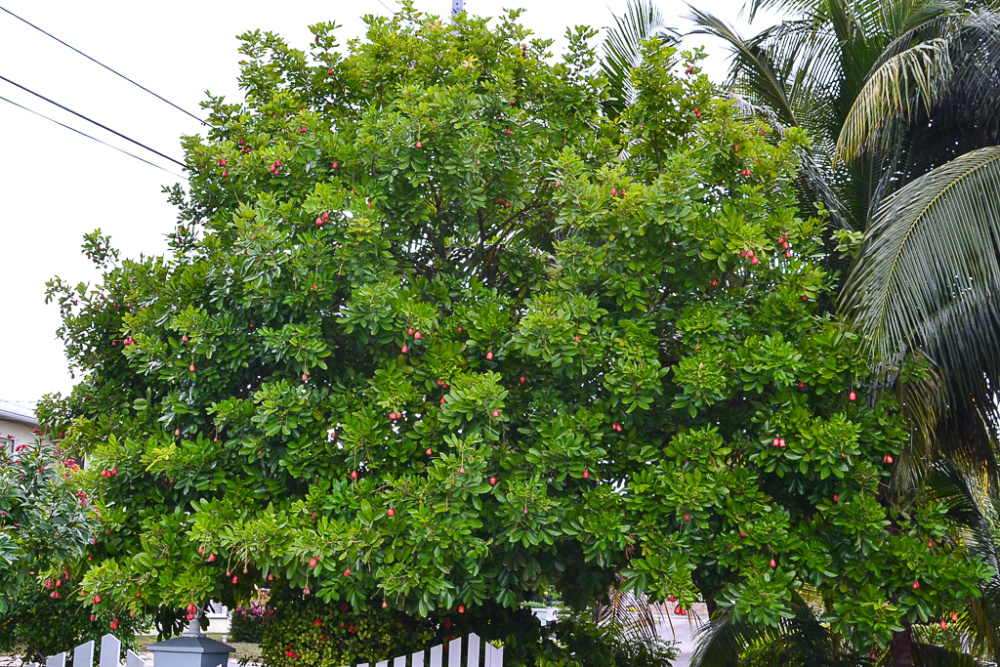
Under favourable conditions, Ackee trees may attain heights up to 25 m (80 ft), though they are more typically 10 to 15 m (30 to 50 ft) tall. They have a straight, stout trunk supporting a densely leafy, rounded crown. The bark is pale grey and smooth.
Leaves are large and compound, consisting of glossy green oval leaflets, each 12 to 20 cm (6 to 8 in) long, arranged in pairs along the length of the leaf. A typical leaf consists of three to five pairs of leaflets. Their dense arrangement casts a deep shade, and the leaflets remain on the tree in all seasons.
Flowers are small, somewhat insignificant, cream-coloured and either bisexual or male. They are held in branched clusters arising at the ends of the branches, though the leaves may partly obscure them.
Flowers bloom at the start of the rainy season in seasonally dry areas but on and off throughout the year in areas where the dry season is short or where humid conditions prevail.
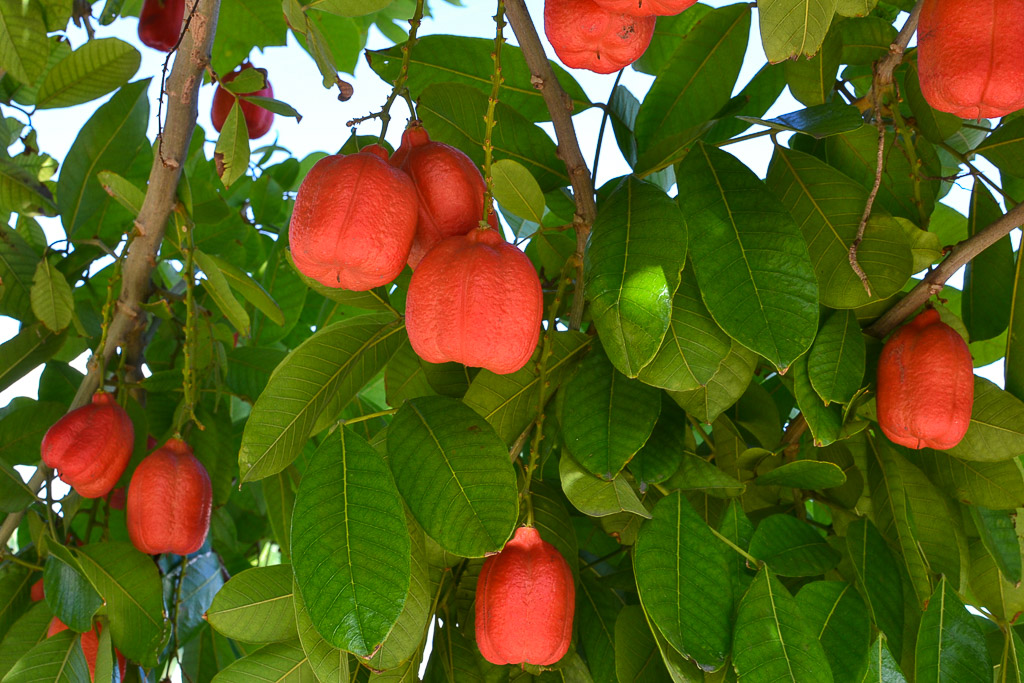
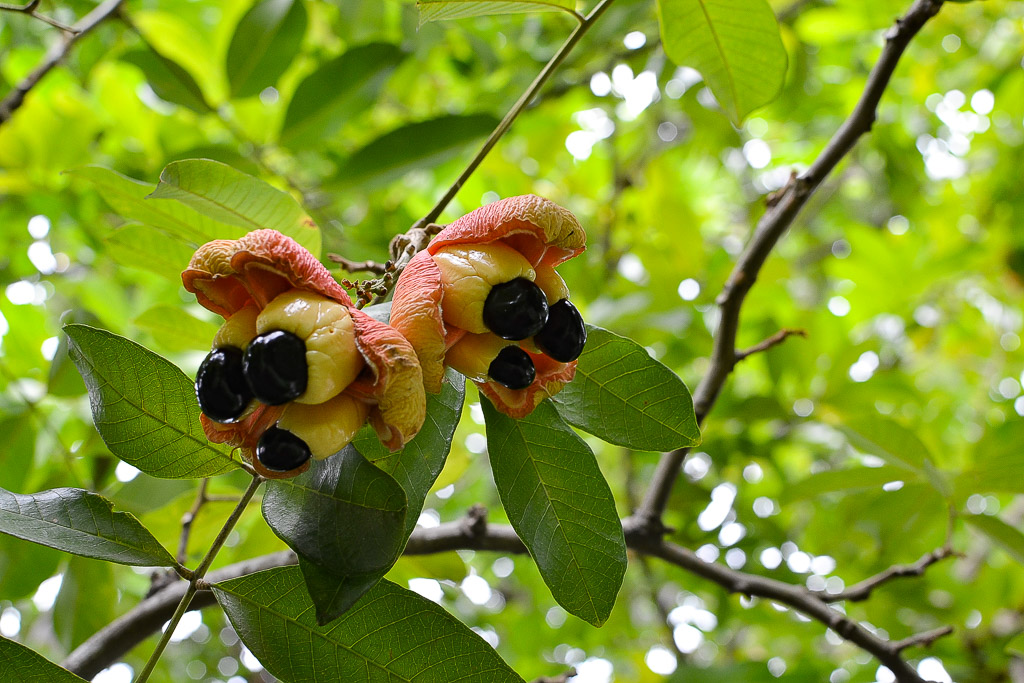
Fertilised flowers develop into light-green, bell-shaped fruit that becomes bright red when mature. They have a thick fibrous shell that splits at the base when mature, separating into three segments, each shielding a soft, pale yellow or creamy-white aril with a glossy black seed attached.
There are two named varieties in cultivation: 'Butter', with a soft, bright yellow aril, and 'Cheese', with a somewhat firmer, cream-coloured aril. Although all parts of the fruit are poisonous, the arils are eaten in some countries, particularly Jamaica, where it is recognised as the national fruit.
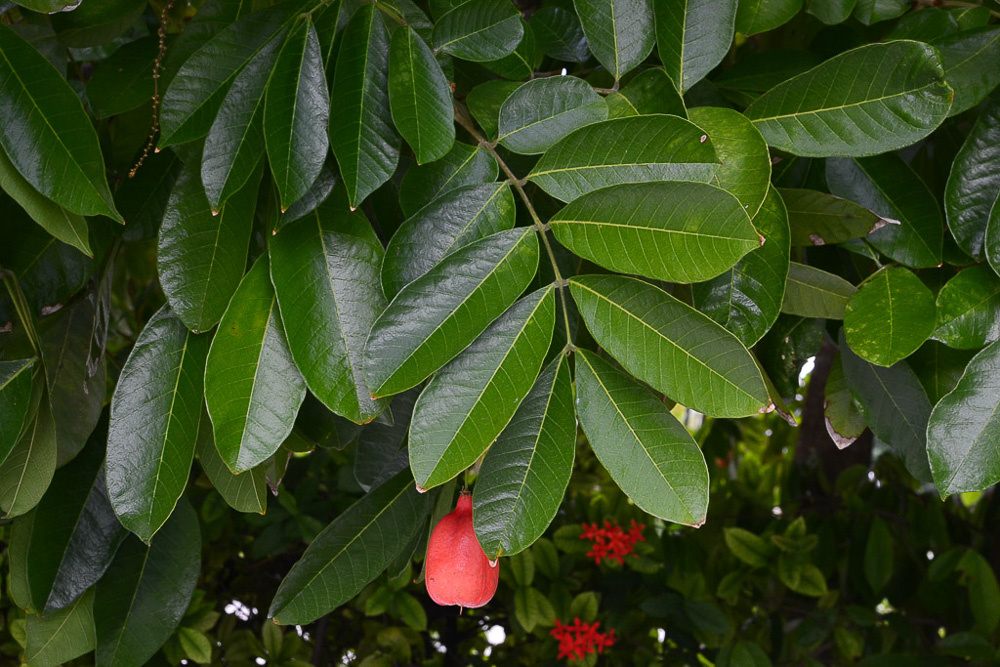
Leaf with the leaflets in pairs
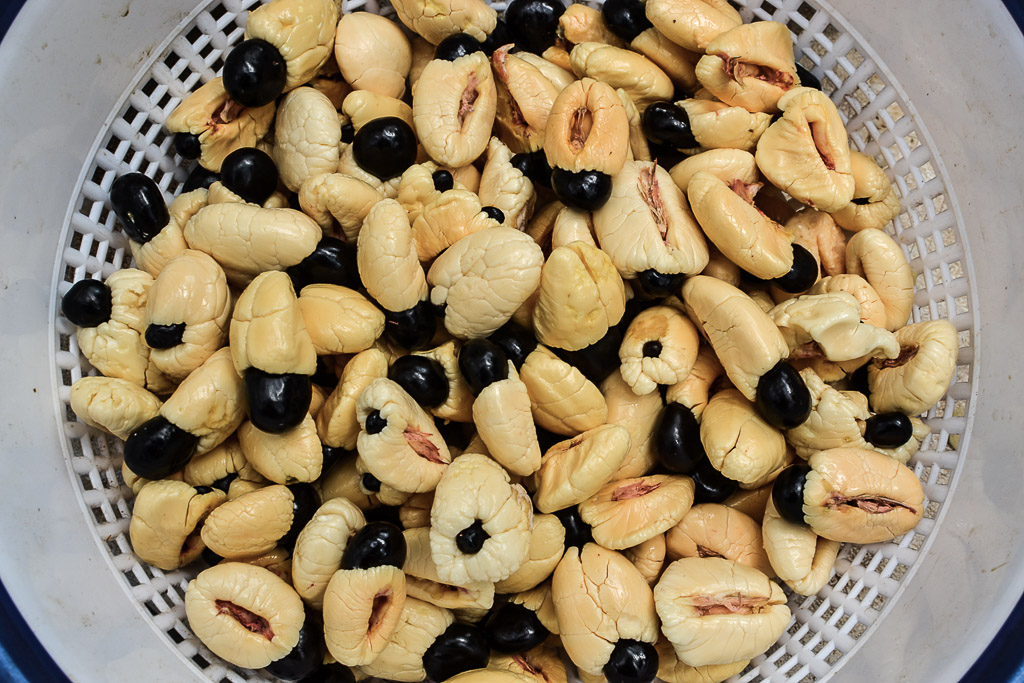
Arils with seed attached
Edible uses
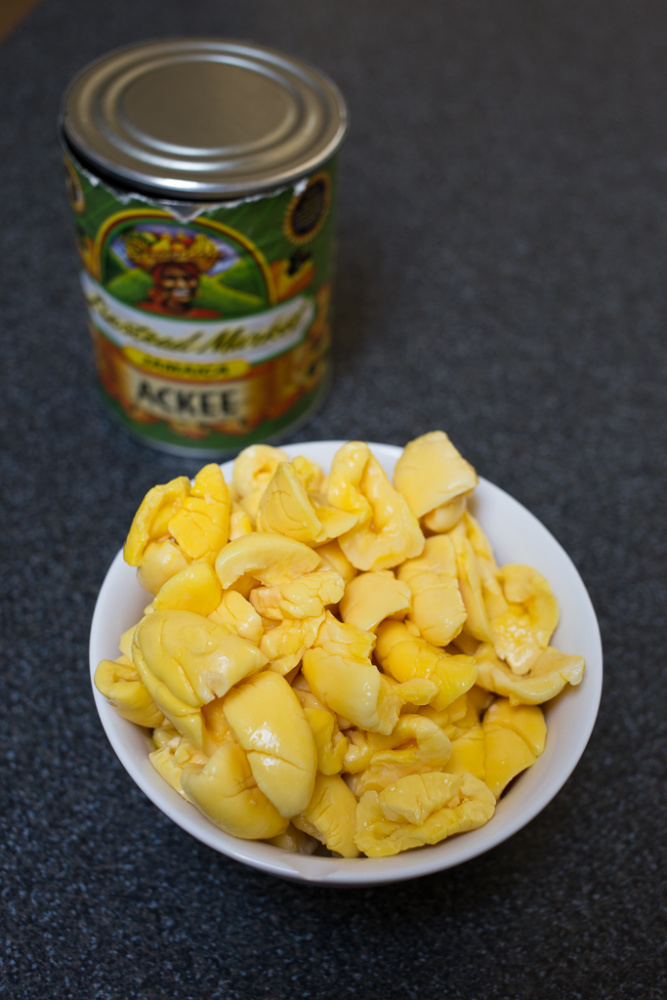
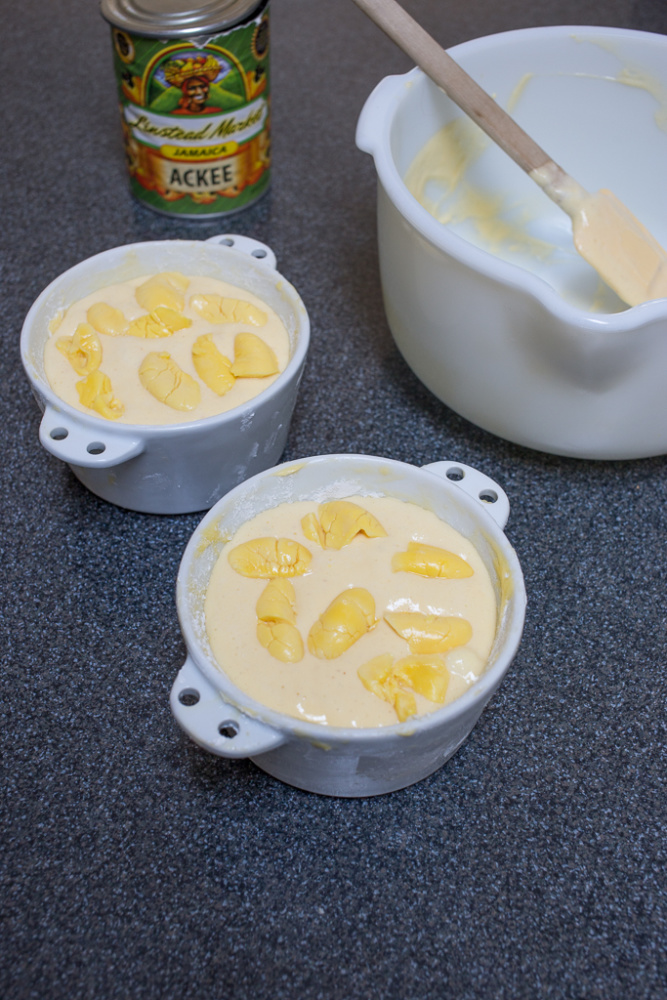
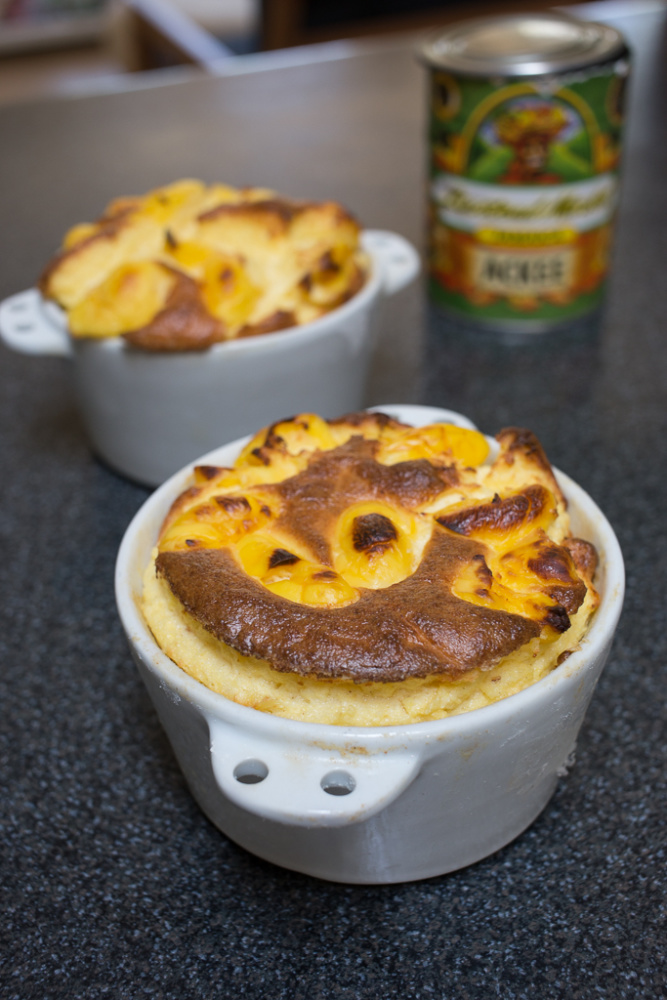
Cooked vegetable - After removing and discarding the seed, the arils are cleaned of any reddish membrane, leaving only the soft yellow or cream-coloured flesh. These are simmered in lightly salted water until soft but still intact, then the water is drained off and discarded as a precaution. The softened arils are then sautéed, usually with herbs and spices, including black pepper (Piper nigrum).
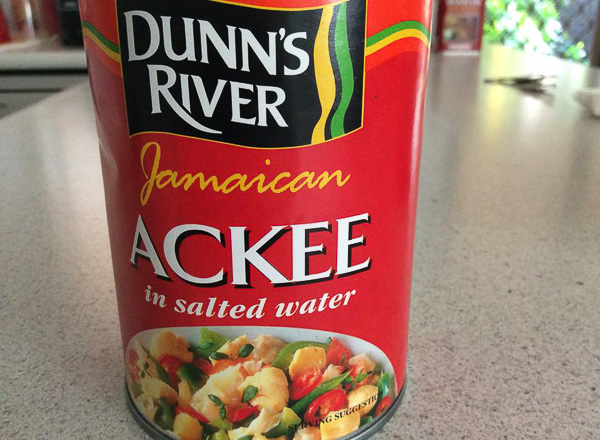
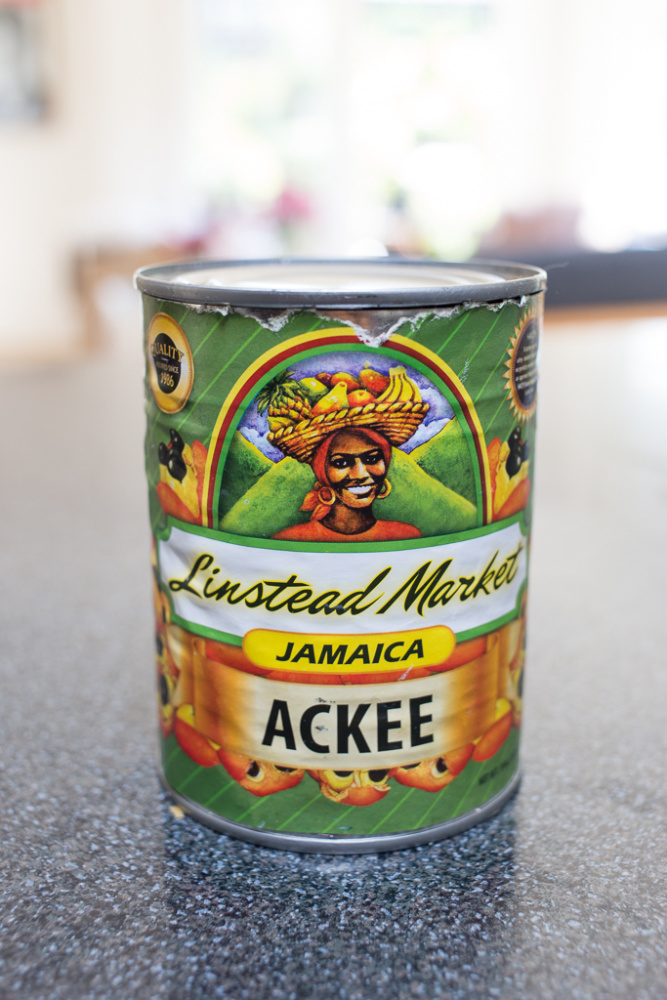
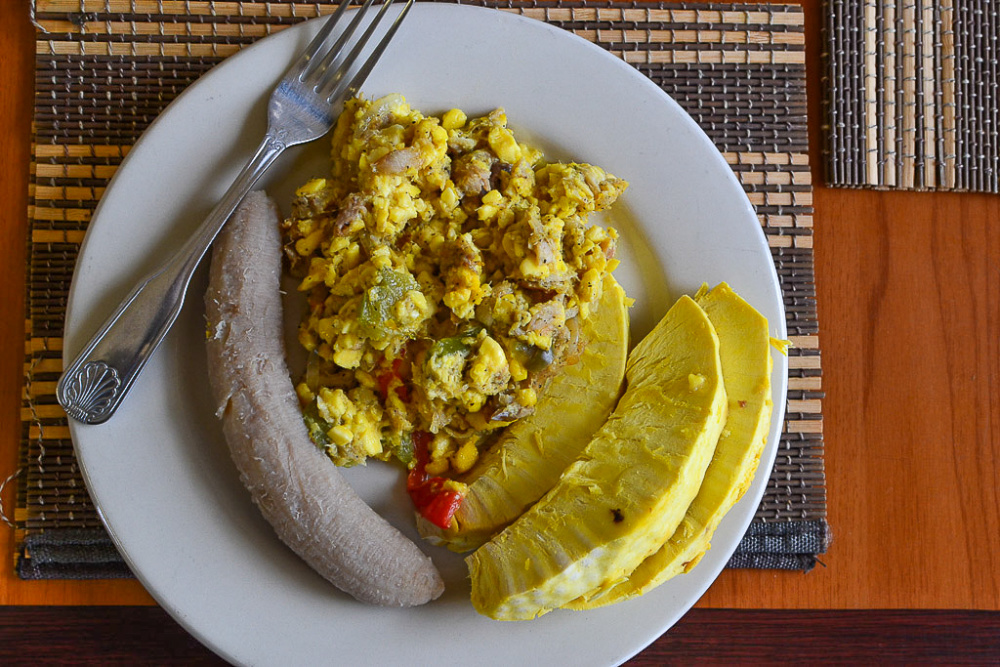
In Jamaica, flakes of salt-preserved codfish are added to make that country's most esteemed dish, 'Ackee and saltfish.' When cooked, ackee has a soft, buttery, avocado-like texture and an agreeable, slightly nutty flavour.
Material uses
Ackee trees produce medium-weight wood in the 600 to 650 kg per cubic metre (37 to 41 lbs per cubic ft) range, with good natural resistance to rot, decay, and wood-boring insects, though this is not well researched. The heartwood is pale gold to orange-brown.
Furniture and cabinets - When available, logs are sawn into planks primarily for making furniture and cabinets. However, the trees are not usually felled in areas where the fruit is eaten or is economically important.
Crossties or sleepers - The wood is also used for railway sleepers and heavy support beams.
Firewood - Pruned branch wood can be used for firewood.
Charcoal - The branch wood can also be converted into charcoal.
Environmental uses
Bee forage - Honeybees are observed working the flowers vigorously, though the tree's importance to honey production remains unclear.
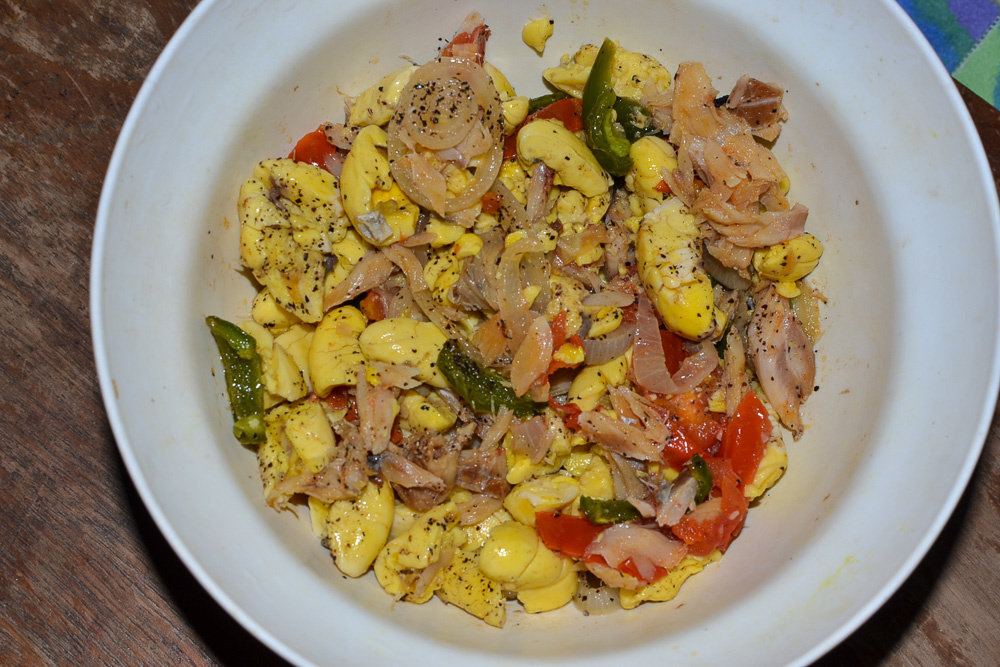
Ackee and saltfish (Kingston, Jamaica)
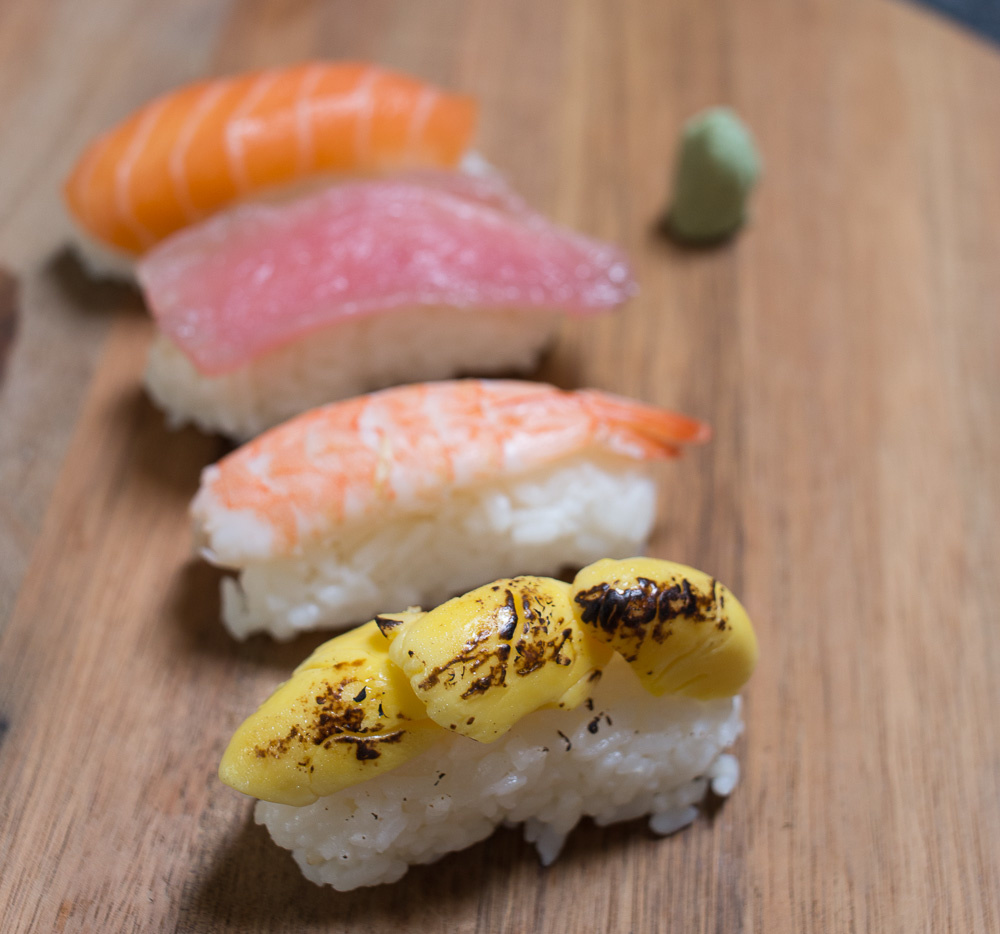
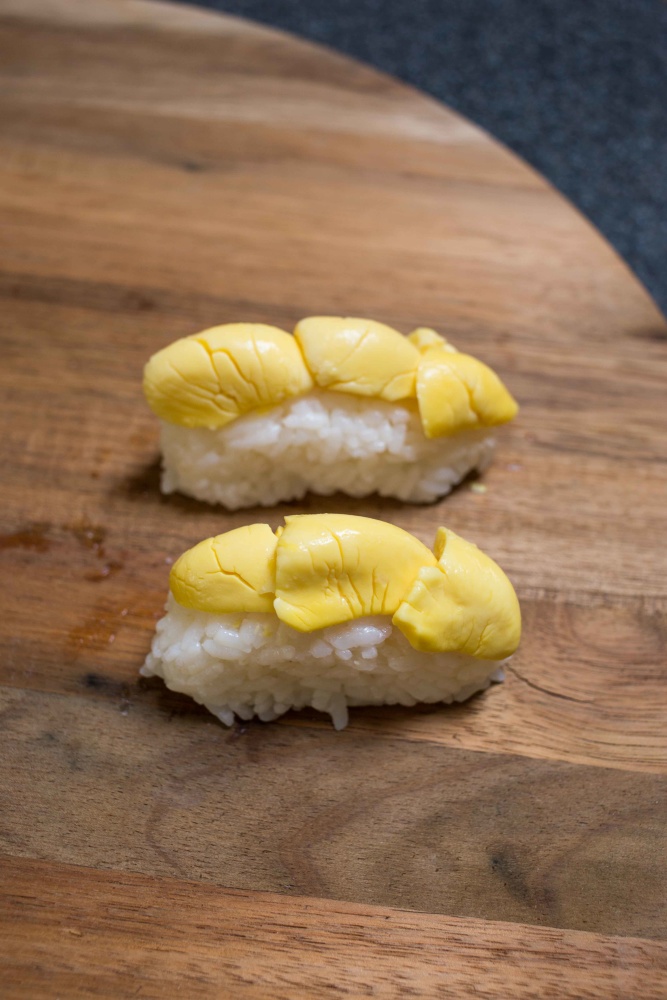
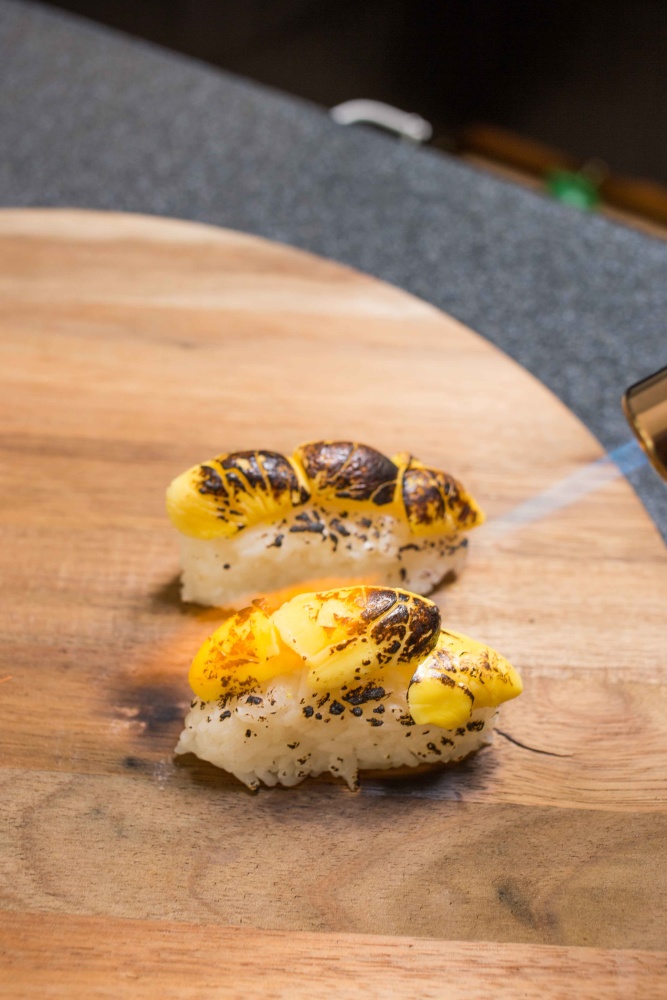
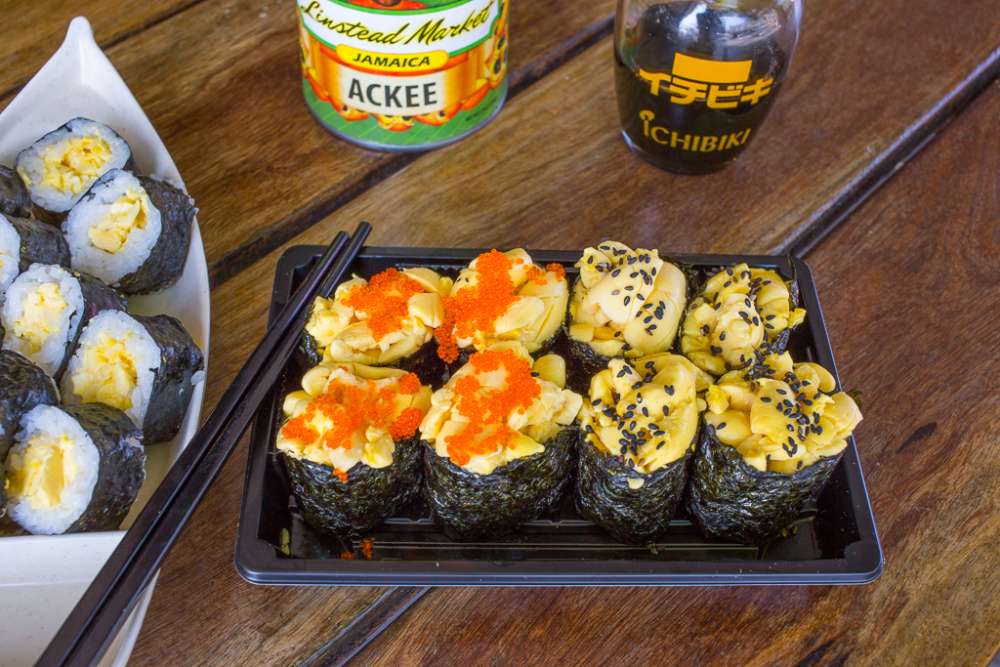
Ackee sushi
Health uses
The cooked arils are a rich source of the following:
Vitamin A
Vitamin B1 (Thiamine)
Vitamin B2 (Riboflavin)
Vitamin B3 (Niacin)
Vitamin C (as ascorbic acid)
Omega-9 fatty acid - Present as oleic acid; helps maintain healthy blood cholesterol levels.
General interest
Ackee was banned from being imported into the United States for years. Still, in 2012, the FDA (Food and Drug Administration) granted an exemption to a 'Green List' of exporters that, according to the FDA, demonstrated they have controls in place to ensure their products are safe.
Climate
Grows and fruits naturally in sub-humid to humid subtropical and tropical climates, generally frost-free areas with annual lows of 17 to 25°C, annual highs of 26 to 35°C, annual rainfall of 800 to 6000 mm and a winter dry season of 2 to 7 months.
Although Ackee trees also grow well in wetter climates with no dry season, flowering is usually poor due to fungal attack, resulting in low fruit production. Also, trees may fail to flower and fruit altogether in areas where the average low of the warmest month is below 18°C (64°F).
Growing
Ackee trees can be grown from seed or cuttings. Seedling trees start to flower and fruit at around three years old, but are not true-to-type, so cuttings are used to grow a specific variety. Arils of the 'Cheese' variety are generally preferred over those of the 'Butter' variety for canning because their firmer texture helps them retain their shape better.
Ackee performs best on free-draining clay loam, loam, sandy loam, and loamy sand soils that are moderately acid to slightly alkaline, generally with a pH of 5.5 to 8.0, and on sites with full sun exposure.
Although it also grows well on alkaline soils with pH values at or above 8.5, fruit production and quality are low. Ackee trees tolerate drought well but do not tolerate slow-draining or permanently waterlogged soils.
Trees in South Florida yield from fifty to two hundred fruit per season, depending on the tree's size and growing conditions.
Problem features
The fruit is poisonous if harvested and prepared improperly, as it contains the potentially deadly peptide hypoglycin. Only fruit on the tree that has opened naturally, showing its arils, should be harvested. Unripe, unopened fruit or fruit that has opened and fallen to the ground are considered a poison risk and are not consumed.
The seeds germinate readily, but because of their size, they would need large animals or rodents to disperse them. It has naturalised in Jamaica, largely due to its extensive cultivation there.
In Australia, it is recorded as having escaped cultivation and as a weed in some areas. Still, there appears to be no record of it being a serious weed anywhere in the world.
Where it grows
References
Books
-
Adams, C. D. 1972, Flowering plants of Jamaica, University of the West Indies, Mona, Greater Kingston
-
Barwick, M., et al. 2004, Tropical & subtropical trees : a worldwide encyclopaedic guide, Thames and Hudson, London
-
Janick, J., & Paull, R. E. 2008, The encyclopedia of fruit & nuts, CABI Publishing, Wallingford, Oxfordshire
-
Lemmens R.H.M.J., Louppe, D. & Oteng-Amoako, A.A. (Editors) 2012, Plant Resources of Tropical Africa, Volume 7(2) : Timbers 2, PROTA Foundation, Backhuys Publishers, Leiden
-
Little, E. L. 1974, Trees of Puerto Rico and the Virgin Islands, Vol. 2, United States Department of Agriculture (USDA), Washington D.C.
-
Macmillan, H. F. 1943, Tropical planting and gardening : with special reference to Ceylon, 5th ed, Macmillan Publishing, London
-
Morton, J. F. & Dowling, C. F. 1987, Fruits of warm climates, Creative Resources Systems, Winterville, North Carolina
-
Perkins, K. D. & Payne, W. 1981, Guide to the poisonous and irritant plants of Florida, Florida Cooperative Extension Service, Gainesville, Florida
-
Perry, F. & Hay, R. 1982, A field guide to tropical and subtropical plants, Van Nostrand Reinhold Company, New York
-
Randall, R. P. 2002, A global compendium of weeds, R.G. and F.J. Richardson Press, Melbourne
-
Van Wyk, B. E. 2005, Food plants of the world: an illustrated guide, 1st ed., Timber Press, Portland, Oregon
Articles, Journals, Reports and Working Papers
-
Goldson, A., Bremmer, D., Nelson, K., & Minott, D. A. 2014, Fat profile of jamaican ackees, oleic acid content and possible health implications. The West Indian medical journal, 63(1), 9-12. doi:10.7727/wimj.2013.052
-
Morton, J.F. 1964, Honeybee Plants of South Florida, Proceedings of the Florida State Horticultural Society, Vol 77:415-436.
-
Watson, B.J., & Moncur, M. 1985, Guideline criteria for determining survival, commercial and best mean minimum July temperatures for various tropical fruit in Australia (Southern Hemisphere), Department of Primary Industries Queensland (DPI QLD), Wet Tropics Regional Publication, Queensland