

Description
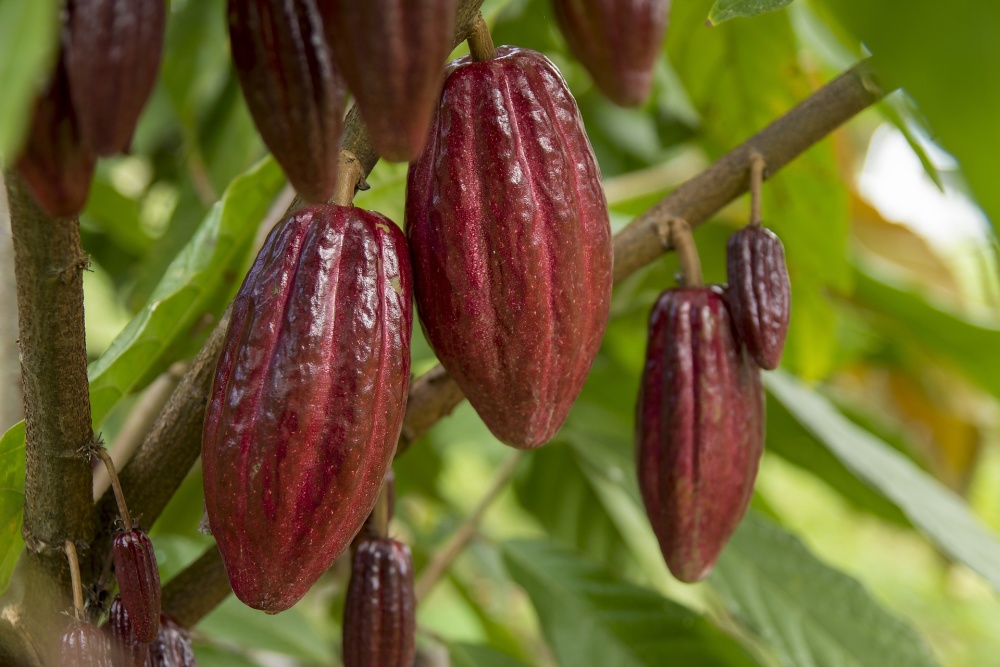
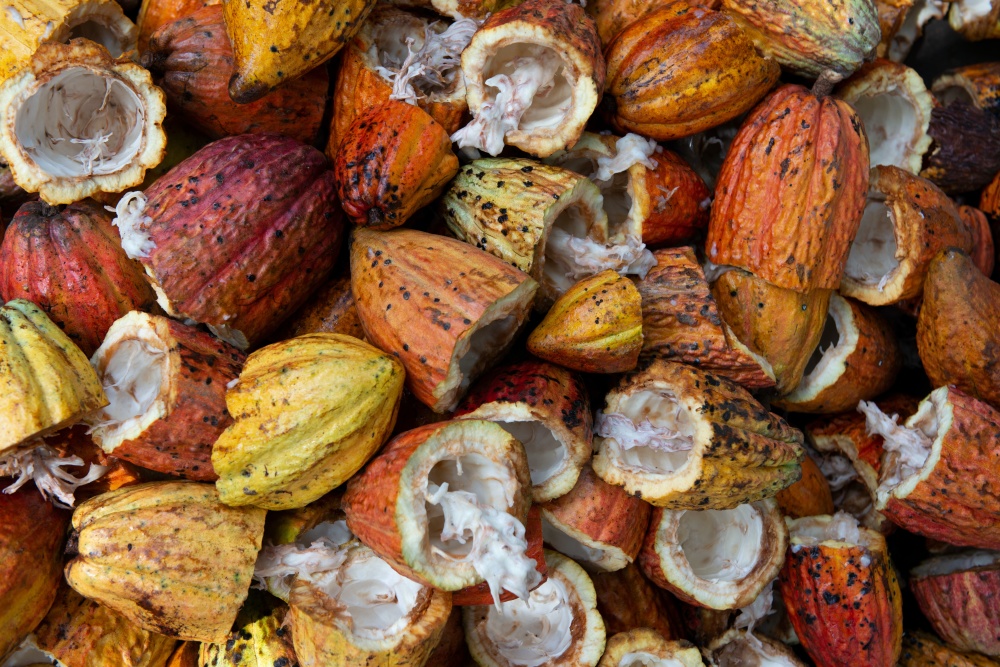
Cacao is a small tree whose fruit produces chocolate, one of the world's most beloved and craved foods. Botanists say cacao originates in the Amazon rainforests of South America. Still, its range expanded into other parts of tropical America before Columbus arrived, reaching as far north as the Yucatan Peninsula in Mexico.
Today, chocolate comes mostly from cacao trees on smallholder farms in both old and new cacao-producing regions, including the humid tropical regions of America, Africa, Asia, and the Pacific.
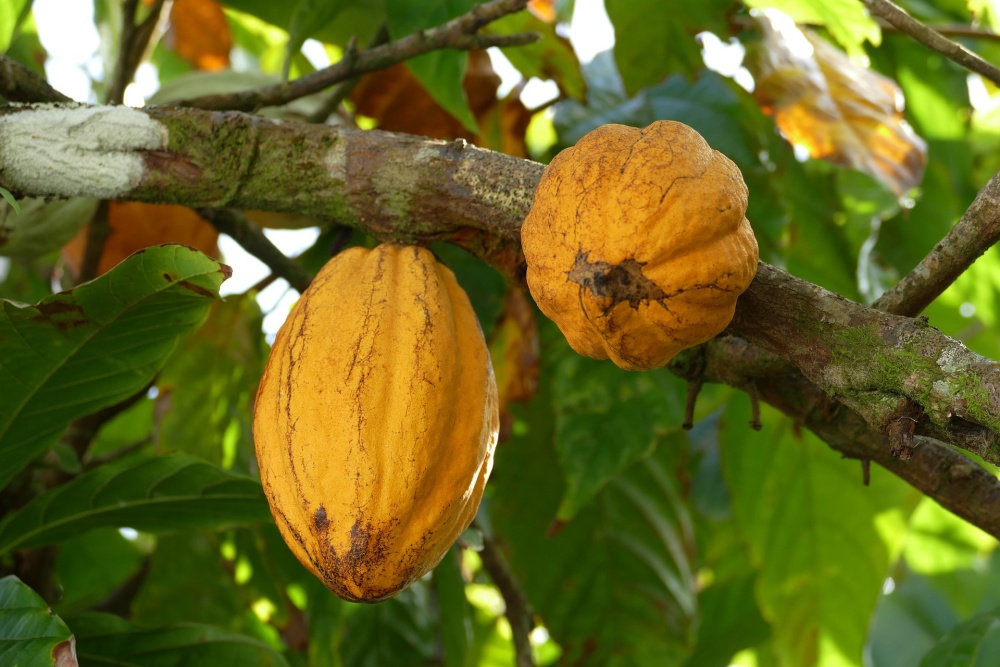
Cacao thrives in perpetually humid, equatorial forest environments and is an understory tree, accustomed to the shade of taller trees growing above it. It may reach up to 20 m (33 ft) in the wild, though it is typically 4 to 10 m (13 to 33 ft) tall in cultivation, with a slim, straight trunk. The bark is smooth, dark brown, and often mottled by lichens, mosses and algae, which thrive in the shade and humid conditions where the tree grows. Branching starts low on the trunk and is wide-spreading, forming first a pyramidal, then a rounded canopy.
Leaves are elongated-oval, pointed at the tip, 20 to 60 cm (6 to 18 in) long and ribbed on the surface. They emerge pale green, pink, or purple, become dark, glossy green, and are arranged alternately along the branches, where they remain in all seasons.
Flowers are small, five-petaled, creamy white, yellowish, or pink, and perfect, having both female and male parts. They are borne individually or in clusters of a few on the trunk and older branches, a botanical curiosity known as cauliflorous flowering. Rising humidity, brought on by the transition from the dry to the rainy season, encourages blooms. In areas with two rainy-season events a year, flowering and fruiting usually follow each event. Where the climate is perpetually wet or humid, flowering is intermittent to continuous.
Edible uses
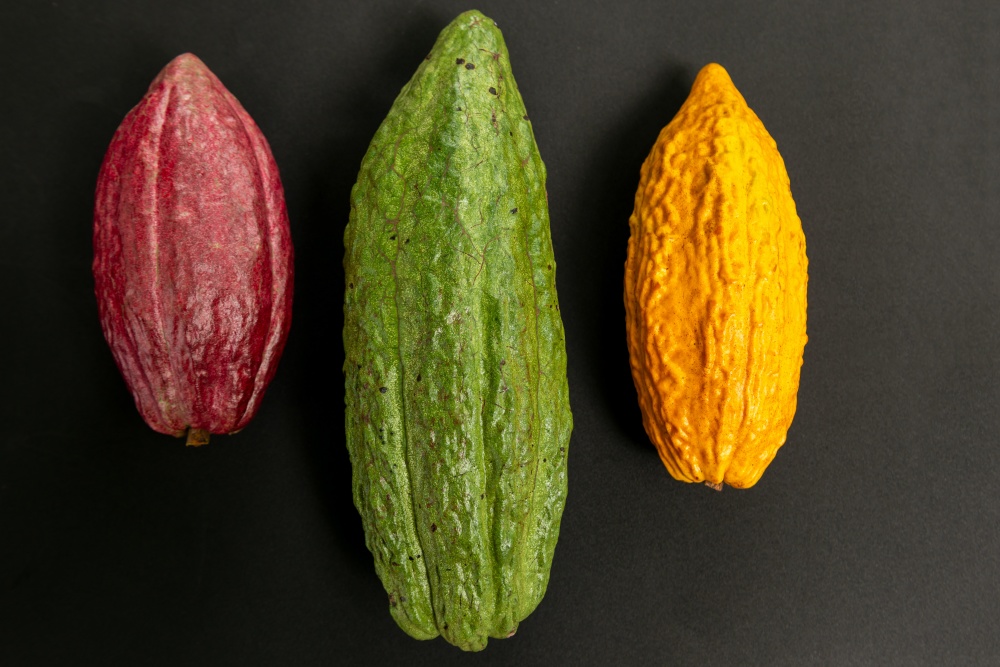
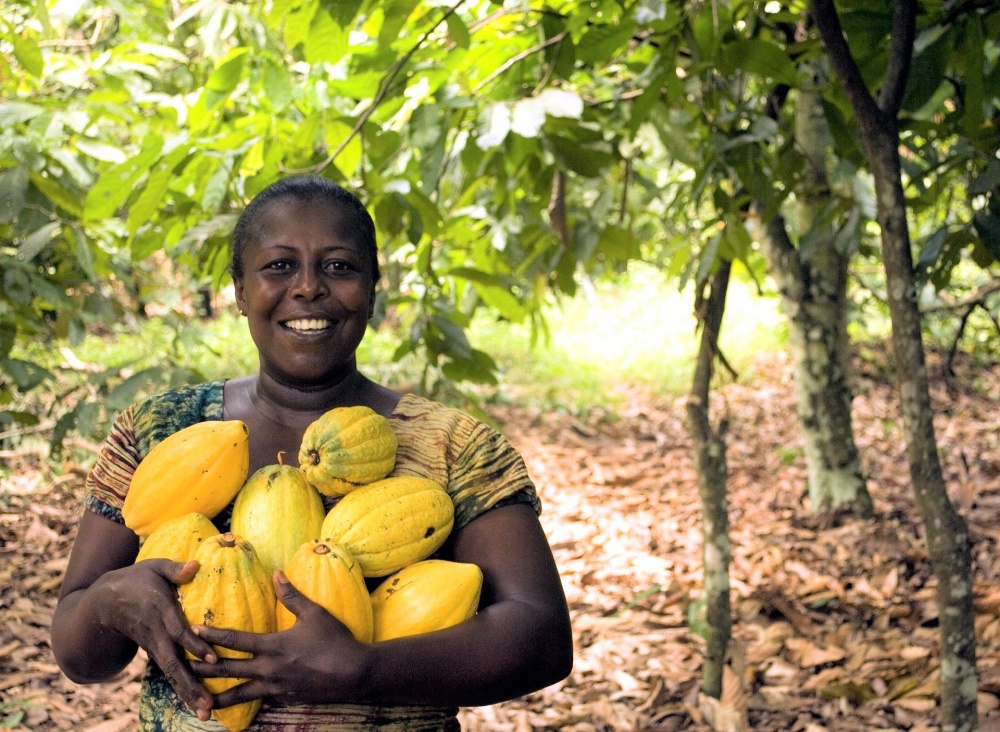
Sweets or confectionery - Chocolate production starts with the ripe cacao fruit, known as cacao pods. After harvest, they are split open, the beans extracted, and piled into heaps to ferment; the heaps are covered, traditionally with banana leaves, to retain heat, and stirred every couple of days to promote even fermentation, which completes after about six days. Fermentation is essential to producing quality chocolate, as only properly fermented beans develop a full chocolate flavour. The beans are then dried in the sun or artificially, reducing their moisture content from around 50% to 7% and making them stable for storage and transport.
At the chocolate factory, the beans are roasted, shelled, and ground into "cacao mass" or "cocoa liquor," the first liquid stage of the process, as liquefaction releases the beans' fat, known as cacao butter. Chocolate itself is made by mixing cacao mass with sugar and extra cacao butter, then smoothing the mixture through a mechanical process called conching, which removes grittiness for a silky-smooth result. Pure chocolate has a bitterish flavour, which sugar - and, depending on taste, milk - makes more agreeable, while cocoa butter, with a melting point close to body temperature, gives chocolate its distinctive melting mouthfeel.
Most chocolate is eaten as a sweet treat - in chocolate bars and as dark or milk chocolate, either pure or mixed with other ingredients such as nuts and fruit - and is also commonly melted and incorporated into cakes, pastries, and desserts.
Edible oil or fat - Cocoa butter is a solid, yellowish fat that whitens with age, is usually brittle below 25°C (77°F), has a melting point of 31 to 35°C (88 to 95°F), an agreeable aroma, and a bland, chocolate-like taste.
Beyond its role in chocolate, it's an expensive fat, which has led to a search for other edible fats as extenders or replacements - Cocoa Butter Equivalents (CBEs) - some of the better-known being Mango butter (from Mangifera indica), Kokum butter (from Garcinia indica), Illipe butter (from Madhuca longifolia), and Murumuru butter (fromAstrocaryum murumuru), along with Cupuacu butter (fromTheobroma grandiflorum), Shea butter (from Butyrospermum parkii), Sal butter (from Shorea robusta), Borneo tallow (from Shorea stenoptera), and Piney tallow (from Vatera indica). Some CBEs raise the chocolate's melting point, making it less likely to melt in warm conditions - useful for chocolate sold in tropical regions.
Natural flavouring - Cacao powder - made by removing some cacao butter from the cacao mass, then drying and grinding the rest - is used mainly in baked goods such as chocolate cake and pastries. Chocolate itself is also used to flavour savoury dishes and sauces, including "Mole," a traditional Mexican sauce made by blending chocolate with chillies, onions, garlic, nuts, and spices such as Cinnamon (Cinnamomum verum), Cloves (Syzygium aromaticum), and Allspice (Pimenta dioica).
Non-alcoholic drink - Cacao powder is also used in powdered drinking chocolate, and chocolate more generally is melted into drinks both hot and cold.
Alcoholic drink - Crème de cacao is a clear or dark brown vodka-based liquor flavoured with cacao beans and Vanilla (Vanilla planifolia), incorporated into fancy cocktails and desserts as a flavouring.
Juice - Pacha de Cacao is a juice made from the excess pulp around the beans. Cloudy and tropical-flavoured, it is reminiscent of pineapple, lychee, citrus, peach, pear, and honey.
Material uses
Natural cosmetic - As a solid fat that stays stable at room temperature but melts at body temperature, cocoa butter is valued in cosmetics for its skin-softening and lubricating qualities, in products such as lipsticks, skin creams, rouge, and nail whiteners.
Natural soap - And in soaps.
Natural carrier base - Cocoa butter is also used in ointments and suppositories as a base to carry medicines.
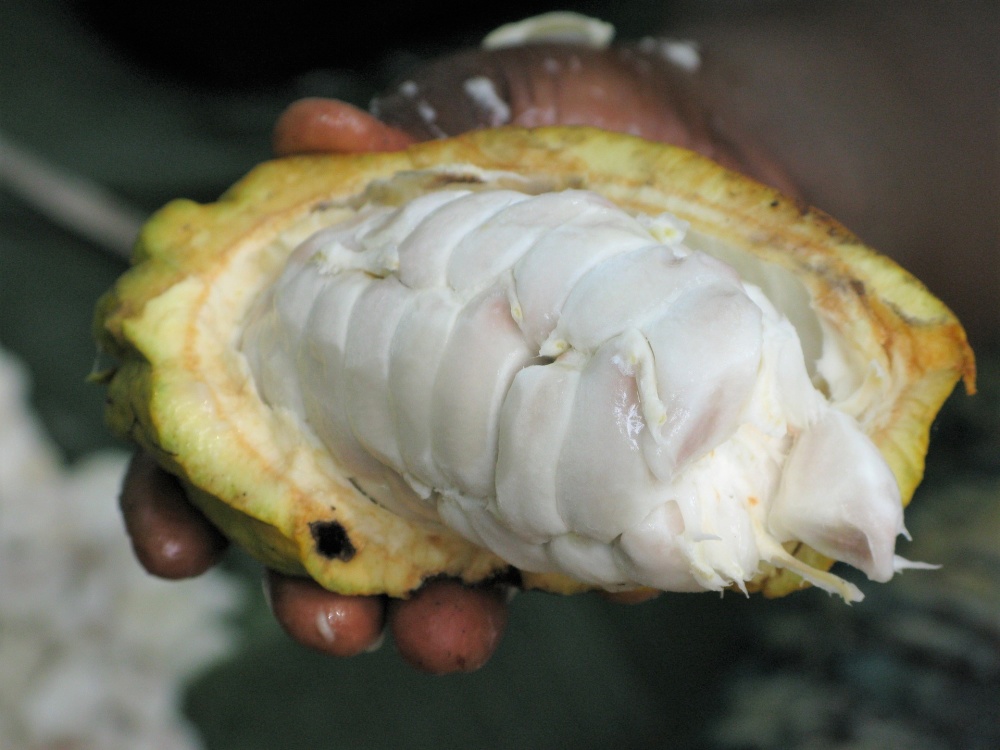
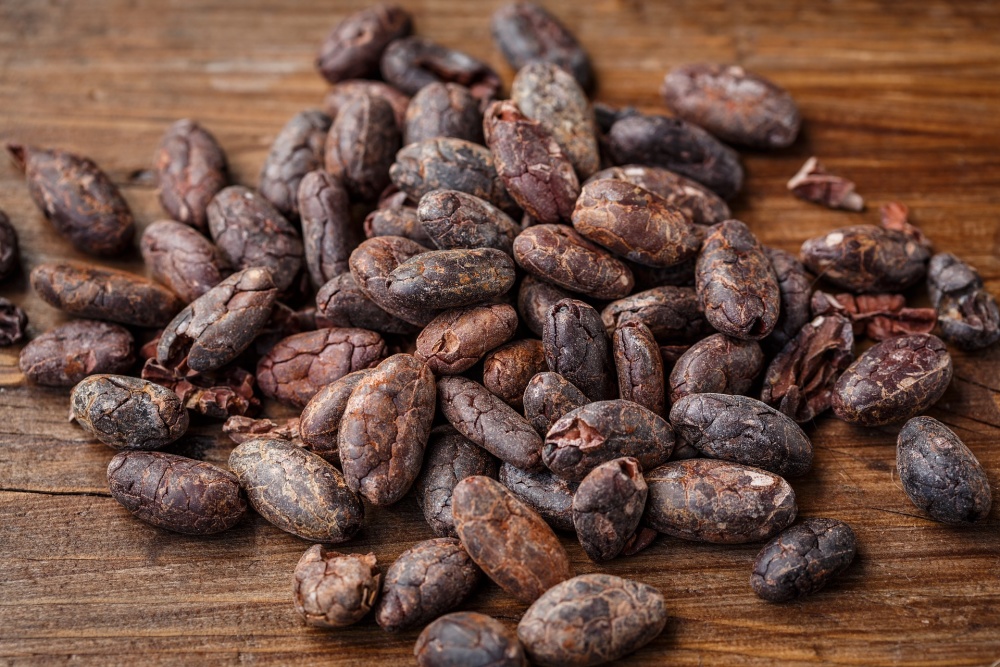
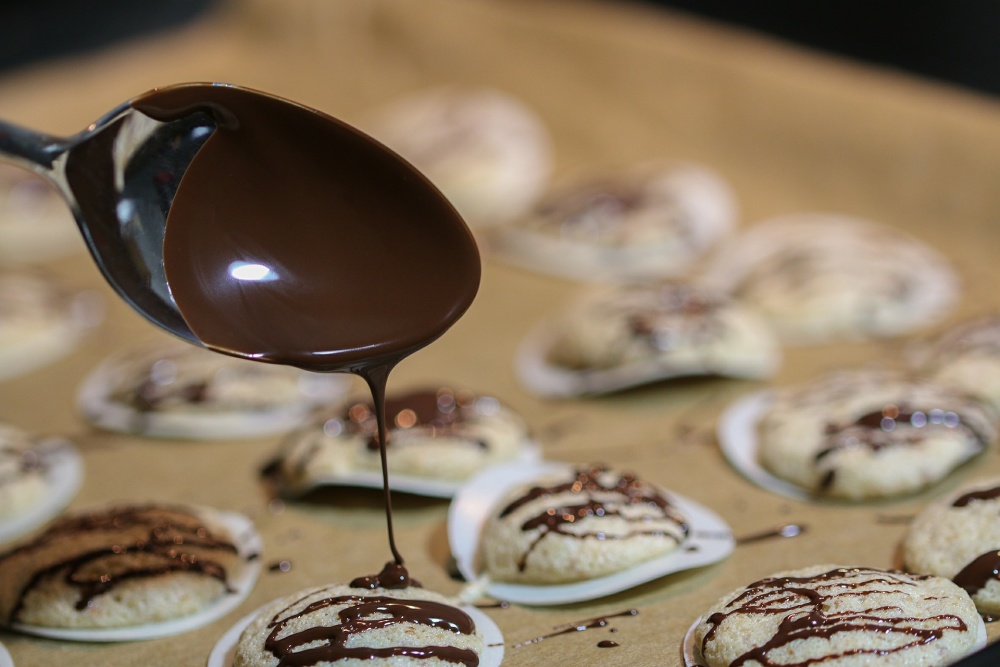
Photo by designerpoint from Pixabay
Climate
Cacao grows naturally in humid tropical climates, generally frost-free areas with annual lows of 18 to 25°C, annual highs of 27 to 35°C, annual rainfall of 1200 to 4000 mm and a dry season of 3 months or less, extending to 6 months with irrigation or groundwater (such as in the Yucatan, Mexico).
Cacao may not thrive where the average low of the coldest month is below 15 °C (59 °F).
Growing
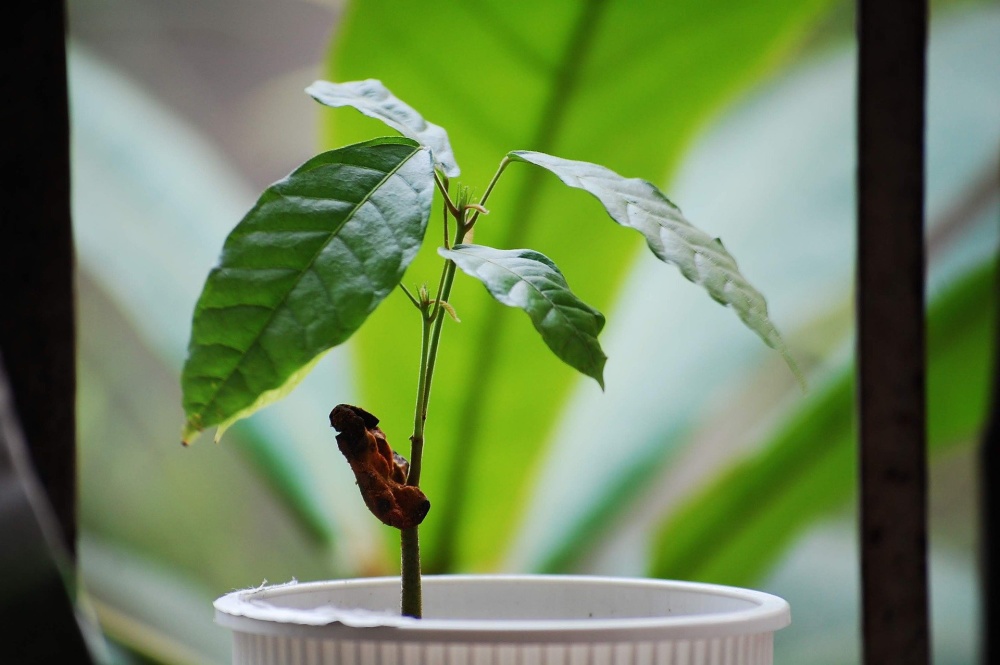
New cacao plants are started from seed or cuttings. However, seed-raised plants vary widely in yield, disease resistance, and other characteristics. Cuttings can provide more reliable results. These are usually taken from recently matured flushes on selected trees and should have around five to seven leaves and stems that are green but hard. They are placed cut-end in a free-draining potting mix, tended in a nursery and should be ready for planting out in around six months.
Performs best in deep, fast-draining, organically rich clay loam, loam, sandy loam, and loamy sand soils of a moderately acid to neutral nature, generally with a pH of 4.5 to 7.5, and on sites with light shade to partial sun exposure, with afternoon shading essential to prevent leaf scorch.
When clearing land to plant cacao, deliberately leaving some trees standing as a temporary or permanent shade is good practice. This not only helps minimise leaf scorch but also helps maintain the humid microclimate cacao thrives in. Planting under a fast-growing, short-lived perennial, such as Banana (Musa acuminata), is common practice in the absence of trees.
There are generally three types of cacao: 'Criollo', 'Trinitario' and 'Forastero'. Criollo and Trinitario beans are considered to have the best flavour but make up only about 10% of the world's production. Forastero cacao makes up the bulk and is produced mainly in West African countries such as Ghana, Cameroon, Nigeria, and the Ivory Coast.
Cacao trees start flowering and fruiting when three to five years old and continue bearing for another forty years. Under optimal conditions, cacao trees may yield up to 2,250 kgs of dry cacao beans per hectare per year (2000 lbs per acre per year), but less than a quarter of that on average.
Problem features
None known.
Where it grows
References
Books
-
Adams, C. D. 1972, Flowering plants of Jamaica, University of the West Indies, Mona, Greater Kingston
-
Attokaran, M. 2011, Natural food flavors and colorants, Institute of Food Technologists, Wiley-Blackwell Publishing, Oxfordshire
-
Barwick, M., et al. 2004, Tropical & subtropical trees : a worldwide encyclopaedic guide, Thames and Hudson, London
-
Brady, G. S. & Clauser, H. R & Vaccari, J. A. 2002, Materials handbook : an encyclopedia for managers, technical professionals, purchasing and production managers, technicians and supervisors, 15th ed., McGraw-Hill, New York
-
Chevallier, A. 2000, Encyclopedia of herbal medicine, 2nd American ed., Dorling Kindersley, New York
-
Culbreth, D. M. R. 1927, A manual of materia medica and pharmacology : comprising the organic and inorganic drugs which are or have been recognized by the United States pharmacopeia, 7th ed., Febiger, Philadelphia
-
Elevitch, C. R. & Thaman, R. R. 2011, Specialty crops for Pacific islands, 1st ed, Permanent Agriculture Resources, Hawaii
-
Food and Agriculture Organization of the United Nations (FAO) 1986, Food and Fruit-bearing Forest Species, 3 : Examples from Latin America, FAO Forestry Paper no 44/3, Rome
-
Francis, J. K. and Liogier, H. A. 1991, Naturalized exotic tree species in Puerto Rico, General technical report SO-82, USDA Forest Service, Southern Forest Experiment Station, New Orleans
-
Groom, N. 1997, The new perfume handbook, 2nd ed., Blackie Academic & Professional, London
-
Gunstone, F. D. 2011, Vegetable oils in food technology : composition, properties and uses, 2nd ed, Wiley-Blackwell, Hoboken, New Jersey
-
Jamieson, G. S. 1943, Vegetable fats and oils : their chemistry, production, and utilization for edible, medicinal and technical purposes, 2d ed, Reinhold, New York
-
Jensen, M. 1999, Trees commonly cultivated in Southeast Asia : an illustrated field guide, 2nd ed., Food and Agricultural Organisation of the United Nations (FAO) Regional Office for Asia and the Pacific (RAP), Bangkok
-
Khan, I. A. & Abourashed, E. A. 2010, Leung's encyclopedia of common natural ingredients : used in food, drugs and cosmetics, 3rd edition, Wiley Publishing, Hoboken, New Jersey
-
Little, E. L. et al. 1964 and 1974, Common trees of Puerto Rico and the Virgin Islands (2 volumes), Forest Service, U.S. Department of Agriculture (USDA), Washington D.C.
-
Lorenzi, H. 2002, Brazilian trees : a guide to the identification and cultivation of Brazilian native trees. Vol. 1, 4. ed, Instituto Plantarum de Estudos da Flora, Nova Odessa, Sao Paulo
-
Marshall, E. (Elaine) & Schreckenberg, Kathrin & Newton, A. C & UNEP World Conservation Monitoring Centre 2006, Commercialization of non-timber forest products : factors influencing success : lessons learned from Mexico and Bolivia and policy implications for decision-makers, UNEP World Conservation Monitoring Centre, Cambridge
-
McIlroy, R.J. 1963, An introduction to tropical cash crops, Ibadan University Press, Ibadan, Nigeria
-
Mollison, B. 1993, The permaculture book of ferment and human nutrition, Tagari Publications, Tyalgum, New South Wales
-
Mors, W. B & Rizzini, C. T. 1966, Useful plants of Brazil, Holden-Day Publishing, San Francisco, California
-
Parkinson, R. 1999, Culinaria : The Caribbean a culinary discovery, 1st. ed, Koìln: koìnemann, Germany
-
Randall, R. P. 2002, A global compendium of weeds, R.G. and F.J. Richardson Press, Melbourne
-
Stewart, A. 2013, The drunken botanist : the plants that create the world's great drinks, 1st ed., Algonquin Books, Chapel Hill, North Carolina
Articles, Journals, Reports and Working Papers
-
Watson, B.J., & Moncur, M. 1985, Guideline criteria for determining survival, commercial and best mean minimum July temperatures for various tropical fruit in Australia (Southern Hemisphere), Department of Primary Industries Queensland (DPI QLD), Wet Tropics Regional Publication, Queensland