


Common name: Areca
Other common names: Areca Nut, Betel Nut, Betel Palm
Description
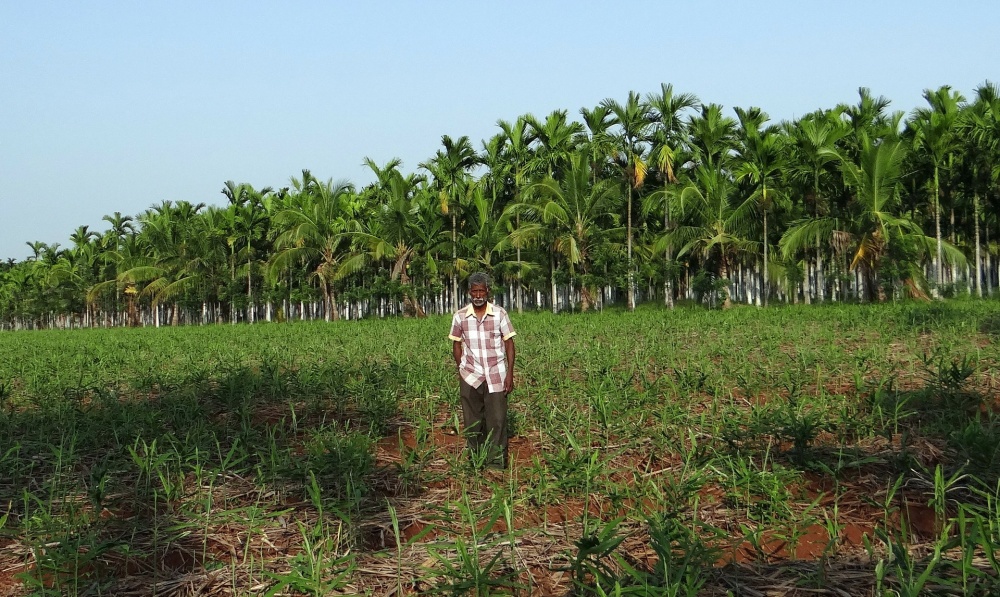
Areca catechu is an elegant, tall palm native to coastal India and Southeast Asia, long cultivated for its fruit, whose seed is a popular masticatory.
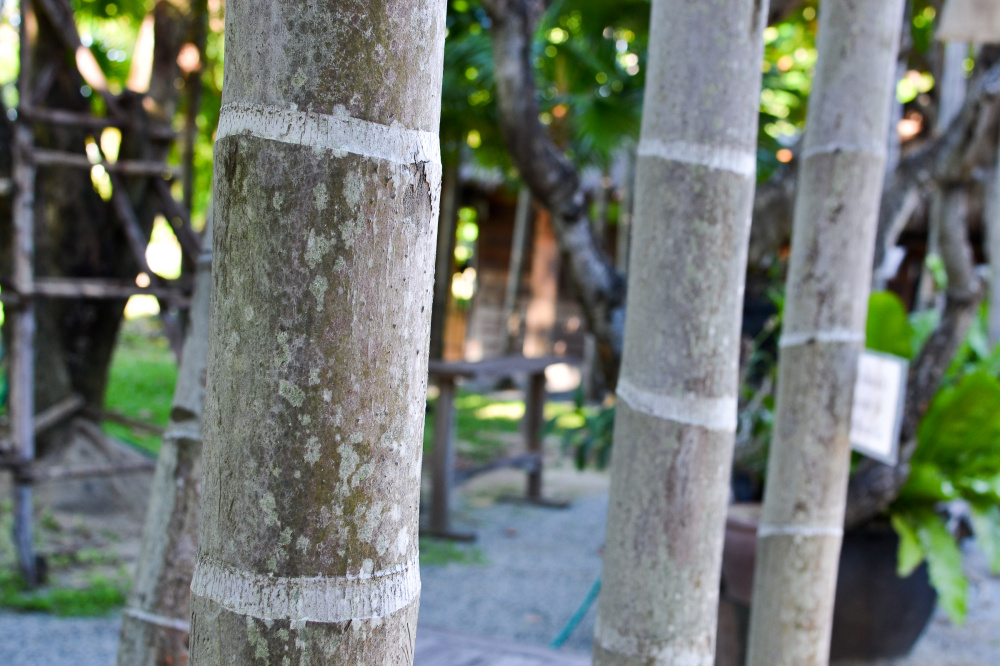
It may reach up to 30 m (100 ft), though it is more typically 15 to 20 m (50 to 65 ft) tall, with an ultra-slim, tall-palm appearance. The trunk is pencil-shaped, smooth, grey, and distinctly ringed, supporting a crown of large, arching leaves 1.5 to 2 m (5 to 6.5 ft) long atop a smooth green crownshaft.
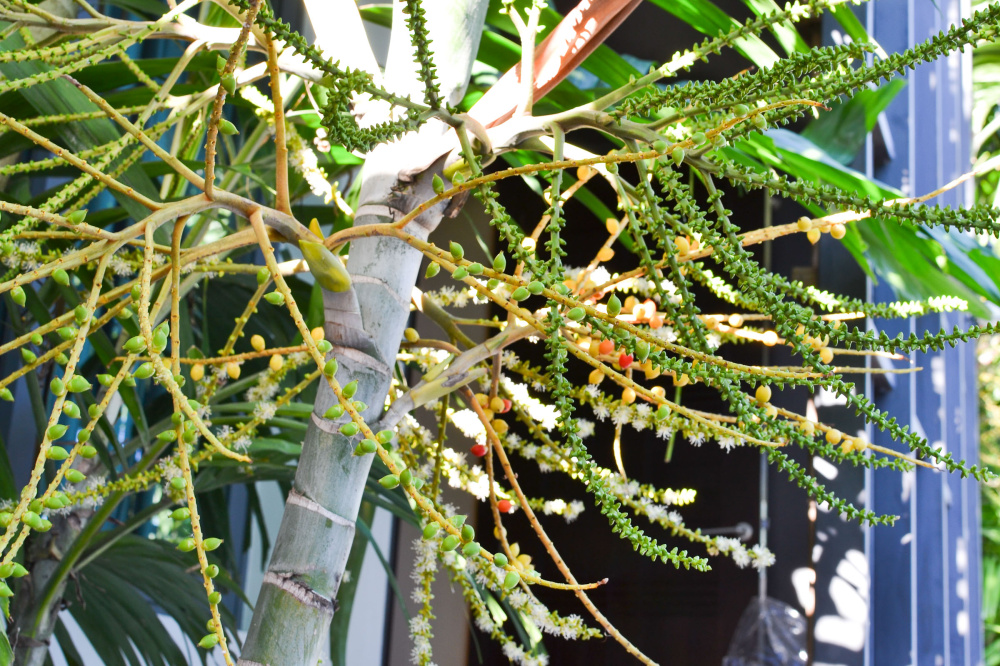
Flowering is seasonal in areas with a distinct dry season but continuous in humid areas. The flowers are small, pale yellow, and either female or male, held in large branched flower-stalks arising at the base of the crownshaft. Male flowers open before the female ones and fall before the latter open, ensuring cross-pollination with other plants.
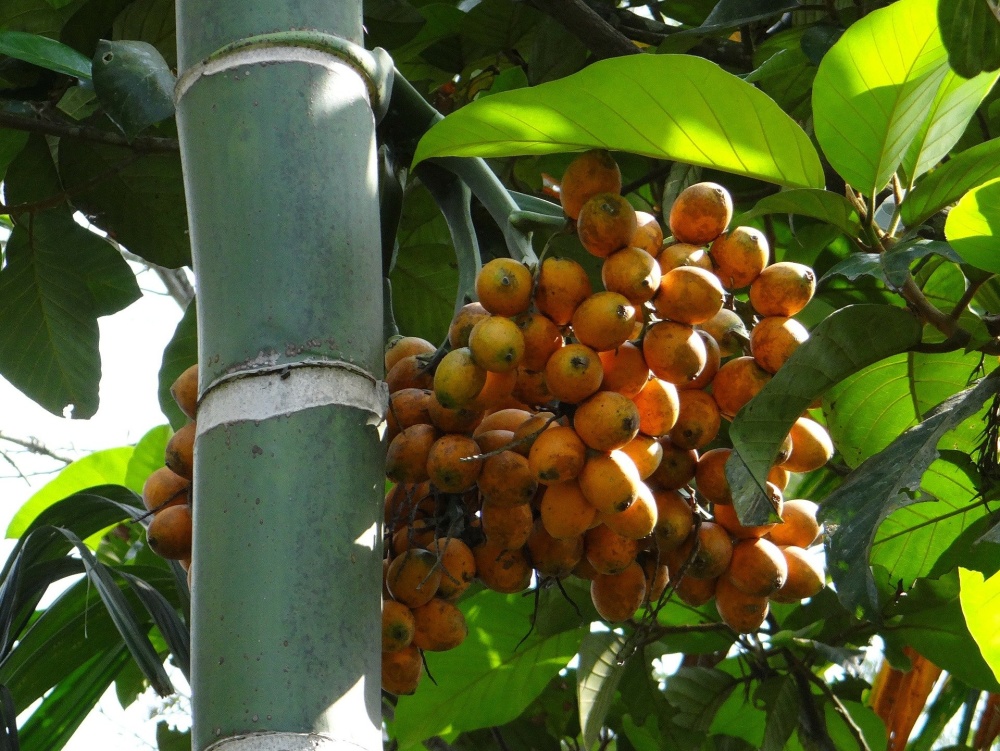
The flowers are followed by egg-shaped fruit about 5 cm (2 in) long, green when young and becoming orange, less commonly scarlet, when ripe. They have a hard, fibrous husk surrounding a single seed and ripen approximately 8 months after fruit set.
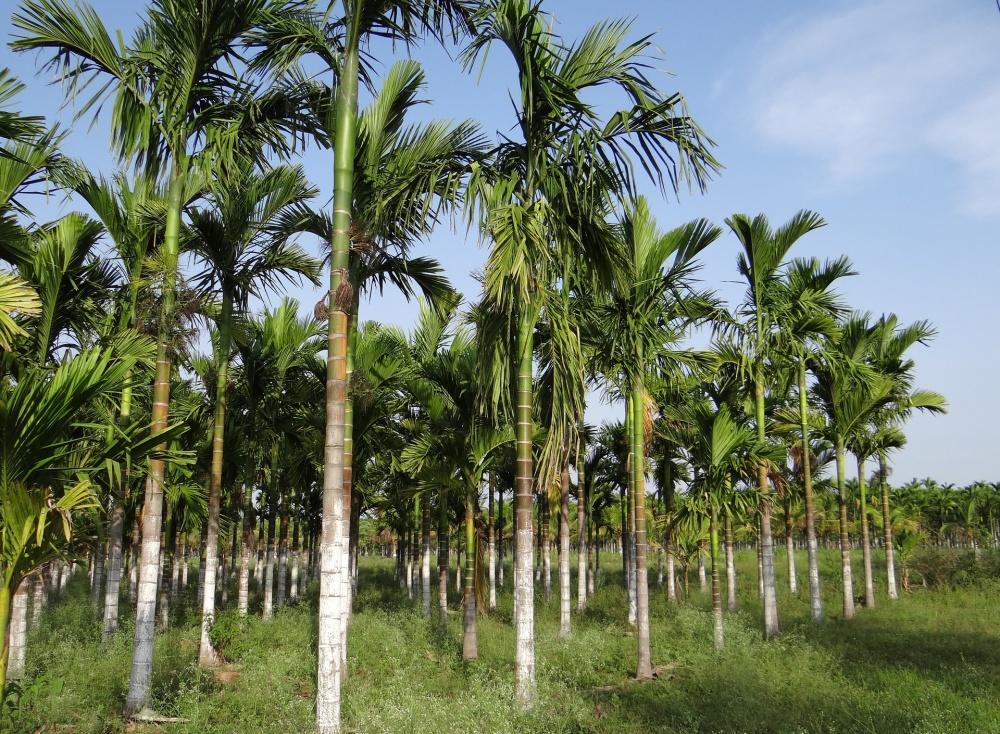
Photo by Bishnu Sarangi from Pixabay
Material uses
Vegan leather - The leaf base, also known as the leaf-sheath, has a wide range of uses, some of which are only now being explored. It is the part of the leaf that wraps around the trunk to form the crownshaft and is a tough, fibrous material similar to leather. After the old leaves have died and fallen, the leaf bases are gathered from the ground. They are large, curved pieces that, after being flattened into rectangular sheets, are washed and cut into shapes to make sandals, baskets, and other traditional items.
Natural packaging - Today, with growing concerns about plastic waste, more are being made into biodegradable materials to replace disposable plastic plates and food containers. Although mostly confined to India and Malaysia, where large Areca palm plantations exist, demand from overseas markets has created new export opportunities for these environmentally friendly products.
Veterinary use - One of the alkaloids present in betel nut is 'Arecoline', a potent vermifuge with a history of use in veterinary medicine as a worming agent for dogs and other animals.
Environmental uses
Foliage ornamental - The palm's slender, graceful form makes it ideal for gardens, either singly or in groups of three or more.
Seaside garden plant - It has some tolerance to soil salinity, though less than Coconut (Cocos nucifera), which makes it suitable for seaside gardens, but only at some distance from the shoreline.
Health uses
Natural digestive aid - In India, betel leaf parcels known as 'Pan' are chewed as an after-dinner digestive to combat post-meal sluggishness.
Natural dental care - Also in India, the seeds are burnt to charcoal, then powdered into a dentifrice mixed with water and applied to a toothbrush to whiten teeth. This is achieved by the charcoal's abrasive action, which removes deposits such as stains, plaque and tartar.
Natural stimulant - The seed of ripe fruit is used as a masticatory by about a tenth or more of the world's population, which represents hundreds of millions of people. After being extracted from the fruit, the seed is thinly sliced, boiled to reduce tannin content, and then dried, usually in the sun.
The dried pieces are mixed with other ingredients, usually chewing tobacco and spices, wrapped in Betel Pepper (Piper betle) leaves, and chewed. The spices and flavourings that accompany betel nut vary by region. It may include Cardamom (Elettaria cardamomum), Clove (Syzygium aromaticum), Tamarind (Tamarindus indica), and slaked-lime paste derived from limestone.
Alkaloids in betel nut act as stimulants and appetite suppressants, with the former being the main benefit sought by those who consume it.
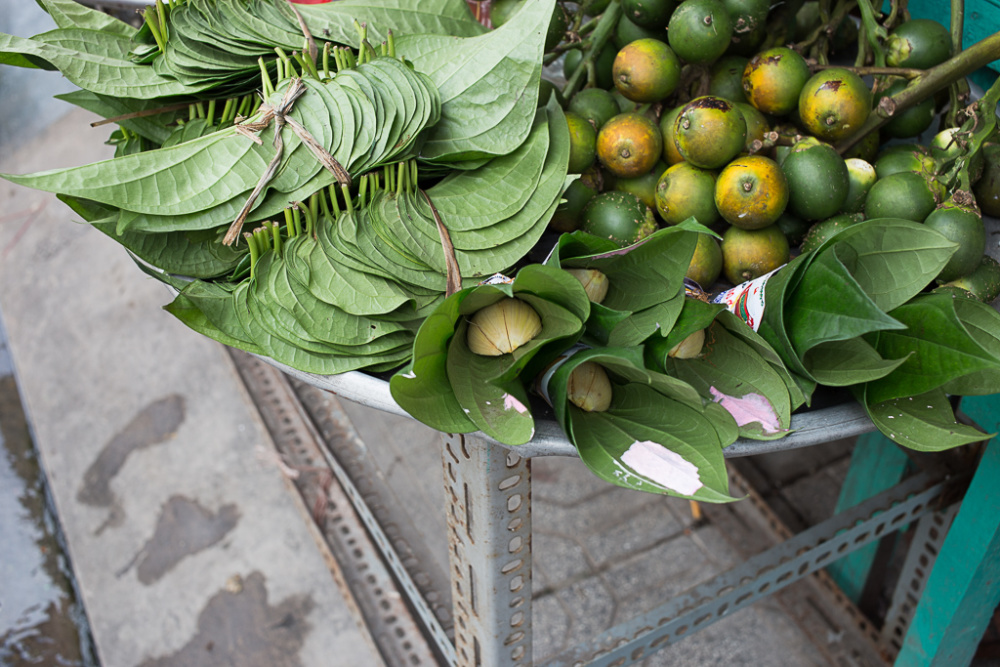
Pieces of Betel Nut wrapped in Piper Betel leaves
Climate
Areca grows naturally in humid tropical climates, generally in frost-free areas with annual lows of 18 to 25°C, annual highs of 27 to 35°C, annual rainfall of 1300 to 6000 mm and a dry season of 5 months or less, extending to 7 months with irrigation.
Growing
New plants are usually started from seed, which germinate readily and are best sown in deep containers with a free-draining potting mix. Young seedlings are then grown in a nursery and in shade until they develop at least three to four leaves, then are planted out. In seasonally dry areas, it is common practice to plant the seedlings under a fast-growing tree to provide shade for their first few years.
Performs best on free-draining clay loam, loam, and sandy loam soils that are moderately acidic to moderately alkaline, generally with a pH of 5.0 to 8.0, and on sites with full to partial sun exposure. It has poor tolerance to drought and slow-draining or waterlogged soils.
Acrea palms start to flower and fruit when about six to eight years old.
Problem features
Chewing betel nut is strongly associated with several major health problems, including heart disease and oral cancer. However, betel nut is often chewed with tobacco, slaked lime, and betel leaf, and it is unclear how much each contributes to disease.
When Betel Nut seed is ingested, it is known to cause vomiting, diarrhoea, irregular heartbeat, respiratory problems, convulsions, and coma.
Areca is recorded as a weed in East Africa, though not as a serious weed or invasive species. It is assessed as a low weed risk species for Hawaii by the Hawaii Pacific Weed Risk Assessment project (HPWRA)
Pollen released by the male flowers can cause hay fever in some people.
Where it grows
References
Books
-
Blombery, A. M. & Rodd, A. N. 1992, An informative, practical guide to palms of the world : their cultivation, care and landscape use, (Revised edition), Angus & Robertson, North Ryde, New South Wales
-
Dastur, J. F. 1964, Useful plants of India and Pakistan : a popular handbook of trees and plants of industrial, economic, and commercial utility, 2nd ed., D. B. Taraporevala Sons, Bombay
-
Elevitch, C. R. 2006, Traditional trees of Pacific Islands: their culture, environment and use, 1st edition, Permanent Agriculture Resources, Holualoa, Hawaii
-
Fawcett, W. 1891, Economic plants, An index to economic products of the vegetable kingdom in Jamaica, Jamaica Government Printing Establishment, Kingston
-
Holttum, R. E. & Enoch, I. C. 2010, Gardening in the tropics : the definitive guide for gardeners, Marshall Cavendish Editions, Singapore
-
Janick, J., & Paull, R. E. 2008, The encyclopedia of fruit & nuts, CABI Publishing, Wallingford, Oxfordshire
-
Jensen, M. 1999, Trees commonly cultivated in Southeast Asia : an illustrated field guide, 2nd ed., Food and Agricultural Organisation of the United Nations (FAO) Regional Office for Asia and the Pacific (RAP), Bangkok
-
Macmillan, H. F. 1943, Tropical planting and gardening : with special reference to Ceylon, 5th ed, Macmillan Publishing, London
-
Murty, A.J.S., Samba, S. & Subrahmanyam, N.S. 1989, A Textbook of Economic Botany, Wiley Eastern Limited, New Delhi
-
Nguyen, V. D. & Doan, T. N. 1989, Medicinal plants in Vietnam, World Health Organization (WHO), Regional Office for the Western Pacific, Manila, Institute of Materia Medica, Hanoi
-
Parrotta, J. A. 2001, Healing plants of peninsular India, CABI Publishing, Wallingford, Oxfordshire
-
Perkins, K. D. & Payne, W. 1981, Guide to the poisonous and irritant plants of Florida, Florida Cooperative Extension Service, Gainesville, Florida
-
Purseglove, J. W. 1981, Tropical crops: Monocotyledons, Longman, Harlow, London
-
Rosengarten, F. 1984, The book of edible nuts, Walker and Company Publishing, New York
-
Selvam, V. 2007, Trees and shrubs of the Maldives, Food and Agriculture Organisation (FAO) RAP publication (Maldives), Thammada Press Company Ltd., Bangkok
-
Thomson, G. 2007, The health benefits of traditional Chinese plant medicines : weighing the scientific evidence, Rural Industries Research and Development Corporation (RIRDC), Barton, Australian Capital Territory