

Common name: La Lot
Other common names: Betel Leaf, Lalot, Lolot, Piper Lolot, Pointed Pepper, Wild Pepper
Description
La Lot is a Black Pepper (Piper nigrum) relative that originated in wet forested areas of Southeast Asia, with its natural range extending from Thailand through Laos and Cambodia to Vietnam, where people have long eaten its leaves as a vegetable. More recently, people migrating from that region to other parts of the world have introduced the plant to places such as Australia and Hawaii, where it is now being cultivated.
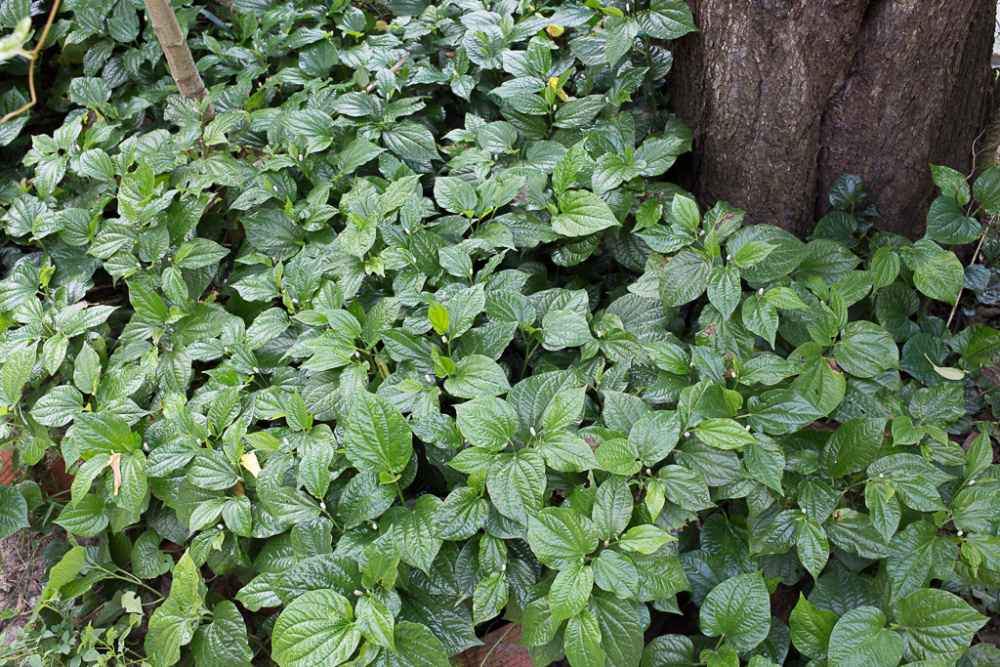
It is a perennial herb made up of clumps of erect leafy stems 40 to 60 cm (1.3 to 2 ft) tall and creeping stems branching off in all directions along the ground, all of which arise from underground rhizomes. The creeping stems quickly colonise new ground and form new clumps, eventually filling empty spaces to create a dense, leafy groundcover.
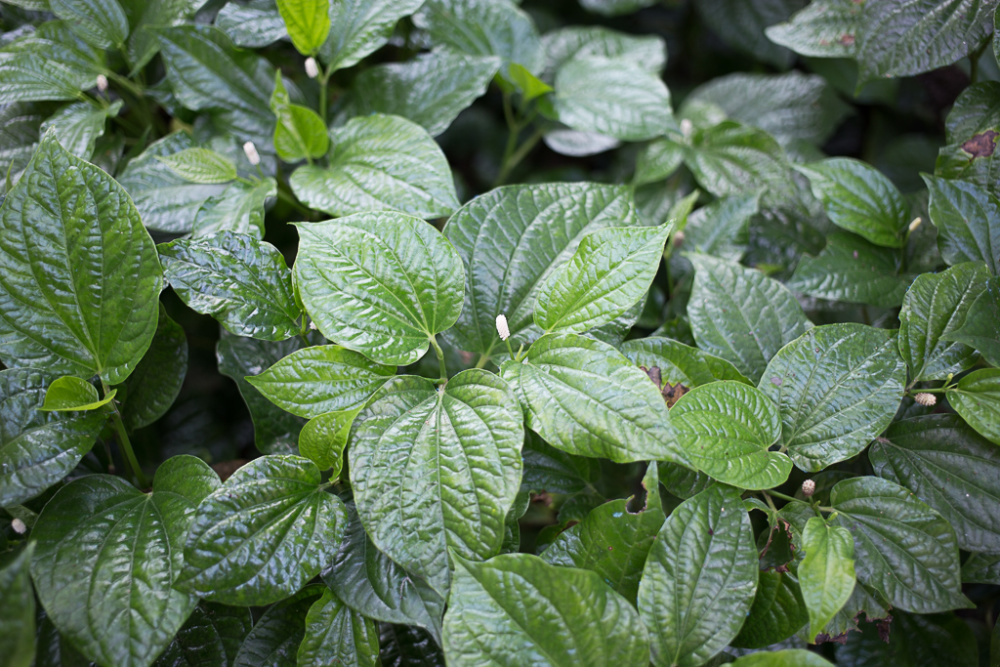
Leaves are typical of the Pepper (Piper) family, heart-shaped with smooth margins, dark glossy green on top with prominent ribbing or veining, and dull green underneath. They range from 10 to 17 cm (4 to 7 in) and are alternately and spirally arranged along the stems.
Flowers are tiny, white, becoming green, either female or male, and closely arranged on cylindrical spikes 1 to 1.5 cm (0.5 to 0.6 in) long, arising at nodes along the stems. Fertilised female flowers are followed by tiny round fruit enclosing a single seed, though they are rarely produced.

The leaves are heart-shaped
Edible uses
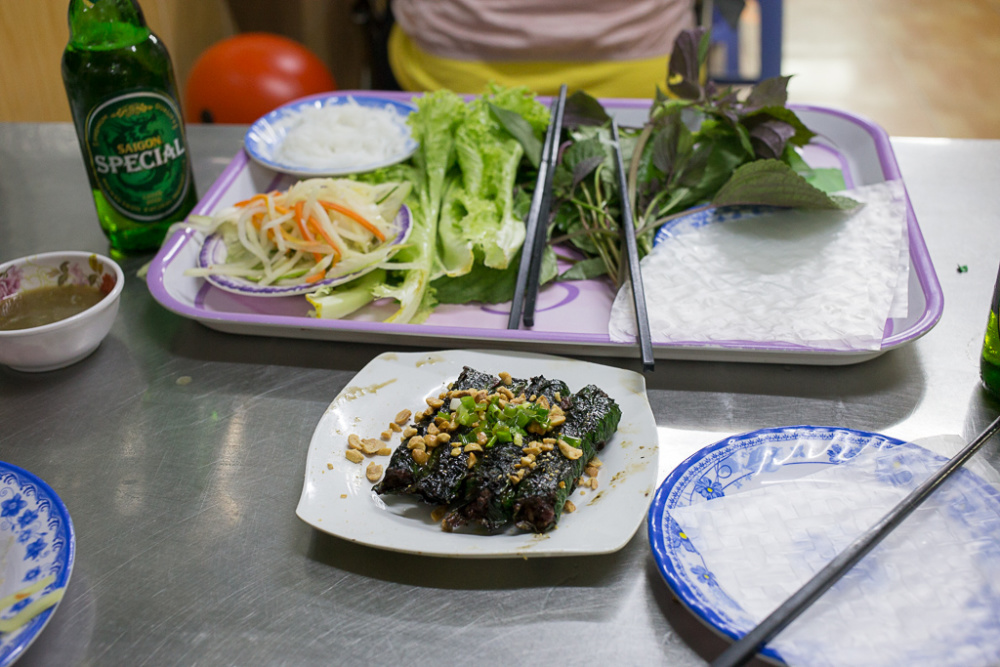
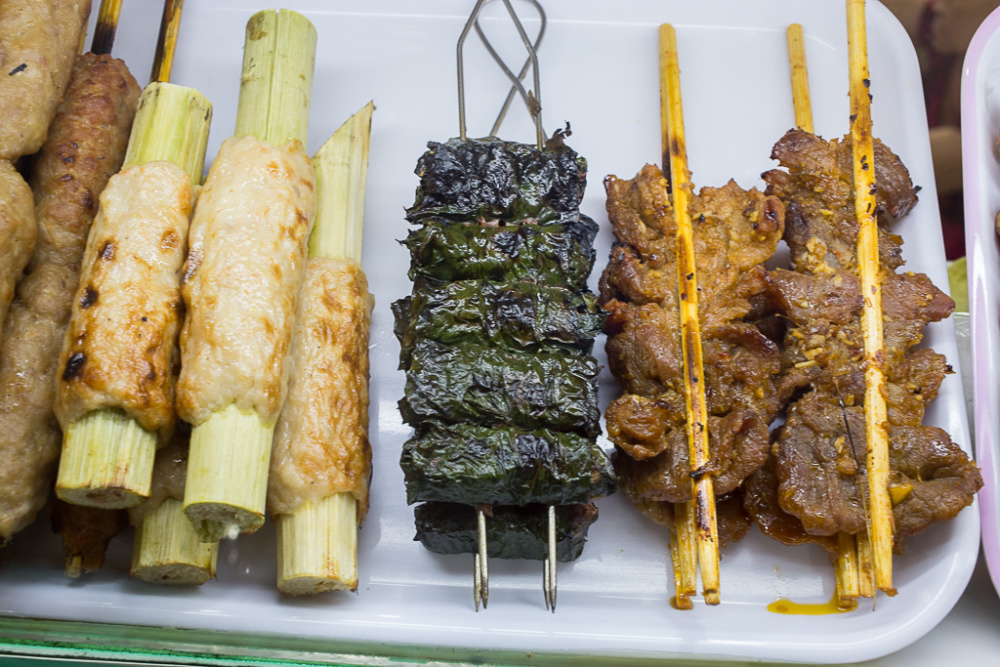
Culinary herb - The tender young leaves are used in Asian cooking, particularly in Thailand and Vietnam. In Vietnam, they are usually washed, dampened, and used to wrap seasoned ground meat into small parcels. The parcels are then grilled over hot coals and brushed with oil to keep them moist. After grilling, they are served with steamed rice or rice noodles, Vietnamese dipping sauce (nuoc-cham) and a selection of fresh herbs, including Beefsteak Mint (Perilla frutescens). In some areas, people shallow-fry the parcels instead of grilling them.
In Thailand, people more commonly use the leaves to wrap peanuts, roasted coconut, ginger, dried shrimp, and other flavour-packed ingredients into parcels eaten as a snack. They are also used as a decorative garnish and are sometimes added to Thai curries.
La Lot is often confused with Betel Pepper (Piper betle), whose leaves are used to wrap pieces of Betel Nut (Areca catechu) into parcels for chewing, a popular masticatory in India, Southeast Asia, and the Pacific region.
Health uses
In Southeast Asia, people use the roots in traditional medicine as a diuretic and to treat coughs and asthma.
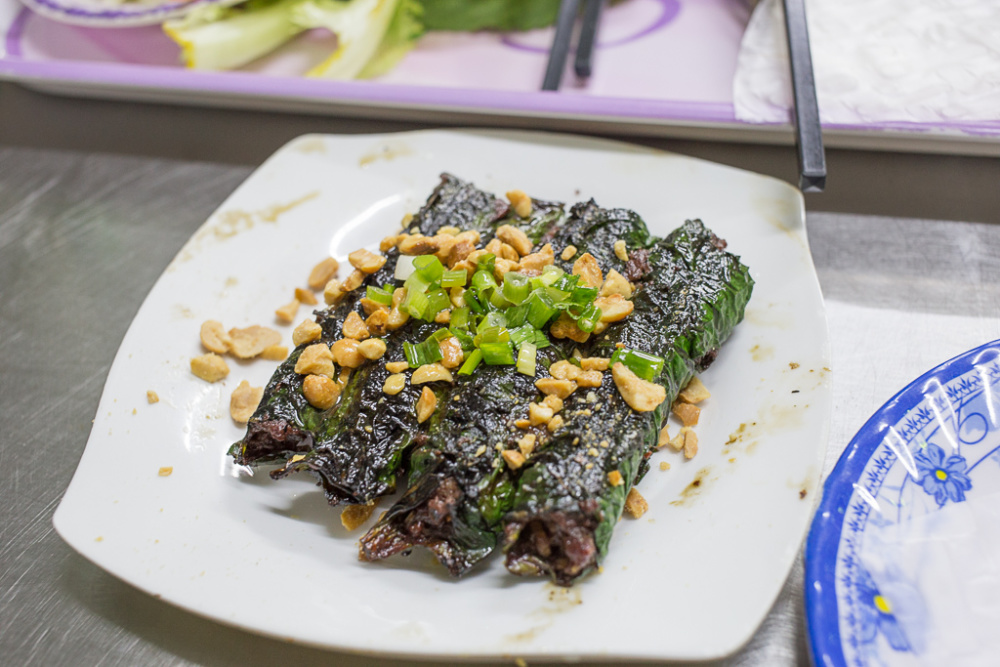
Grilled leaf parcels (Ho Chi Minh, Vietnam)
Climate
La Lot grows naturally in humid subtropical and tropical climates, generally frost-free areas with annual lows of 13 to 25°C, annual highs of 22 to 35°C, annual rainfall of 1200 to 5000 mm and a dry season of 5 months or less.
La Lot can also be grown in pots or containers in cooler climates if it can be moved indoors when frost threatens, or temperatures consistently fall below 15°C (59°F).
Growing
New plants are grown from cuttings or are produced by dividing mature clumps into smaller sections for planting.
Performs best in rich, moist loam soils that are moderately acidic to neutral, generally with a pH of 5.0 to 7.0, and in partial sun or light shade. At least part of the plant should be under permanent shade and be mulched, especially in areas at the lower end of its rainfall range and with a harsh dry season, or on soils that dry out quickly.
Problem features
La Lot is listed as a weed in at least one reference publication. Still, there appears to be no record of it as a serious weed or invasive species anywhere in the world, despite its introduction and widespread cultivation outside its native range. However, escapee plants can quickly colonise shaded forest floors, particularly in high-rainfall areas, and can become difficult to eradicate.
Where it grows
References
Books
-
Adams, C. D. 1972, Flowering plants of Jamaica, University of the West Indies, Mona, Greater Kingston
-
Jacquat, C. & Bertossa, G. 1990, Plants from the markets of Thailand : descriptions and uses of 241 wild and cultivated plants, with 341 colour photographs, Editions Duang Kamol, Bangkok
-
Martin, F. W & Ruberte, R. M. 1975, Edible leaves of the tropics, U.S. Agency for International Development (USAID), and the Agricultural Research Service, U.S. Department of Agriculture (USDA), Mayaguez, Puerto Rico
-
Norrington, L. & Campbell, C. 2001, Tropical food gardens : a guide to growing fruit, herbs and vegetables in tropical and sub-tropical climates, Bloomings Books, Hawthorn, Victoria
-
Randall, R. P. 2002, A global compendium of weeds, R.G. and F.J. Richardson Press, Melbourne
-
Seidemann, J. 2005, World spice plants: economic usage botany taxonomy, Springer-Verlag, Berlin
-
Staples, G. & Kristiansen, M. S. 1999, Ethnic culinary herbs : a guide to identification and cultivation in Hawaii, University of Hawaii Press, Honolulu