

Common name: Nopal
Other common names: Barbary Fig, Cactus Pear, Indian Fig, Mission Prickly Pear, Prickly Pear
Description
Nopal (aka Prickly Pear) is a fruit-bearing cactus that also produces edible stems used as a vegetable, animal fodder, and, more recently, for vegan leather. Its precise origins are unknown, but its cultivation in central Mexico since pre-Columbian times suggests it is native to the region.
It is either bushy or tree-like, with a semi-woody trunk, and may reach up to 7 m (23 ft) tall, with a crown diameter of 3 m (10 ft), though it is more typically 2 to 3 m (6 to 10 ft) tall. Growth is fast under ideal conditions but slows when it lacks moisture or heat.
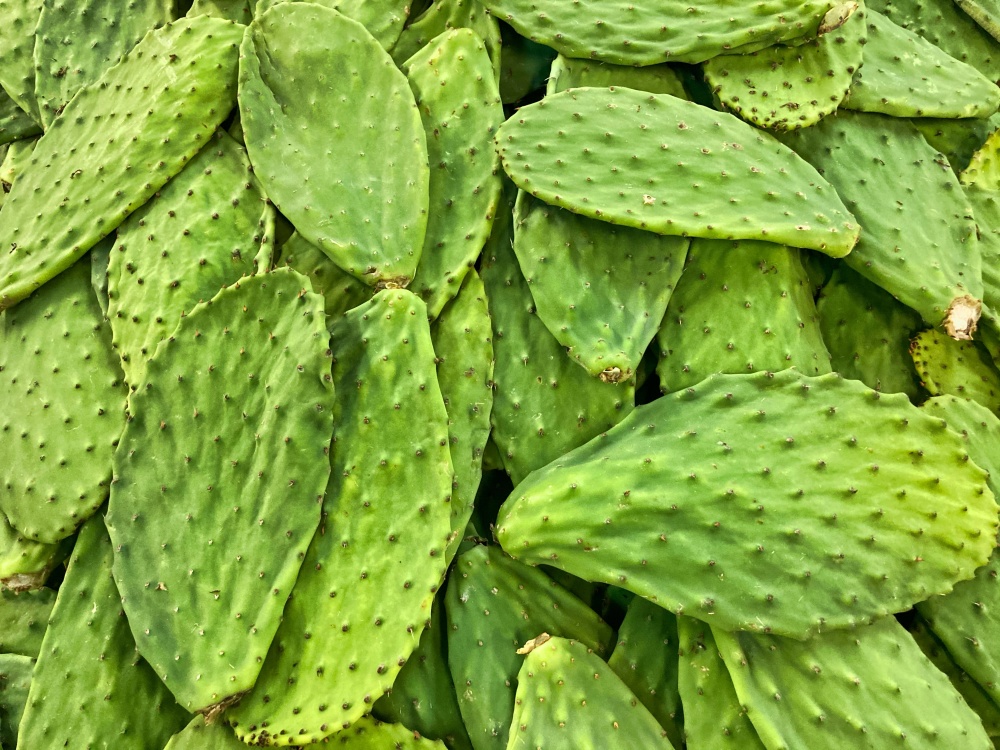
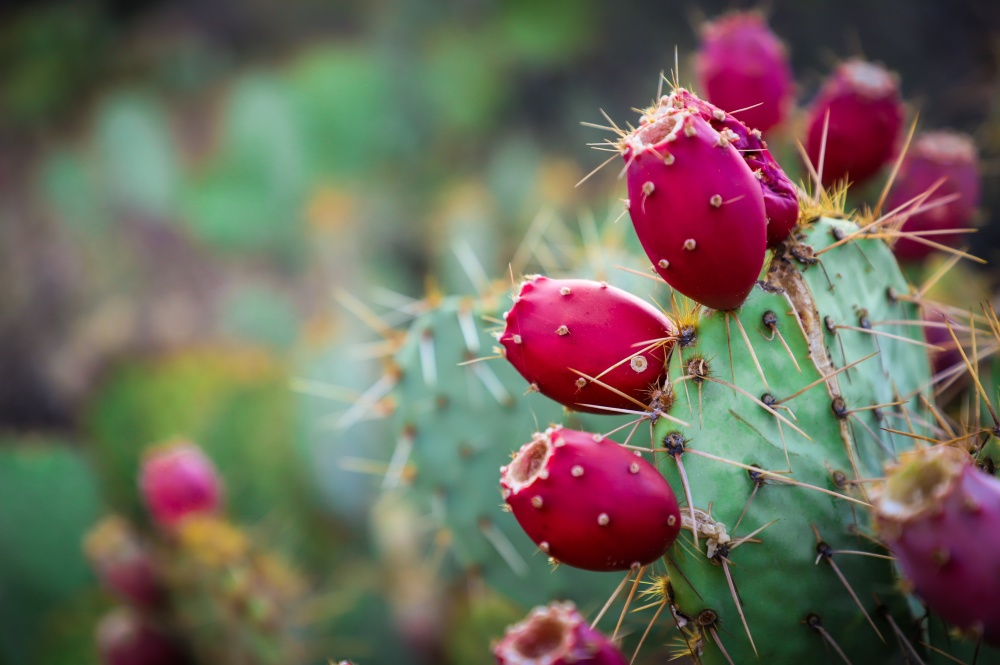
Most of the plant consists of modified stems known as cladodes, commonly called paddles, which are oblong and large when fully grown, measuring 30 to 40 cm (12 to 16 in) long and 2 cm (0.75 in) thick. Depending on the variety, they have thin, smooth green skin, less commonly grey, dotted with clusters of short, sharp spines, or are near spineless. The core is firm with a crisp yet slimy texture. Vegetative buds emerge where sunlight exposure is highest, mainly along the top margin, and produce additional paddles, creating step-like branching as the process repeats.
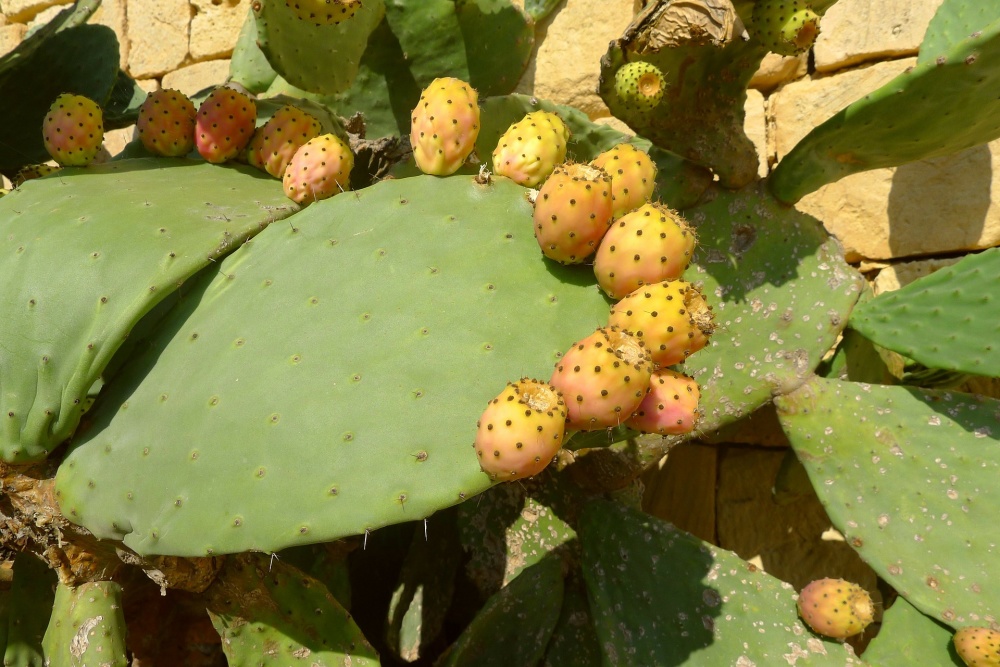
The flowers are large, 7 to 10 cm (2.8 to 4 in) wide, bright yellow and, like the vegetative buds, are borne atop the paddle and singularly. They bloom in spring and are followed by oval fruit 5 to 9 cm (2 to 3.5 in) long, green-skinned when young, then yellow, then orange, red, or purple when ripe, and dotted with tiny, sharp spines. The skin is thick and fleshy, enclosing juicy red or orange pulp embedded with numerous small whiteish kidney-shaped seeds.
Edible uses
Fresh fruit - Ripe fruit is edible and usually peeled, with care taken to avoid the sharp spines. The pulp is cut into pieces and eaten out of hand or added to fruit salads. The texture is soft and juicy, similar to a kiwi fruit's, and the flavour is mildly sweet.
Jam or marmalade - Also pureed and made into jam.
Syrup or cordial - Also made into syrup.
Natural flavouring - Also used for flavouring drinks and dairy products such as yoghurt and ice cream.
Alcoholic drink - Also fermented into wine. Prickly pear wine is consumed as such or distilled into spirits similar to brandy and cognac.
Dried fruit - In Italy, where the plant is introduced and cultivated, the ripe pulp is sliced and preserved by drying.
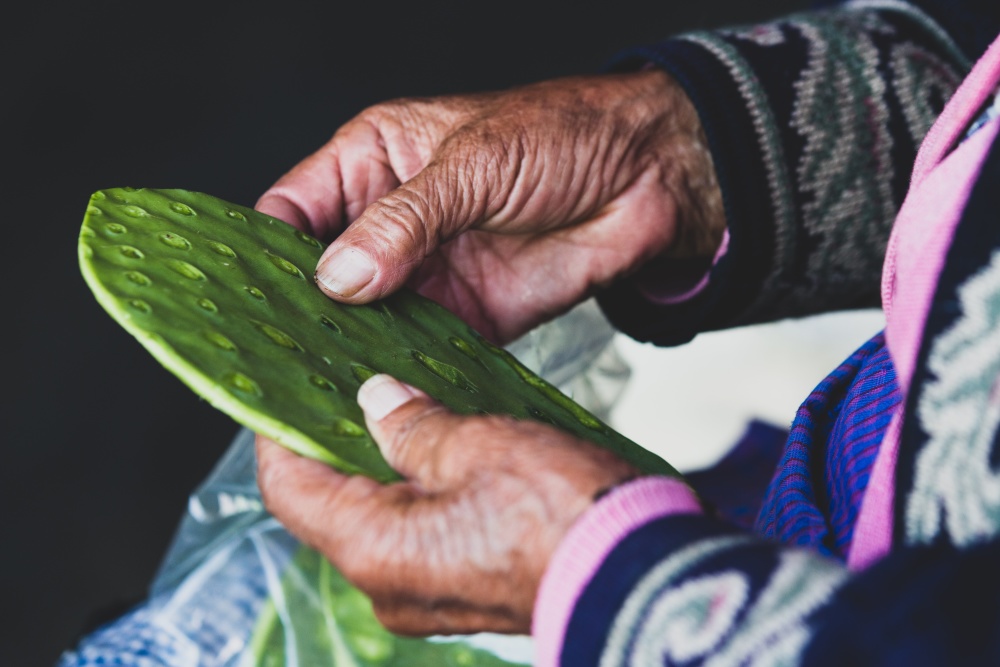
Cooked vegetable - The fleshy paddles are also eaten, but as a vegetable. Only the young paddles are used and should snap when bent, not be bendable, which indicates they are too old to be eaten. For cooking, the margins and the spines on both sides are trimmed with a sharp knife.
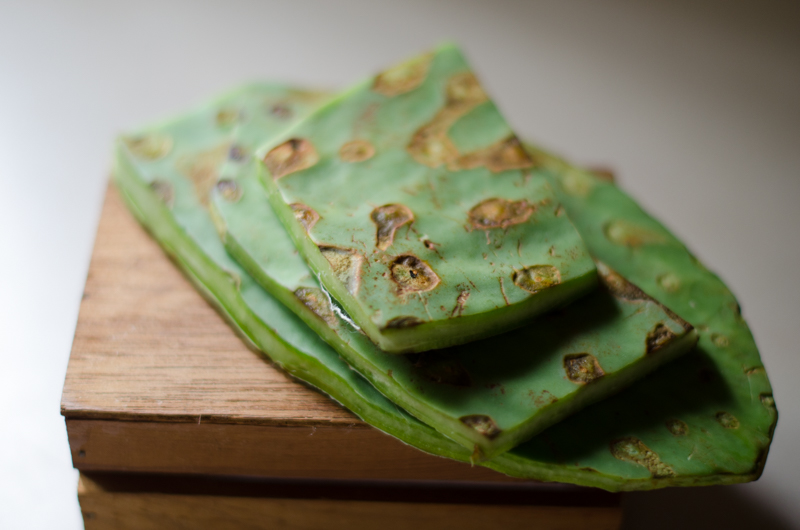
In Mexico, they are grilled whole over coals, pan-roasted for a smoky flavour, or boiled. When grilled, they have a smoky, slightly lemony flavour, a light crunch similar to capsicum (bell pepper), and a somewhat slimy texture reminiscent of Okra (Abelmoschus esculentus).
When they're to be boiled, the paddles are first sliced into strips, then simmered in salted water, usually with pieces of onion and garlic added for flavour. Grilled or boiled, they are used in a range of traditional Mexican vegetable and salad dishes. The de-spined paddles are also sometimes used raw in smoothies, often blended with other vegetables and/or fruit.
Material uses
Livestock feed - The paddles are also fed to ruminant livestock such as sheep, goats, cows, and camels in arid areas. In some arid regions, it has become a valuable livestock feed, though it must be mixed with other feeds to provide a complete and balanced diet, generally those with higher crude protein content. The average crude protein content is about 5% of the paddle's dry weight but can reach 10% for paddles harvested in intensive agricultural systems.
Mainly an energy feed for livestock, the paddles have high concentrations of digestible carbohydrates and are about 85% water, making them even more valuable in arid areas. Livestock find the paddles highly palatable, but varieties with spines must be burnt off or mechanically removed beforehand. Camels, however, are known to ingest them without any apparent harm.
Vegan leather - A more recent use for the paddles has been in manufacturing vegan leather to replace animal leather, especially in fashion apparel items such as shoes, handbags, and jackets; furniture pieces such as sofas; and automotive parts such as car seats. This has grown with demand for animal-free textiles, driving the development of new plant-based vegan leather. The primary sources to date are cactus paddles, Pineapple leaves (from Ananas comosus), Areca Palm leaves (from Areca catechu), Teak leaves (from Tectona grandis), coffee grinds (from Coffea arabica), Giant Taro leaves (from Alocasia macrorrhiza), and apple skins (from Malus domestica).
One of the pioneer companies developing cactus leather (as it's commonly known) is Desserto, based in central Mexico. According to the company's website, the mature paddles are harvested, ground into pulp, dried, reconstituted, and then shaped into sheets of cactus leather. The sheets are then surfaced with a plant-based polyurethane resin and backed with recycled cotton fibre. In their operations, it takes about three mature paddles to create one linear meter of cactus leather.
Natural fabric softener - The slimy (mucilaginous) sap from the paddle makes an effective fabric softener, and is an ingredient in some organic laundry liquids.
Environmental uses
Poolside plant - In the Southwest United States, Prickly Pear is cultivated as a desert ornamental, including as a poolside plant.
Barrier plant - Also used as a barrier plant.
.5702.jpg)
Health uses
The paddles are high in dietary fibre and, along with the fruit pulp, are a good source of the following:
Beta carotene
Calcium
Magnesium
Vitamin C - The fruit is rich in vitamin C.
The sap can be used similarly to Aloe (Aloe vera) to soothe wounds, cuts and burns.
The flowers are astringent and reduce bleeding. They are also used for gastrointestinal problems, particularly diarrhoea, colitis, and irritable bowel syndrome (Chevallier, A. 2000, Encyclopedia of Herbal Medicine, 2nd American ed., Dorling Kindersley, New York).
Natural prostate tonic - Also used to treat an enlarged prostate gland (Chevallier, A. 2000, Encyclopedia of Herbal Medicine, 2nd American ed., Dorling Kindersley, New York).
General interest
The Chichimeca people of central Mexico were a nomadic tribe that travelled to follow the plant's bloom cycle, ensuring an almost continuous supply of fruit.
Climate
Grows naturally in dry to sub-humid warm-temperate, subtropical and tropical climates, generally frost-free areas with annual lows of 7 to 2°C, annual highs of 18 to 37°C, annual rainfall of 300 to 1200 mm and a dry season of 5 to 8 months, extending to 12 months with irrigation.
Nopal can also succeed in moderately humid climates, provided there is excellent drainage, and in areas with cold winters if there is sufficient heat during summer for the fruit to fully ripen, generally areas where the average high of the warmest month is 25°C (77°F) or above.
Growing
New plants can be started from seed, but cuttings are preferred because seed-grown plants are much slower growing at the start. For cuttings, mature paddles are harvested, shade-dried for about two weeks, and then planted, cut end down, in loosely prepared soil in the field, usually in rows.
For commercial paddle production, planting densities can be up to 40,000 plants per hectare (16,000 plants per acre). This may only be 2,000 plants per hectare (800 plants per acre) for commercial fruit production. Fruit production is highest with very large plants with many paddles, which create a large surface area for fruiting.
In paddle production, harvesting is delayed until at least four or five new paddles have developed, then repeat harvesting is done at intervals over the plant's life. Yields of up to 90,000 kgs per hectare per year have been recorded in intensive farming systems.
Fruit yields in commercial orchards average 8,000 kgs per hectare (7'000 lbs per acre) in the third year, rising to 25,000 kgs (22,000 lbs per acre) in the tenth year. Popular fruit-bearing varieties include 'Gialla', 'Rossa' and 'Bianca' (Italy) and 'Blanca' and 'Morada' (Peru). Seedless and near spineless varieties also exist, including 'Burbank spineless' (California) and Amarilla Sin Espinas (Argentina).
Performs best in free-draining loam, sandy-loam, loamy-sand and limestone soils of a neutral to alkaline nature, generally with a pH of 7.0 to 8.0, and on sites with full sun exposure.
Problem features
Once considered highly invasive in Australia, prickly pear was removed from the list of prohibited plants in 1978. The reasons given are that it spreads slowly and is easily eradicated using biological control methods. In other regions, such as South Africa, it remains classed as a highly invasive species.
Where it grows
References
Books
-
Adams, C. D. 1972, Flowering plants of Jamaica, University of the West Indies, Mona, Greater Kingston
-
Chevallier, A. 2000, Encyclopedia of herbal medicine, 2nd American ed., Dorling Kindersley, New York
-
Crane, E., Walker, P. & Day, R. 1984, Directory of important world honey sources, International Bee Research Association, London, United Kingdom
-
Editors of Sunset Magazine 2012, The New Western Garden Book: The Ultimate Gardening Guide, 9th edition, Sunset Publishing Corporation, California
-
Food and Agriculture Organization of the United Nations (FAO) 1988, Traditional food plants : a resource book for promoting the exploitation and consumption of food plants in arid, semi-arid and sub-humid lands of eastern Africa, Food and Nutrition Paper No. 42, Rome
-
Gohl, B. 1981, Tropical Feeds : feed information summaries and nutritive values (Revised edition), Food and Agriculture Organization of the United Nations (FAO), Rome
-
Hall, N. 1972, The use of trees and shrubs in the dry country of Australia, Australian Government Publishing Service, Canberra, Australian Capital Territory
-
Howes, F. N. 1949, Vegetable gums and resins, Chronica Botanica Company, Waltham, Massachusetts
-
Janick, J., & Paull, R. E. 2008, The encyclopedia of fruit & nuts, CABI Publishing, Wallingford, Oxfordshire
-
Lorenzi, H. 2006, Brazilian fruits & cultivated exotics (for consuming in natura), Instituto Plantarum de Estudos da Flora, Nova Odessa, San Paulo
-
Martin, F. M., et al. 1987, Perennial edible fruits of the tropics : an inventory, U.S. Dept. of Agriculture (USDA), Agricultural Research Service, U.S. Government Printing Office (GPO), Washington, D.C.
-
Mollison, B. 1993, The permaculture book of ferment and human nutrition, Tagari Publications, Tyalgum, New South Wales
-
Parkinson, R. 1999, Culinaria : The Caribbean a culinary discovery, 1st. ed, Koìln: koìnemann, Germany
-
Perry, B. 2010, Landscape plants for California gardens: an illustrated reference of plants for California landscapes, Land Design Publishing, Claremont, California
-
Randall, R. P. 2002, A global compendium of weeds, R.G. and F.J. Richardson Press, Melbourne
-
Randall, R. P. 2007, The introduced flora of Australia and its weed status, Cooperative Research Centre for Australian Weed Management, Glen Osmond, South Australia
-
Roecklein, J. C & Leung, P.S. 1987, A Profile of economic plants, Transaction Books, New Brunswick, New Jersey
-
Rubatzky, V. E. & Yamaguchi, M. 1997, World vegetables : principles, production, and nutritive values, 2nd ed., Chapman & Hall, New York
-
Standley, P. C. 1920, Trees and shrubs of Mexico, Government Printing Office (GPO), Washington D.C.
-
Stewart, A. 2013, The drunken botanist : the plants that create the world's great drinks, 1st ed., Algonquin Books, Chapel Hill, North Carolina
Articles, Journals, Reports and Working Papers
-
Morton, J. F. 1976, Pestiferous spread of many ornamental and fruit species in south Florida. In Proceedings of the Florida State Horticultural Society (Vol. 89, pp. 348-353).
-
Wenkam N.S. & Miller C.D. 1965, Composition of Hawaii fruits (Bulletin 135), University of Hawaii, Honolulu