




Common name: Angelonia
Other common names: Narrowleaf Anngelonia, Summer Snapdragon
Description
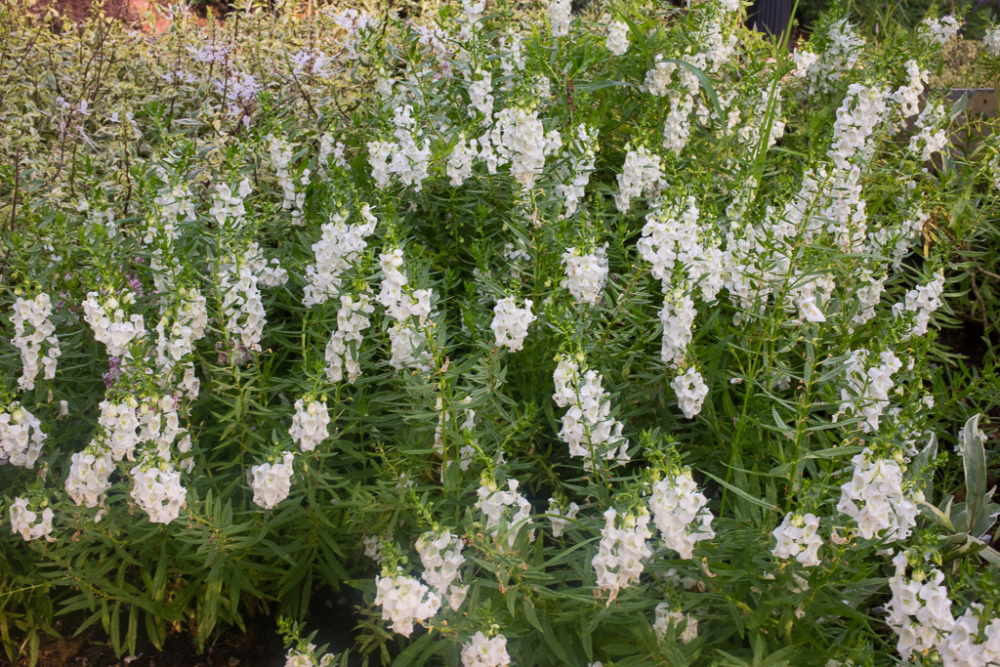
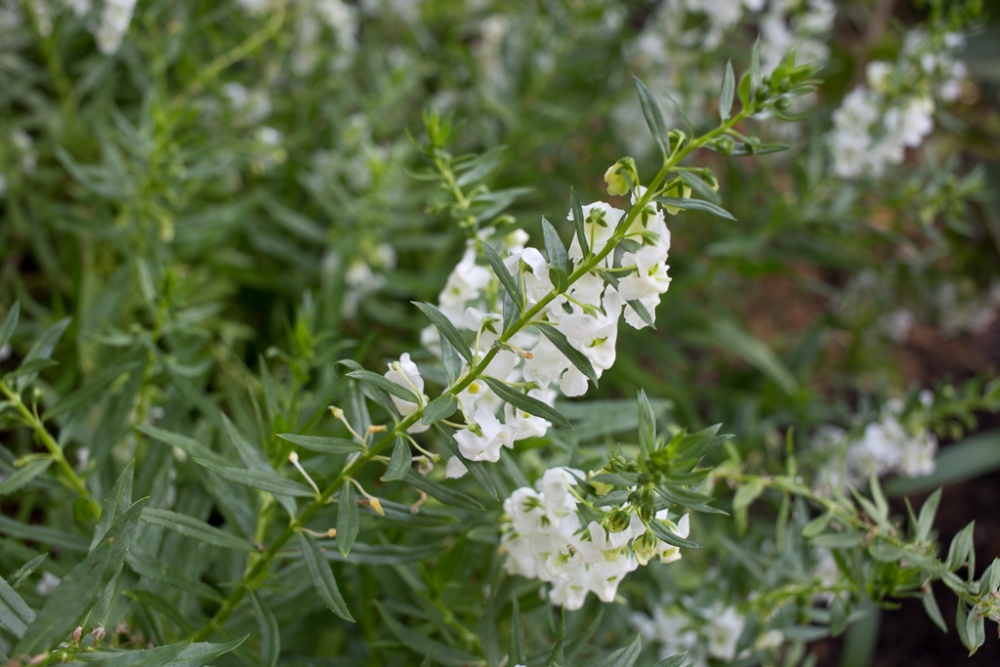
Angelonia is a colourful flowering herb originating from Central America and the Caribbean.
Growing up to 60 cm (2 ft) tall, it has semi-woody stems near the base and herbaceous growth on top, producing showy flower spikes year-round in purple, pink, and white.
It is cultivated as a perennial in subtropical and tropical climates and as a summer annual in cooler climates.
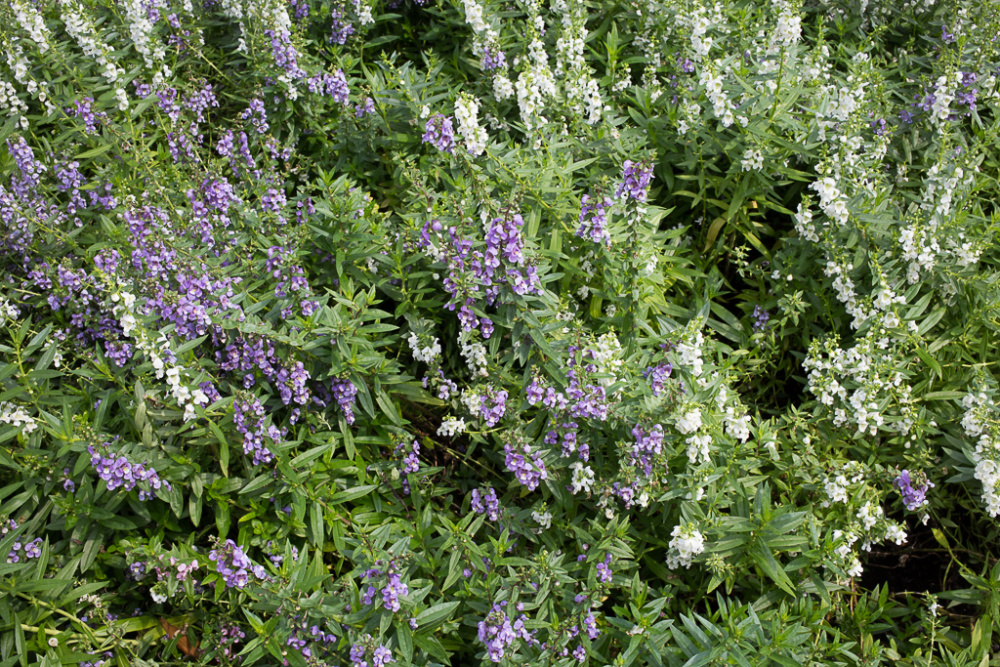
Ho Chi Minh City, Vietnam
Environmental uses
Flowering ornamental - Angelonia is cultivated to create a mass of colour and texture in garden beds...
Container plant - ...and containers.
Material uses
Cut-flower - The flower spikes also make excellent cut flowers. They are best cut for arrangements when the first two to three flowers have opened on the spike.
Floral arrangement - Cut spikes are long-lasting in floral arrangements, with a vase life of up to two weeks.
Climate
Grows naturally in moderately humid subtropical and tropical lowland to mid-elevation climates, generally areas with annual lows of 11 to 25°C, annual highs of 21 to 35°C, annual rainfall of 1000 to 2500 mm and a dry season of 6 months or less.
Growing
New plants are usually raised from cuttings or packaged seed. Plants grown from home-grown seed may yield unpredictable results because two different-coloured varieties are likely to cross-pollinate.
Angelonia performs best in free-draining, well-manured loam, sandy loam, and loamy sand soils that are moderately acid to neutral, generally with a pH of 5.8 to 7.0, and in sites with full to partial sun exposure. It requires minimal maintenance, but benefits from yearly cut-back, weeding, and feeding.
It is well suited to containers, which provide the free-draining environment it needs for good growth and flowering.
Problem features
It is listed as a weed in at least one reference publication and is naturalised outside its native range, but there does not appear to be any record of it anywhere as a serious weed. The small seeds, however, are likely to be easily dispersed by wind and flowing water.
Where it grows
References
Books
-
Adams, C. D. 1972, Flowering plants of Jamaica, University of the West Indies, Mona, Greater Kingston
-
Chaplin, L. T. & Brandies M. M. 1998, The Florida Gardener's Book of Lists, Taylor Publishing Company, Dallas, Texas
-
Cook, O. F. & Collins, G. N. 1903, Economic plants of Porto Rico, Government Printing Office, Washington D. C.
-
Editors of Sunset Magazine 2012, The New Western Garden Book: The Ultimate Gardening Guide, 9th edition, Sunset Publishing Corporation, California
-
Randall, R. P. 2002, A global compendium of weeds, R.G. and F.J. Richardson Press, Melbourne
-
Randall, R. P. 2007, The introduced flora of Australia and its weed status, Cooperative Research Centre for Australian Weed Management, Glen Osmond, South Australia