

Common name: Cashew
Other common names: Cashew, Cashew Nut
Description
Cashew is a widely cultivated nut-bearing tree native to South America. Its native range is mainly limited to seasonally dry areas in the north of the continent, extending from the state of Pernambuco in Brazil, northwest to the Guianas, Suriname, Venezuela and Colombia.
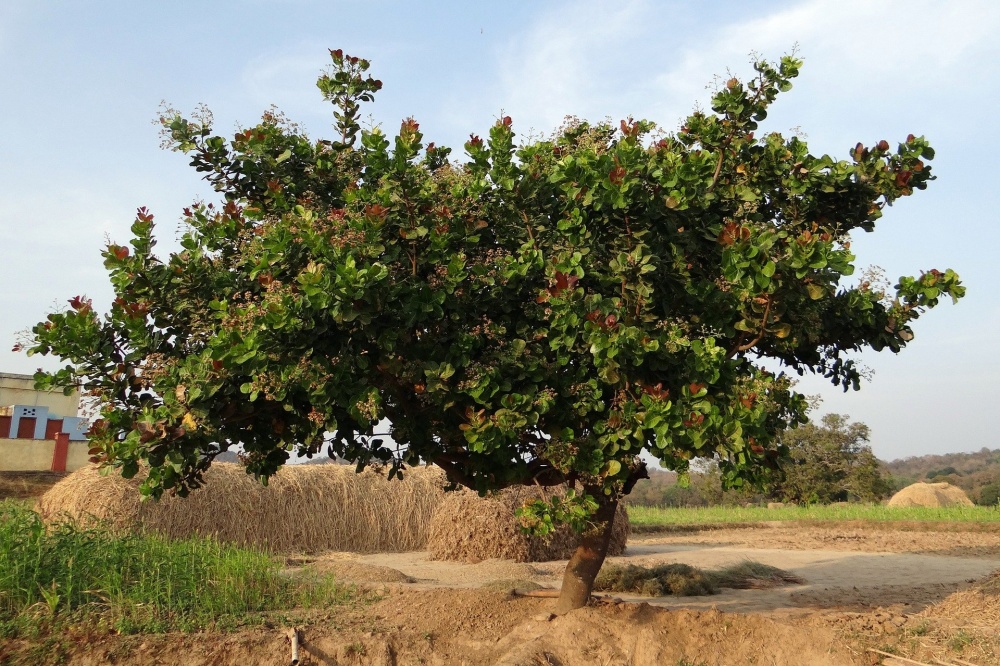
On favourable sites, it is fast-growing and may reach heights up to 15 m (50 ft) with a densely leafy, rounded crown. On marginal sites, it is more typically 5 to 10 m (16 to 32 ft) tall with a wide-spreading crown, sometimes as wide as the tree is tall. Branching starts low on the trunk, with smooth, light-brown bark on young trees, which becomes rough as the tree ages.
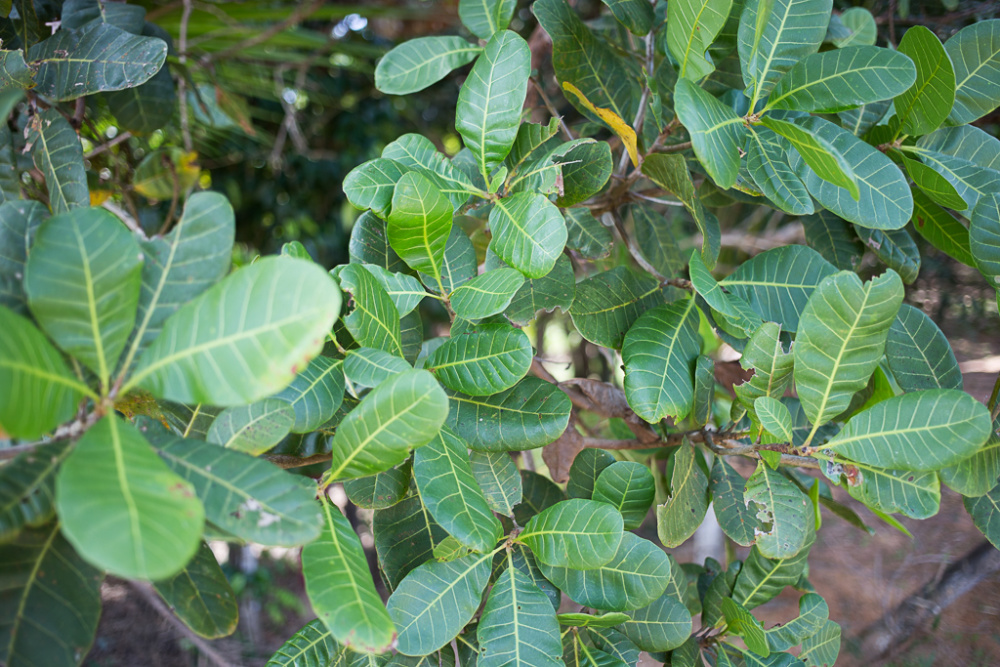
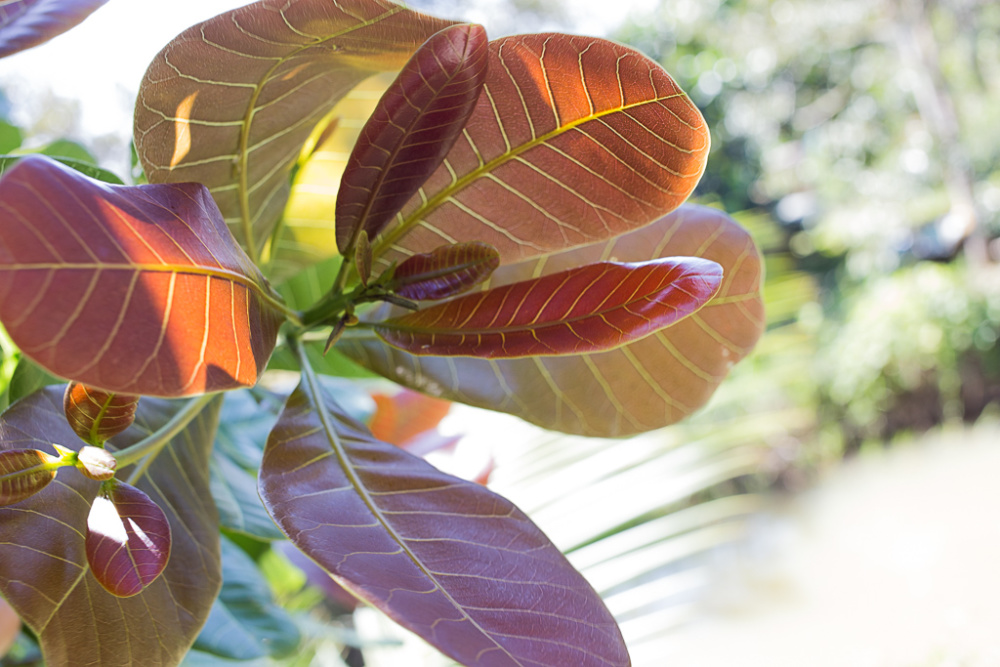
Leaves are oval, blunt-ended, up to 18 cm (7 in) long, bronze-red and soft when they emerge, then become dull green, prominently veined, and thick, leathery. They are alternately arranged along the stems and remain on the tree in all seasons.
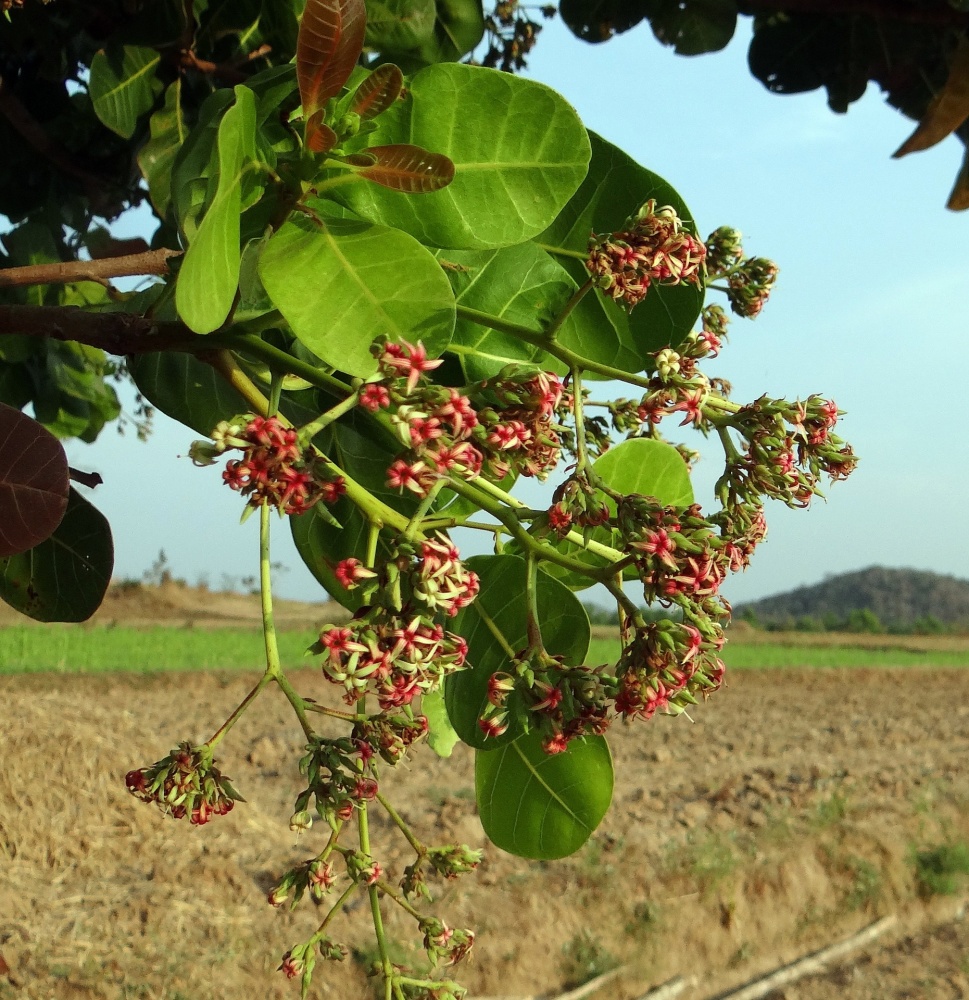
Flowers are small and insignificant, creamy white to pale yellow, turning deep red with age. They are borne in pyramid-shaped clusters arising at the tips of the branches and come into bloom in the dry season, which extends from winter through to early spring in its native range.
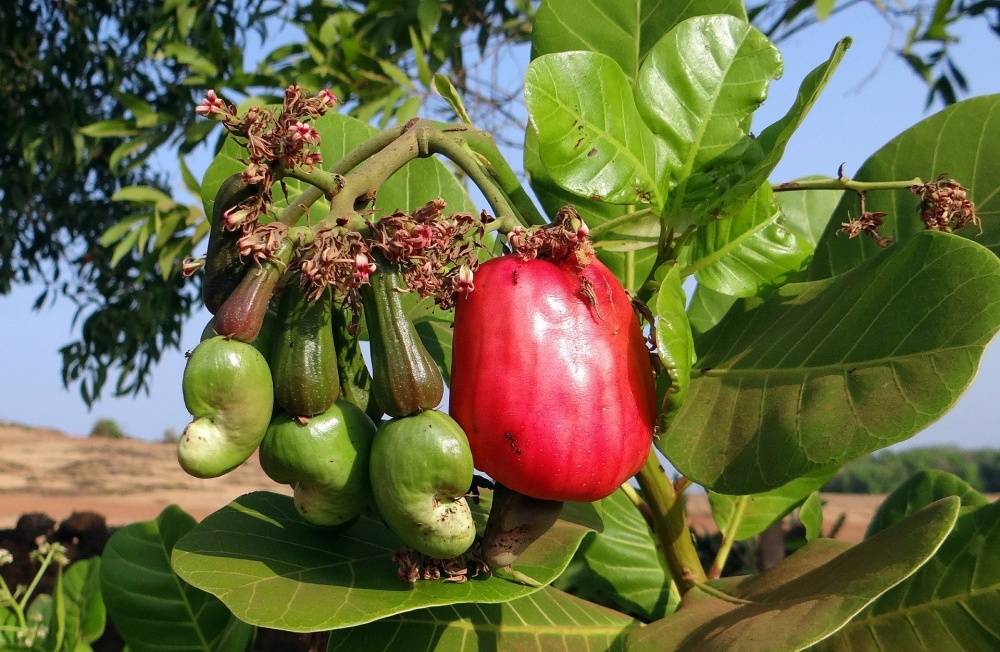
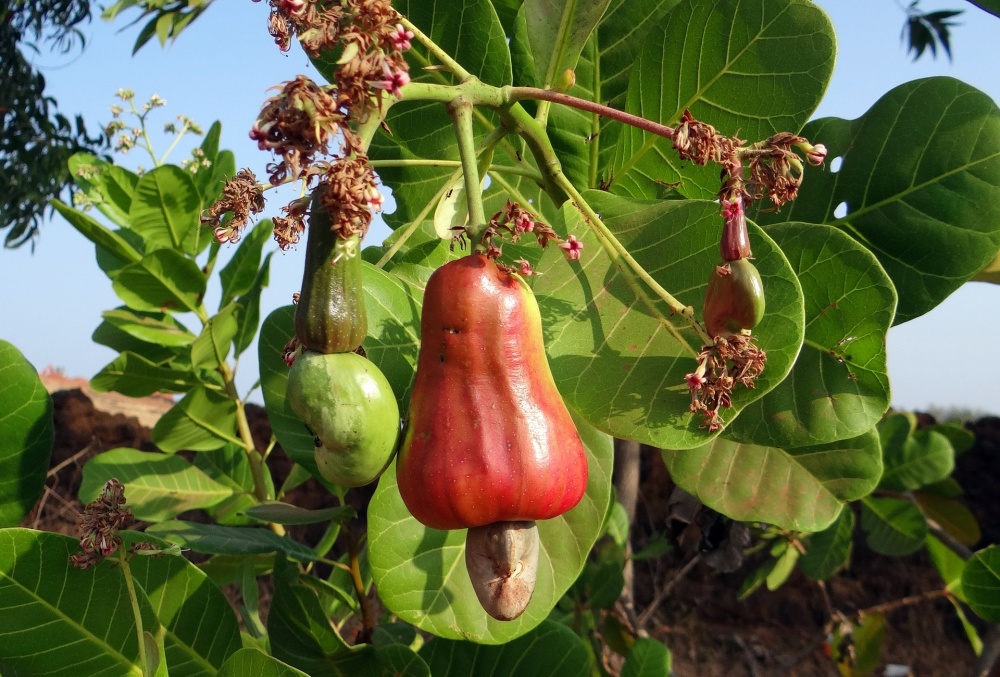
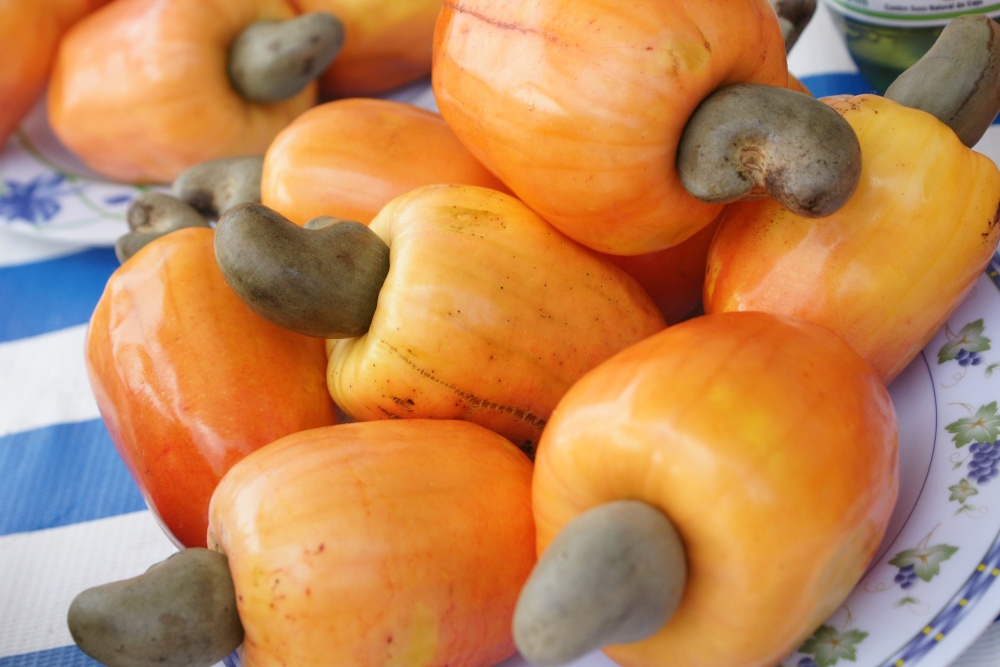
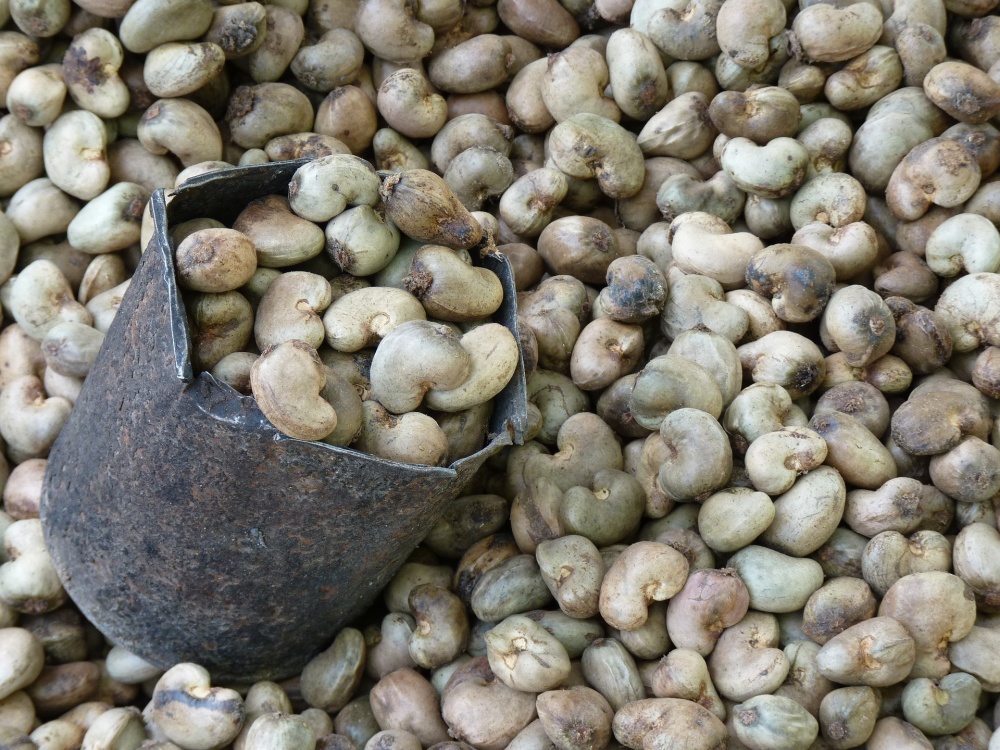
The fertilised flowers develop into small, kidney-shaped fruit about 3 cm (1.2 in) long. Green when young, they become grey-brown when mature and have a thick, hard, oil-rich shell surrounding a single seed. As the fruit matures, the stalk attaching it to the plant thickens and swells, forming a sizeable, pear-shaped pseudo- or false fruit commonly known as the cashew apple. The cashew apple is about 6 to 12 cm (2.5 to 4.7 in) when fully grown, with thin yellow, orange, or red skin depending on the variety, and juicy pulp.
.5760.jpg)
Photo by Bishnu Sarangi from Pixabay
.5761.jpg)
Photo by Bishnu Sarangi from Pixabay
Edible uses
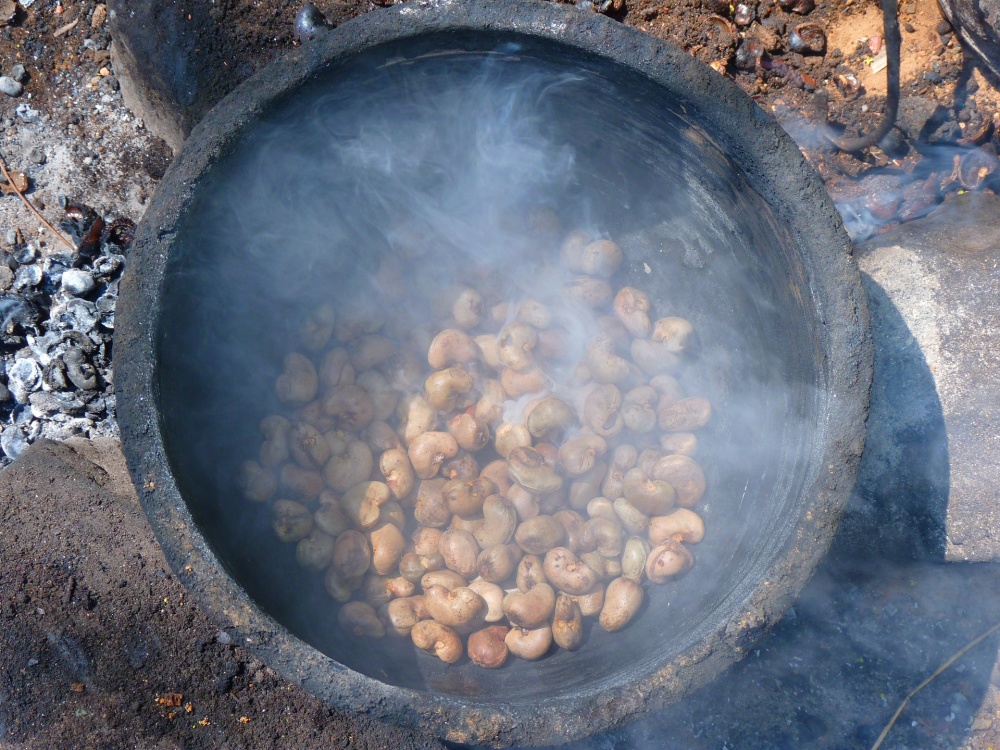
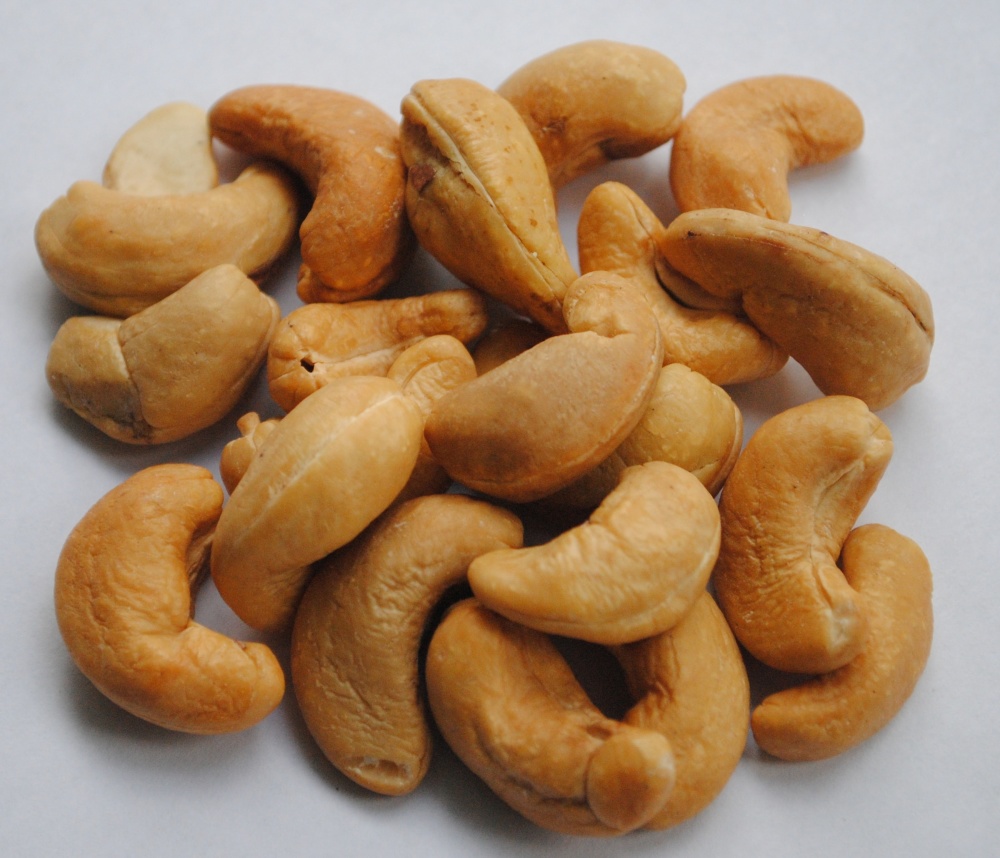
Edible nut - Cashew trees are mainly cultivated for their edible nuts, which are among the world's most popular. The ripe fruit is harvested, separated from the false fruit or cashew apple, then dried and roasted in its shell. After roasting, the shell is peeled, leaving the creamy-white nut. Cashew nuts are eaten out of hand or incorporated into dishes and recipes calling for nuts, including pestos, stir-fries, curries, baked goods, confectionery, and desserts. They are also processed into a nut butter for spreading on bread. The nuts have a crude protein content of about 21% of their dry weight.
Stewed fruit - The cashew apple pulp is edible and juicy, with an agreeable sweet-to-sub-acid flavour, but is astringent due to high tannin content and not usually eaten fresh. It is commonly stewed with sugar, cloves, and other spices, and eaten with ice cream or as a filling in pies and tarts.
Juice - Also made into fresh juice, widely consumed and appreciated in Brazil.
Syrup or cordial - Also made into fruit syrup or cordial.
Jam or marmalade - Also made into jam.
Fruit chutney - Also made into chutney.
Candied fruit - Also candied.
Alcoholic drink - Also fermented into wine and brandy. In Goa, southern India, cashew apples are fermented to make a liquor known as 'Feni'.
Material uses
Livestock feed - Nuts damaged and discarded during the shelling process are a good feed source for single-stomach livestock, such as chickens.
Drying oil - The oil from the shell, extracted as a by-product of roasting, is a dark, viscous, tar-like substance that dries upon exposure to air. Known as 'Cashew Nut Shell Liquid (CNSL)', it is actively used today as a sustainable, bio-based drying oil. Drying oils are plant-based vegetable oils that harden into a solid, tough film when exposed to air through a chemical process called oxidation and polymerisation, and are primarily used in oil paints, varnishes, and printing inks. Some of the best-known and most widely used drying oils are Safflower oil (from Carthamus tinctorius) and Tung oil (from Vernicia fordii).
Natural varnish - Cashew Nut Shell Liquid (CNSL) is used in the manufacture of paints and varnishes.
Bio-based plastic - Also to make synthetic fibres, including natural plastics.
Natural adhesive - And in formulating industrial adhesives. Separately, the bark yields a pale yellow, reddish, or dark brown gum with adhesive properties, used for bookbinding.
Natural insecticide - Cashew Nut Shell Liquid (CNSL) also has insecticidal properties, with good larvicidal action against mosquito larvae (Oliveira, R.J. et al. 2018, 'The mixture of cashew nut shell liquid and castor oil results in an efficient larvicide against Aedes aegypti...,' PLOS ONE, vol. 13, no. 3, e0193509).
Softwood - The wood is greyish to red-brown, moderately heavy, averaging about 500 kg per cubic metre, and has low natural resistance to decay and to wood-boring insects.
Firewood - It is used chiefly for firewood when available.
Environmental uses
Bee forage - The flowers are a nectar source for foraging honeybees, and cashew is reported as a major honey plant in India, Colombia, and Guyana, though there appears to be little information about the honey itself - its colour, flavour, or crystallisation properties.
Health uses
Cashew nuts have a high oil content and are a good source of energy and protein. They also contain high levels of the following:
Vitamin B1 (Thiamine)
Vitamin B2 (Riboflavin)
Vitamin B3 (Niacin)
Vitamin K
Good supplies of the following are also present:
Phosphorus
Potassium
Vitamin C - The cashew apple is rich in vitamin C (ascorbic acid).
The oil from the shell is corrosive and is used as a topical treatment against ringworm, warts, corns, and cracked skin on the soles of the feet. Cashew
Climate
Cashew trees need dry conditions during flowering and fruit-set to produce a good crop of quality nuts. During this time, high rainfall and humidity encourage fungal diseases, particularly fungal types, leading to poor fruit-set and fruit development.
It grows and fruits well in sub-humid to moderately humid subtropical and tropical climates, generally frost-free areas with annual lows of 18 to 25°C, annual highs of 27 to 36°C, annual rainfall of 900 to 4000 mm and a dry season of 3 to 7 months. Cashew trees may fail to flower and fruit or do so poorly in areas where the average low of the coldest month is below 11°C (52°F).
Cashew is also cultivated with irrigation in areas that receive less than 1000 mm annual rainfall or where the dry season is long and pronounced.
Growing
New plants are usually started from seed. Performs best on free-draining clay loam, loam, sandy loam, or loamy sand soils of a moderately acid to neutral nature, generally with a pH of 4.5 to 7.0, and on sites with full sun exposure.
Seedling trees start flowering at about four years old, yielding only a few nuts at first, then gradually more over the years. Mature trees produce up to 30 kgs (66 lbs) of unshelled nuts per year or more at their peak.
Problem features
The oil in the shell is toxic and caustic, causing burning, blistering and swelling of the lips and mouth. Contact of the shell with any sensitive part of the body should be avoided. Fumes from roasting the shell can irritate the eyes and respiratory passages.
Cashew apple juice can stain garments and other fabric items.
Where it grows
References
Books
-
Adams, C. D. 1972, Flowering plants of Jamaica, University of the West Indies, Mona, Greater Kingston
-
Allen, B. M. 1967, Malayan fruits : an introduction to the cultivated species, Donald Moore Press, Singapore
-
Bradbear, N. 2009, Bees and their role in forest livelihoods : a guide to the services provided by bees and the sustainable harvesting, processing and marketing of their products, Food and Agriculture Organization of the United Nations (FAO), Rome
-
Crane, E., Walker, P. & Day, R. 1984, Directory of important world honey sources, International Bee Research Association, London, United Kingdom
-
Dastur, J. F. 1964, Useful plants of India and Pakistan : a popular handbook of trees and plants of industrial, economic, and commercial utility, 2nd ed., D. B. Taraporevala Sons, Bombay
-
Duke, J. A. 1983, Handbook of energy crops (unpublished), Center for New Crops & Plants Products, Purdue University, West Lafayette, Indiana
-
Fellows, P. 1997, Traditional foods : processing for profit, Intermediate Technology, Technical Centre for Agricultural and Rural Co-operation, London
-
Food and Agriculture Organization of the United Nations (FAO) 1986, Food and Fruit-bearing Forest Species, 3 : Examples from Latin America, FAO Forestry Paper no 44/3, Rome
-
Food and Agriculture Organization of the United Nations (FAO) 1988, Traditional food plants : a resource book for promoting the exploitation and consumption of food plants in arid, semi-arid and sub-humid lands of eastern Africa, Food and Nutrition Paper No. 42, Rome
-
Gohl, B. 1981, Tropical Feeds : feed information summaries and nutritive values (Revised edition), Food and Agriculture Organization of the United Nations (FAO), Rome
-
Hall, N. 1972, The use of trees and shrubs in the dry country of Australia, Australian Government Publishing Service, Canberra, Australian Capital Territory
-
Hocking, D. 1993, Trees for drylands, International Science Publisher, New York
-
Howes, F. N. 1949, Vegetable gums and resins, Chronica Botanica Company, Waltham, Massachusetts
-
Jamieson, G. S. 1943, Vegetable fats and oils : their chemistry, production, and utilization for edible, medicinal and technical purposes, 2d ed, Reinhold, New York
-
Janick, J., & Paull, R. E. 2008, The encyclopedia of fruit & nuts, CABI Publishing, Wallingford, Oxfordshire
-
Jensen, M. 1999, Trees commonly cultivated in Southeast Asia : an illustrated field guide, 2nd ed., Food and Agricultural Organisation of the United Nations (FAO) Regional Office for Asia and the Pacific (RAP), Bangkok
-
Lorenzi, H. 2002, Brazilian trees : a guide to the identification and cultivation of Brazilian native trees. Vol. 1, 4. ed, Instituto Plantarum de Estudos da Flora, Nova Odessa, Sao Paulo
-
Luna, R. K 1996, Plantation trees, International Book Distributors, Dehradun, Uttarakhand
-
Mitchell, John D. (John Daniel) & Mori, Scott A., 1941- & Mori, Scott A & Mitchell, John D 1987, The cashew and its relatives (Anacardium: Anacardiaceae), New York Botanical Garden, Bronx, N.Y., USA
-
Morton, J. F. & Dowling, C. F. 1987, Fruits of warm climates, Creative Resources Systems, Winterville, North Carolina
-
Norrington, L. & Campbell, C. 2001, Tropical food gardens : a guide to growing fruit, herbs and vegetables in tropical and sub-tropical climates, Bloomings Books, Hawthorn, Victoria
-
Nussinovitch, A. 2010, Plant gum exudates of the world : sources, distribution, properties, and applications, CRC Press / Taylor & Francis, Boca Raton, Florida
-
Page, P. E. 1984, Tropical tree fruits for Australia, Queensland Department of Primary Industries (QLD DPI), Brisbane
-
Parrotta, J. A. 2001, Healing plants of peninsular India, CABI Publishing, Wallingford, Oxfordshire
-
Perkins, K. D. & Payne, W. 1981, Guide to the poisonous and irritant plants of Florida, Florida Cooperative Extension Service, Gainesville, Florida
-
Record, S. J. & Hess, R. W., 1972, Timbers of the New World, Yale University Press, New Haven, Connecticut & Arno Press, New York
-
Stewart, A. 2013, The drunken botanist : the plants that create the world's great drinks, 1st ed., Algonquin Books, Chapel Hill, North Carolina
-
Troup, R.S. & Joshi, H. B. 1975 to 1981, Silviculture of Indian Trees (3 volumes), Government of India Publications, New Delhi
-
Webb, D. B. 1984, A Guide to species selection for tropical and sub-tropical plantations, 2nd ed., Unit of Tropical Silviculture, Commonwealth Forestry Institute, University of Oxford, Oxfordshire
-
Wickens, G. E 1995, Edible nuts, Food and Agriculture Organization of the United Nations (FAO), Rome
-
Wong, C. & Thuras, D., 2021. Gastro Obscura: A Food Adventurer's Guide. Workman Publishing Company, United States.
Articles, Journals, Reports and Working Papers
-
Morton, J.F. 1964, Honeybee Plants of South Florida, Proceedings of the Florida State Horticultural Society, Vol 77:415-436.
-
Watson, B.J., & Moncur, M. 1985, Guideline criteria for determining survival, commercial and best mean minimum July temperatures for various tropical fruit in Australia (Southern Hemisphere), Department of Primary Industries Queensland (DPI QLD), Wet Tropics Regional Publication, Queensland