

Common name: Queensland Blue Gum
Other common names: Flooded Gum, Forest Red Gum, Red Gum, Red Iron Gum
Description
Queensland Blue Gum is a fast-growing Australian eucalyptus tree producing valuable timber and essential oil.
There are two subspecies recognised: one native to small parts of Victoria, in the temperate south of Australia; the other to a much wider area extending mainly along Australia's east coast from Batemans Bay in New South Wales to Cooktown in tropical north Queensland. This description is limited to the latter or more widely distributed of the two subspecies.
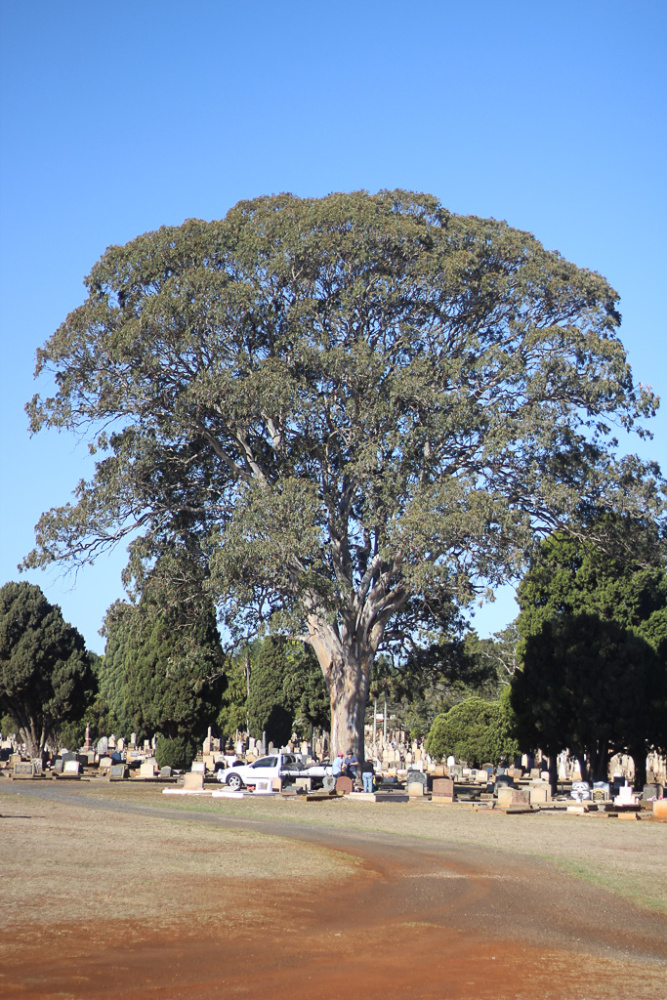
Depending on the growing conditions, it attains a height of 20 to 40 m (65 to 130 ft), with a straight trunk for one-third to half the tree's height supporting a heavily branched, rounded crown of steeply ascending branches. The bark peels off in patches, leaving behind a mottled grey-to-blue-grey surface.
The leaves and flowers are typical of Eucalyptus species. The leaves are dull green, long, narrow, and pointed, and the flowers are small with long, creamy-white stamens.
The flowers bloom in small, open clusters from winter through spring, and fertilised flowers develop into small, woody, bowl-shaped capsules containing numerous seeds.
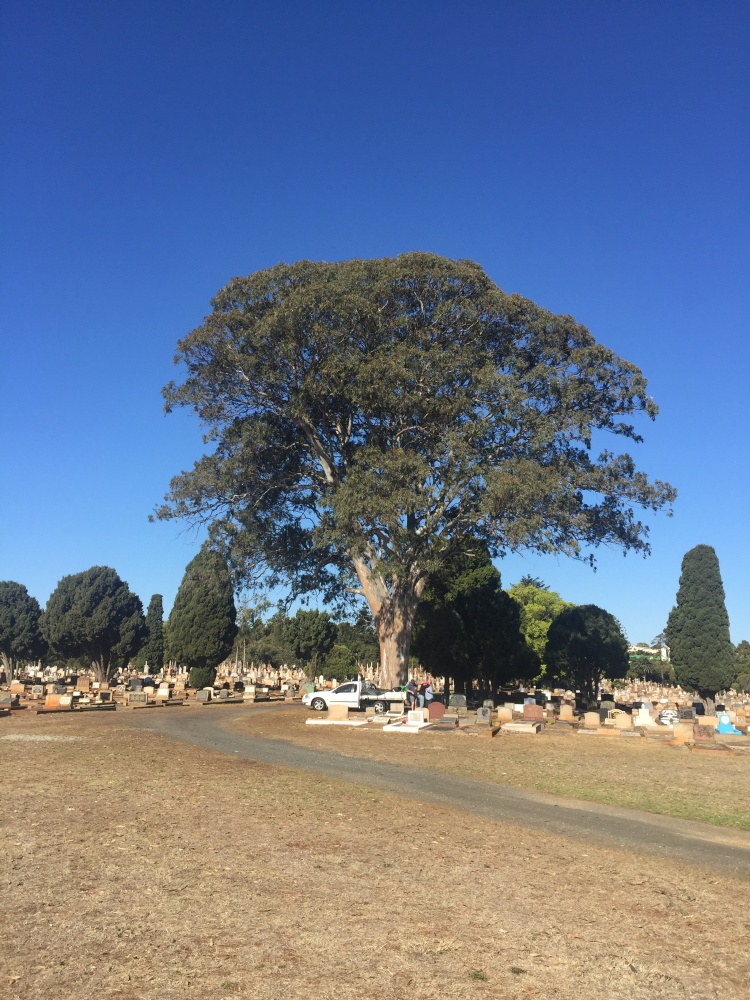
Toowoomba, Australia (Photo: Donna Reis)
Material uses
Hardwood - Queensland blue gum produces heavy wood, averaging 800 kg per cubic meter (50 lb per cubic ft).
Decay- and rot-resistant wood - The wood has moderate to high natural resistance to rot and decay, making it suitable for both indoor and outdoor construction.
Heavy construction - Suitably sized logs are sawn into beams used in heavy construction, including structural timber for house-building.
Crossties or sleepers - Also used for railway sleepers.
Flooring and decking - Planks are also used for flooring and outdoor decking.
Furniture and cabinets - And for making furniture and cabinets.
Poles and posts - Small-diameter logs and branchwood are cut for poles and posts.
Wood turning - Also used for turnery.
Firewood - Also valued as firewood.
Charcoal - And as a source of wood for making charcoal.
Essential oil - The leaves, on steam distillation, yield fair quantities of Eucalyptus oil of the cineole (aka. eucalyptol) type.
Natural insect repellent - The oil is used as an active ingredient in insect repellents.
Natural disinfectant - Also used as a disinfectant and antiseptic.
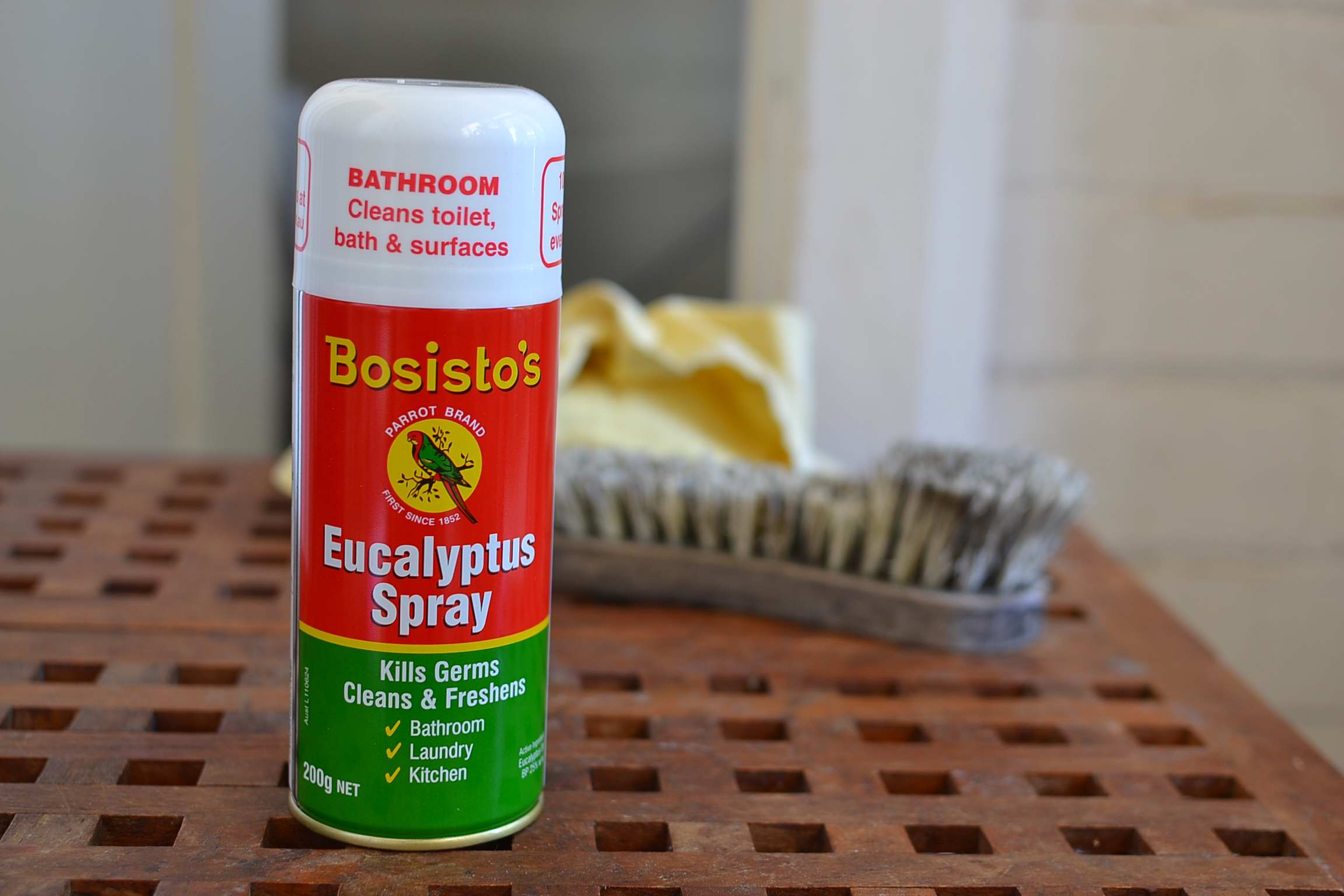
Stain removal - Also used as a stain remover, having proven effective in removing grease, glue and dried stains from both skin and fabric.
Edible uses
Natural flavouring - The oil is also used as a flavouring agent in food and medicines.
Honey - The honey from this tree is pale to medium amber in colour with a distinctive toffee or caramel flavour.
Environmental uses
Bee forage - The flowers are a major source of pollen and a moderate source of nectar for honeybees, especially during the winter months when many other plants are not in bloom.
Land rehabilitation - The tree has a long history of use in rehabilitating degraded land, including as a pioneer species on tailings left over from copper mining.
Wildlife support - Also serves as a major food tree for koalas, which eat the leaves, and provides habitat for some of Australia's native possum species.
Climate
Queensland blue gum grows well and produces good quality, valuable timber in a range of climates, from warm-temperate to tropical and from sub-humid to humid. The climate in its native range is characterised by annual lows of 8 to 25°C, annual highs of 19 to 36°C, annual rainfall of 700 to 3500 mm and a dry season of 7 months or less, extending to 12 months with irrigation or groundwater.
Growing
New plants are usually started from seed, germinating readily without pre-treatment. The seeds are sown in individual containers with a free-draining potting mix, and the seedlings planted out when 40 cm (16 in) tall or taller, with the best result achieved when planted at the start of the rainy season.
Performs well on clay, loam and sand soils, provided they are well-drained and slightly acid to slightly alkaline, generally with a pH of 6.0 to 7.5. Sites should have full sun exposure.
It has good tolerance for drought and seasonal flooding, but not for waterlogging. It is moderately salt tolerant, with growth reported to be unaffected by moderately saline conditions, equivalent to up to 3.2 grams of dissolved salt per litre of water.
Problem features
The small seeds are easily dispersed by wind and flowing water, enabling their spread beyond cultivation. However, the assessment of its weed potential is conflicting. It is assessed as a low weed risk species for Hawaii but as a high weed risk species for Florida by the Hawaii Pacific Weed Risk Assessment (HPWRA) project and the IFAS Assessment of Non-Native Plants in Florida's Natural Areas, respectively.
Prolonged skin contact with Eucalyptus essential oil may cause burning dermatitis and blisters in some people, and it can be poisonous if ingested in large amounts.
Where it grows
References
Books
-
Blake, S. T. & Roff, C. 1987, The honey flora of Queensland, 3rd ed., Queensland Department of Primary Industries (QLD DPI), Brisbane
-
Boland D.J., Brophy J.J. & House A. P. N. 1991, Eucalyptus leaf oils, use, chemistry, distillation and marketing, Australian Centre for International Agricultural Research (ACIAR) & Commonwealth Scientific Industrial Research(CSIRO), Inkata Press, Melbourne
-
Boland, D. & Brooker, I. & McDonald, M. W. 2006, Forest trees of Australia, 5th ed., CSIRO Publishing (Ensis), Melbourne
-
Brady, G. S. & Clauser, H. R & Vaccari, J. A. 2002, Materials handbook : an encyclopedia for managers, technical professionals, purchasing and production managers, technicians and supervisors, 15th ed., McGraw-Hill, New York
-
Chaplin, L. T. & Brandies M. M. 1998, The Florida Gardener's Book of Lists, Taylor Publishing Company, Dallas, Texas
-
Clarke, B. & McLeod, I. & Vercoe, T. 2009, Trees for farm Forestry : 22 Promising Species, Rural Industries Research and Development Corporation (RIRDC), Wagga Wagga, New South Wales
-
Clemson, A. 1985, Honey and pollen flora, New South Wales Department of Agriculture, Inkata Press, Melbourne
-
Crane, E., Walker, P. & Day, R. 1984, Directory of important world honey sources, International Bee Research Association, London, United Kingdom
-
Culbreth, D. M. R. 1927, A manual of materia medica and pharmacology : comprising the organic and inorganic drugs which are or have been recognized by the United States pharmacopeia, 7th ed., Febiger, Philadelphia
-
F. R. Beuhne 1922, Honey flora of Victoria, Melbourne Albert J. Mullett, Govt. printer
-
Hocking, D. 1993, Trees for drylands, International Science Publisher, New York
-
Krishen, P. 2006, Trees of Delhi : a field guide, Dorling Kindersley Publishers, Delhi
-
Lemmens, R.H.M.J., Louppe, D. & Oteng-Amoako, A.A. (eds). PROTA, Plant Resources of Tropical Africa, Volume 7(1) : Timbers 1, PROTA Foundation, Backhuys Publishers, Leiden
-
Luna, R. K 1996, Plantation trees, International Book Distributors, Dehradun, Uttarakhand
-
Maesen, L. J. G. van der & Faridah Hanum, I & Prosea Project 1997, Auxiliary plants, Backhuys Publishers, Leiden
-
Marcar, N. E. 1995, Trees for saltland : a guide to selecting native species for Australia, Division of Forestry, Commonwealth Scientific and Industrial Research Organisation (CSIRO) Australia, Canberra
-
National Research Council (Board on Science and Technology for International Development) 1983, Firewood crops : shrub and tree species for energy production (Volume 2), The National Academies Press, Washington D. C.
-
Nicolle, D. (2016). Taller Eucalypts for Planting in Australia: Their Selection, Cultivation and Management. Dr Dean Nicolle, Adelaide.
-
Perkins, K. D. & Payne, W. 1981, Guide to the poisonous and irritant plants of Florida, Florida Cooperative Extension Service, Gainesville, Florida
-
Roecklein, J. C & Leung, P.S. 1987, A Profile of economic plants, Transaction Books, New Brunswick, New Jersey
-
Scheffer, T. C & Morrell, J. J. 1998, Natural durability of wood : a worldwide checklist of species, Forest Research Laboratory, Oregon State University, Corvallis, Oregon
-
Sheikh M. I. 1993, Trees of Pakistan, USAID Forestry Planning and Development Project, Pictorial Printers, Islamabad
-
Webb, D. B. 1984, A Guide to species selection for tropical and sub-tropical plantations, 2nd ed., Unit of Tropical Silviculture, Commonwealth Forestry Institute, University of Oxford, Oxfordshire
-
Weiss, E. A. 1997, Essential oil crops, CABI Publishing, Wallingford, Oxfordshire
Articles, Journals, Reports and Working Papers
-
Kha, L.D, et. al 2003, Forest Tree Species Selection for Planting Programs in Vietnam, Ministry of Agriculture and Rural Development, Hanoi, Vietnam