

Common name: Butterfly Pea
Other common names: Asian pigeonwings, Blue Butterfly Pea, Blue Pea, Bluebell Vine, Kordofan Pea
Description
Butterfly Pea is a perennial, leguminous flowering vine widely distributed across the tropics and subtropics, making it difficult for botanists to trace its origins. However, tropical Asia is the most likely region of origin.
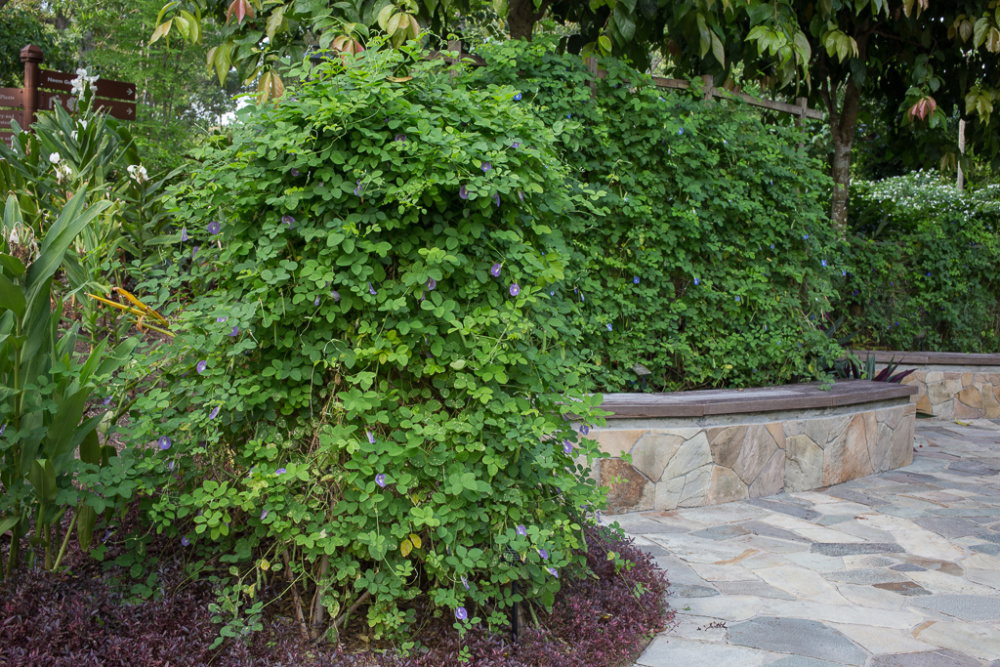
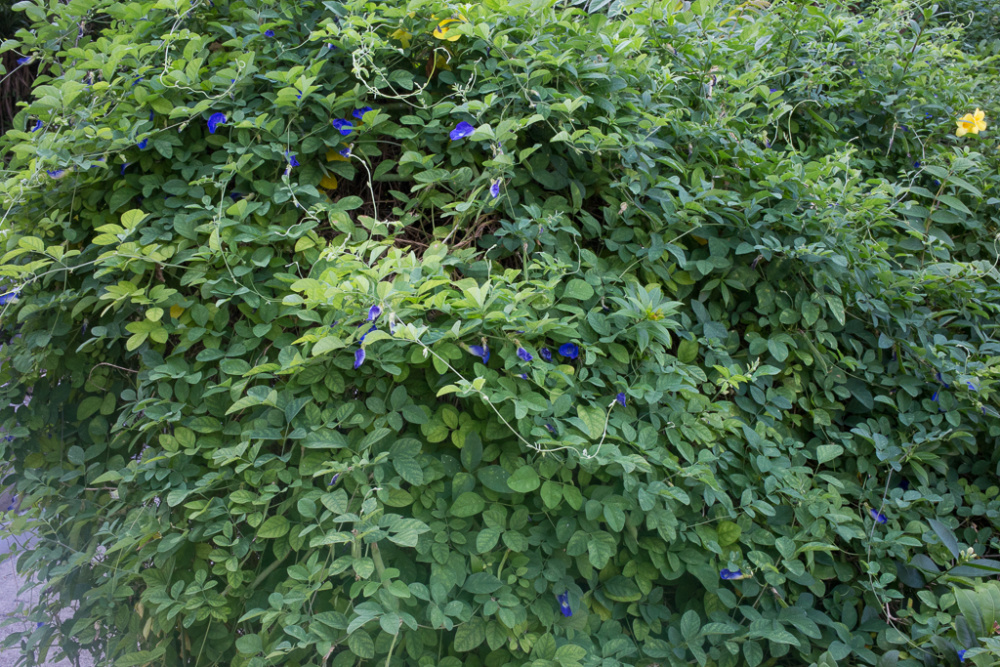
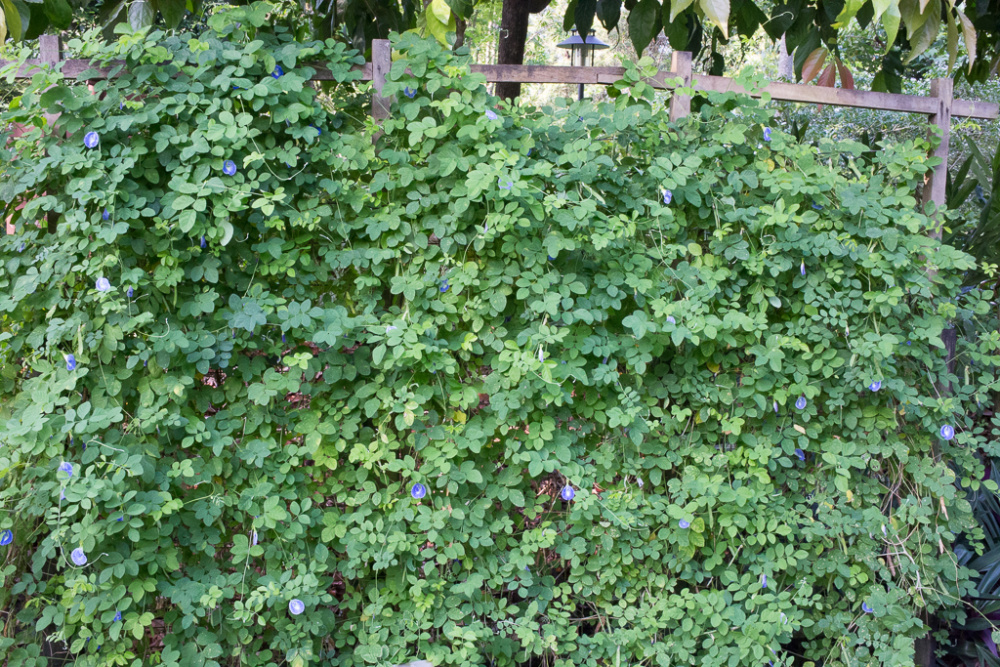
It is fast-growing and produces a large taproot below ground, above which grow finely hairy, slender, green herbaceous stems 3 to 5 m (10 to 15 ft) long. These twist and climb their way up on any structure or a nearby object, entwining and sometimes completely covering them.
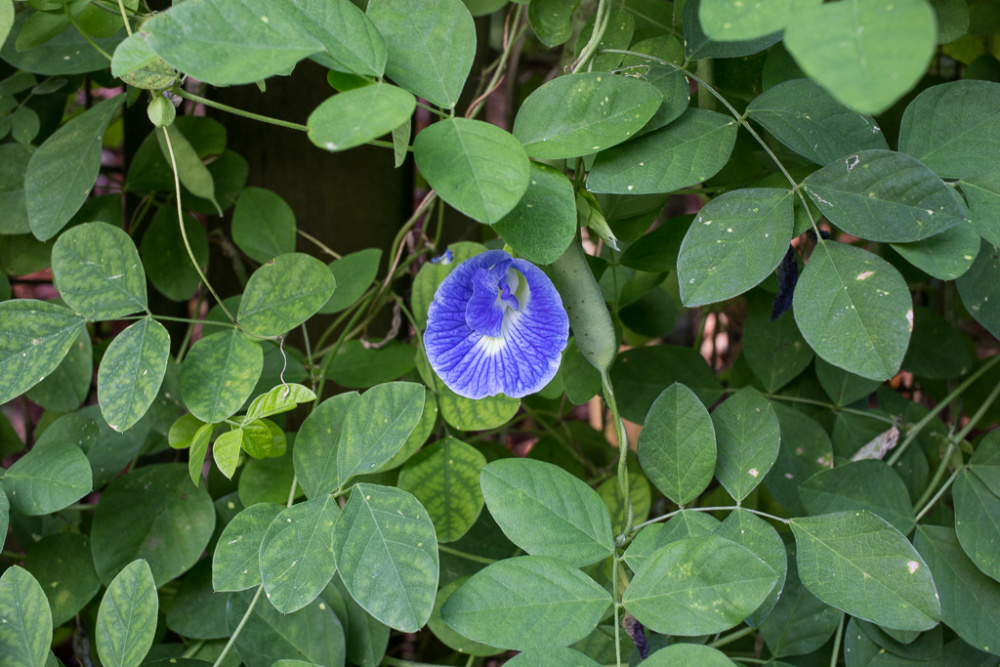
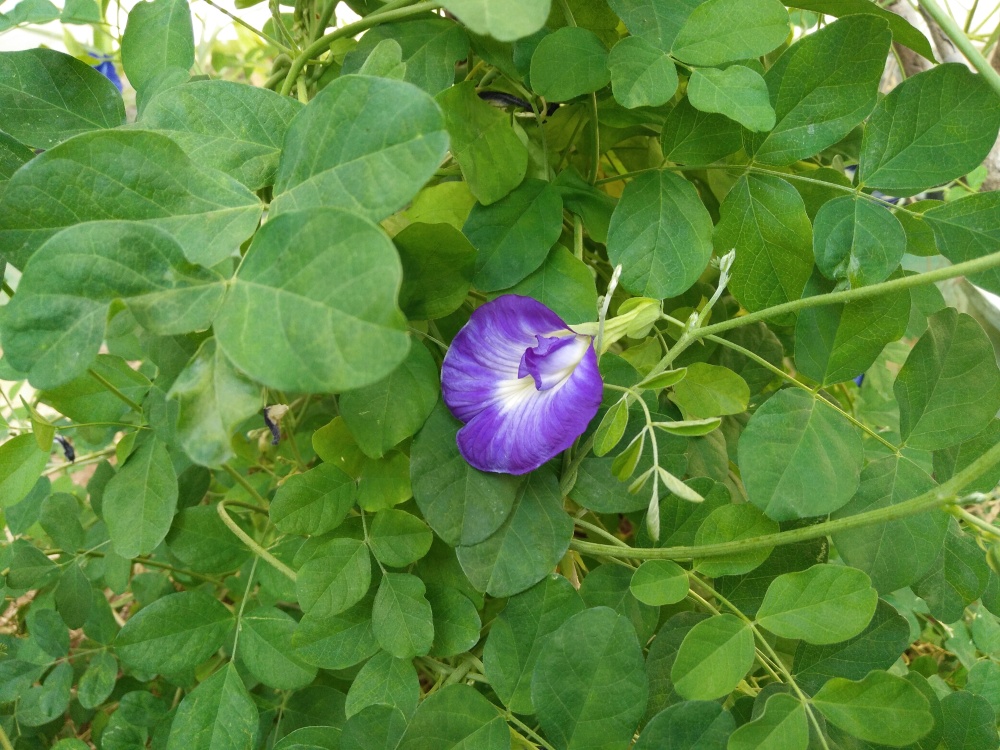
The leaves are feathery, made up of small green oval leaflets 2 to 5 cm (0.8 to 2 in) long, arranged in two, three or four pairs along the length, and an extra leaflet at the tip.
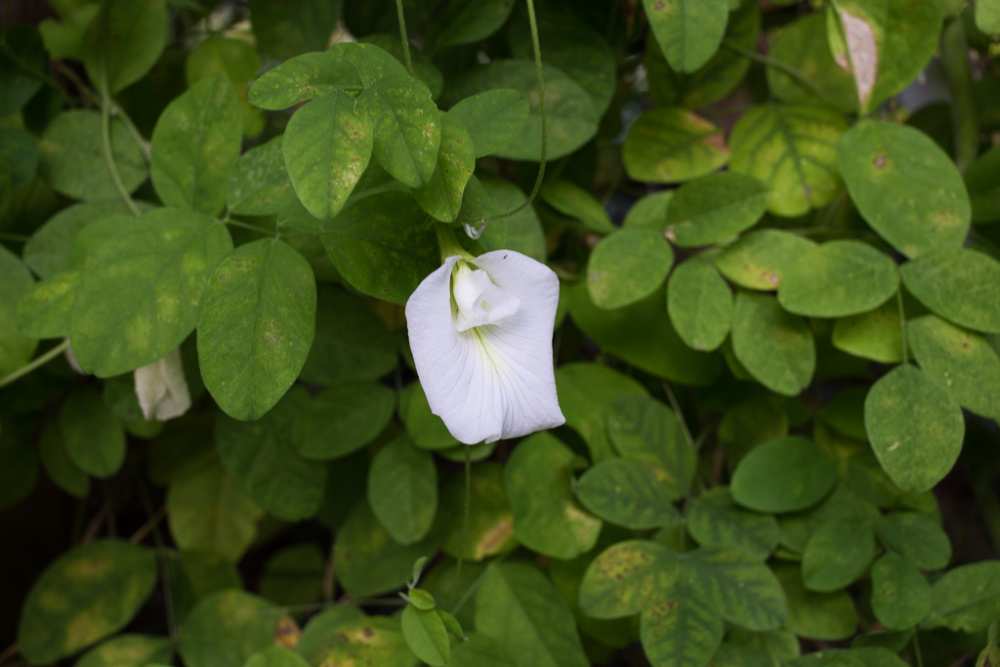
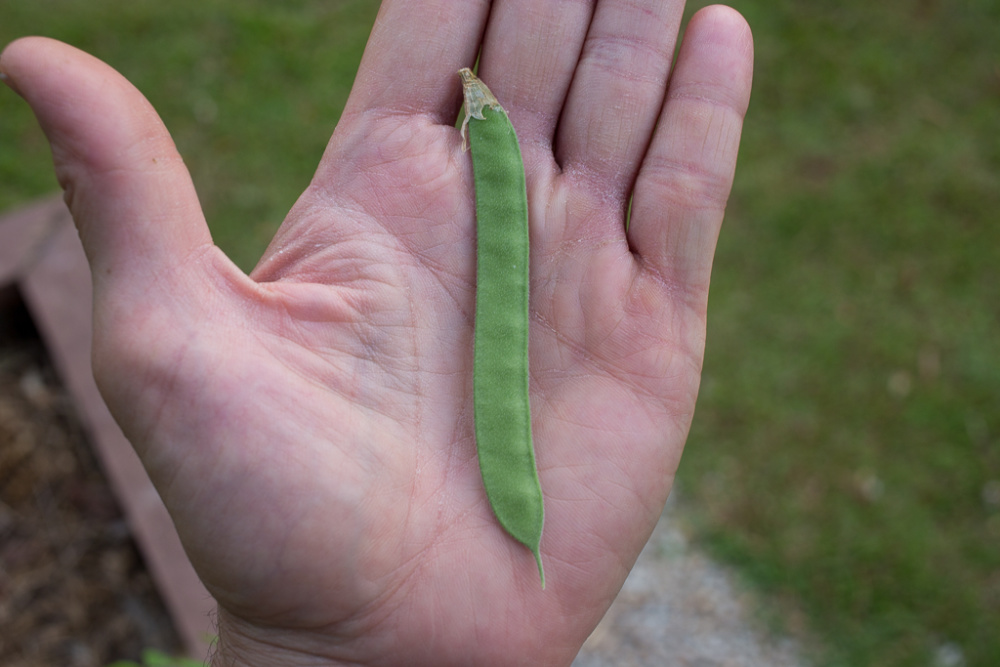
The flowers are pea-like in shape, resembling those of other legumes, purple-blue in colour, and stained white at the centre, or, less commonly, pure white. They arise singly or in pairs spaced far apart along the vine and bloom on and off throughout the year. Slender seedpods follow, 6 to 11 cm (2.3 to 4.3 in) long, green when young, becoming brown and dry, with up to 10 blackish seeds inside.

Singapore Botanic Gardens
Material uses
Natural dye - The blue flowers yield a dye containing 'ternatin', a pigment similar to litmus, which is widely used to indicate acidity and alkalinity. The dye is traditionally used for fabric and fibre, as well as for colouring hair. It is made by drying the flowers, crushing them to a powder, and mixing them with ten parts water. Altering the pH of the dye liquor produces colours in the red and blue regions of the spectrum, and adding mordants such as ferrous sulphate, copper sulphate, or lemon juice helps make the dye colour-fast.
Hair tonic - The flowers are rich in bioflavonoids, natural compounds found in modern-day hair products that reportedly stimulate hair growth and make hair thick and lustrous.
Natural insecticide - Extracts from the plant have recently been used to develop a natural, non-synthetic biopesticide (sold as Sero-X), which is claimed to be highly effective against pest insects yet safe for bees and other pollinators.
Livestock forage - The herbaceous parts are highly palatable to livestock and can be grown in pastures as forage.
Livestock feed - Also used as fresh-cut feed, or harvested together with tall grasses for rotational hay or silage production. The fresh-cut parts, including the leaves, flowers, and soft stems, have a crude protein content of about 19% of their dry weight.
Edible uses
Cooked vegetable - The young seedpods are edible and usually cooked as a vegetable.
Salad vegetable - The flowers are also edible and are added to salads as a garnish.
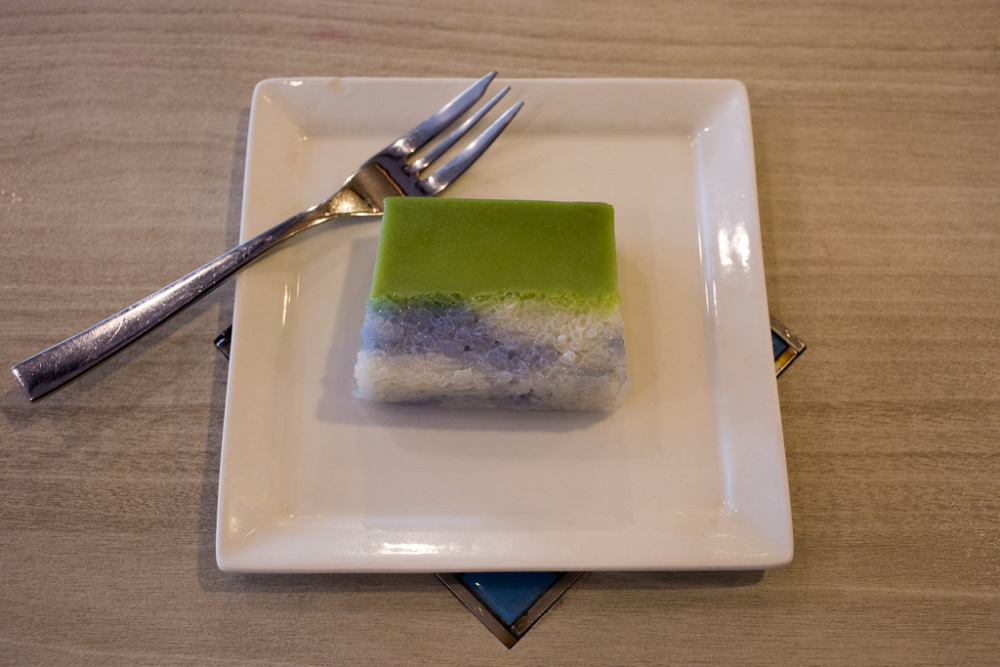
Natural food colouring - Aqueous extracts of the flower are also used traditionally as food colouring.
Environmental uses
Trellis or arbour plant - Butterfly Pea is cultivated to climb and cascade over arbours and trellises.
Wall or fence cover - Also grown over walls and fences.
Shade or privacy screen - Quickly screens or shades an area.
Flowering ornamental - Valued for its feathery foliage and showy, pea-like flowers.
Groundcover - Also used in agriculture as orchard ground cover, because of its deep taproot and fast growth.
Erosion control - Also used for erosion control.
Green manure - Also used as green manure.
Nitrogen-fixing - Its nitrogen-fixing abilities support these environmental services.
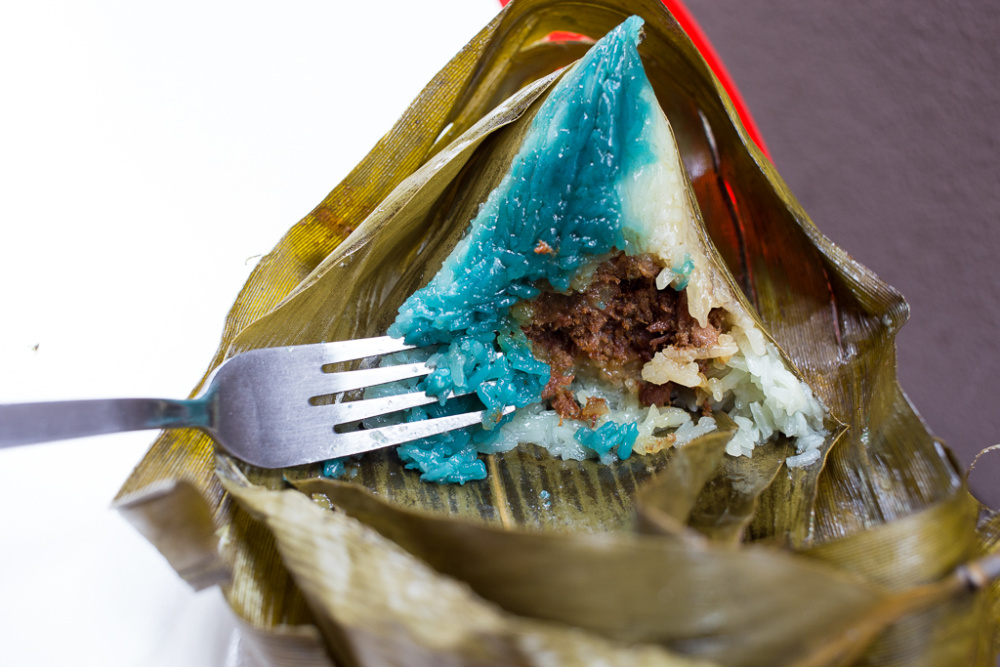
Natural food colouring (Singapore)
General interest
The first part of the botanical name, 'Clitoria', comes from the flower's resemblance to the female genitalia.
Climate
Grows naturally in sub-humid to moderately humid subtropical and tropical climates, generally in frost-free areas with annual lows of 15 to 25°C, annual highs of 26 to 35°C, annual rainfall of 700 to 4500 mm and a dry season of 6 months or less. Under dry-season conditions, the plant enters a dormant stage in which growth slows. The foliage dies down but recovers again when the rains return.
Growing
New plants are usually started from seed but can also be raised from cuttings. Performs best on free-draining clay loam, loam, and sandy loam soils of a moderately acid to alkaline nature, generally with a pH of 5 to 8.5, and on sites with full to partial sun exposure. It has good tolerance to drought and limestone soils.
Problem features
Butterfly Pea reseeds naturally and is a declared noxious weed and invasive species in Australia. The Hawaii Pacific Weed Risk Assessment project (HPWRA) assessed it as a high weed risk species for Hawaii.
Mature seeds are a strong purgative and should not be ingested.
Where it grows
References
Books
-
Adams, C. D. 1972, Flowering plants of Jamaica, University of the West Indies, Mona, Greater Kingston
-
Allen, O. N. & Allen, E. K. 1981, The Leguminosae : a source book of characteristics, uses, and nodulation, University of Wisconsin Press, Madison, Wisconsin
-
Chami J. & Invernizzi, L. 2002, Thai spa book : the natural Asian way to health and beauty, Periplus Editions, Hong Kong
-
Chaplin, L. T. & Brandies M. M. 1998, The Florida Gardener's Book of Lists, Taylor Publishing Company, Dallas, Texas
-
Duke, J. A. 1981, Handbook of legumes of world economic importance, Plenum Press, New York
-
Fawcett, W. 1891, Economic plants, An index to economic products of the vegetable kingdom in Jamaica, Jamaica Government Printing Establishment, Kingston
-
Gohl, B. 1981, Tropical Feeds : feed information summaries and nutritive values (Revised edition), Food and Agriculture Organization of the United Nations (FAO), Rome
-
Griffiths, M. & Burras, J. K. 1994, Manual of climbers and wall plants, Royal Horticultural Society (Great Britain), Timber Press, Portland, Oregon
-
Jex-Blake, A. J. 1957, Gardening in East Africa : a practical handbook, 4th ed., Royal Kenya Horticultural Society, Longmans, Green and Company, London
-
Martin, F. W & Ruberte, R. M. 1975, Edible leaves of the tropics, U.S. Agency for International Development (USAID), and the Agricultural Research Service, U.S. Department of Agriculture (USDA), Mayaguez, Puerto Rico
-
Menninger, E. A. 1970, Flowering vines of the world : an encyclopedia of climbing plants, Hearthside Press, New York
-
Oakman, H. 1995, Harry Oakman's what flowers when : the complete guide to flowering times in tropical and subtropical gardens, University of Queensland Press, St. Lucia, Queensland
-
Parrotta, J. A. 2001, Healing plants of peninsular India, CABI Publishing, Wallingford, Oxfordshire
-
Randall, R. P. 2002, A global compendium of weeds, R.G. and F.J. Richardson Press, Melbourne
-
Randall, R. P. 2007, The introduced flora of Australia and its weed status, Cooperative Research Centre for Australian Weed Management, Glen Osmond, South Australia
-
Rauch, F. D. & Weissich, P. R. 2000, Plants for tropical landscapes : a gardener's guide, University of Hawaii Press, Honolulu
-
Wong, C. & Thuras, D., 2021. Gastro Obscura: A Food Adventurer's Guide. Workman Publishing Company, United States.
Articles, Journals, Reports and Working Papers
-
Growth Agriculture Pty Ltd 2019, Sero-X Horticulture Technical Manual, Growth Agriculture, Wee Waa, New South Wales