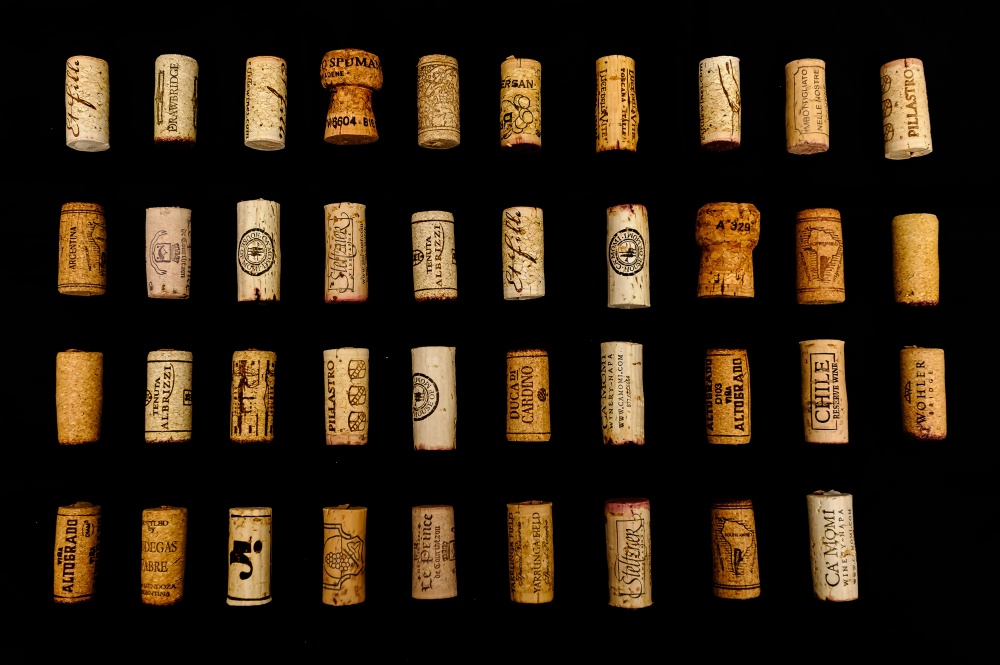


Common name: Cork Oak
Description
Cork Oak is a long-lived, semi-evergreen tree native to the Mediterranean region, with a natural range extending from Portugal through Spain and North Africa to southern coastal France and Italy. As its name suggests, it is the source of commercial cork, which comes from its bark.
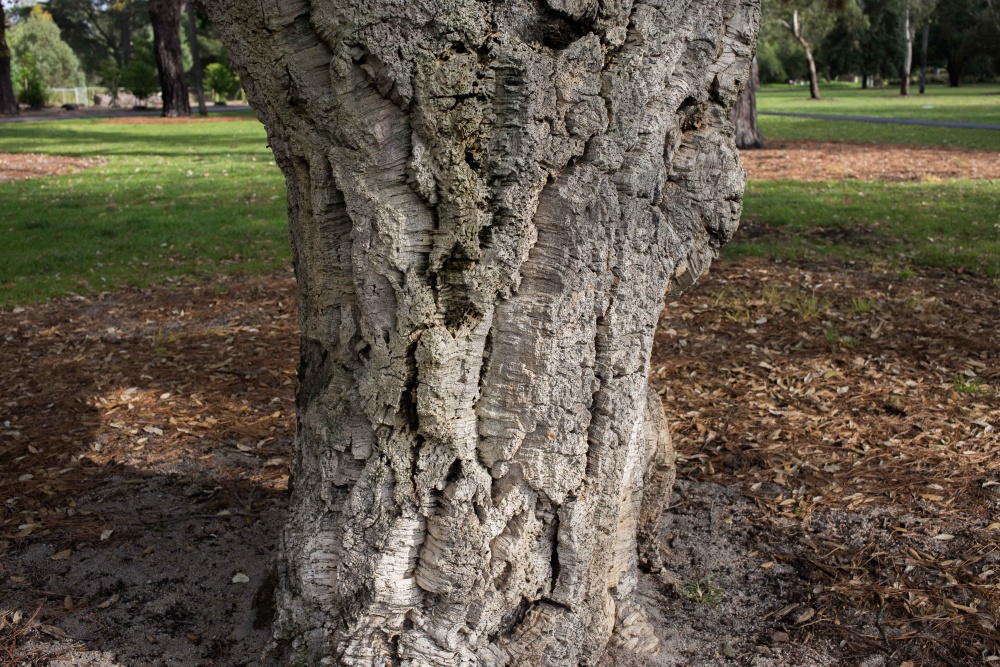
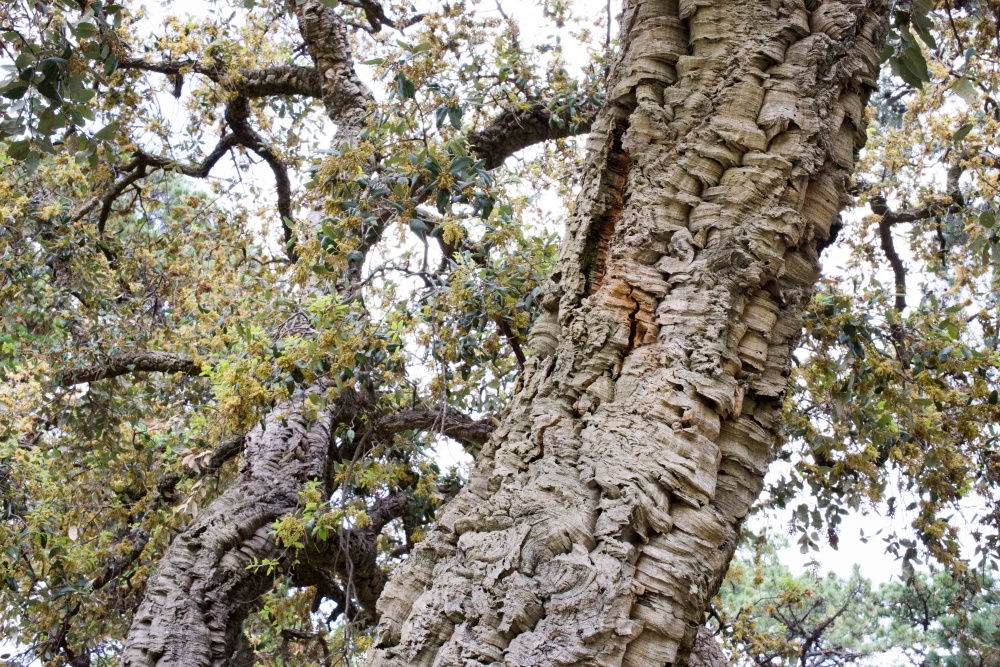
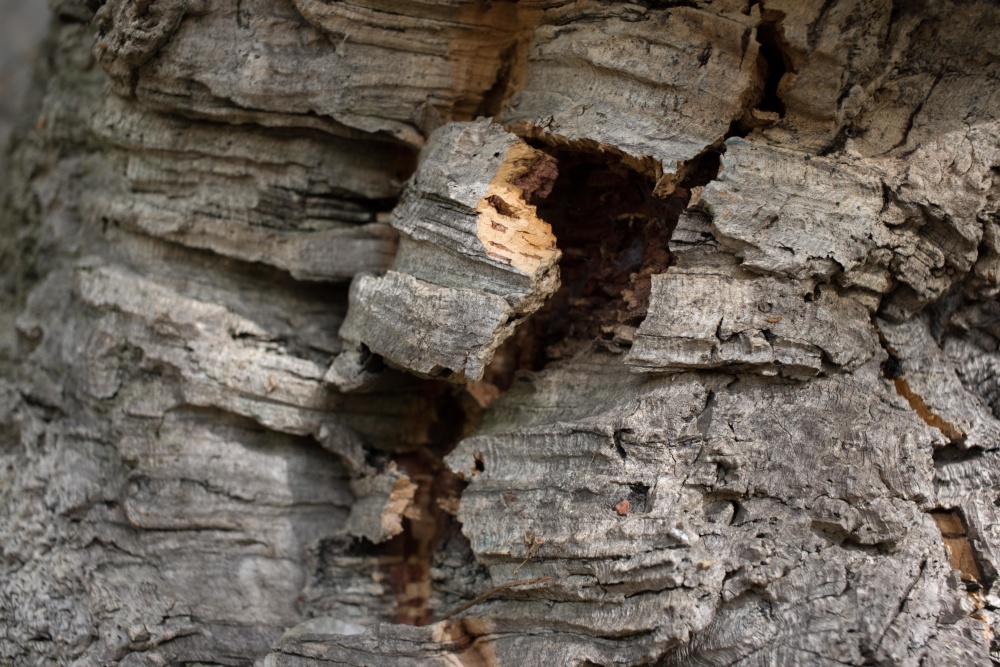
It is a slow-growing tree, to heights of up to 25 m (80 ft) with a trunk diameter of 1.2 m (4 ft). However, it is more typically 10 to 20 m (30 to 60 ft) tall, with a stout trunk supporting a sizeable rounded crown. The trunk and main branches are covered in light-grey bark that is gnarly, rough and up to 10 cm (4 in) thick.
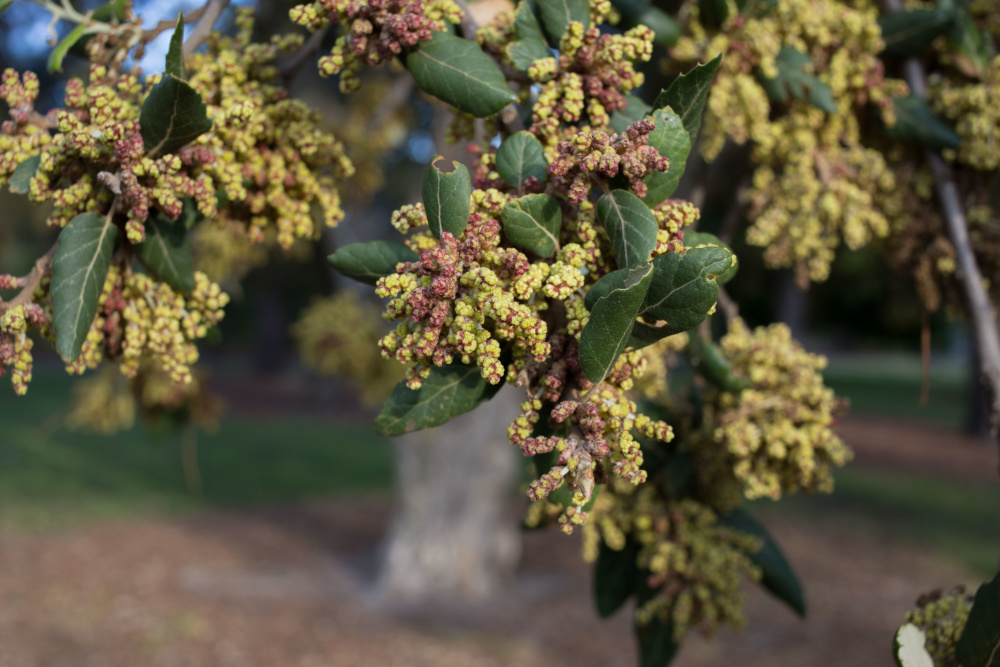
Leaves are oval, small, 2 to 8 cm (1 to 3 in) long, serrated on the margins, dark glossy green on top, and dull grey underneath. They remain on the tree in all seasons, though some leaf fall occurs during extreme dry or cold periods.
Flowers are small and insignificant, yellow, either female or male on the same tree and in catkin-like clusters arising at the ends of the branches. They bloom in spring, at which time the male flowers release their pollen, which gets carried by the wind to pollinate the female flowers.
Fertilised female flowers develop into a hard nut commonly known as an acorn, which is egg-shaped, dark green and half-covered by a bowl-shaped cap. Enclosed is a single, oil-rich seed, though occasionally there may be two or even three seeds inside.
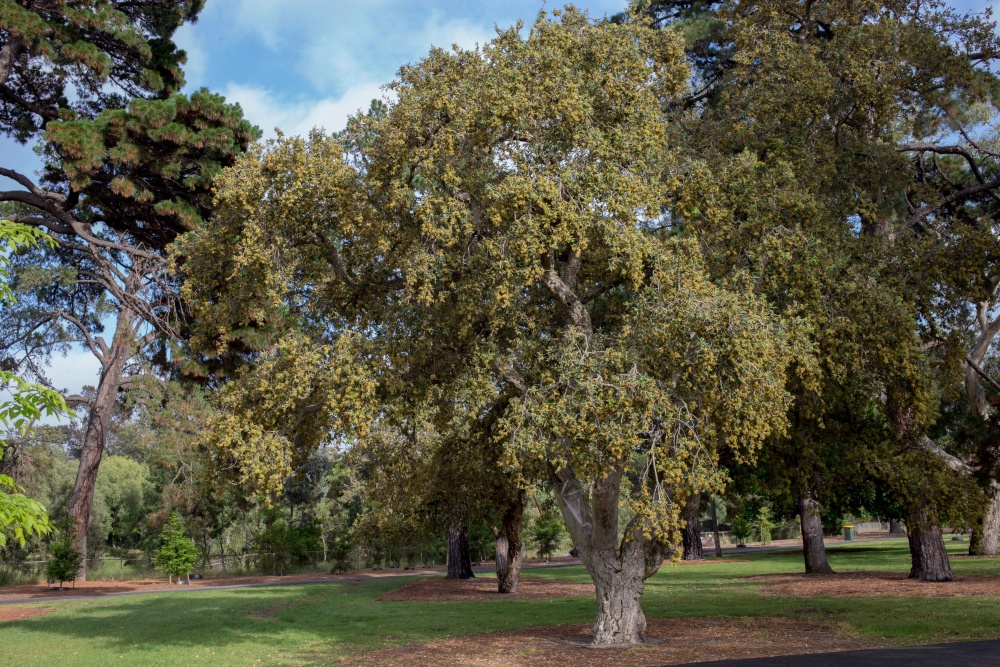
Cork Oak tree (Melbourne, Australia)
Material uses
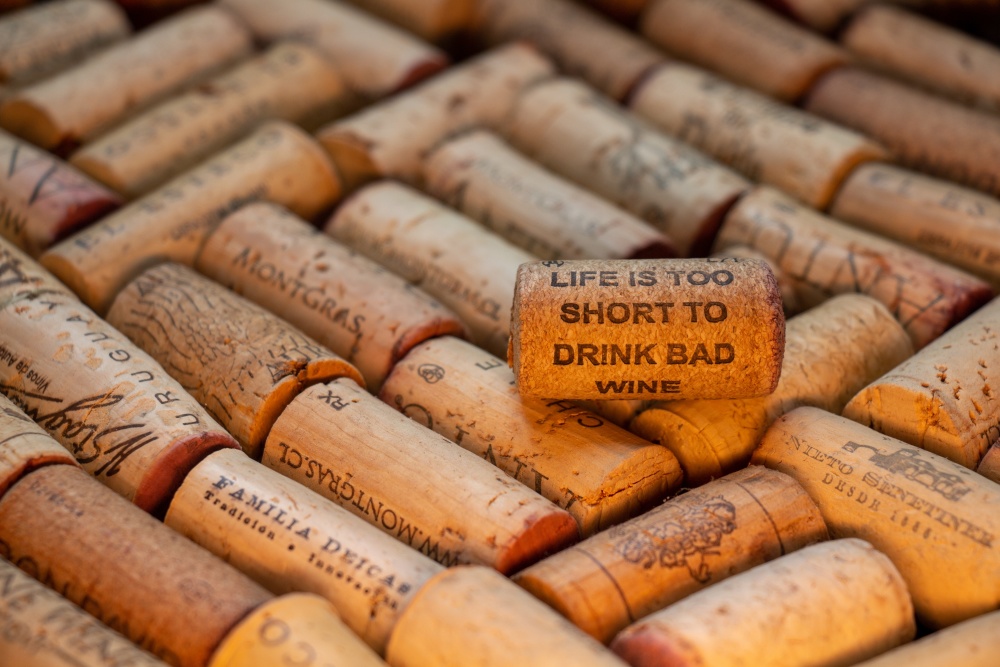
Natural cork - Cork Oak bark has been harvested for centuries as commercial cork, traditionally to make cork stoppers that seal bottles filled with liquids such as wine and olive oil. Although cork stoppers represent only 15 to 20% of cork usage by volume, they account for 75 to 80% of its market value.
Today, cork is used not only to make bottle stoppers but also for a diverse range of products, including panels for heat and sound insulation, friction and vibration pads, seals, and buoyancy material for flotation devices, including surfboards. Cork is lightweight, weighing around 225 kg per cubic meter (14 lb per cubic ft), which is lighter than water and therefore floats. Only Balsa (Ochroma pyramidale) is lighter, at 128 to 192 kg per cubic meter (8 to 12 lb per cubic ft).
Granulated cork, made from leftover material such as cork stopper manufacture, is combined with rubber from the Rubber tree (Hevea brasiliensis) to make cork/rubber composites that are lightweight, compressible and flexible. Easily moulded and shaped, these composites are made into sealed gaskets used in automotive engine blocks, vibration pads, oil retainers, polishing wheels, roll coverings, linoleum for floor coverings, shoe soles and packaging for perishable products such as fruit.
Livestock forage - The acorns are usually left to fall to the ground to be foraged by pigs. Acorn-fed, Black Iberian pigs found in Spain and Portugal produce one of the world's most prized and expensive hams, known locally as 'Jamon Iberico', whose reputation and popularity have spread worldwide.
Environmental uses
Public garden tree - Valued for its botanical interest as the source of commercial cork, Cork Oak is often planted as an amenity tree in parks and public gardens.
Shade tree - It is also valued in these settings for the shade it provides.
Edible uses
Edible nut - The acorns can also be roasted and eaten.
Climate
Cork Oak grows naturally and produces quality cork in Mediterranean climates. Generally, areas with annual lows of 6 to 17°C, annual highs of 19 to 32°C, annual rainfall of 600 to 1100 mm and a summer dry season of 7 months or less, extending to 12 months with irrigation or groundwater.
Although the trees also grow well in areas with summer and uniform rainfall patterns - such as Eureka, California; London, England (e.g. the Chelsea Physic Gardens); Wellington, New Zealand; Kruger National Park, South Africa, and Australia, in Hobart, Canberra, Melbourne, Bowral and Tenterfield - the quality of the cork produced is inferior to cork coming from areas with a distinct summer dry season. Wet conditions at the wrong time also make the tree susceptible to disease.
The best-quality cork comes from warm Mediterranean regions with a pronounced summer dry season and average highs above 25°C (77°F) in the warmest month. Slow bark growth, caused by low water availability during the active growing season, results in fine-textured cork with a dense cell structure suitable for high-value products such as cork stoppers for wine and champagne bottles.
Growing
New plants are usually started from acorns, which benefit from being soaked in water for a couple of days to improve germination. Any acorns that float are discarded, leaving only the healthy acorns that are then sown directly in the soil where the tree will grow. Direct sowing helps seedlings develop a strong root system faster than transplanting, increasing their chances of surviving their first dry summer season.
Performs best on deep, free-draining loam, sandy-loam, loamy-sand and gravelly soils of a moderately acid to neutral nature, generally with a pH of 5.0 to 7.0, and on sites with full to partial sun exposure. Cork Oak trees are tolerant of drought conditions but intolerant of excessive moisture, which increases the tree's susceptibility to disease and may also cause the bark to rot.
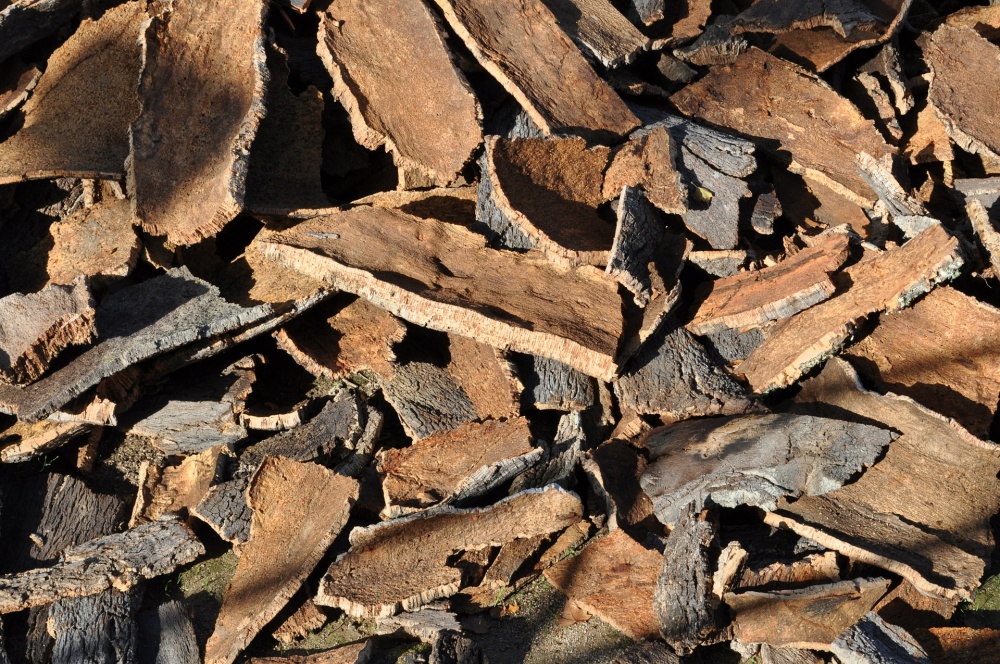
Cork harvest occurs from late spring to summer when the tree is actively growing and the cork, or outer bark, separates from the inner bark, making it easy to peel off without damaging the tree. Underneath the gnarly surface is the pale red-brown, corky, and spongy layer that is the cork of commerce.
The trees are around twenty-five years old when first harvested for their cork. After that, they are stripped every 9 to 12 years. Because they live up to 150 years, they can be harvested about 12 times over their lifetime. However, cork from young trees is inferior, being hard, irregular, and generally unsuitable for making cork stoppers used to seal wine and champagne bottles. Only from the third harvest on is premium-quality cork obtained.
Cork trees produce an average of 40 to 60 kg (88 to 132 lbs) of usable cork. But before making anything with it, it must be dried for six months or more, then steamed to soften it, make it more flexible, and kill any insects.
While most cork comes from natural forests, it's important to note that the highest concentrations of trees are in plantations, such as those in São Brás de Alportel, in the Algarve region of Portugal. These carefully managed plantations reflect the industry's commitment to sustainability and preserving natural resources.
Problem features
Cork Oak pollen can cause allergies or hay fever in some people.
Spent flowers and fallen acorns can create litter.
Where it grows
References
Books
-
Brady, G. S. & Clauser, H. R & Vaccari, J. A. 2002, Materials handbook : an encyclopedia for managers, technical professionals, purchasing and production managers, technicians and supervisors, 15th ed., McGraw-Hill, New York
-
Crane, E., Walker, P. & Day, R. 1984, Directory of important world honey sources, International Bee Research Association, London, United Kingdom
-
Editors of Sunset Magazine 2012, The New Western Garden Book: The Ultimate Gardening Guide, 9th edition, Sunset Publishing Corporation, California
-
Gilman, E. F. 1997, Trees for urban and suburban landscapes, Delmar Publishers, Albany, New York
-
Jelks, Mary 1986, Allergy plants : that cause sneezing and wheezing, 1st ed., World-Wide Publications, Tampa, Florida
-
Menninger, E. A. 1967, Fantastic trees, Viking Press, New York
-
Menninger, E. A. 1977, Edible nuts of the world, Horticultural Books, Stuart, Florida
-
Randall, R. P. 2002, A global compendium of weeds, R.G. and F.J. Richardson Press, Melbourne
-
Streets, R. J. & Troup, R. S. 1962, Exotic forest trees in the British Commonwealth, Oxford University Press, Oxford, England
-
Tudge, C. 2006, The secret life of trees : how they live and why they matter, Penguin, London
-
Wickens, G. E 1995, Edible nuts, Food and Agriculture Organization of the United Nations (FAO), Rome