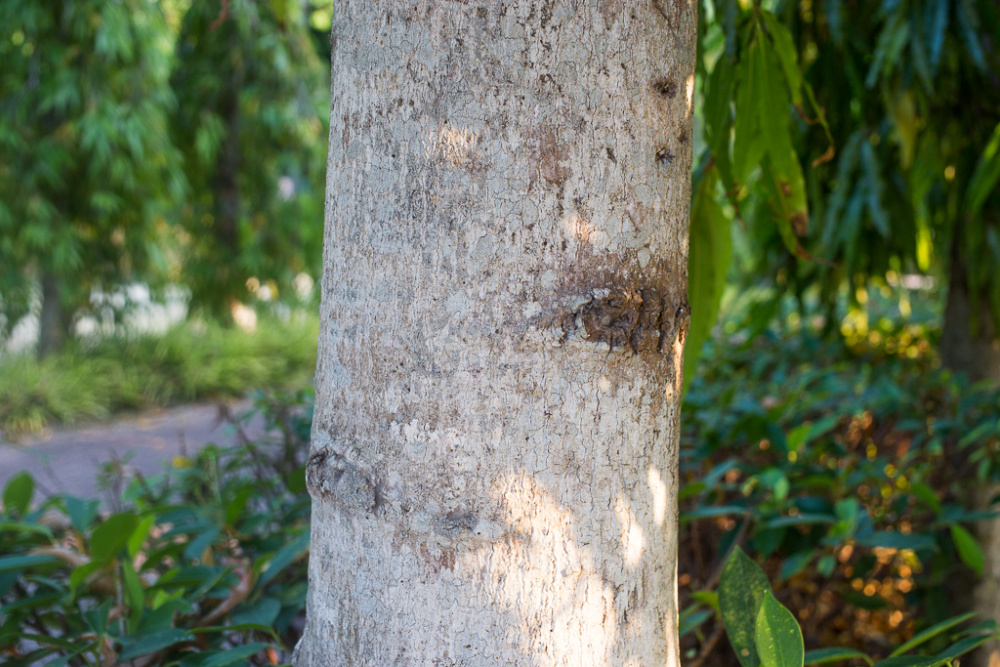


Common name: Indian Mast Tree
Other common names: Cemetery Tree, Indian Fir, Mast Tree
Description
Originating in India and Sri Lanka, this landscape tree grows moderately slowly to 10-18 m (30-60 ft) tall.
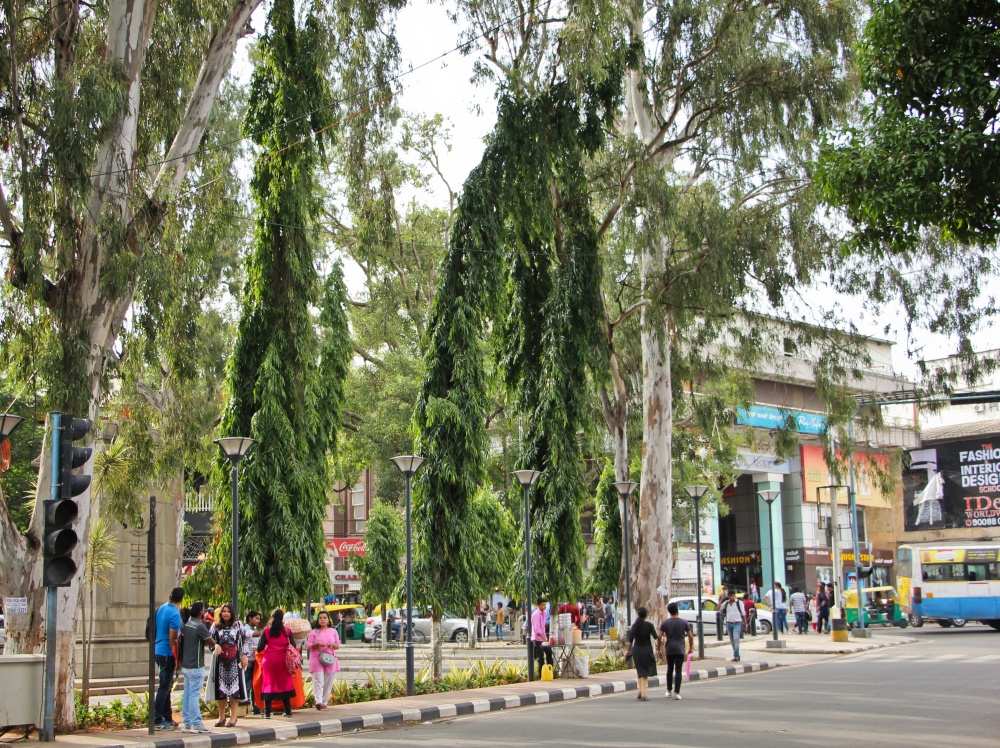
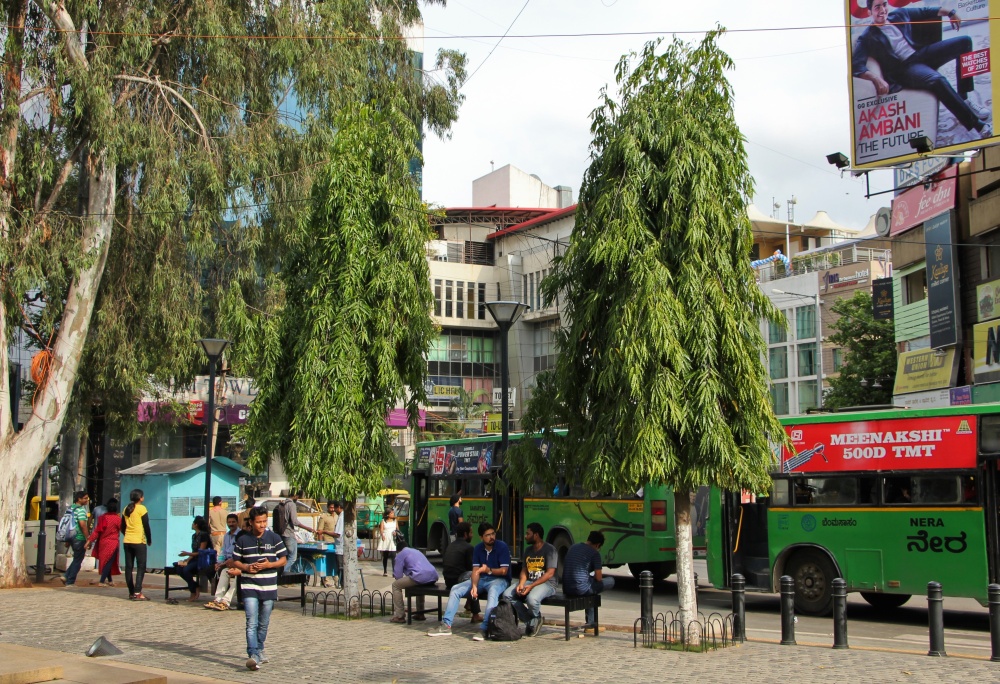
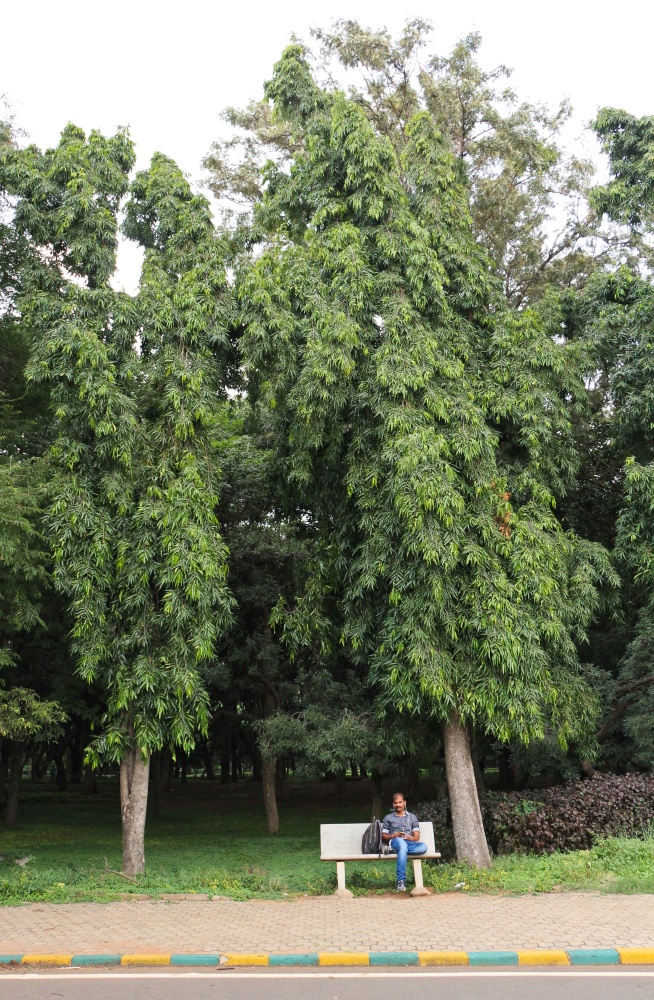
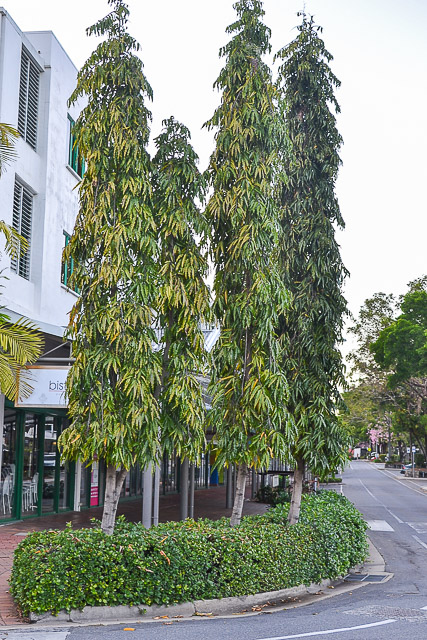
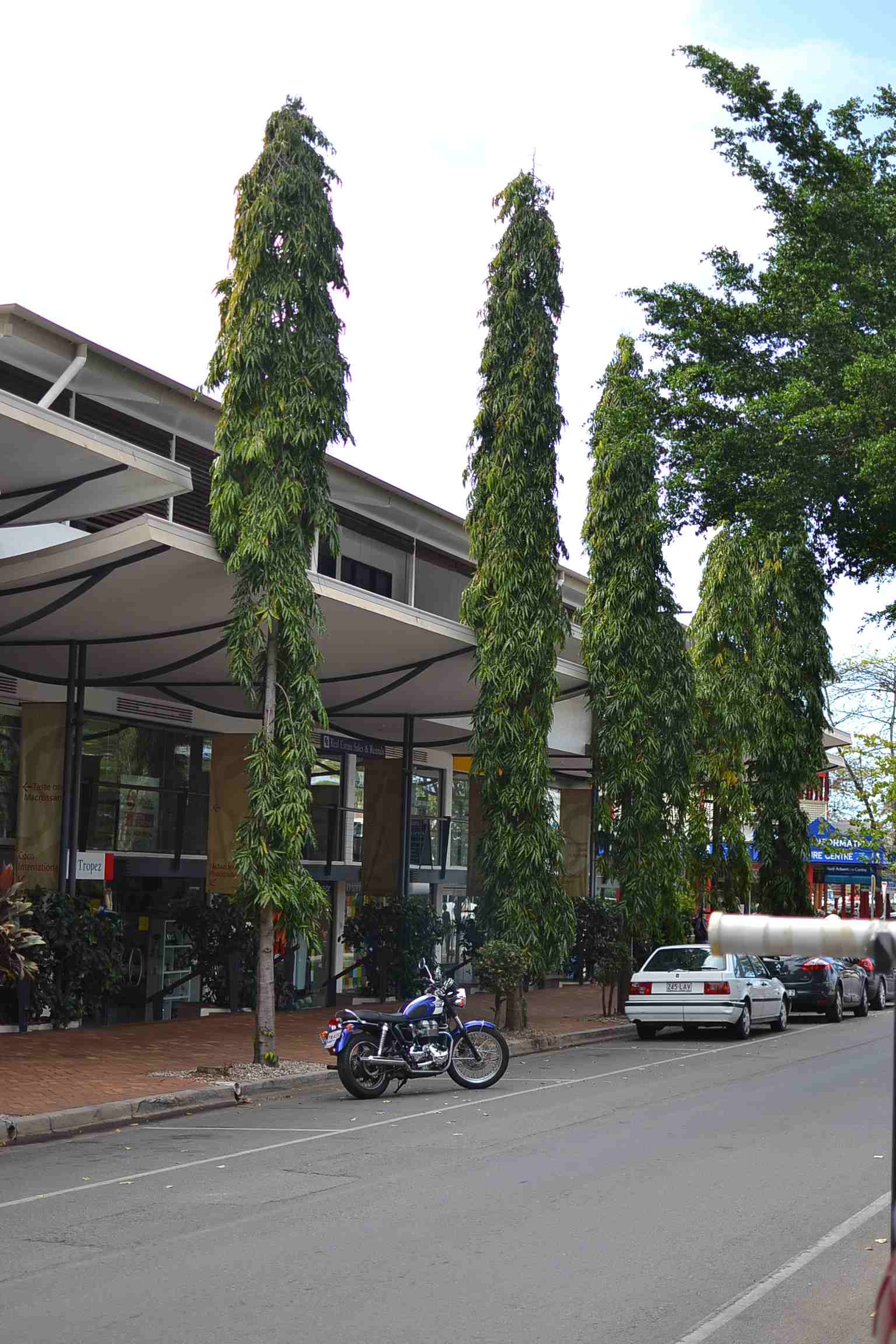
There are two varieties in cultivation. The more striking var. pendula has a straight, slim trunk and short, drooping branches, resulting in a narrow columnar shape not usually seen in tropical trees. The less common variety, var. angustifolia, has wide-spreading branches that form a pyramidal crown. The bark is grey and smooth.
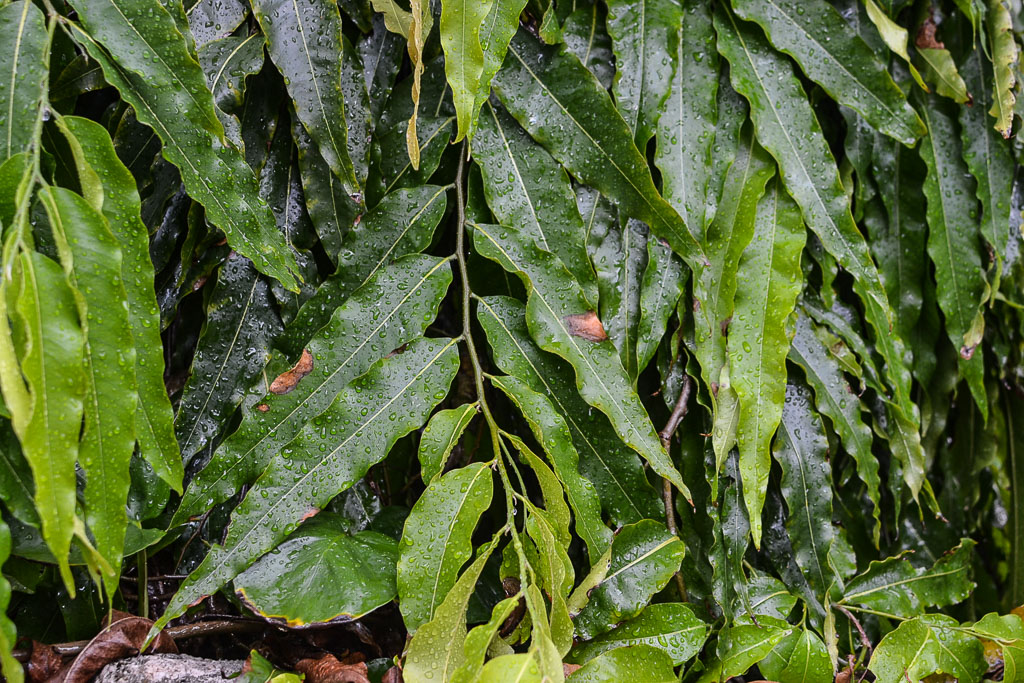
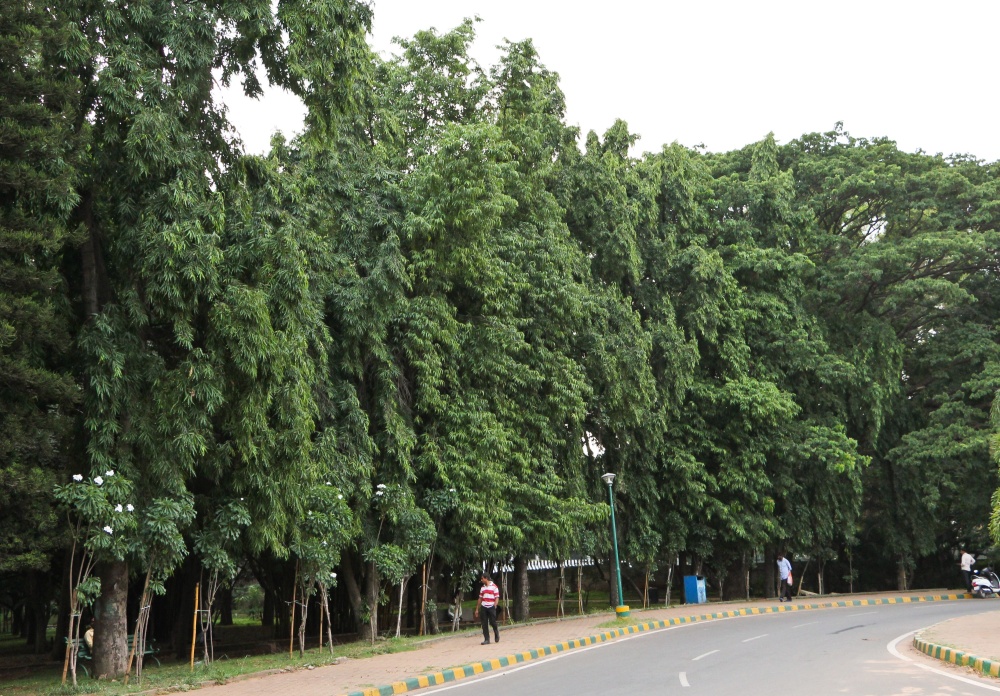
Leaves are lance-shaped with wavy margins and, depending on their age, either bronze, lime green or dark green. They remain on the tree in all seasons, forming a dense arrangement that almost completely cloaks the trunk in lush greenery from near the tree's bottom to the top.
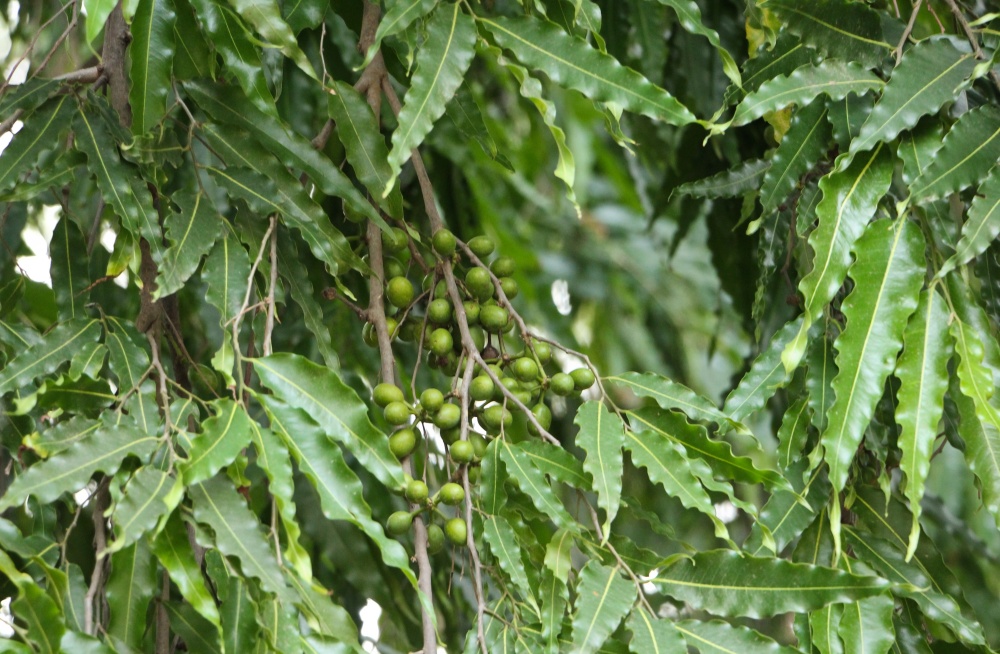
For a brief period in spring, masses of pale yellow-green star-shaped flowers bloom amid the leaves. These are followed by green, coffee-berry-like fruit with a single seed, ripening to dark purple or near black from summer to autumn.
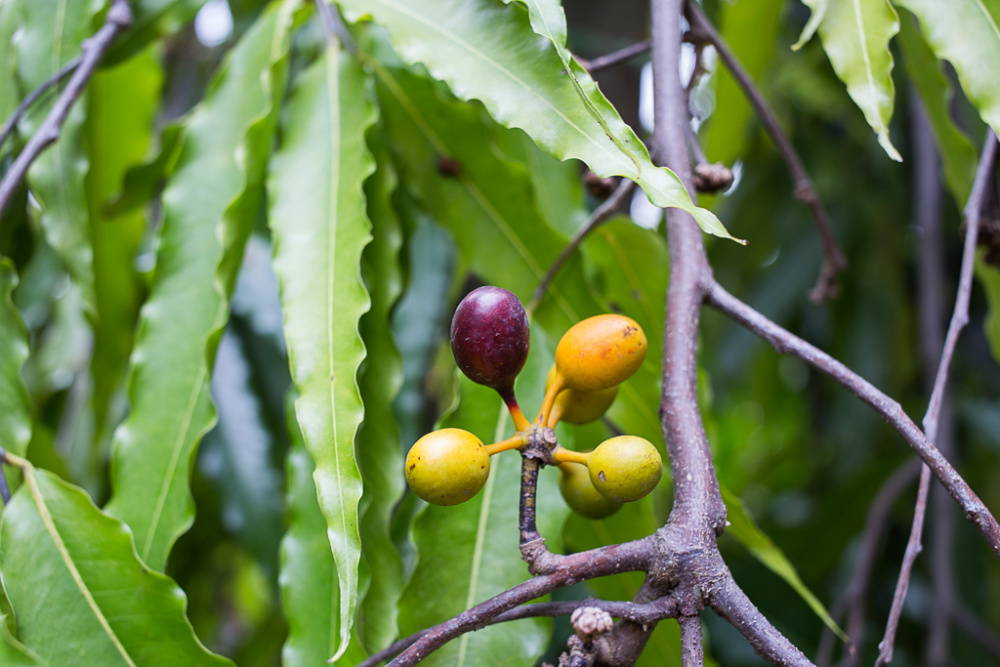
Fruit at various stages of ripening
Environmental uses
Street tree - The narrowly shaped weeping variety, var. pendula, is widely cultivated as a street tree in India, Sri Lanka, and Southeast Asia for its compact form and lush green foliage.
Hedge plant - Closely spaced, it forms a tall hedge,
Shade or privacy screen - ...useful for privacy screening,
Shade tree - ...also for shade,
Windbreak - ...and as a windbreak.
Material uses
Hardwood - The wood is yellowish to grey-white, medium-weight, averaging around 590 kg per cubic metre (37 lb per cubic ft), but has low natural resistance to rot and decay. Further, the trunk diameter is too small to make sawing into lumber practical.
Wood craft and wares - It is reportedly suitable only for making light articles, such as matches and pencils.
Musical instruments - However, in parts of its native range, it is also crafted into drums.
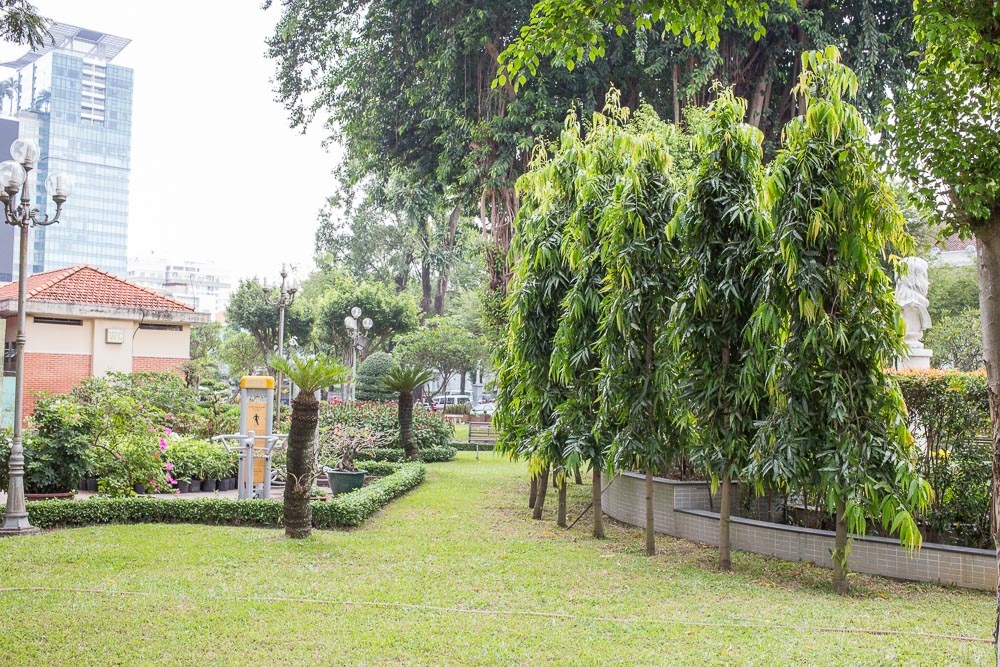
As a privacy screen (Ho Chi Minh City, Vietnam)
General interest
The botanical name Polyalthia comes from the Greek words poly, meaning "many", and althia (derived from Althea ), meaning "cure". However, the plant does not appear to have widespread medicinal use.
Climate
Grows naturally in sub-humid to humid subtropical and tropical climates, generally frost-free areas with annual lows of 14 to 25°C, annual highs of 25 to 36°C, annual rainfall of 700 to 4000 mm and a dry season of 8 months or less, extending to 12 months with irrigation or groundwater.
Growing
New plants are usually started from seed, which remain viable only for a relatively short time. After harvest, the ripe fruit is left out in the open for the rind to rot and soften, making seed extraction easier. The seeds are then washed and air-dried under shade. Sown in a free-draining potting mix, most germinate within two to three weeks, and the young seedlings are cared for in a nursery for around a year before being planted out. Care is taken when transplanting not to damage the delicate roots.
It performs best in full to partial sun and in rich, free-draining clay-loam, loam, sandy loam, and loamy sand soils of a slightly acid to neutral nature, generally with a pH of 5.5 to 7.5. Young plants need water and protection from wind, especially in hot, dry conditions. Once established, they tolerate drought well.
Problem features
The fruit attracts bats and birds that feed on it and disperse the seed. However, there do not appear to be any records of its escape and naturalisation anywhere, despite its widespread cultivation outside of its native range. The Hawaii Pacific Weed Risk Assessment (HPWRA) project assesses it as a low weed-risk species for Hawaii.
Where it grows
References
Books
-
Barwick, M., et al. 2004, Tropical & subtropical trees : a worldwide encyclopaedic guide, Thames and Hudson, London
-
Council of Scientific and Industrial Research (India) 1948 - 1976 (11 volumes), The Wealth of India : a dictionary of Indian raw materials and industrial products, Delhi
-
Jim, C.Y. 1990, Trees in Hong Kong: Species for Landscape Planting, Hong Kong University Press, Hong Kong
-
Krishen, P. 2006, Trees of Delhi : a field guide, Dorling Kindersley Publishers, Delhi
-
Luna, R. K 1996, Plantation trees, International Book Distributors, Dehradun, Uttarakhand
-
Macmillan, H. F. 1943, Tropical planting and gardening : with special reference to Ceylon, 5th ed, Macmillan Publishing, London
-
Parrotta, J. A. 2001, Healing plants of peninsular India, CABI Publishing, Wallingford, Oxfordshire
-
Prasanna, P.V. 2012, Trees of Hyderabad: A Pictorial Guide, 1st ed., Botanical Survey of India (BSI), Indian Government Ministry of Environment and Forests, Kolkata
-
Randall, R. P. 2002, A global compendium of weeds, R.G. and F.J. Richardson Press, Melbourne
-
Randall, R. P. 2007, The introduced flora of Australia and its weed status, Cooperative Research Centre for Australian Weed Management, Glen Osmond, South Australia
-
Redhead, J. F. & Hall, J. B. 1992, Tropical forestry, Longman, London
-
Troup, R.S. & Joshi, H. B. 1975 to 1981, Silviculture of Indian Trees (3 volumes), Government of India Publications, New Delhi