

Common name: Avocado
Other common names: Avocado Pear, Alligator Pear, Butter Pear, Pear, West Indian Avocado
Description
Originating from Central America, the Avocado tree has a natural range extending from Mexico through Guatemala to Nicaragua. Nowadays, it is cultivated worldwide for its fruit, eaten mostly as a salad vegetable.
Avocados come in a wide range of varieties, all of which derive from three main types: Mexican, Guatemalan, and West Indian. The Guatemalan and West Indian types bear large round, oval or pear-shaped fruit, distinct from the Mexican type, which bears smaller, mostly pear-shaped fruit.
The three types also differ in their climate requirements. The West Indian type grows best in tropical lowland areas, and the Mexican and Guatemalan types best in tropical highland, subtropical and warm-temperate areas.
Wild trees may reach heights up to 20 m (65 ft). However, they are typically 5 to 15 m (16 to 50 ft) tall in cultivation, with a short, stout trunk supporting a wide-spreading umbrella-shaped crown. The bark is grey or brown, slightly rough and fissured.
Leaves are elongated and oval, with tapered ends, 10 to 20 cm (4 to 8 in) long; dark, glossy green on top, prominently veined and dull grey-green underneath. They are alternately arranged along the ends of the branches and remain on the tree in all seasons.
Flowers are small, greenish-yellow and in much-branched clusters at the branches' ends. They bloom from winter through autumn, with timing varying considerably among the different types and varieties. Some come into flower very early in the season, while others do so quite late.
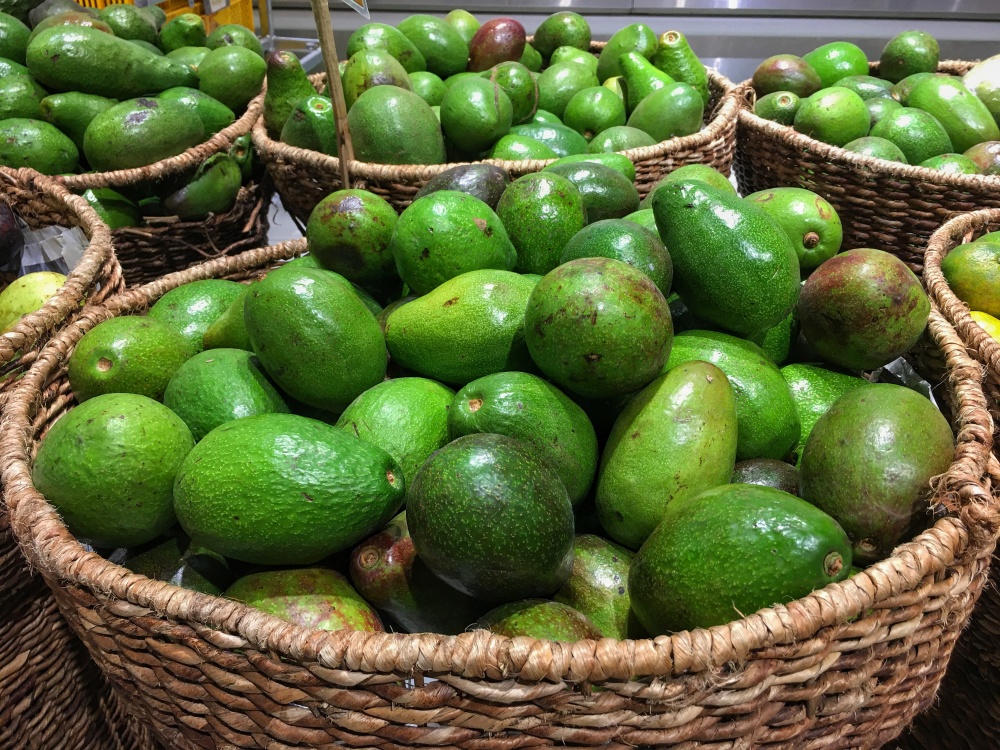
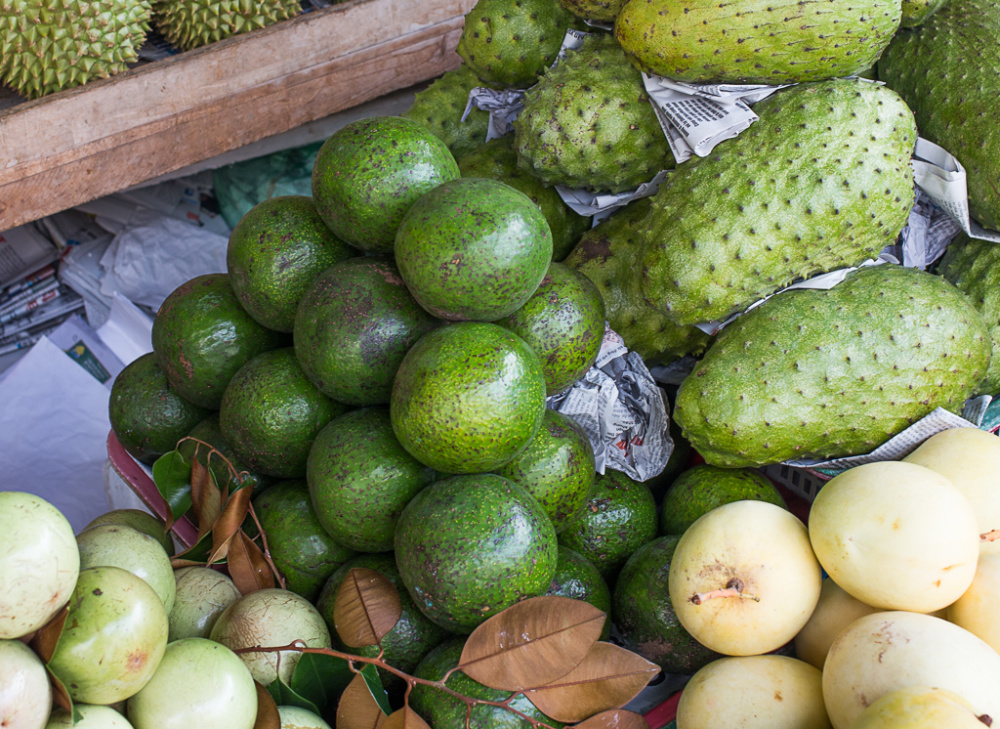
Fertilised flowers develop into pear-shaped, oval or round fruit, with smooth or warty, green or dark purple skin and weigh from a few grams up to 3 kg (7 lbs), depending on the type and variety. They ripen six to fourteen months after fruit set, depending on climate and variety, becoming soft to the touch, with thin, leathery skin enclosing buttery yellow pulp and a large, round brown seed.
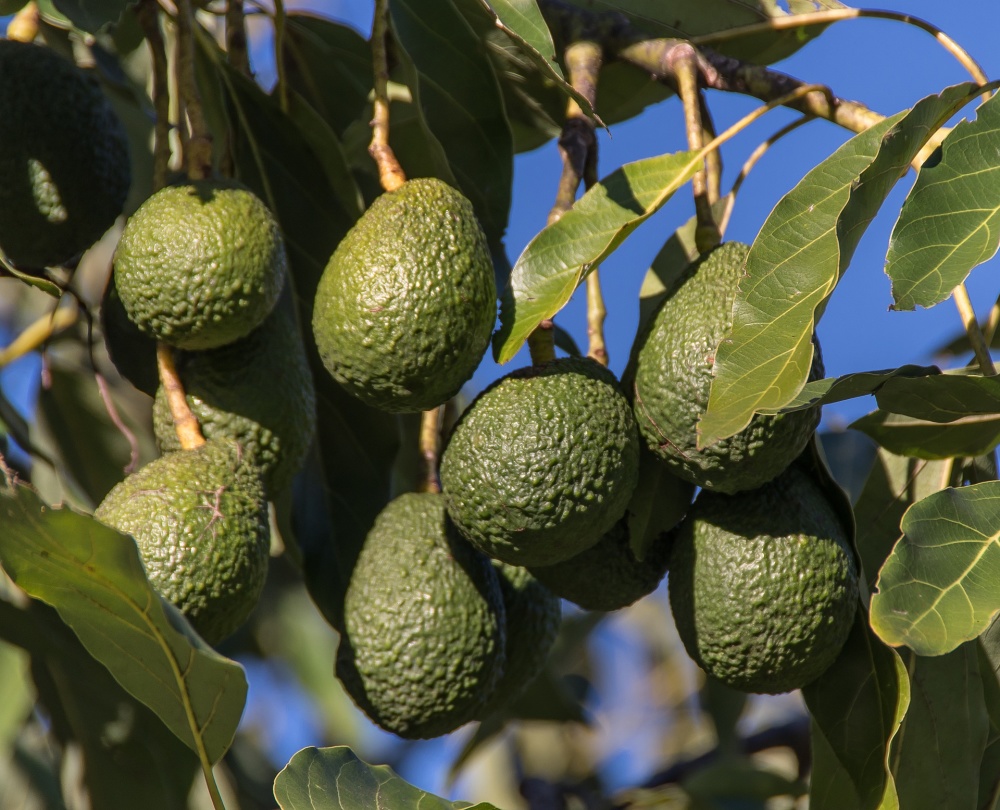
Perth, Australia
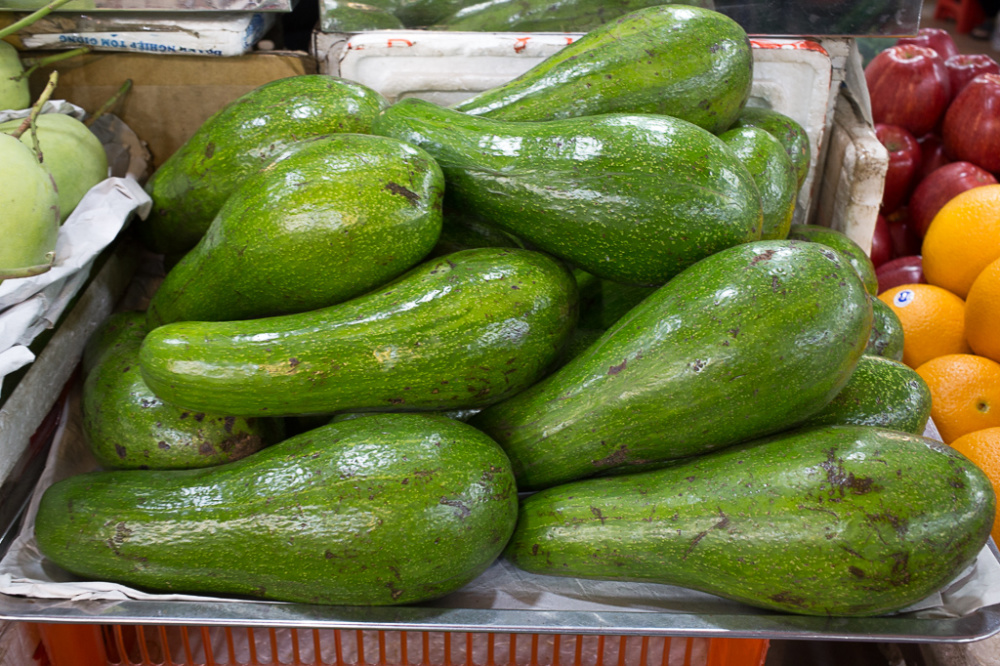
Long neck variety (Ho Chi Minh City, Vietnam)
Edible uses
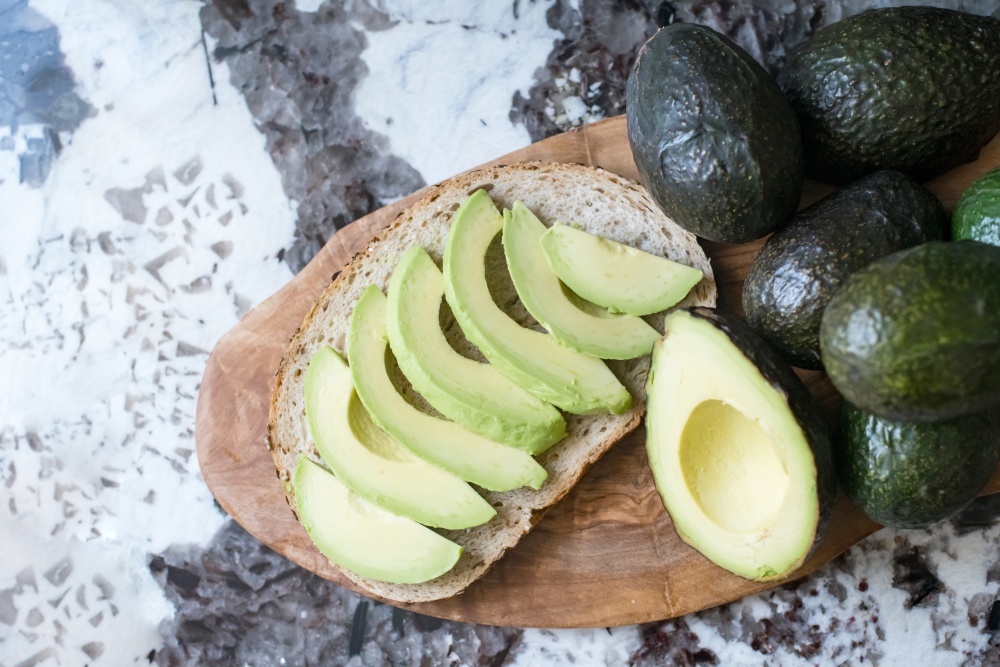
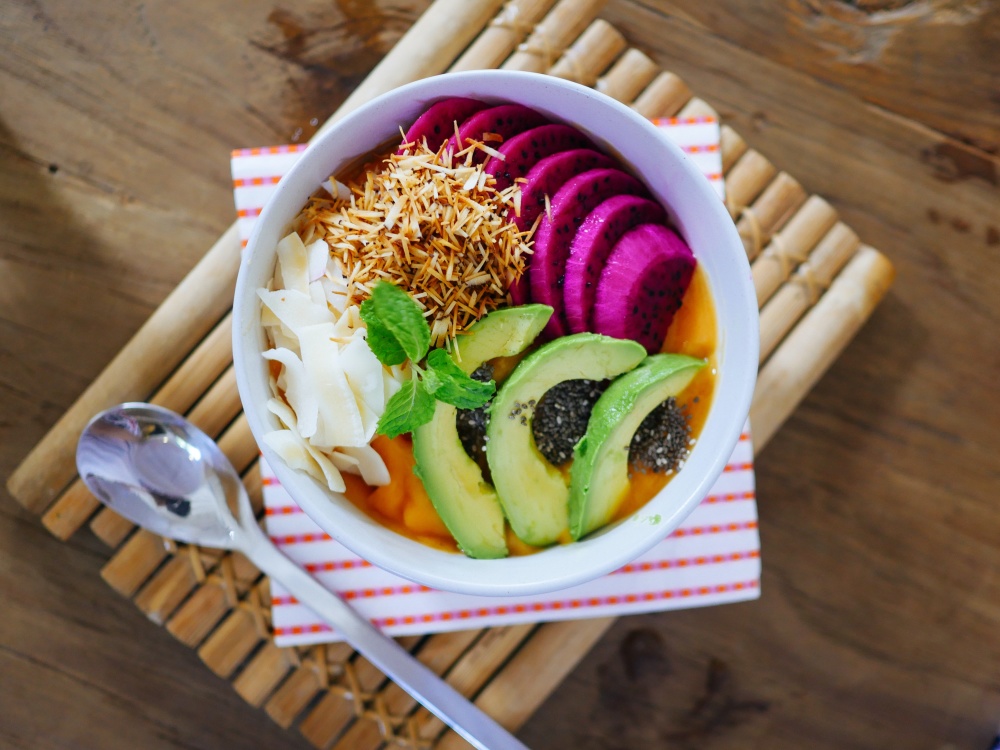
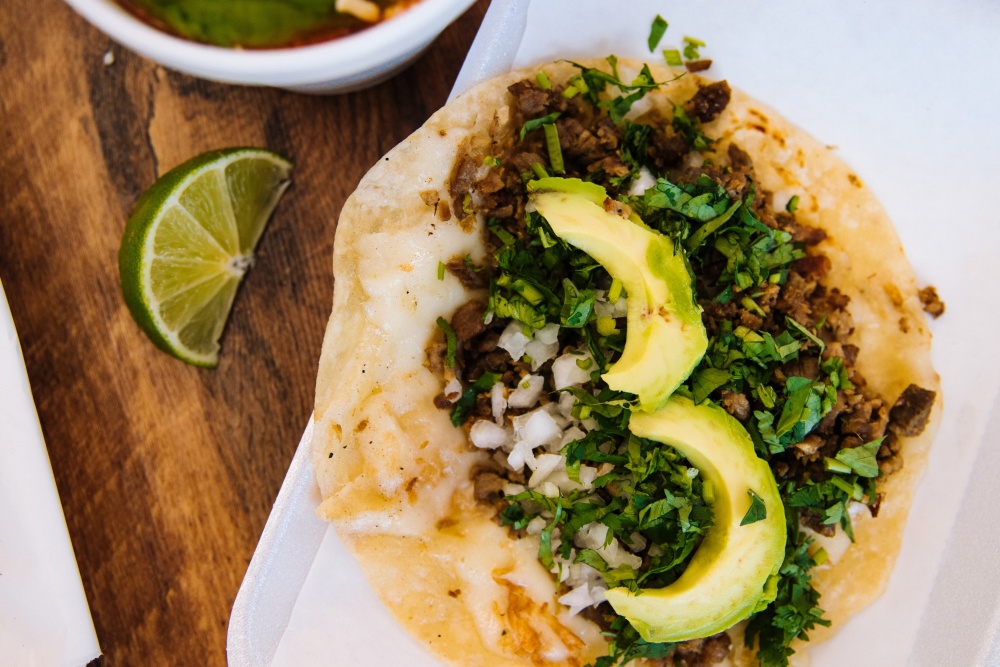
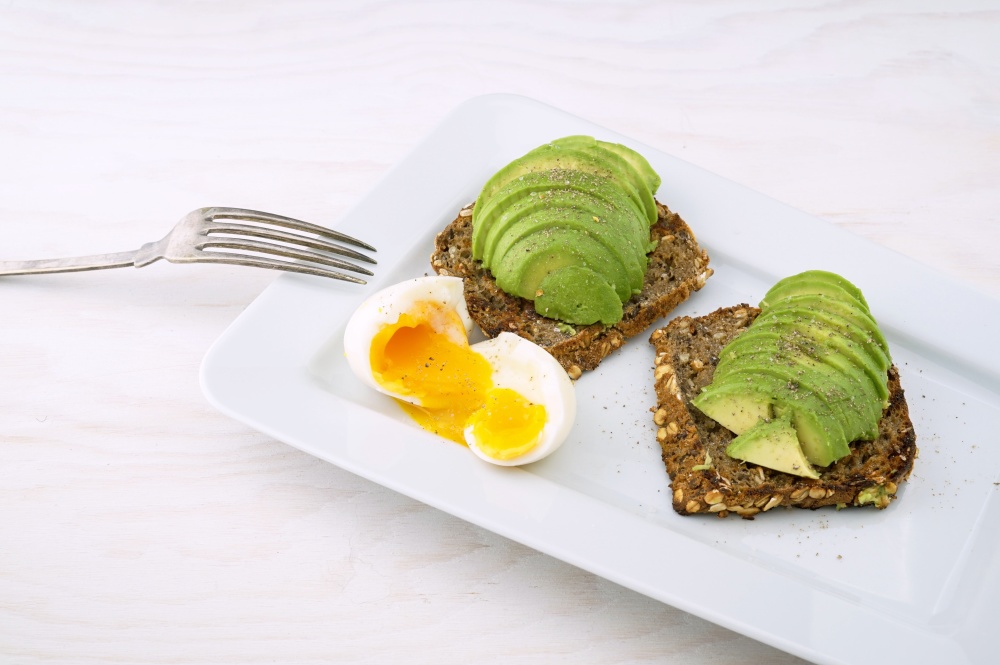
Salad vegetable - In Mexico, locals mash avocado pulp with spices and lime juice to make guacamole, a dish now popular in many countries, including the United States. In North America, Europe, Australia, and New Zealand, people most often add avocados to salads, spread them on toast, or put them in sandwiches. In the Caribbean, they are served as a cool accompaniment to hot soup.
Non-alcoholic drink - In Brazil, people blend the pulp with milk and ice cream to make a smoothie.
Edible oil or fat - Avocados that are too ripe, blemished, oddly shaped, or not the right size for sale are often used to make a pale yellow, edible oil, usually pressed from the pulp using a cold-press method without heat. It has a mild taste and a delicate, buttery texture, without the spicy flavour found in many other cold-pressed salad oils.
The amount of oil produced ranges from 10 to 30 per cent of the fruit's weight, depending on the variety, growing conditions, and ripeness. Avocado oil has a very high smoke point, about 270°C (518°F), so it works well for deep-frying. For comparison, refined safflower oil (from Carthamus tinctorius) has a smoke point of 266°C (510°F), coconut oil (from Cocos nucifera) is around 232°C (450°F), and olive oil (from Olea europaea) is 210°C (410°F).
Honey - When conditions are right, avocado flowers produce abundant nectar. The tree is an important source of honey in places such as the Dominican Republic, El Salvador, Haiti, Martinique, Mexico, and Mozambique. Avocado honey is dark amber and thick, with a strong flavour and hints of molasses and caramelised sugar. It granulates slowly.
Environmental uses
Bee forage - Sustains honeybee colonies, which can be observed actively working the flowers.
Material uses
Bio-based plastic - For many years, avocado seeds were discarded as waste. In Mexico, a company called Biofase now uses these seeds to make a resin that can be heated and shaped into plastic-like sheets. They then cut these sheets into disposable, biodegradable utensils like knives, forks, spoons, drinking straws, and coffee cup lids.
Natural skin care - Avocado oil is also used in cosmetics and is believed to be good for the skin; because fat-soluble vitamins are absorbed through the skin, the oil is widely used in skin creams and cosmetics. The ancient Mayans used the oil to treat burns. The seed also contains 1 to 2% of a brownish oil, extracted by cold pressing, which is used topically to treat dry skin and blemishes.
Hair tonic - The Mayans also used the oil as a pomade, an oil or ointment for dressing the hair.
Firewood - Avocado wood is light to medium in weight, with an average density of about 640 kg per cubic metre (40 pounds per cubic foot). It does not resist rot or decay well, and has little commercial value; it is not usually harvested where the fruit is grown for food. Pruned branches, however, can be dried and used as firewood.
Health uses
The oil-rich pulp is a rich energy source.
Folate, Vitamin C, Vitamin A, Vitamin E and Vitamin K - The pulp contains high levels of these essential vitamins: the water-soluble vitamins B (Folate) and C, and the fat-soluble vitamins A, E and K.
Potassium and Phosphorus - Avocado oil also contains good levels of these minerals.
Omega-9 fatty acid - It is also high in oleic acid, an Omega-9 fatty acid that helps maintain healthy blood cholesterol levels.
General interest
In Jamaica, people catch river mullets on small hooks baited with pieces of semi-ripe avocado.
Climate
Avocado trees grow naturally and produce good quality fruit in humid warm-temperate, subtropical and tropical climates, generally frost-free areas with annual lows of 7 to 25°C, annual highs of 17 to 35°C, annual rainfall of 600 to 4000 mm and a summer or winter dry season of 4 months or less, extending to 12 months with irrigation or groundwater.
In its native Central America, the West Indian-type trees occur at elevations from near sea level up to 750 m (2460 ft), where the average low of the warmest month is 19°C (66°F) or higher. This suggests varieties of this type are unlikely to thrive at elevations above, for example, 350 m (1150 ft) in Hawaii, 730 m (2395 ft) in Jamaica or 960 m (3150 ft) in Colombia, because of too-cool temperatures.
In contrast, Guatemalan and Mexican types occur in Central America at elevations from 900 m to 2500 m (2950 to 8200 ft), where the average low of the warmest month ranges from 10 to 18°C (50 to 64°F), making them more cold-tolerant than the West Indian type. As such, they are the best choice for cultivating in cool-climate regions such as California, Spain, Israel, South Africa, southern Australia and high-elevation areas in the tropics. However, in cool-climate regions, the trees can take 5 or 6 years to flower and bear fruit.
Some of the best-suited varieties for locations with occasional minor frosts include 'Bacon', 'Fuerte', 'Hass', 'Holiday', 'Mexicola', 'Oro Negro', 'Rincon', 'Ryan', 'Sharwill', 'Stewart', 'Reed' and 'Zutano'. And the hardiest of these are 'Fuerte', 'Mexicola' and 'Zutano'.
Growing
New plants can be grown from seed, but seedlings do not come true-to-type, so vegetative propagation is preferred for predictable results, such as high yields and fruit quality.
Grafting cuttings of select varieties onto ordinary seedling rootstock has produced the best results. This technique also extends the harvest season by grafting different varieties onto the same tree or different rootstocks in the same orchard. For example, cultivating grafted 'Pollock', 'Waldin', 'Booth 7', and 'Choquette' varieties will extend the harvest season by months compared with cultivating a single variety. 'Pollock' is the earliest to bear fruit and 'Choquette' is the last to do so.
Avocado trees perform best on free-draining loam, sandy-loam and loamy-sand soils of a slightly acid to moderately alkaline nature, generally with a pH of 6.2 to 8.0, and on sites with full to partial sun exposure. The trees have poor tolerance for slow-draining, clayey, or permanently wet soil, or for pronounced and prolonged drought conditions.
Five-year-old Guatemalan-type avocado trees in well-managed orchards in Australia yield around 80 kg (176 lbs) of fruit per tree per season. In comparison, fifteen-year-old trees yield around 250 kgs (550 lbs). Yields of seedling West Indian Avocados vary greatly. Still, mature, well-managed orchards can produce up to 22,000 kg per hectare (19,630 lbs per acre).
Problem features
The leaves are reportedly toxic to ruminants such as cows, sheep, and goats.
Where it grows
References
Books
-
Adams, C. D. 1972, Flowering plants of Jamaica, University of the West Indies, Mona, Greater Kingston
-
Axtell, B. L & Fairman, R. M 1992, Minor oil crops, Food and Agriculture Organization of the United Nations (FAO), Rome
-
Barwick, M., et al. 2004, Tropical & subtropical trees : a worldwide encyclopaedic guide, Thames and Hudson, London
-
Bradbear, N. 2009, Bees and their role in forest livelihoods : a guide to the services provided by bees and the sustainable harvesting, processing and marketing of their products, Food and Agriculture Organization of the United Nations (FAO), Rome
-
Brady, G. S. & Clauser, H. R & Vaccari, J. A. 2002, Materials handbook : an encyclopedia for managers, technical professionals, purchasing and production managers, technicians and supervisors, 15th ed., McGraw-Hill, New York
-
Chevallier, A. 2000, Encyclopedia of herbal medicine, 2nd American ed., Dorling Kindersley, New York
-
Crane, E., Walker, P. & Day, R. 1984, Directory of important world honey sources, International Bee Research Association, London, United Kingdom
-
Editors of Sunset Magazine 2012, The New Western Garden Book: The Ultimate Gardening Guide, 9th edition, Sunset Publishing Corporation, California
-
Francis, J. K. and Liogier, H. A. 1991, Naturalized exotic tree species in Puerto Rico, General technical report SO-82, USDA Forest Service, Southern Forest Experiment Station, New Orleans
-
Gilman, E. F. 1997, Trees for urban and suburban landscapes, Delmar Publishers, Albany, New York
-
Gunstone, F. D. 2011, Vegetable oils in food technology : composition, properties and uses, 2nd ed, Wiley-Blackwell, Hoboken, New Jersey
-
Jamieson, G. S. 1943, Vegetable fats and oils : their chemistry, production, and utilization for edible, medicinal and technical purposes, 2d ed, Reinhold, New York
-
Janick, J., & Paull, R. E. 2008, The encyclopedia of fruit & nuts, CABI Publishing, Wallingford, Oxfordshire
-
Jensen, M. 1999, Trees commonly cultivated in Southeast Asia : an illustrated field guide, 2nd ed., Food and Agricultural Organisation of the United Nations (FAO) Regional Office for Asia and the Pacific (RAP), Bangkok
-
Khan, I. A. & Abourashed, E. A. 2010, Leung's encyclopedia of common natural ingredients : used in food, drugs and cosmetics, 3rd edition, Wiley Publishing, Hoboken, New Jersey
-
Little, E. L. & Skolmen, R. G. 1989, Common forest trees of Hawaii (native and introduced), Agricultuural Handbook No. 679, Forest Service, U.S. Department of Agriculture, Washington, D.C.
-
Little, E. L. et al. 1964 and 1974, Common trees of Puerto Rico and the Virgin Islands (2 volumes), Forest Service, U.S. Department of Agriculture (USDA), Washington D.C.
-
Martin, F. M., et al. 1987, Perennial edible fruits of the tropics : an inventory, U.S. Dept. of Agriculture (USDA), Agricultural Research Service, U.S. Government Printing Office (GPO), Washington, D.C.
-
Morton, J. F. & Dowling, C. F. 1987, Fruits of warm climates, Creative Resources Systems, Winterville, North Carolina
-
Norrington, L. & Campbell, C. 2001, Tropical food gardens : a guide to growing fruit, herbs and vegetables in tropical and sub-tropical climates, Bloomings Books, Hawthorn, Victoria
-
Page, P. E. 1984, Tropical tree fruits for Australia, Queensland Department of Primary Industries (QLD DPI), Brisbane
-
Perkins, K. D. & Payne, W. 1981, Guide to the poisonous and irritant plants of Florida, Florida Cooperative Extension Service, Gainesville, Florida
-
Queensland Department of Primary Industries and Fisheries (QLD DPI) 2008, Queensland tropical fruit : the healthy flavours of North Queensland, Brisbane
-
Record, S. J. & Hess, R. W., 1972, Timbers of the New World, Yale University Press, New Haven, Connecticut & Arno Press, New York
-
Standley P. C., & Steyermark J. A. 1946 to 1976, Flora of Guatemala (25 volumes), Botany series publication (Chicago Field Museum of Natural History), Chicago, Illinois
-
Tacon, A. G. & Hasan, M. R. 2009, Feed ingredients and fertilizers for farmed aquatic animals : sources and composition, Food and Agriculture Organization of the United Nations (FAO), Rome
-
Van Wyk, B. E. 2005, Food plants of the world: an illustrated guide, 1st ed., Timber Press, Portland, Oregon
-
Wilder, G. P. 1911, Fruits of the Hawaiian Islands rev. ed, Honolulu: The Hawaiian gazette co. ltd.
-
Winter, R. 2009, A consumer's dictionary of cosmetic ingredients : complete information about the harmful and desirable ingredients found in cosmetics and cosmeceuticals, 7th ed, Three Rivers Press, New York
Articles, Journals, Reports and Working Papers
-
Buddenhagen C.E., Chimera C. & Clifford P. 2009, Assessing Biofuel Crop Invasiveness: A Case Study, PLoS ONE 4
-
Hamilton, R.A. 1987, Ten tropical fruits of potential value for crop diversification in Hawaii, Research Extension Series : RES-085, University of Hawaii, Honolulu
-
Morton, J.F. 1964, Honeybee Plants of South Florida, Proceedings of the Florida State Horticultural Society, Vol 77:415-436.
-
Percival, S. & Findley, B. 2007 (Reviewed April 2014), What's in Your Tropical Fruit?, Fact Sheet HN 0708, University of Florida IFAS Extension Service, Gainesville, Florida
-
Watson, B.J., & Moncur, M. 1985, Guideline criteria for determining survival, commercial and best mean minimum July temperatures for various tropical fruit in Australia (Southern Hemisphere), Department of Primary Industries Queensland (DPI QLD), Wet Tropics Regional Publication, Queensland
-
Wenkam N.S. & Miller C.D. 1965, Composition of Hawaii fruits (Bulletin 135), University of Hawaii, Honolulu