


Common name: Sacred Lotus
Other common names: East Indian Lotus, Egyptian Lotus, Hindu Lotus, Indian Lotus, Lotus, Oriental Lotus, Sacred Water Lily
Description
Sacred Lotus is a water-dwelling ornamental and food plant native to Asia and the Pacific, with a natural range extending from China and Korea, south through Japan and Southeast Asia, to northern Australia. Nowadays, it is naturalised in many parts of the world, introduced long ago as an ornamental.
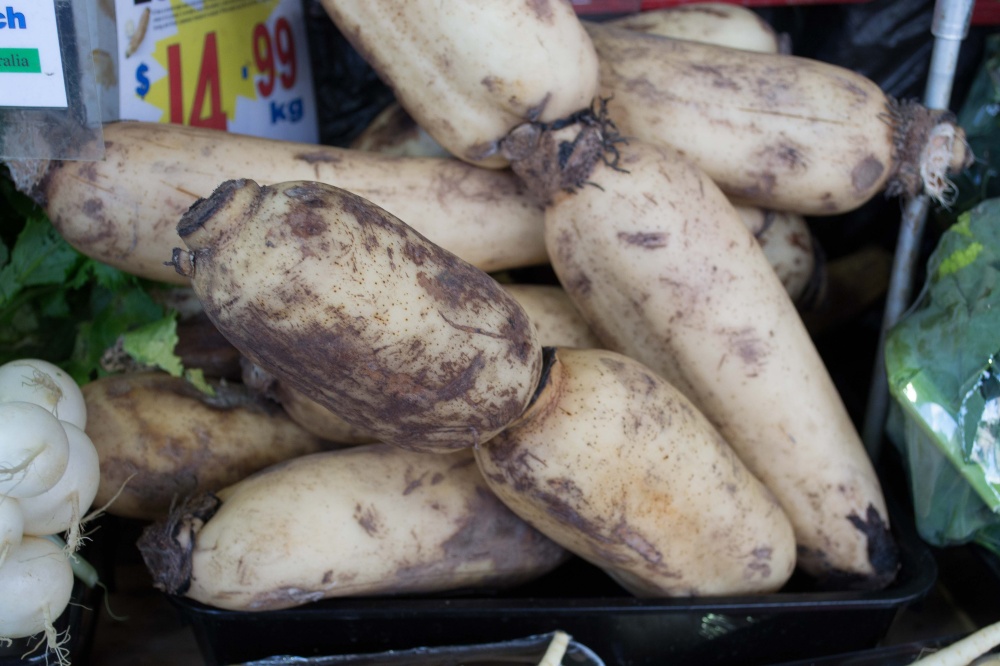
It grows in partially submerged clumps 1 to 1.5 m (1.5 to 3 ft) tall and up to 3 m (10 ft) wide, made up of light green, erect, herbaceous stems that sprout from submerged rhizomes. The rhizomes resemble a string of linked sausages, and each rhizome usually carries three to four sausages. They have a spongy texture and develop air-filled channels at the centre, which makes them buoyant.
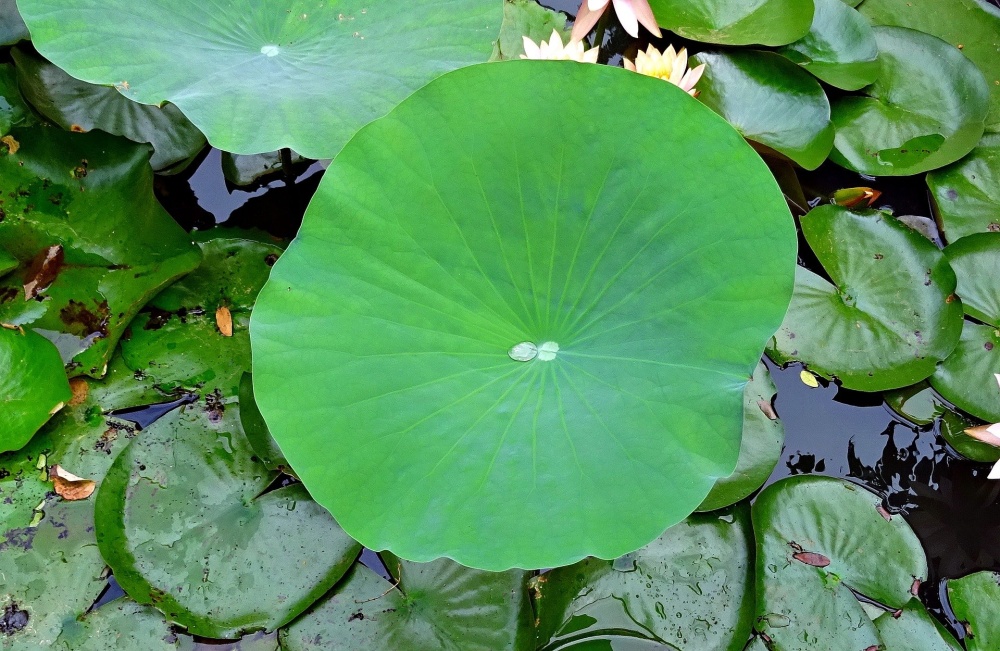
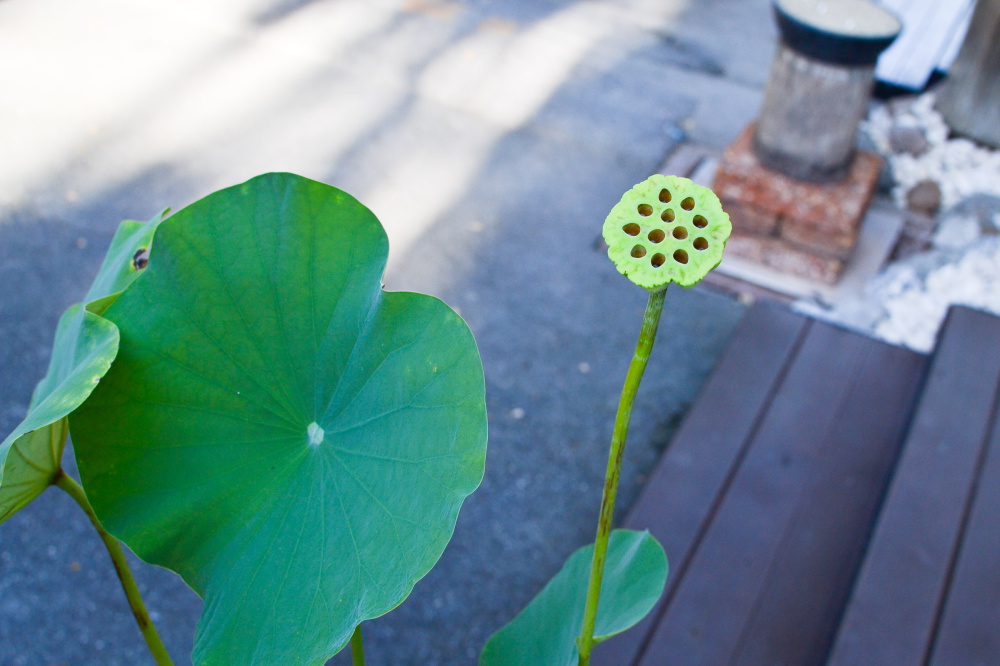
The sprouting stems hold saucer-shaped leaves above them, some floating and some held high above the water. They are bluish-green, range up to 80 cm (2.6 ft) in diameter, and have a waxy surface that causes water droplets to bead.
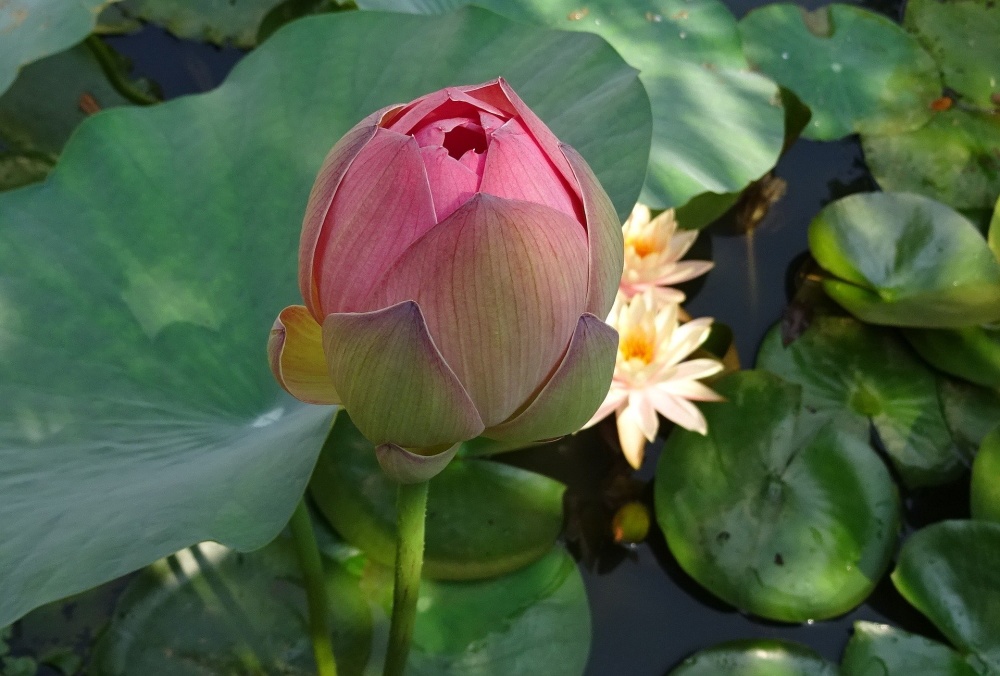
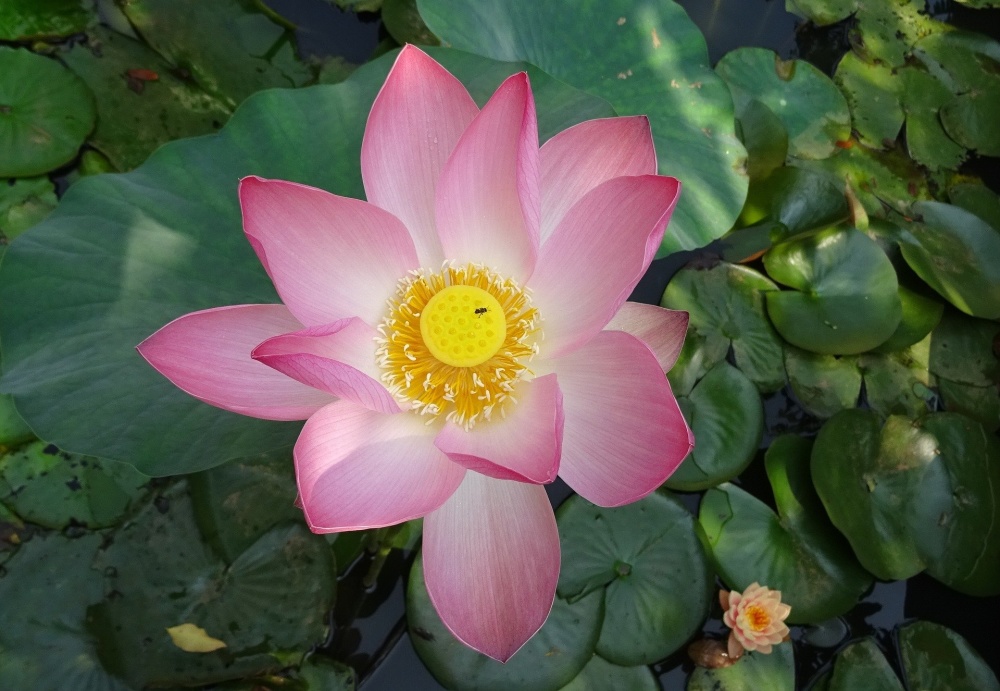
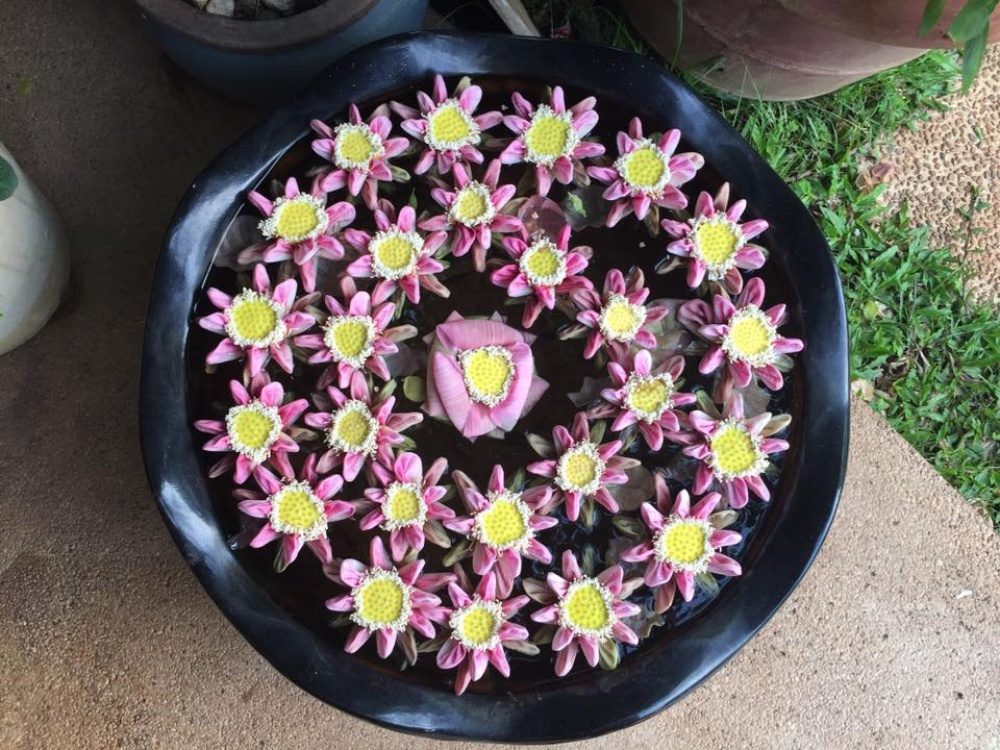
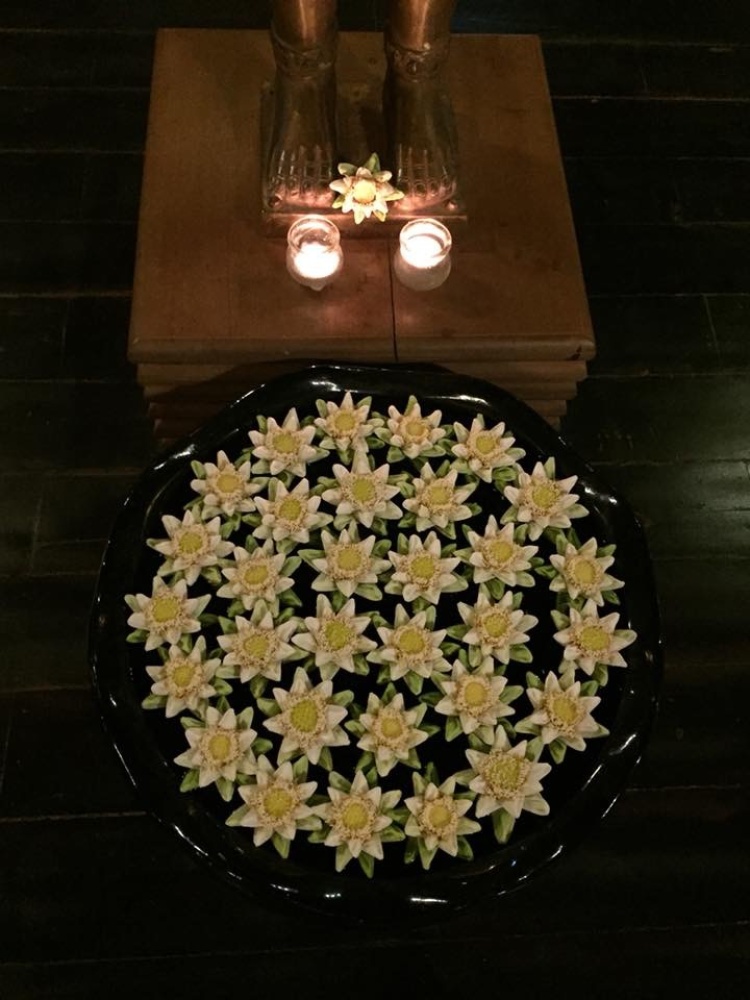
The flowers are up to 20 cm (8 in) across when fully open, with large oval petals that taper to a point. Through selective breeding, they come in pink, red, white, or bicoloured varieties. Like the leaves, they sit high above the water on erect stems and bloom year-round. They open early in the morning, then close in the afternoon for three successive days before dropping their petals.
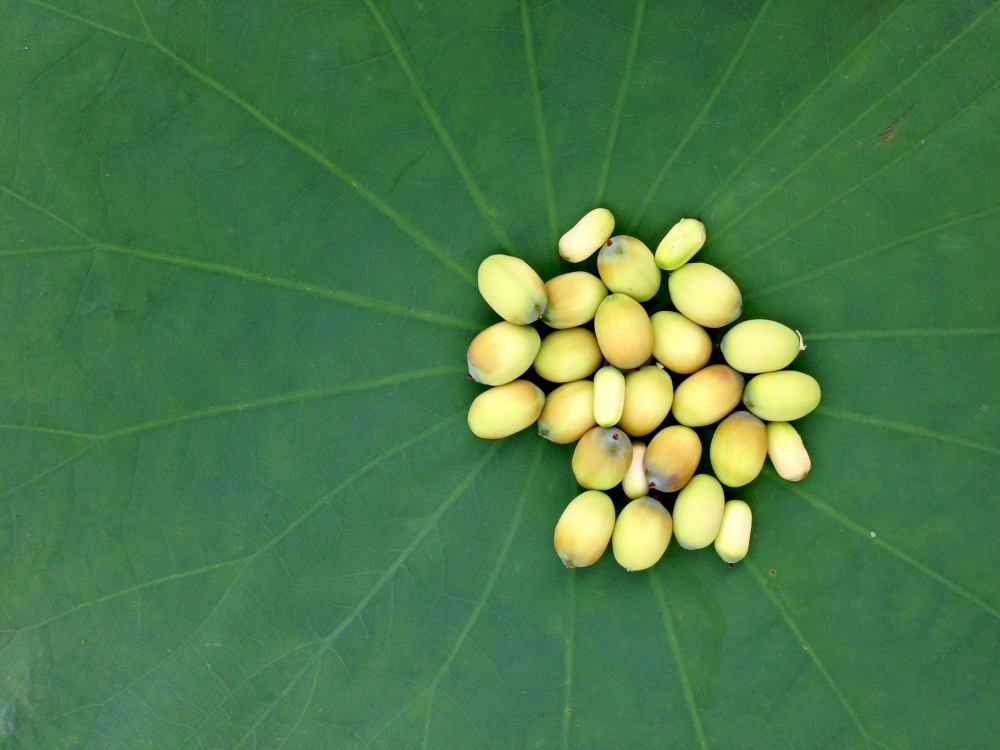
Green, cone-shaped seed-heads follow the flowers, their flat-faced, perforated top making them somewhat resemble a shower-head. Fertilised ones develop marble-sized seeds, which, when mature, exit through the perforated openings.
.5869.jpg)
Photo by Bishnu Sarangi from Pixabay
Many lotus varieties exist, bred for their flowers, rhizomes or seed and generally only for a single purpose. So varieties bred for their flowers, for example, are usually not suitable for producing rhizomes or seed, and the same is true in reverse.
Edible uses
Salad vegetable - Rhizome-producing varieties have large rhizomes up to 90 cm (3 ft) long, divided into sausage-like segments that can be peeled, sliced, and eaten raw in salads. The small young leaves, 10 cm (3 in) in diameter or less, are also eaten raw, tossed into a salad, usually seasoned with sesame oil, or used in place of lettuce in 'Sung choi bao', an Asian dish of minced, spiced meat wrapped in a leaf and eaten as an entrée (appetiser).
Cooked vegetable - The sliced rhizomes are also cooked. Thinly sliced in cross-section, the round slices have the appearance of a wagon-wheel, on account of the air-filled channels that run along the length of the sausage, making them highly decorative. They have a bland taste but crisp texture, even after cooking, and are a good substitute for Chinese water chestnuts in stir-fry dishes. They can also be made into tempura.
Chip or crisp - The rhizome slices can also be deep-fried to make chips or crisps, which are now sold as packaged snacks in many Asian countries.
Pickled vegetable - They can also be pickled.
Flour - A highly digestible, gluten-free flour, similar to Arrowroot (Maranta arundinacea), is prepared from the rhizomes and is known in China as 'Ou fen'.
Natural thickening agent - 'Ou fen' is commonly used to thicken soups, stews, sauces, and puddings.
Edible nut - People eat the seeds raw before they are fully mature, or, when mature, roast, boil, or pop them like popcorn. Immature seeds have a thick, green seed coat, a thin inner coat, and a bitter green embryo, all of which must be removed before eating, leaving only the white portion of the seed in two halves. They have a crunchy texture and sweet, nutty flavour reminiscent of almonds or sunflower seeds. They are eaten out of hand or used in a variety of sweet and savoury dishes.
People in Asia do not eat the large, mature leaves. Instead, they dry them and use them to wrap sticky rice and meat into parcels for steaming. When steamed, they impart a sweet, earthy aroma to the dish.
Material uses
Cut-flower - The flowers can be cut for floral arrangements but have a short vase life of three to four days. However, adding a few small pieces of Bamboo or Coconut (Cocos nucifera) charcoal to the water naturally suppresses bacteria and filters impurities to extend their life.
Cut-foliage - The cone-shaped seed heads with the stem attached are popular cut foliage, particularly in hand-ties, adding texture and interest to exotic floral arrangements. They keep well in cool storage at 12 to 15°C (54 to 59°F) and last longer in arrangements when you add a conditioner to the vase water. They also dry well, turning from green to dark brown, and work well in dried arrangements.
Environmental uses
Flowering ornamental - Varieties cultivated only for their flowers come in many forms, including dwarf forms, and in a wide range of pinks, reds, and whites. The flowers are spectacular in bloom.
Foliage ornamental - The saucer-shaped leaves are equally eye-catching.
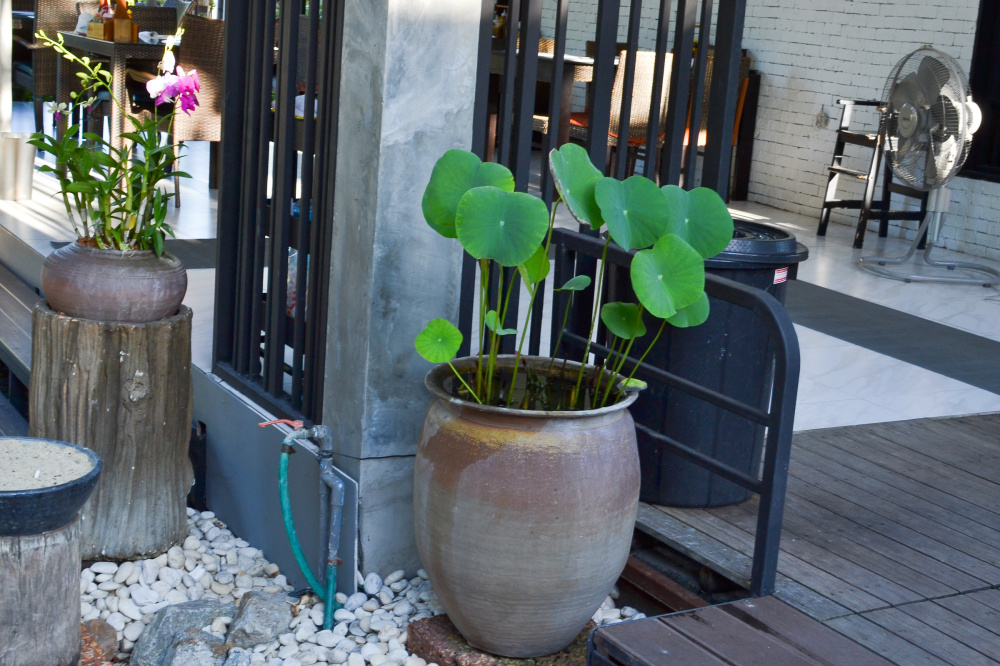
Container plant - Plants grow best in large, preferably round containers so the rhizomes can coil without breaking and their spread stays under control.
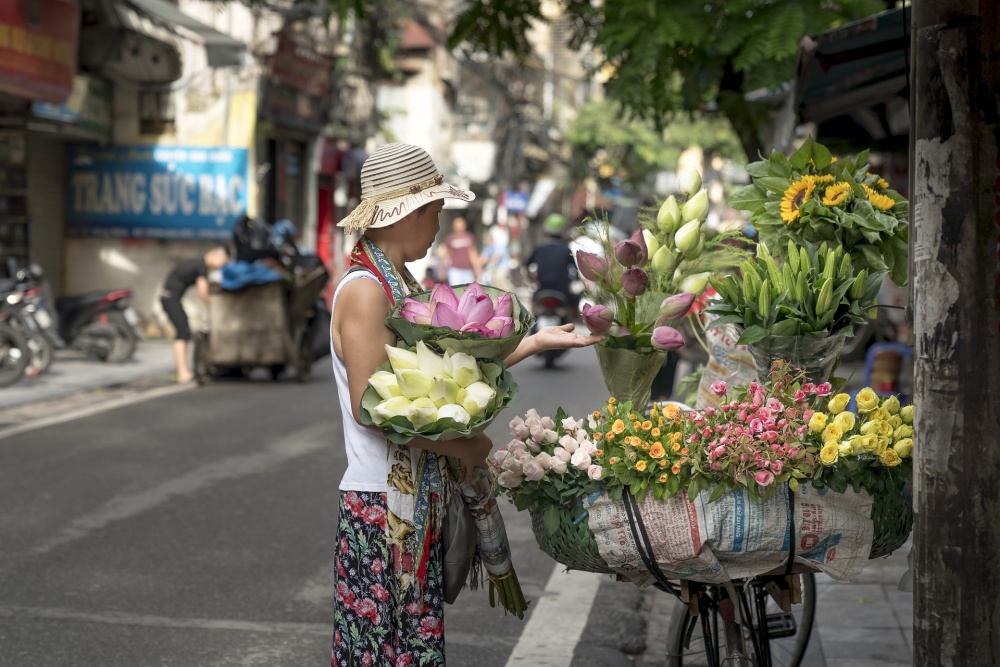
Hanoi, Vietnam (Photo by Quangpraha from Pixabay)
General interest
Sacred Lotus is the national flower of India and is considered sacred by both Hindus and Buddhists, for whom the reopening of the flower in the morning represents rebirth. Because of the plant's sacred status, people also commonly string the seeds and use them as prayer beads.
Climate
It grows naturally and is productive under submerged conditions in humid subtropical and tropical climates, generally areas with annual lows of 7 to 25°C, annual highs of 19 to 35°C, and permanent surface water, such as a pond or lake.
Growing
New plants are usually started from seed or rhizome cuttings. The seeds are placed in a shallow dish or pan, covered in loose earth and left submerged in shallow water, about 5 cm (2 in) in depth, in a lightly shaded area for them to germinate. However, plants started from seed do not come true-to-type, so cuttings are preferred when cultivating selected varieties.
Sacred lotus can be grown in ponds or large water-holding containers. Best practice in ponds is to grow plants in large, submerged containers or barricaded sections of the pond to control rhizome spread. The ideal water depth is 20 to 30 cms (8 to 11 ins). Commercial rhizome production does not use containers or barricades.
Performs best on rich, well-manured loam and silt-loam soils of a moderately acid to neutral nature, generally with a pH of 5.5 to 7.5, and on sites with full to partial sun exposure. Heavy clays or pure sand soils are not suitable for good rhizome formation, foliage or flower development.
Rhizomes require six to nine months to mature, depending on the growing conditions. In commercial operations, yields of fresh rhizomes are in the range of 5,000 to 10,000 kgs per hectare (4,460 to 8,920 lbs per acre) per year, though yields of up to 40,000 kgs (35,687 lbs) have been reported in intensive growing systems.
Problem features
Sacred lotus has a vigorous habit with creeping rhizomes that grow and spread quickly to crowd out other plants. It is listed as a weed in more than one reference publication and as a serious weed or invasive species in some areas. The seed can also contribute to the plant's spread and is produced in protective seed-heads that can remain dormant for many years.
The seedpods contain small amounts of the alkaloid Nelumbine, which acts as a cardiac poison if ingested.
Where it grows
References
Books
-
Bladholm, L. 1999, The Asian grocery store demystified, 1st edition, Renaissance Books, Los Angeles, California
-
Byrne, T. & Bourke, M. & Salvin, S. 2004, The new crop industries handbook, Rural Industries Research and Development Corporation (RIRDC), Canberra, Australia
-
Gilbert, V., Smith, S. & Young, L. 2006, Foliage for florists, Society of Floristry, United Kingdom
-
Hanson, B. 2007, Buried treasures : tasty tubers of the world : how to grown and enjoy root vegetables, tubers, rhizomes, and corms, Brooklyn Botanic Garden, Brooklyn, New York
-
Holttum, R. E. & Enoch, I. C. 2010, Gardening in the tropics : the definitive guide for gardeners, Marshall Cavendish Editions, Singapore
-
Jacquat, C. & Bertossa, G. 1990, Plants from the markets of Thailand : descriptions and uses of 241 wild and cultivated plants, with 341 colour photographs, Editions Duang Kamol, Bangkok
-
Menninger, E. A. 1977, Edible nuts of the world, Horticultural Books, Stuart, Florida
-
Morgan, D. & Achilleos, A. 2012, Roots : the definitive compendium with more than 225 recipes, Chronicle Books, San Francisco
-
Nash, H. & Slocum, P. D. & Stroupe, S. & Romar, B. 2003, Complete guide to water garden plants, Stirling Publishing, New York
-
Norrington, L. & Campbell, C. 2001, Tropical food gardens : a guide to growing fruit, herbs and vegetables in tropical and sub-tropical climates, Bloomings Books, Hawthorn, Victoria
-
Perry, F. & Hay, R. 1982, A field guide to tropical and subtropical plants, Van Nostrand Reinhold Company, New York
-
Polunin, Ivan 1987, Plants and flowers of Singapore, Times Editions, Singapore
-
Randall, R. P. 2002, A global compendium of weeds, R.G. and F.J. Richardson Press, Melbourne
-
Randall, R. P. 2007, The introduced flora of Australia and its weed status, Cooperative Research Centre for Australian Weed Management, Glen Osmond, South Australia
-
Roecklein, J. C & Leung, P.S. 1987, A Profile of economic plants, Transaction Books, New Brunswick, New Jersey
-
Rosengarten, F. 1984, The book of edible nuts, Walker and Company Publishing, New York
-
Rubatzky, V. E. & Yamaguchi, M. 1997, World vegetables : principles, production, and nutritive values, 2nd ed., Chapman & Hall, New York
-
Speichert, C. G. & Speichert, S. 2004, Encyclopedia of water garden plants, Timber Press, Portland, Oregon
-
Thomson, G. 2007, The health benefits of traditional Chinese plant medicines : weighing the scientific evidence, Rural Industries Research and Development Corporation (RIRDC), Barton, Australian Capital Territory
-
Wenkam, N.S. 1983 to 1990, Foods of Hawaii and the Pacific Basin (5 volumes), College of Tropical Agriculture and Human Resources, University of Hawaii, Honolulu
-
Winter, R. 2009, A consumer's dictionary of cosmetic ingredients : complete information about the harmful and desirable ingredients found in cosmetics and cosmeceuticals, 7th ed, Three Rivers Press, New York
Articles, Journals, Reports and Working Papers
-
Dagar, J. C. & Singh, G. 2007, Biodiversity of Saline and Waterlogged Environments: Documentation, Utilization and Management, NBA Scientific Bulletin, (9), 78.
-
Morton, J. F. 1976, Pestiferous spread of many ornamental and fruit species in south Florida. In Proceedings of the Florida State Horticultural Society (Vol. 89, pp. 348-353).
-
Nguyen, Q. V. & Hicks, D. 2001, Exporting lotus to Asia : an agronomic and physiological study : a report for the Rural Industries Research and Development Corporation (RIRDC), Barton, Australian Capital Territory