

Common name: Star Anise
Other common names: Badian Star Anis, Chinese Anise, Chinese Aniseed, Chinese Star Anise, Indian Anise, Star Aniseed, True Star Anis
Description
Star Anise is a spice and essential oil-yielding tree native to the region from southern China to northern Vietnam, where it has been cultivated for centuries. The main cultivation areas in China are Funing and Pingbian counties in Yunnan Province, and in Vietnam, Van Quan District in Lạng Sơn Province.
It is a medium-sized tree, 8 to 15 m (26 to 50 ft) tall, with a slender trunk up to 25 cm (10 in) in diameter and a low-branching habit that forms a densely leafy pyramidal crown. The bark is pale grey and smooth.
Leaves are elongated-oval, 5 to 12 cm (2 to 5 in) long, glossy green, and thick and leathery. They are alternately arranged along the stems at the ends of the branches, where they remain in all seasons.
The flowers are white, greenish-yellow, or purple, depending on the variety; 1 to 1.5 cm (0.4 to 0.6 in) in diameter; and perfect, with both female and male parts. They are borne singly on leafy stems and bloom mainly from spring to summer, though with light blooms on and off at other times of the year.
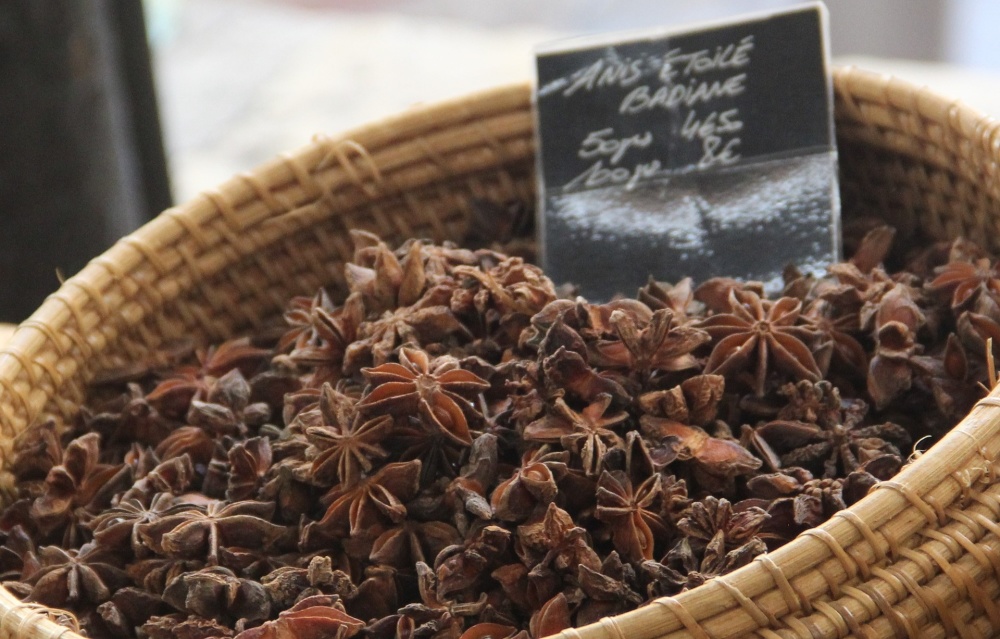
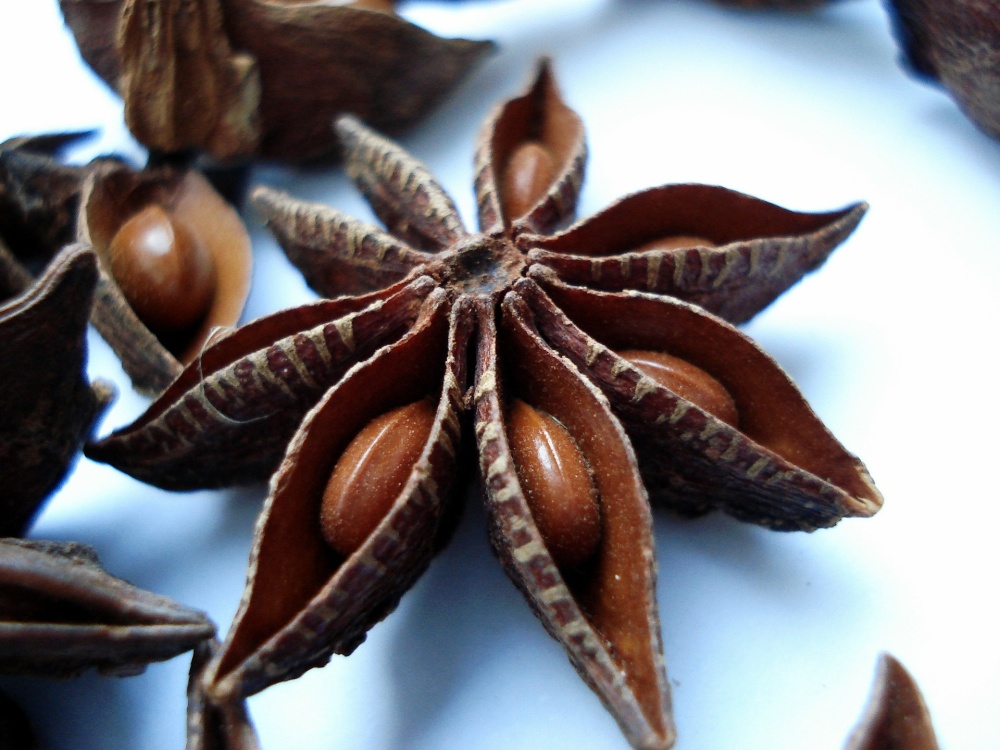
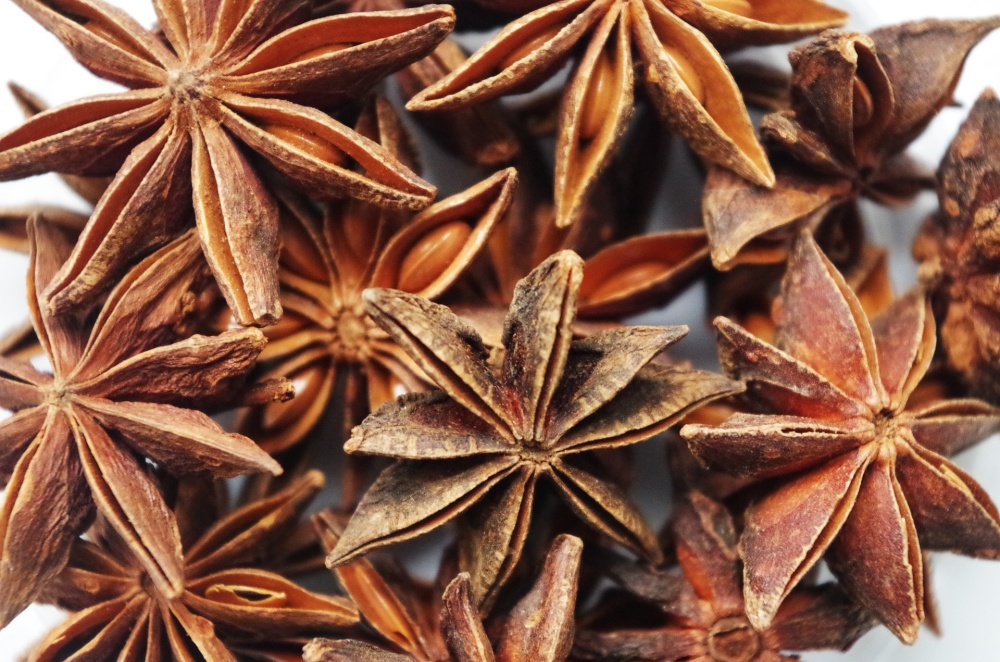
Fertilised flowers develop into pale yellow-green, spoke-wheel-shaped fruit, 3 to 4.5 cm (1.2 to 1.8 in) in diameter, consisting of seven or eight segments, each with a single seed inside. They become dark brown and dry when mature, about ten to twelve months after fruit-set, the segments easing apart into a star shape and opening to expose the seed.
Material uses
Essential oil - Steam distillation of the fruit yields an essential oil traded as 'Star anise oil'. It is a colourless to pale yellow liquid with a sweet aroma and flavour, similar to 'Anise oil' extracted from the seed of Anise (Pimpinella anisum), an unrelated, commercially grown herb from cold temperate Asia. Star anise oil is extracted mainly from mature, but not fully ripe, fruit, and varying amounts of dried fruit are mixed in with the distilled material. The fruit shell, not the seed, yields most of the oil, from 3 to 3.5% by weight.
Natural fragrance - Essential oils of both Star anise and Anise are widely used as fragrances in the food, pharmaceutical, and cosmetic industries, including in perfumes and men's colognes such as 'Brut', a long-standing brand.
Edible uses
Natural flavouring - Essential oils of both Star anise and Anise are also widely used as flavourings in the food, pharmaceutical, and cosmetic industries, giving aniseed flavour and aroma to baked goods, dairy desserts, teas, and liquors such as 'Anisette de Bordeaux' and 'Pastis', as well as toothpaste, mouthwashes, and medicines. Apart from its commercial use, aniseed flavouring is used in home baking and is commonly available as Aniseed essence, usually sold in small bottles in the baking section of supermarkets.
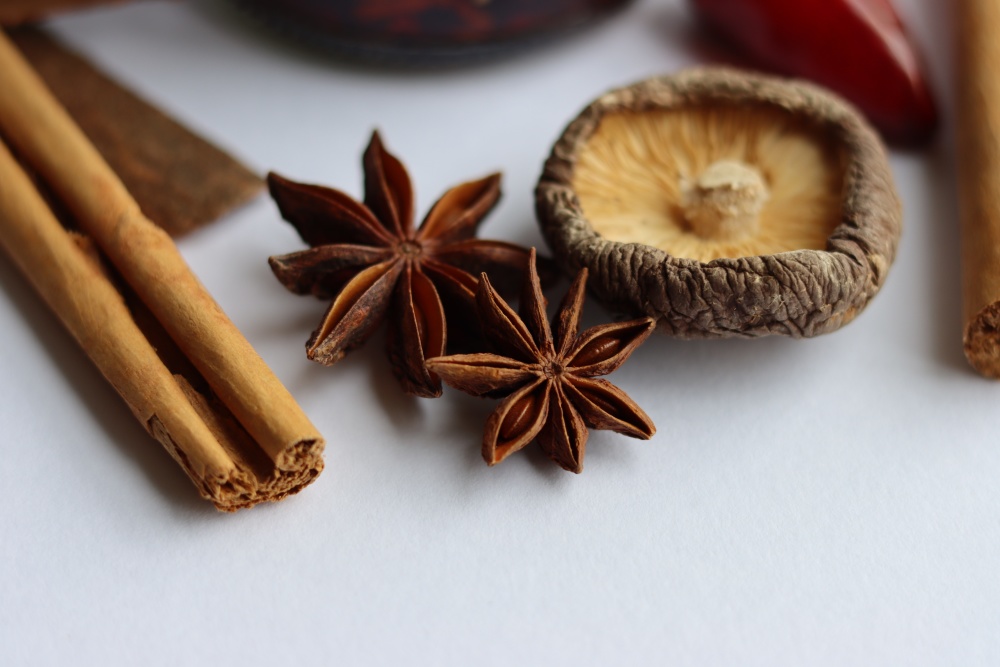
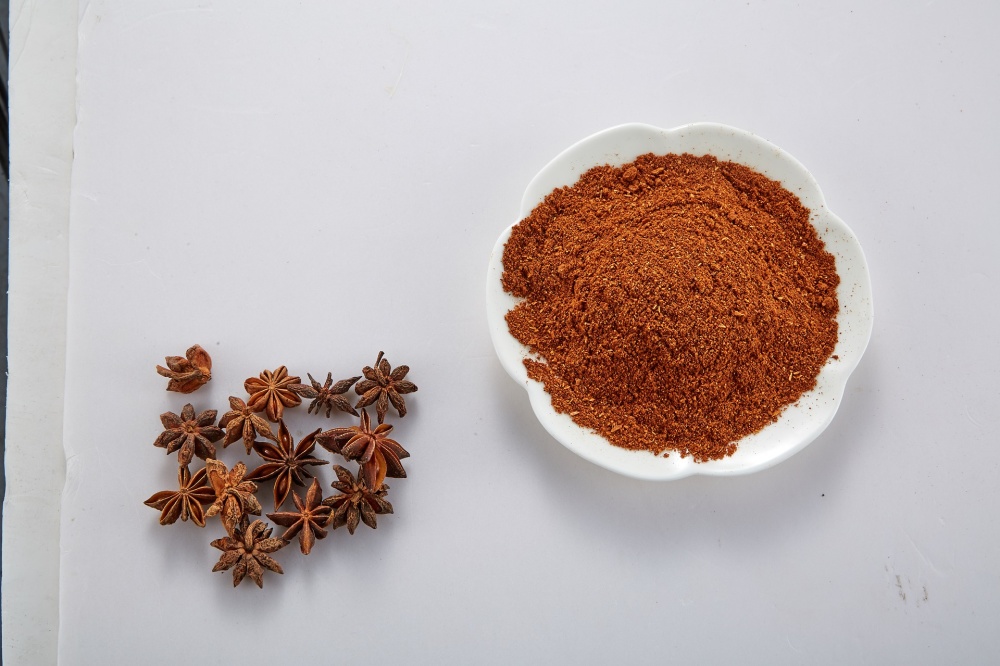
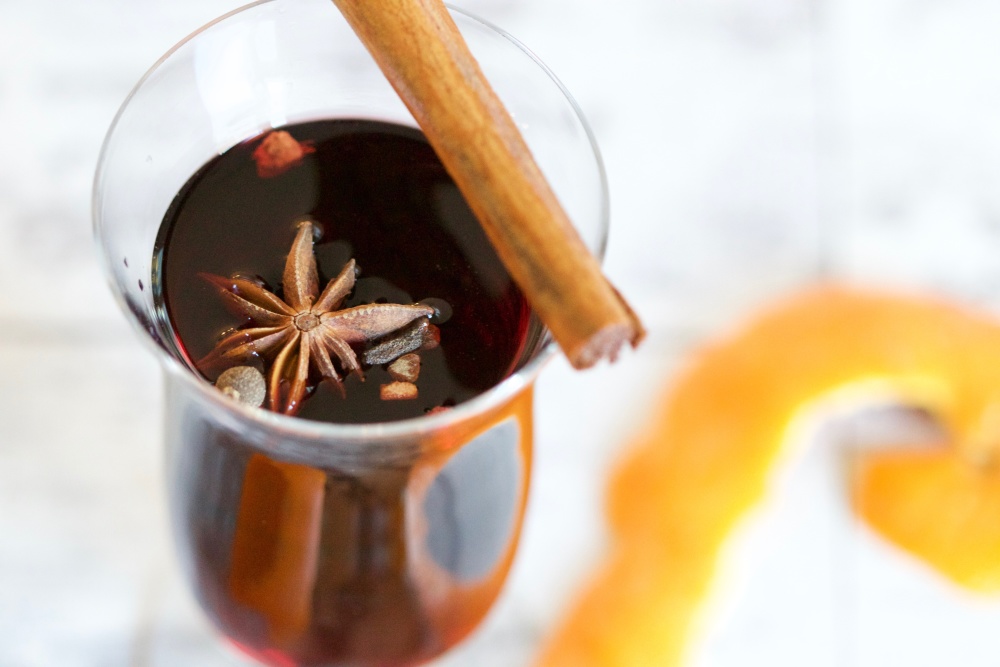
Spice - Some fruit is dried and used as a spice, most commonly in Chinese cuisine, to impart its strong aniseed aroma and flavour to stocks, soups, sauces and stews, especially chicken-based ones.
Health uses
Natural digestive aid - The essential oil contains around 85% anethole, an organic compound with stimulant, diuretic and antiseptic properties. It is used in traditional medicine for digestive complaints, such as indigestion and gas.
It is also used to treat respiratory ailments, such as cough and congestion.
Natural dental care - It is prescribed against toothache.
Natural breath freshener - And against bad breath.
Star anise is also the most concentrated natural source of shikimic acid, which is used to synthesise the anti-influenza drug Oseltamivir, otherwise known as Tamiflu. The pharmaceutical industry is now the largest buyer of star anise, purchasing about 90% of the harvest.
Climate
Star Anise grows naturally in humid subtropical and tropical mid- to high-elevation climates, generally frost-free areas with annual lows of 13 to 19°C, annual highs of 21 to 28°C, annual rainfall of 1200 to 2700 mm and a dry season of 4 months or less.
Growing
New plants are mostly raised from seed, best collected from highly productive, mature trees and then sown within three days (after soaking in lukewarm water overnight).
Performs well on deep, rich, free-draining clay and loam soils of a strongly to slightly acid nature, generally with a pH of 4.0 to 6.5, and on sites with full to partial sun exposure. It has poor tolerance for alkaline, limestone-derived, slow-draining, or waterlogged soils.
The tree is slow-growing, and it takes a long time to come into bearing, with reports of small harvests starting when the tree is about five to six years old. It does not come into full production until ten years old or older.
Problem features
Star anise is recorded as an introduced species in the Philippines, though not as a weed. Otherwise, it has no recorded presence as a weed or invasive species anywhere.
The essential oil may cause skin contact dermatitis in susceptible individuals.
Where it grows
References
Books
-
Arctander, S. 1960, Perfume and flavor materials of natural origin, Elizabeth, New Jersey
-
Attokaran, M. 2011, Natural food flavors and colorants, Institute of Food Technologists, Wiley-Blackwell Publishing, Oxfordshire
-
Chevallier, A. 2000, Encyclopedia of herbal medicine, 2nd American ed., Dorling Kindersley, New York
-
Do, D. S. & Nguyen, H. N. 2003, Use of indigenous tree species in reforestation in Vietnam, Agricultural Publishing House, Hanoi
-
Groom, N. 1997, The new perfume handbook, 2nd ed., Blackie Academic & Professional, London
-
Guenther, E. & Althausen, D. 1948 to 1952, The essential oils (6 volumes), Van Nostrand Publishing, New York
-
Macmillan, H. F. 1943, Tropical planting and gardening : with special reference to Ceylon, 5th ed, Macmillan Publishing, London
-
Randall, R. P. 2002, A global compendium of weeds, R.G. and F.J. Richardson Press, Melbourne
-
Seidemann, J. 2005, World spice plants: economic usage botany taxonomy, Springer-Verlag, Berlin
-
Stewart, A. 2013, The drunken botanist : the plants that create the world's great drinks, 1st ed., Algonquin Books, Chapel Hill, North Carolina
-
Weiss, E. A 2002, Spice crops, CABI Publishing, Wallingford, United Kingdom
-
Winter, R. 2009, A consumer's dictionary of cosmetic ingredients : complete information about the harmful and desirable ingredients found in cosmetics and cosmeceuticals, 7th ed, Three Rivers Press, New York