
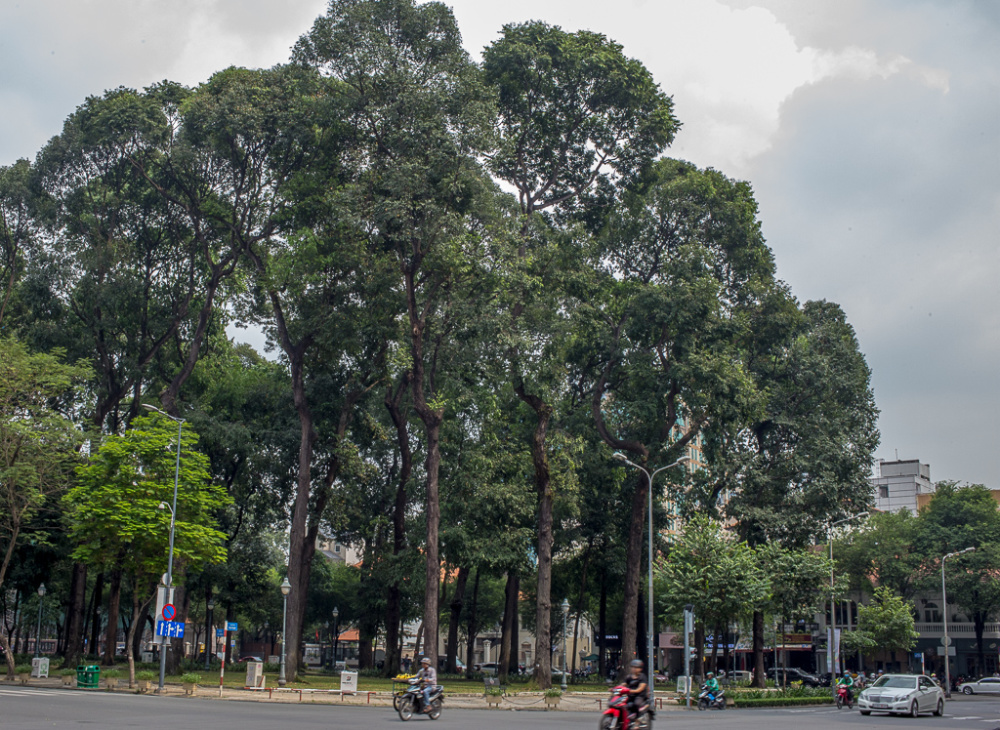


Common name: White Thingan
Other common names: Merawan, White Thingan
Description
White Thingan is a timber and landscape tree native to tropical India and Southeast Asia, with a natural range extending from Sri Lanka to the Andaman and Nicobar Islands, and from Bangladesh to Myanmar (Burma), Thailand, Malaysia, and Indochina.
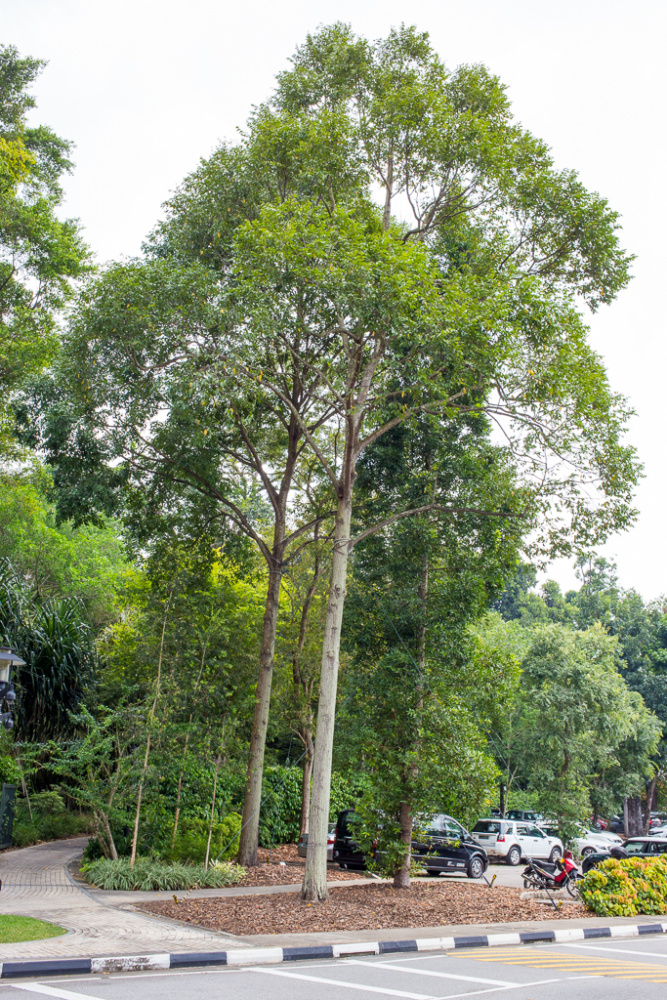
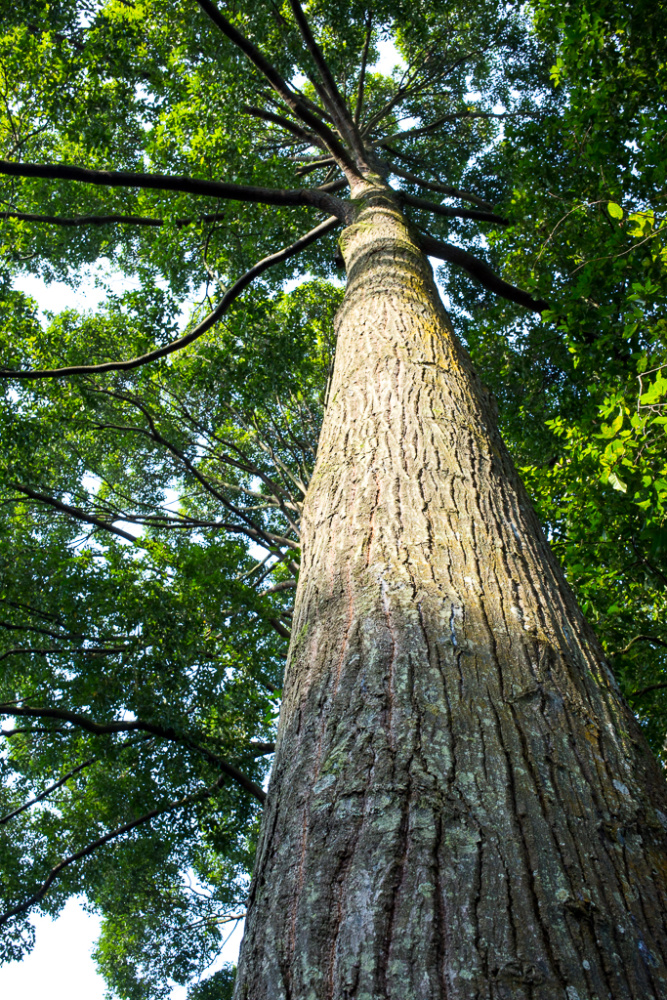
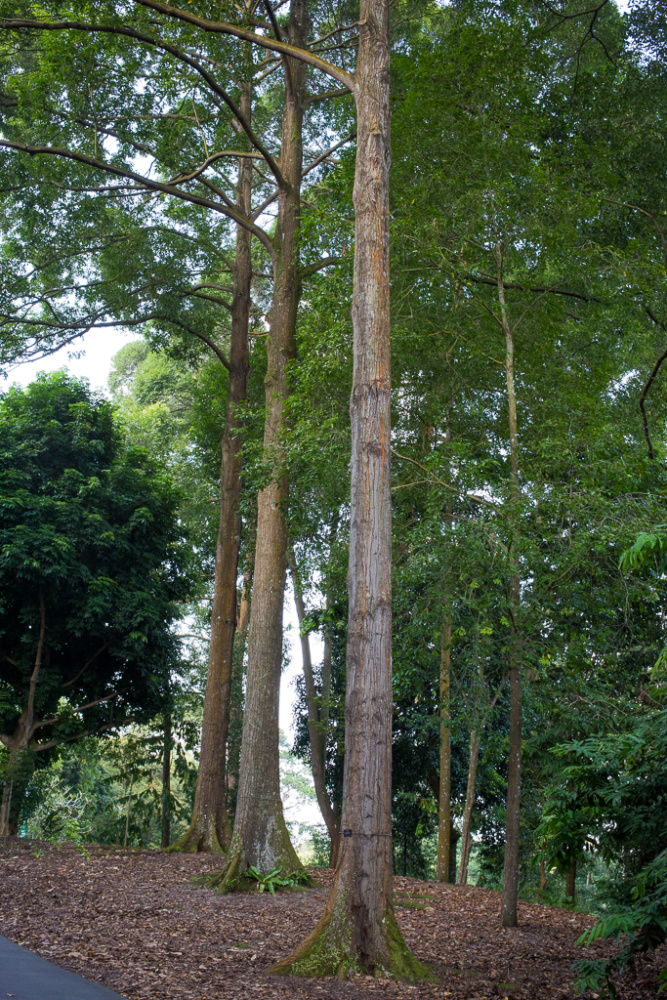
It is a large tree that may reach up to 45 m (148 ft) in natural forests, with a straight trunk around 1.2 m (4 ft) in diameter and buttresses on mature trees. In open sites, it typically reaches 25 to 30 m (82 to 98 ft) tall, with gently ascending branches forming a pyramidal crown that becomes rounded as the tree ages. The bark is light to dark brown and roughened by vertical fissures and ridges.
Leaves are oval, 10 to 15 cm (4 to 6 in) long, dark green and alternately arranged along the ends of the branches. They remain on the tree year-round.
The flowers are small, white and held in branched clusters arising at the sides and ends of the branches. They bloom every second spring, followed by small egg-shaped nuts, around 1 cm (0.4 in) long, attached to a pair of long blade-like wings. The nuts and their wings are green when young, turn brown when mature, then detach and fall to the ground in a twirling, helicopter-like motion.
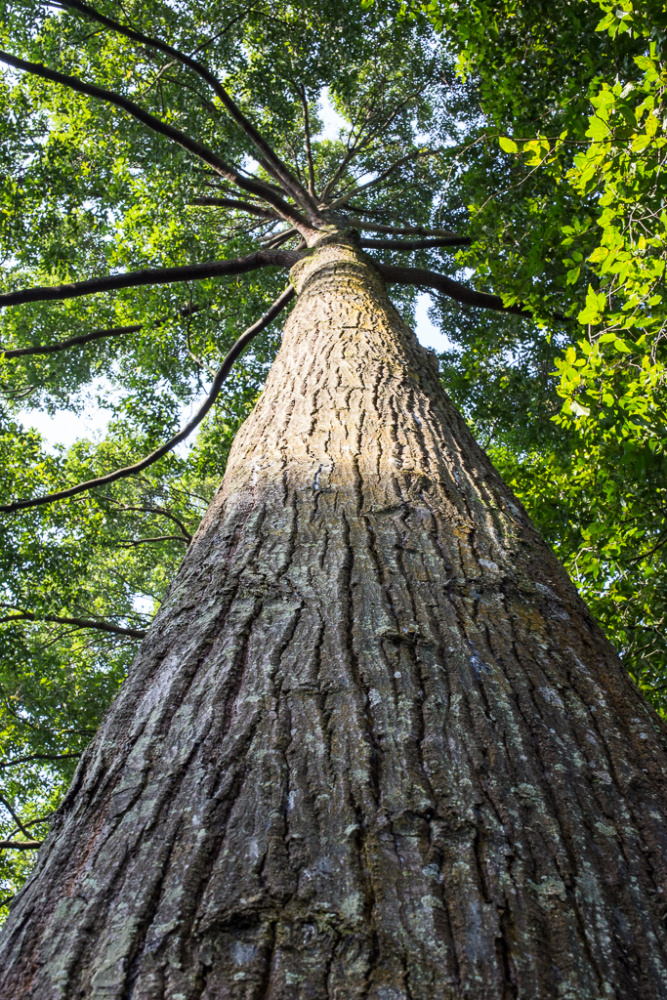
Large tree (Singapore Botanic Gardens)
Material uses
Hardwood - The tree produces wood grouped with other Hopea species under the commercial name 'Merawan', with yellowish-brown heartwood that darkens to olive-brown on exposure. Wood weight ranges from lightweight to heavy, from 500 to 950 kg per cubic meter (31 to 59 lb per cubic ft).
Decay- and rot-resistant wood - Its natural resistance to rot and decay varies from non-resistant to very resistant. Variability in wood weight and natural resistance likely stems from differences among Hopea species and, within them, from differing soil and climate conditions.
Timber and lumber - Well-formed logs are sawn into planks and boards used mainly for...
Furniture and cabinets - ...furniture and cabinets,
Flooring and decking - ...flooring and decking,
Joinery and millwork - ...and for interior joinery and millwork.
Natural resin - Without wounding, the trunk yields a hard, yellow, whitish or colourless resin soluble in turpentine.
Natural varnish - The resin is sometimes used as a varnish over paint. However, it is reportedly somewhat inferior to better-known, more widely used varnish resins, for example damar resin from Shorea javanica.
Environmental uses
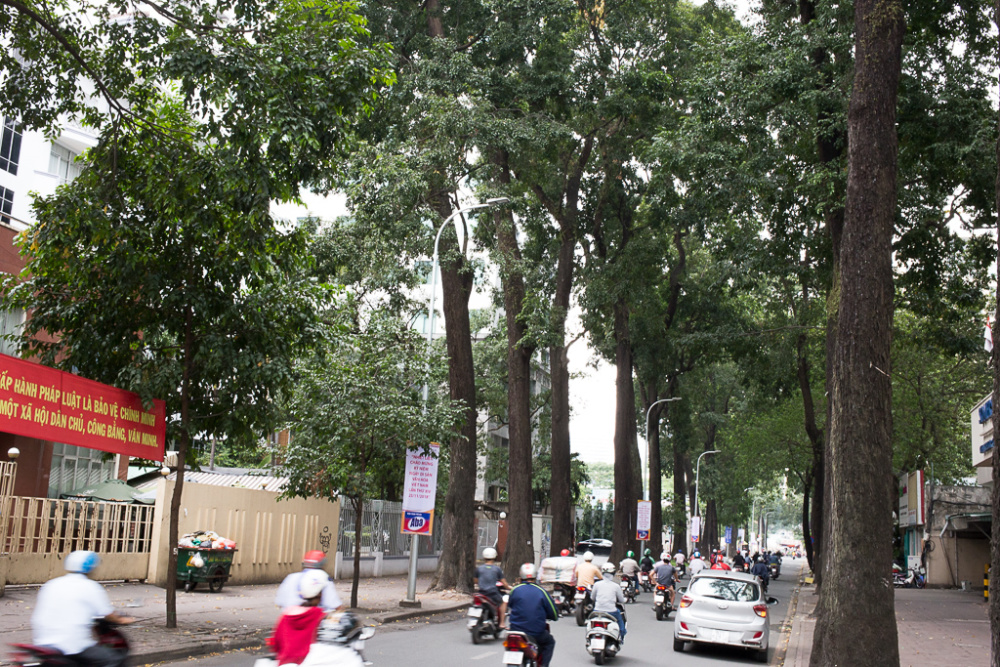
Street tree - White Thingan is commonly grown in its native range as a street, landscape and public garden tree for its shapely, stately form,
Shade tree - ...and the shade it provides.
Species conservation - Unrestricted logging in its native range has reduced wild White Thingan populations, which the IUCN lists as vulnerable. Cultivating the tree helps ease pressure on remaining wild stands and supports its long-term conservation.
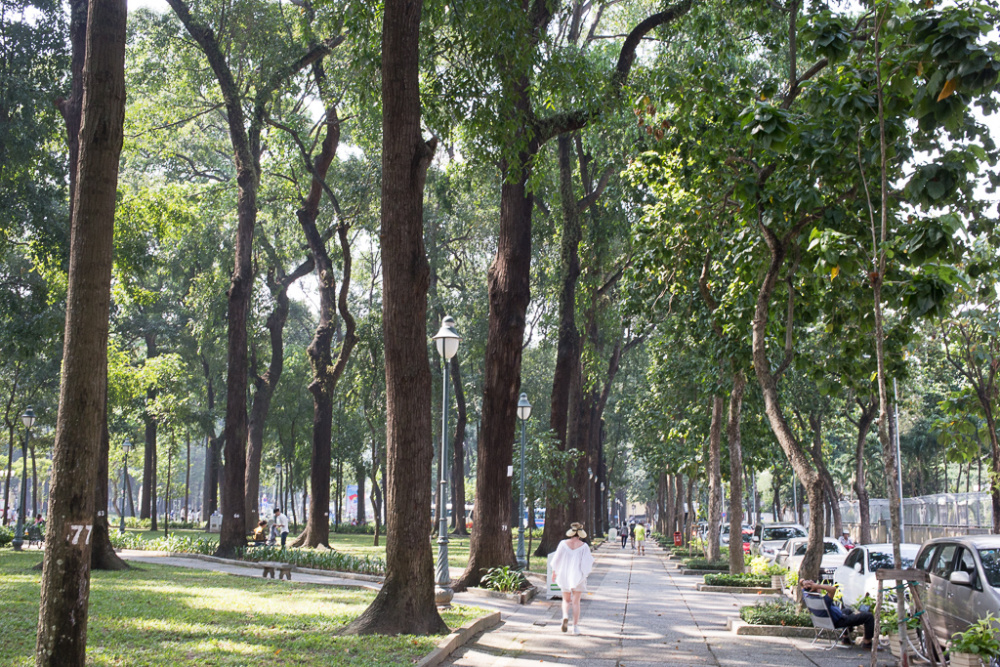
Trees providing shade in an urban park (Ho Chi Minh City, Vietnam)
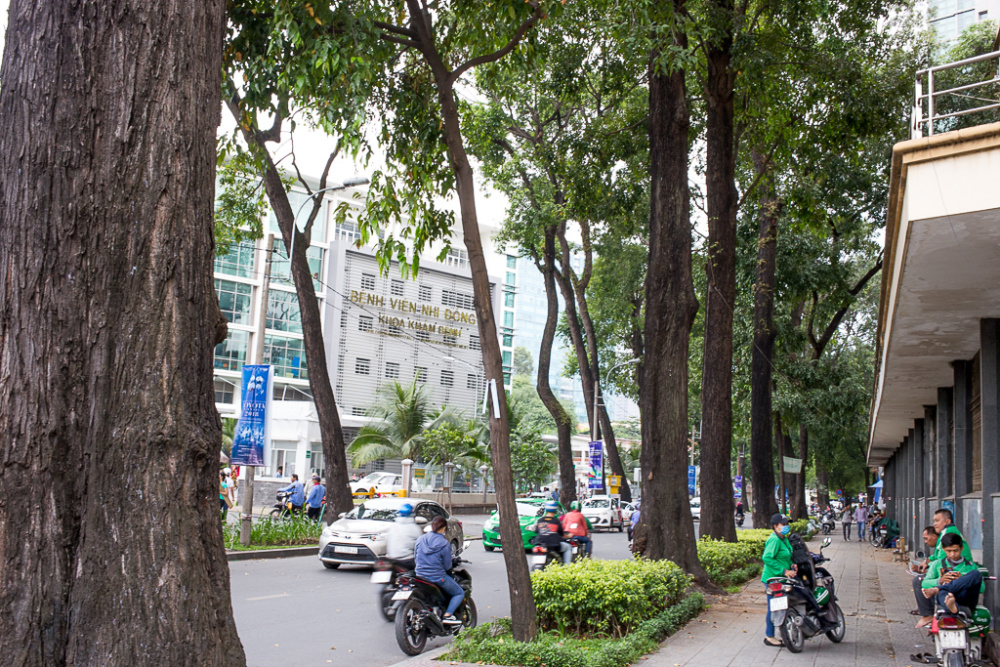
Planted as a street tree (Ho Chi Minh City, Vietnam)
Health use
People collect the resin, powder it, and use it in traditional medicine in Myanmar (Burma) as a styptic to help stop bleeding when applied to wounds.
Climate
Grows naturally in humid tropical lowland climates, generally areas with annual lows of 19 to 25°C, annual highs of 27 to 35°C, annual rainfall of 1300 to 5000 mm and a dry season of 5 months or less.
Although they also grow in seasonally dry areas with annual rainfall below 1300 mm, the trees are next to rivers, streams, and watercourses, where their roots have year-round access to groundwater.
Growing
New plants start from cuttings or seed, which lose viability quickly, even in storage, and are best sown within one to two weeks of harvesting the nuts. Nursery seedlings are kept under 50% shade until they reach about 50 cm (1.6 ft) tall, at which point they can be planted out.
It performs best in slow- to free-draining clay loam, loam, and sandy loam soils, generally with a pH of 4.5 to 7.5, and in sites with full to partial sun exposure.
Problem features
Despite its wide distribution, there is no record of it being a weed or invasive species. The nuts, though they sometimes blow a fair distance by wind, lose their viability quickly and are highly susceptible to weevil attacks after landing on the forest floor. For these reasons, it is unlikely to emerge as a problem weed or invasive species.
Where it grows
References
Books
-
C.A.B. International 2013, The CABI encyclopedia of forest trees, CABI Publishing, Wallingford, Oxfordshire
-
Do, D. S. & Nguyen, H. N. 2003, Use of indigenous tree species in reforestation in Vietnam, Agricultural Publishing House, Hanoi
-
Howes, F. N. 1949, Vegetable gums and resins, Chronica Botanica Company, Waltham, Massachusetts
-
Kraemer, J. H. 1945, Native woods for construction purposes in the South China Sea region, Bureau of Yards and Docks, United States Navy Department, Washington D.C.
-
Letourneux, C. 1957, Tree planting practices in tropical Asia, Food and Agriculture Organization of the United Nations (FAO), Rome
-
Scheffer, T. C & Morrell, J. J. 1998, Natural durability of wood : a worldwide checklist of species, Forest Research Laboratory, Oregon State University, Corvallis, Oregon
-
Troup, R.S. & Joshi, H. B. 1975 to 1981, Silviculture of Indian Trees (3 volumes), Government of India Publications, New Delhi