

Common name: Red Sorrel
Other common names: Florida Cranberry, Guinea Sorrel, Indian Sorrel, Jamaican Sorrel, Java Jute, Jelly Okra, Queensland Jam Plant, , Red Tea, Red Zinger, Rosella, Roselle, Sorrel, Sour Sour
Description
Red Sorrel or Jamaican Sorrel is a versatile plant originating in the Old World tropics, with its natural range extending from East Africa to India.
Two varieties are cultivated, each with different uses. One variety, var. altissima, is cultivated for its fibre and the other, var. sabdariffa, as a food plant. Because their use and cultivation differ so much, only the food-producing variety is described here.
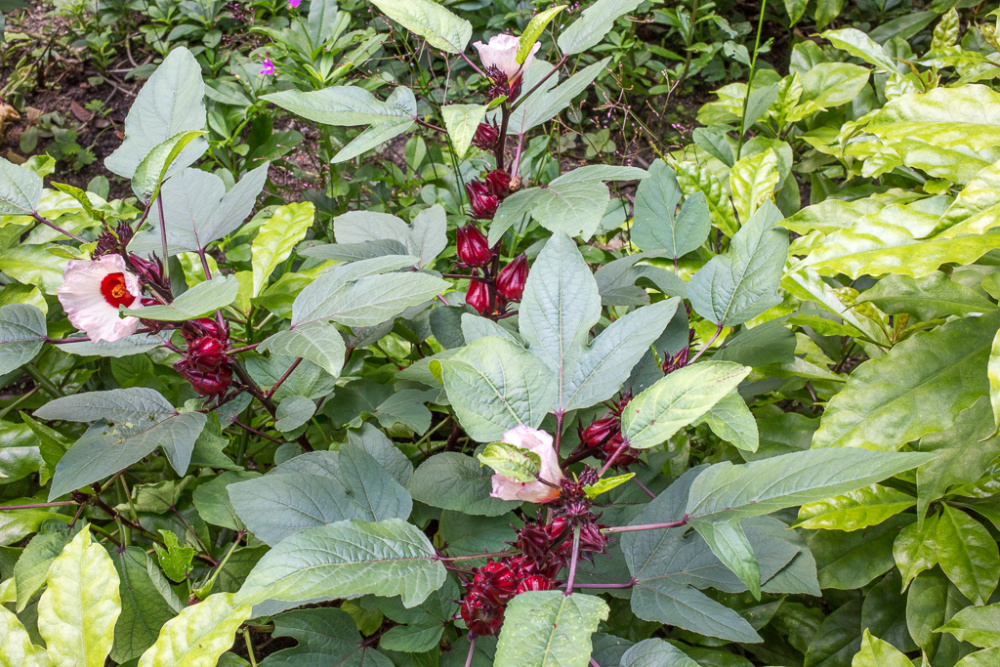
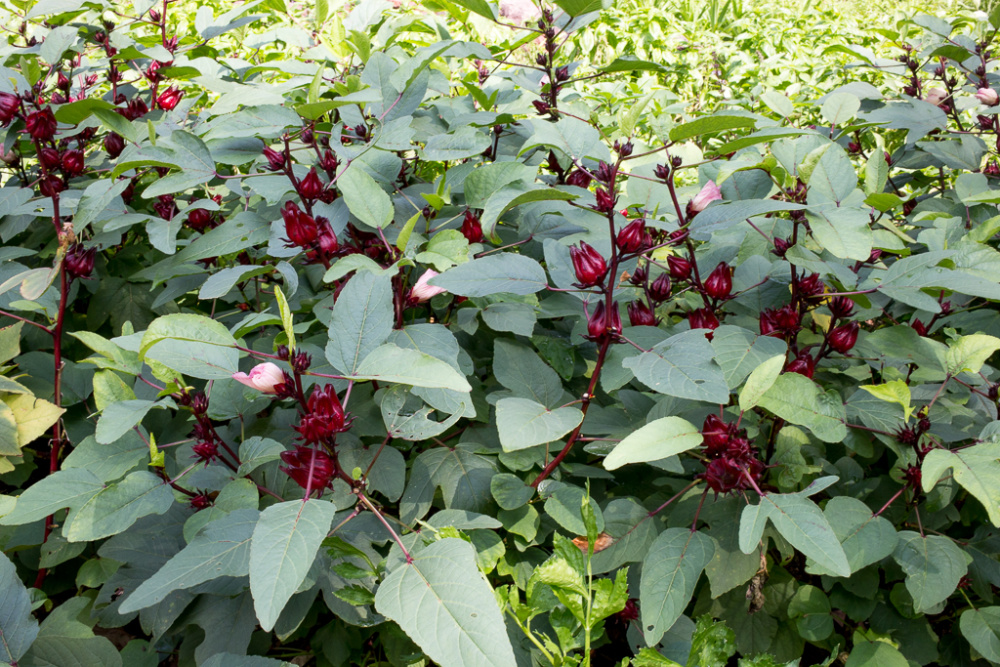
Closely related to Cotton and Okra (Abelmoschus esculentus), it is a wide-spreading annual sub-shrub 1 to 2 m (3.3 to 6.6 ft) tall, made up of a central stem with semi-woody, wine-red stems branching off all around, and with a vigorous taproot keeping the whole plant firmly anchored in the soil.
The leaves are dull blue-green and vary in size and shape, with the first leaves and the leaves at the top of the plant lance-shaped and entire. As the plant grows, deeply lobed palmate leaves develop, either three- or five-lobed and 7 to 15 cm (2.8 to 6 in) long, mostly on the side branches around the middle of the plant.
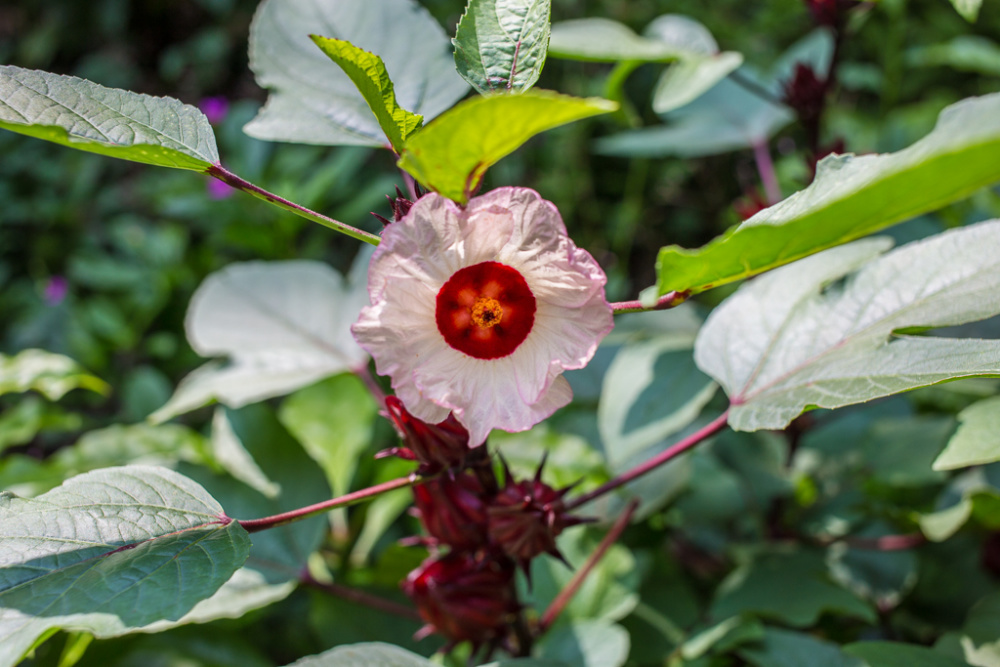
The flowers are typical Hibiscus, with five large yellow petals and a red centre. They are borne on the side branches and come into bloom from autumn to winter in response to shortening day length.
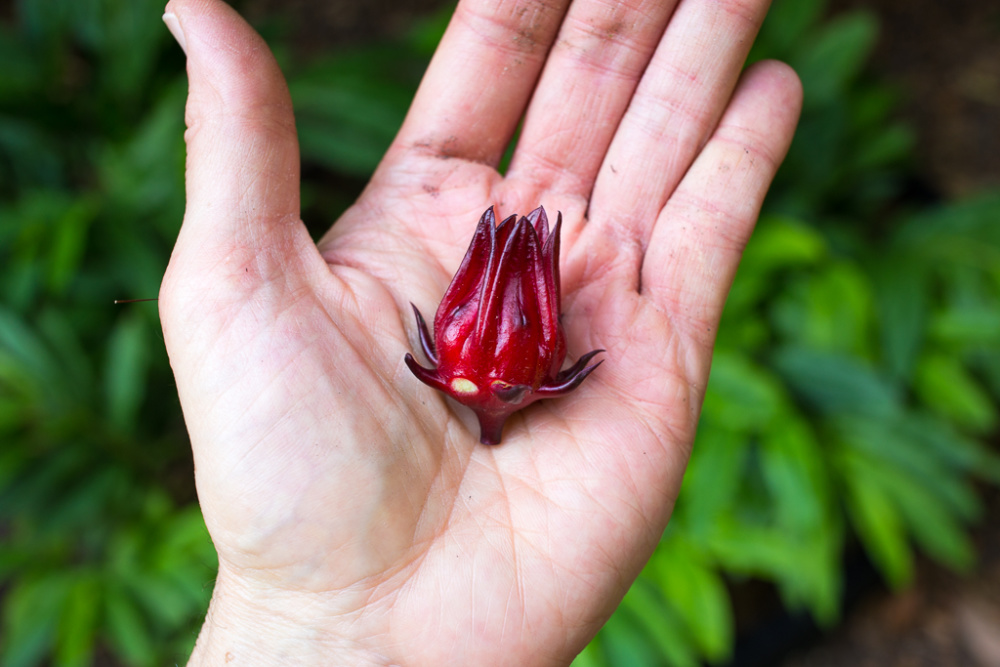
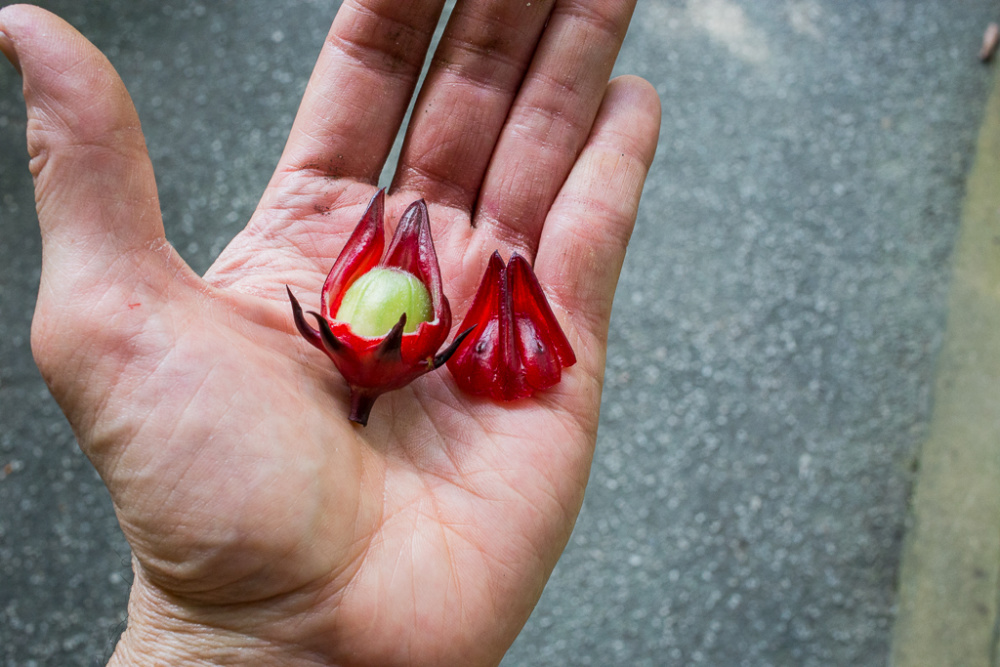
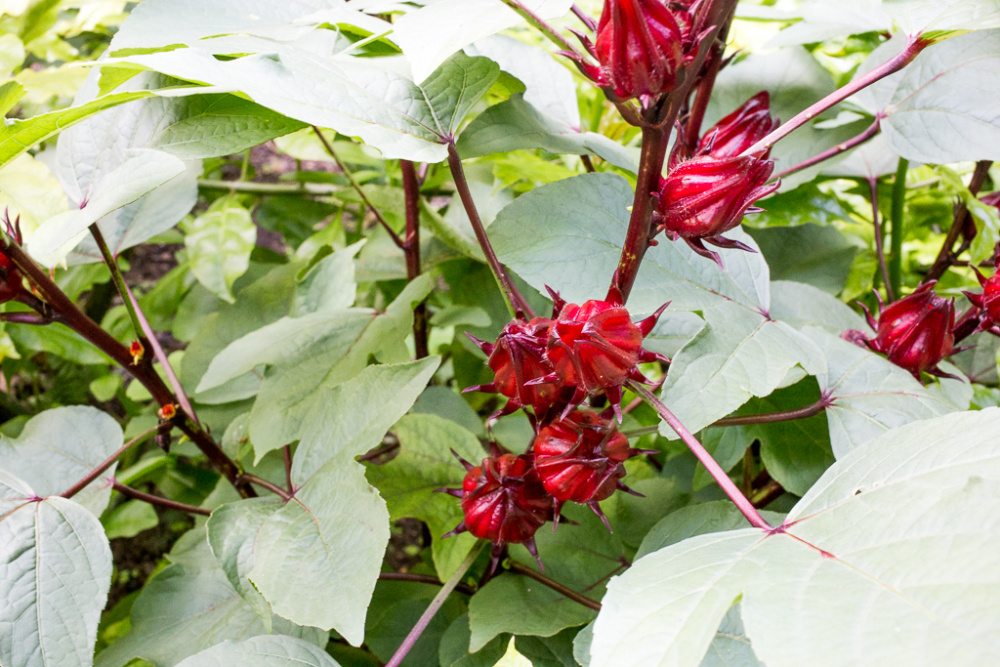
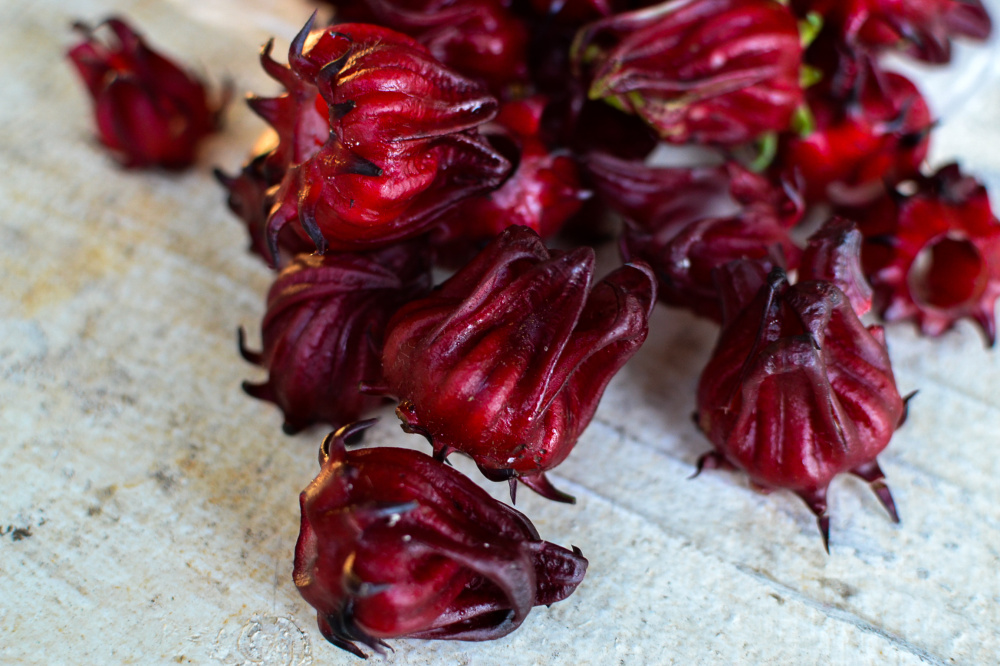
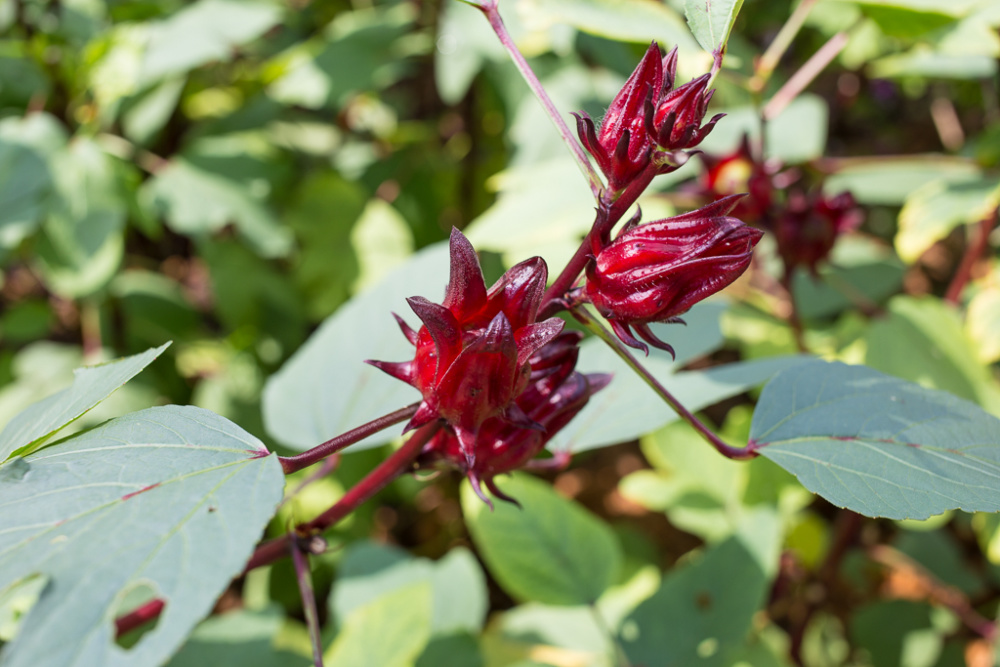
Each flower lasts for only a day and is set in a green calyx that swells after the flower withers and falls, becoming fleshy, juicy and ruby-red. This covers a small, egg-shaped seedpod up to 3 cm (1.2 in) long, containing up to 30 very small, finely hairy, dark brown, kidney-shaped seeds.
Edible uses
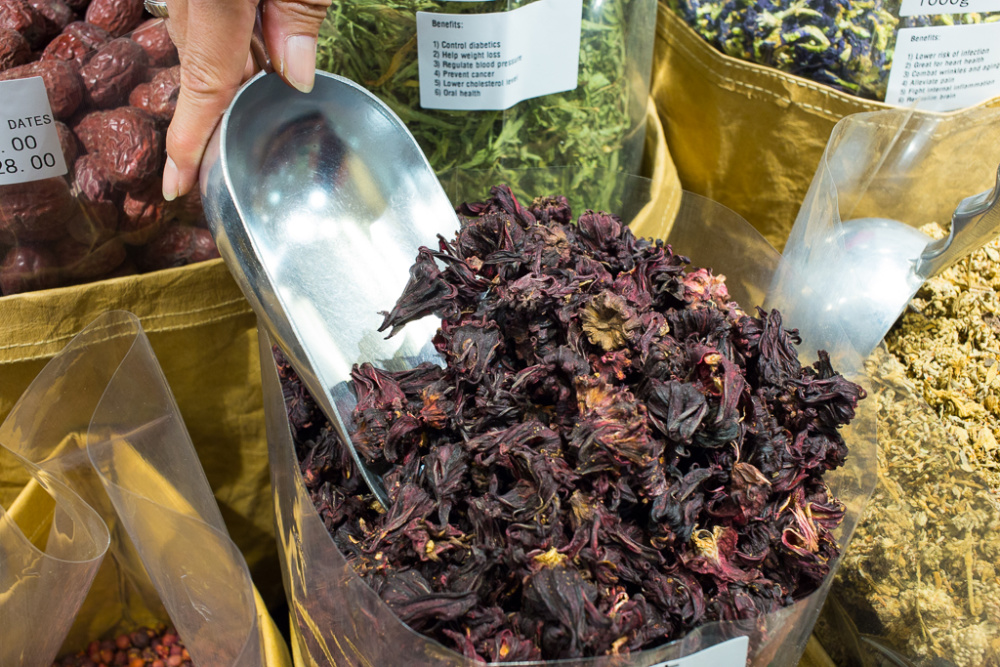
Tea - The fleshy calyx has a sourish, cranberry-like flavour and is used fresh or dried to make tea-based beverages. In its native region, people make the calyx into teas and cold beverages, with or without a sweetener, and spice it with Ginger or other spices.
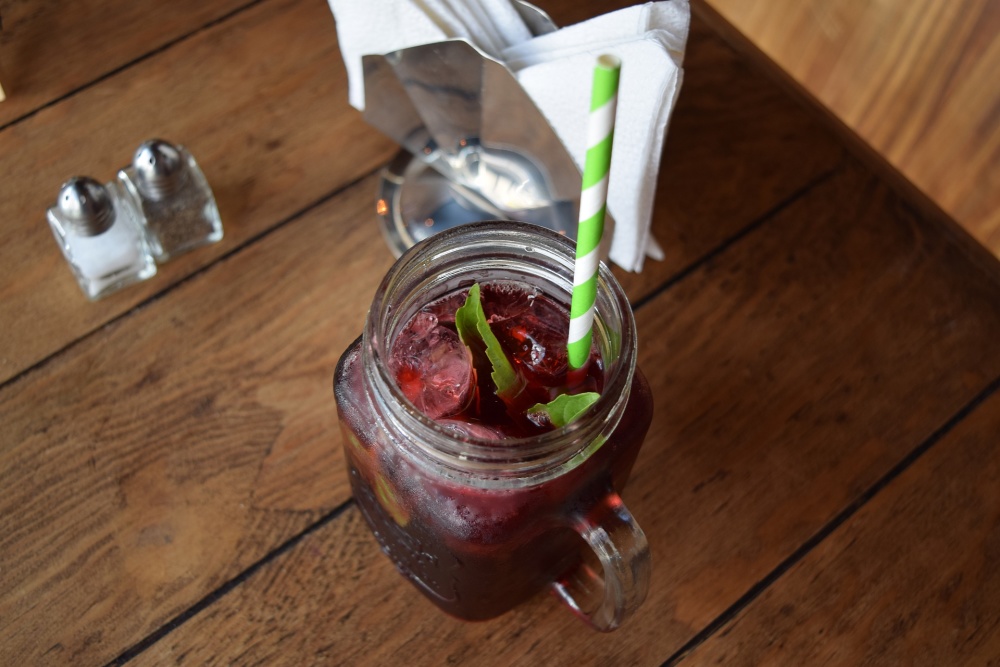
Non-alcoholic drink - In the Caribbean, the calyx (locally called 'sorrel', also known as 'flor de Jamaica' and 'rosella') is soaked in water with various spices and flavourings, particularly Ginger (from Zingiber officinale), then strained to make a bright red, aromatic drink. Because the calyces are ready for picking in mid-December, sorrel is traditionally used extensively during the Christmas season. For West Indian communities in America and Europe, Christmas isn't considered complete without it. (Culinaria: The Caribbean, A Culinary Discovery).
Red Sorrel is also dried and packaged commercially for year-round availability and export. It is increasingly sold as a bottled, concentrated syrup for year-round use.
Alcoholic drink - The same sorrel drink is also made alcoholic by adding White Rum (from Saccharum officinarum)
Jam or marmalade - It's also made into jams, jellies and sauces, substituting the calyx for fruit in traditional recipes.
Syrup or cordial - As well as fruit syrup (cordial) and drink mixes.
Natural food colouring - Infusions retain the bright ruby-red colour of the calyx and are used commercially as a natural food colouring.
Natural flavouring - They're also used to flavour alcoholic and non-alcoholic beverages, chilled dairy desserts, confectionery, and baked goods.
Material uses
Natural soap - The seed yields 16% edible oil, though questions remain about the oil's suitability for human consumption, and it is mostly diverted to soap-making.
Bird or poultry feed - The whole seed, which has a crude protein content of about 21% of its dry weight, is recommended as bird feed for chickens and other poultry.
Health uses
Natural liver tonic - Teas or infusions of the calyx are prescribed as a liver tonic in traditional medicine.
Clinical trials have also shown protective action against high blood pressure. They are rich in both:
Vitamin C
Vitamin A
Climate
Red Sorrel grows naturally in humid subtropical and tropical climates, generally areas with annual lows of 12 to 25°C, annual highs of 22 to 35°C and annual rainfall of 800 to 3500 mm. It can also be cultivated with irrigation in much drier areas.
Growing
New plants are usually started from seed, broadcast on finely prepared soil enriched with organic matter and adjusted to a moderately acidic to alkaline pH, generally 6.0 to 8.5. Alternatively, sow seeds in containers and transplant seedlings when they are about 15 to 30 cm (6 to 12 in) tall.
Seeds are best sown in spring or at the start of the rainy season in subtropical and tropical areas, when there is sufficient moisture for good germination and growth. The calyces mature around four to six months after the seeds are sown, or three weeks after flowering. Yields of fresh calyces average 1.5 kg per plant per season, or about 8,000 kg per hectare (7,140 lb per acre) in commercial operations.
Problem features
Birds and other animals eat the seeds and disperse them. It is recorded as having escaped cultivation and as a weed of the natural environment in Australia. The Hawaii Pacific Weed Risk Assessment (HPWRA) project assesses it as a moderate weed risk in Hawaii.
Where it grows
References
Books
-
Adams, C. D. 1972, Flowering plants of Jamaica, University of the West Indies, Mona, Greater Kingston
-
Dean, J. 2010, Wild Color : the complete guide to making and using natural dyes (Revised and updated edition), Watson-Guptill Publishing, New York
-
Farooqi, A. A. & Sreeramu, B. S. 2004, Cultivation of medicinal and aromatic crops, Hyderabad University Press, Hyderabad
-
Food and Agriculture Organization of the United Nations (FAO) 1988, Traditional food plants : a resource book for promoting the exploitation and consumption of food plants in arid, semi-arid and sub-humid lands of eastern Africa, Food and Nutrition Paper No. 42, Rome
-
Ghosh, T. 1983, Handbook on jute, Food and Agriculture Organization of the United Nations (FAO), Rome
-
Gohl, B. 1981, Tropical Feeds : feed information summaries and nutritive values (Revised edition), Food and Agriculture Organization of the United Nations (FAO), Rome
-
Grubben, G.J.H. & Denton, O.A. (Editors) 2004, Plant Resources of Tropical Africa, Volume 2 : Vegetables, PROTA Foundation, Backhuys Publishers, Leiden
-
Holttum, R. E. & Enoch, I. C. 2010, Gardening in the tropics : the definitive guide for gardeners, Marshall Cavendish Editions, Singapore
-
Khan, I. A. & Abourashed, E. A. 2010, Leung's encyclopedia of common natural ingredients : used in food, drugs and cosmetics, 3rd edition, Wiley Publishing, Hoboken, New Jersey
-
Martin, F. W & Ruberte, R. M. 1975, Edible leaves of the tropics, U.S. Agency for International Development (USAID), and the Agricultural Research Service, U.S. Department of Agriculture (USDA), Mayaguez, Puerto Rico
-
McIlroy, R.J. 1963, An introduction to tropical cash crops, Ibadan University Press, Ibadan, Nigeria
-
Morton, J. F. & Dowling, C. F. 1987, Fruits of warm climates, Creative Resources Systems, Winterville, North Carolina
-
Norrington, L. & Campbell, C. 2001, Tropical food gardens : a guide to growing fruit, herbs and vegetables in tropical and sub-tropical climates, Bloomings Books, Hawthorn, Victoria
-
Parkinson, R. 1999, Culinaria : The Caribbean a culinary discovery, 1st. ed, Koìln: koìnemann, Germany
-
Parrotta, J. A. 2001, Healing plants of peninsular India, CABI Publishing, Wallingford, Oxfordshire
-
Randall, R. P. 2002, A global compendium of weeds, R.G. and F.J. Richardson Press, Melbourne
-
Randall, R. P. 2007, The introduced flora of Australia and its weed status, Cooperative Research Centre for Australian Weed Management, Glen Osmond, South Australia
-
Tindall, H. D 1983, Vegetables in the Tropics, Macmillan Press, London
-
Wood, I. M. 1997, Fibre crops : new opportunities for Australian agriculture, Queensland Department of Primary Industries (QLD DPI), Brisbane