

Common name: Fig
Other common names: Common Fig, Edible Fig
Description
Cultivated figs originate from the geographic region extending from North Africa, through the Mediterranean, to Western Asia. Today, people cultivate the tree for its fruit far beyond its native range in many warm-climate regions worldwide.
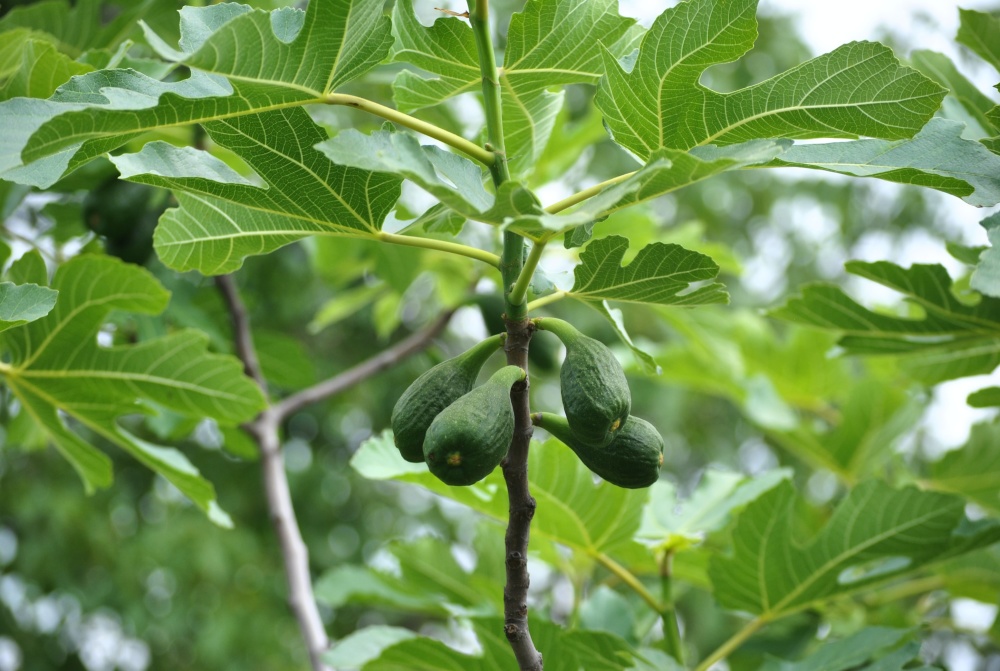
It is typically a small tree, 3 to 5 m (10 to 16 ft) tall, though under favourable conditions it may reach up to 10 m (30 ft) or more, and in warm climates it is fast-growing. The trunk is usually short with silvery-grey bark and supports a wide-spreading crown, sometimes as wide as the tree is tall.
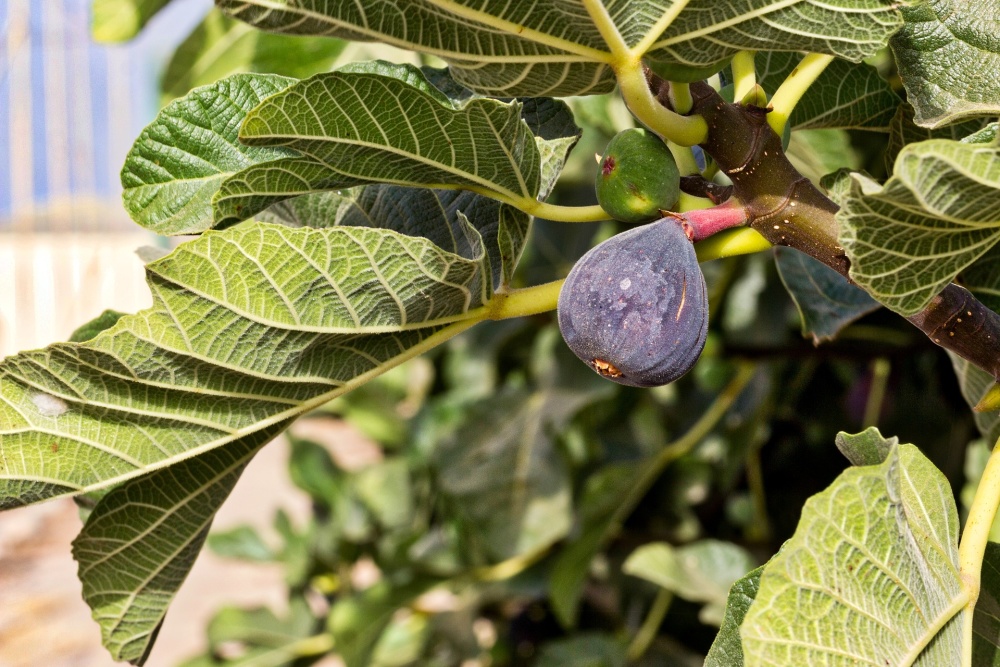
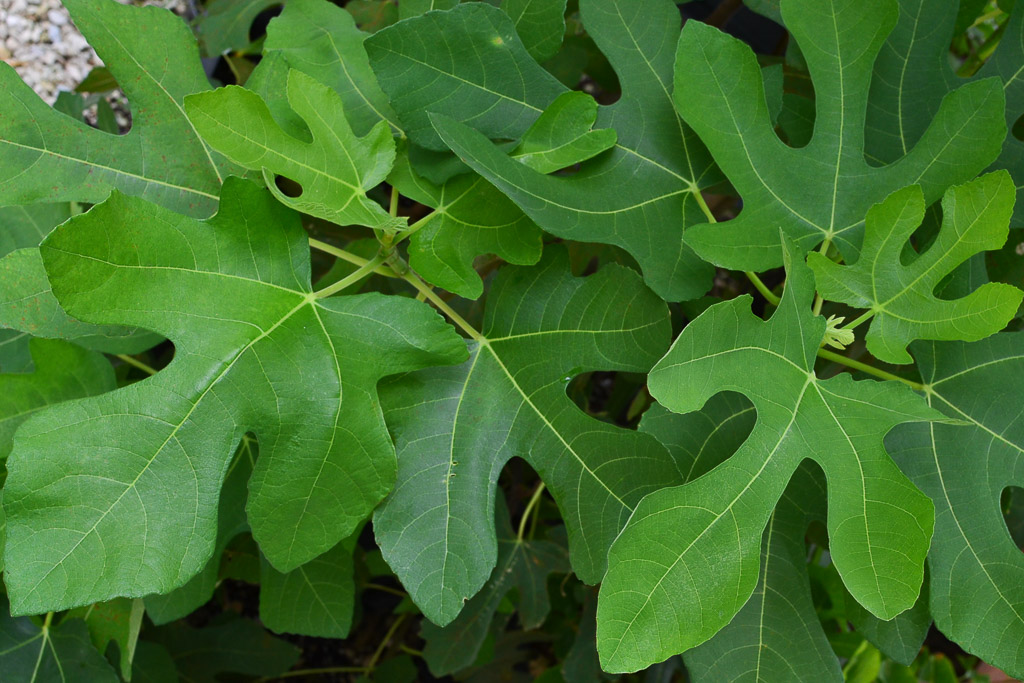
Leaves are large, up to 25 cm (10 in) long and equally as wide, deeply lobed, dark green, rough on top and finely haired underneath. They fall off the tree during seasonally dry or cool weather, leaving the branches bare and the tree dormant until moisture and warmth return to encourage new growth.
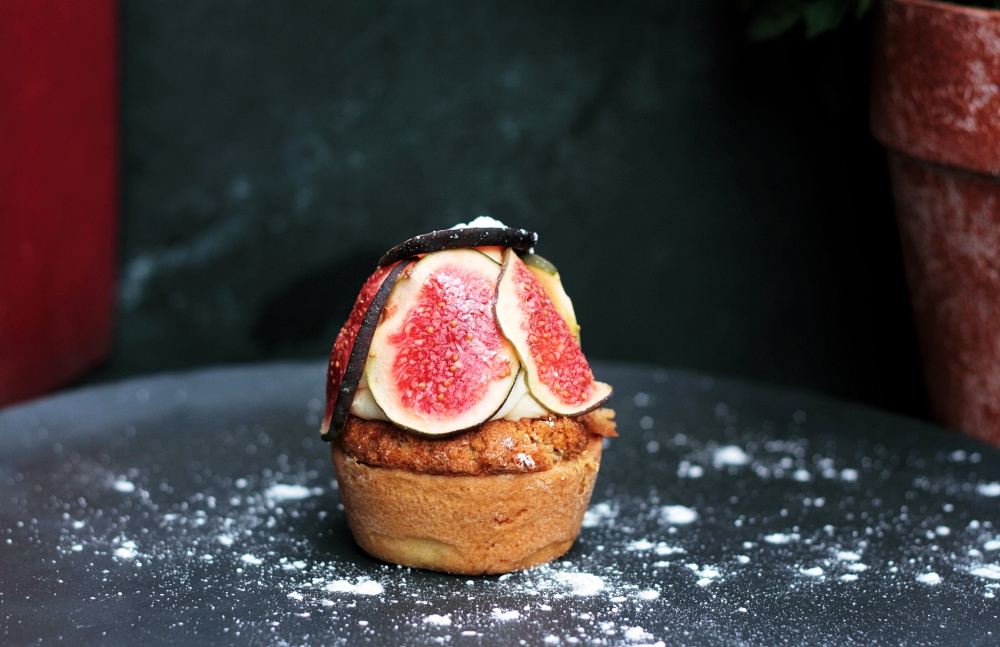
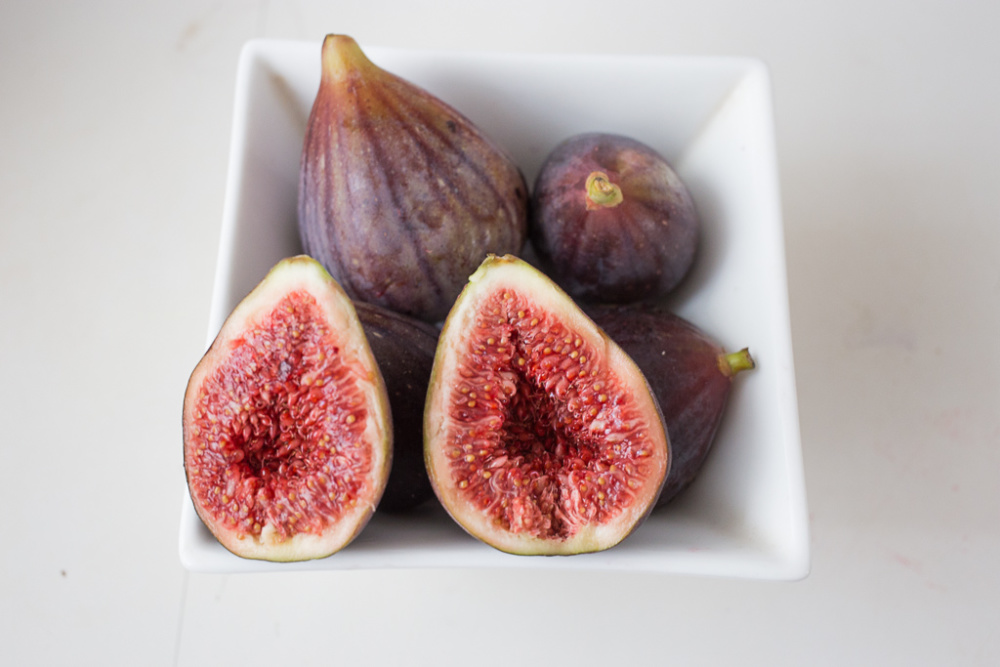
The flowers are not visible on the tree, as they are enclosed within what is commonly called the fruit, which is actually a receptacle for both the flowers and the real fruit. They become visible when the fig is cut in half, showing up as tiny, thread-like filaments pointing inward toward the hollow centre. The true fruit is the speck that develops at the tip.
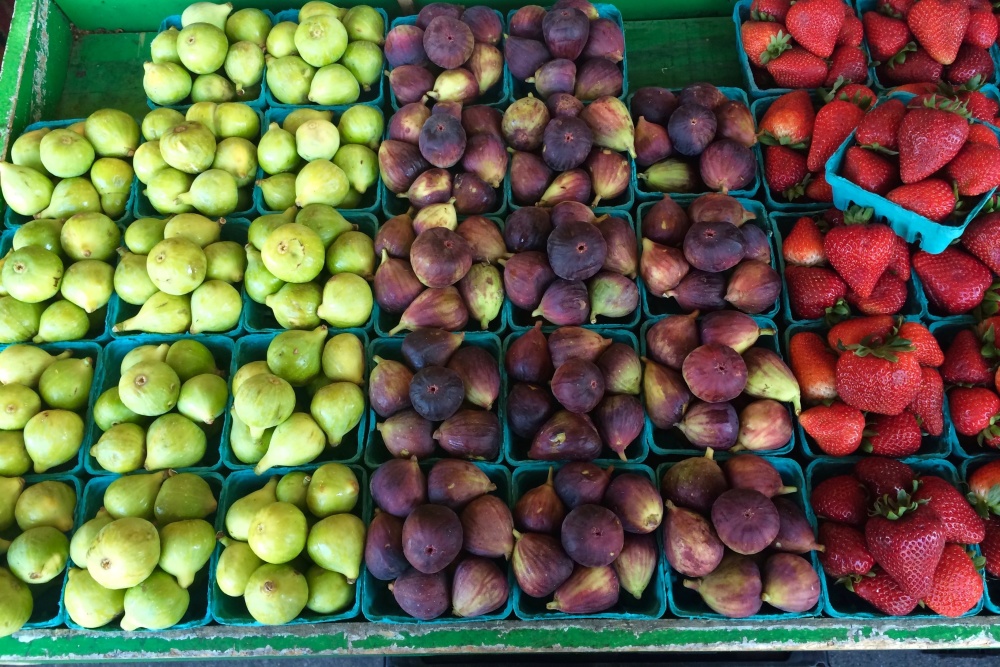
Figs come in a variety of colours, shapes, and sizes, but are usually pear-shaped, around the size of a large lime to an average lemon and are green to yellow or deep purple when ripe, depending on the variety, of which there are hundreds. They ripen in summer in temperate climates, but the fruiting season is somewhat longer in warmer areas and may extend into early autumn or start earlier in late spring.
Edible uses
Fresh fruit - Figs are well known and widely eaten in many countries worldwide, usually fresh or preserved,
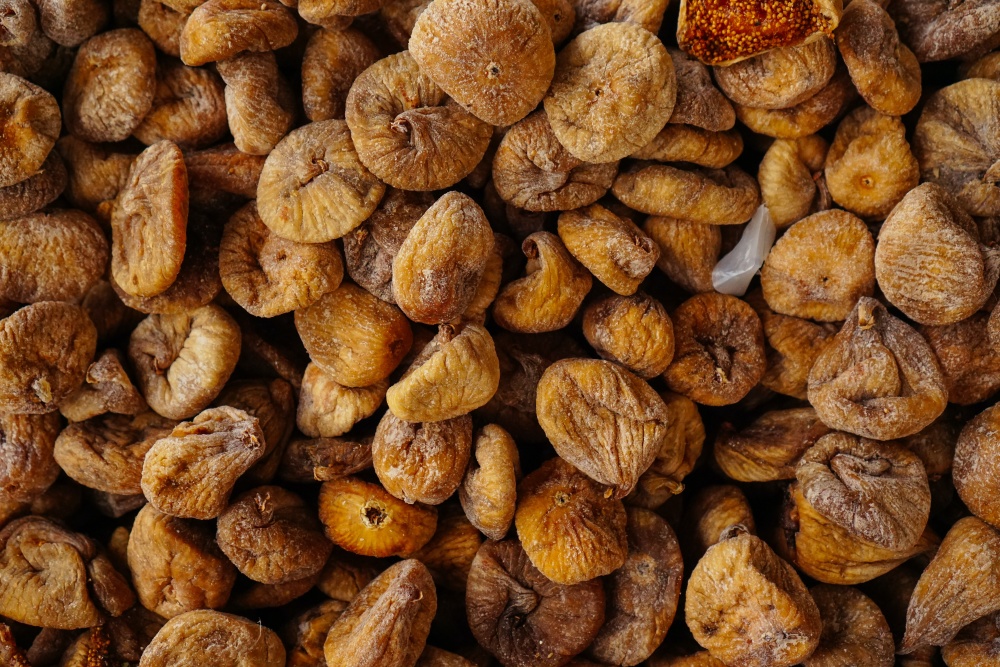
Dried fruit - ...including dried fruit,
Fruit spread - ...jam, and other preserves.
Material uses
Natural coagulant - When wounded, the stems yield a milky latex that has long been collected and used as a coagulant, particularly to curdle milk for cheesemaking. It is a credible vegetarian substitute for rennet, traditionally obtained from the lining of cattle stomachs. Farmers collect the latex early in the morning, when yields and enzyme activity are highest. It is reported to be many times more effective than conventional rennet at curdling milk.
Livestock feed - The leaves are palatable to ruminants and have a reported crude protein content of around 14% of their dry weight, but must be harvested fresh before they begin to yellow.
Health uses
Vitamin K - The dried fruit contains high levels of Vitamin K
Calcium - ...and Calcium.
Fig latex mixed with sodium bicarbonate (baking soda) can be given orally to treat intestinal worms in humans. The latex contains the enzyme Ficin, which has a protein-dissolving action that kills some species of intestinal worms.
Fig latex is also effective in treating common skin warts (Verruca vulgaris). In one scientific study, latex applied topically was found to be only marginally less effective than wart cryotherapy (the usual freezing off of warts).
Climate
Although naturally adapted to Mediterranean climates with cold winters, fig trees do not require chilling to break dormancy, unlike apple, pear, cherry, or plum trees. However, the fruit is highly susceptible to fungal disease in hot, humid tropical conditions, particularly in spring and summer when the tree flowers and fruits.
Fig trees produce fair to good quality fruit in sub-humid to moderately humid Mediterranean and subtropical climates, generally areas with annual lows of 7 to 17°C, annual highs of 18 to 37°C, annual rainfall of 400 to 2000 mm and a dry season of 7 months or less.
Figs can also be cultivated in tropical savanna and arid areas if irrigated, and in areas with high rainfall if the rain falls in autumn to winter and the spring to summer is relatively dry, as occurs in parts of the Hawaiian Islands. However, spring-to-summer rainfall is the norm in subtropical and tropical areas.
Growing
New plants are usually started from cuttings, but air-layering (aka. circumposing) techniques can also be used, with varying success. Vegetatively propagated plants start bearing fruit when around two to three years old.
Good results have been obtained with cuttings of mature budwood about 1 to 3 years old, 1 to 1.5 cm (0.4 to 0.6 in) in diameter, and 30 cm (12 in) long. These are taken from selected trees in the spring; the cut end is dipped in a rooting hormone, and they are placed in seedling containers with a moistened, free-draining potting mix. They are then covered, both the cuttings and the container, with a clear plastic pavilion and kept sheltered and shaded until they develop a root system, after which they are transplanted to the garden or orchard.
Non-pollinated varieties and those with a closed or small eye opening at the base of the fruit are recommended for tropical areas. Fruit with a large eye-opening encourages fungal disease and is therefore not suitable.
Some non-pollinated, small- to closed-eye varieties that have given good results in the tropics include: 'Black Genoa', 'Black Madeira', 'Black Mission', 'Brown Turkey', 'Celeste', 'Excel', 'Flanders', 'Ischia', 'Kadota', 'LSU Gold', 'LSU Purple', 'Osborn Prolific', 'Prestons Prolific', 'Rattlesnake Island', 'White Kadota', 'White Texas', 'Violette de Bordeaux' and 'Petite Negra'.
The tree performs best in free-draining loam and sandy soils, generally with a pH of 5.5 to 8.5, and in full sun. It tolerates limestone soils well.
The roots are highly susceptible to nematodes and root fungus. Nematodes operate only in the top 50 cm (1.6 ft) of soil, and a good way to avoid them is to plant in a bottomless bucket buried at least 50 cm (1.6 ft) deep, with the top lip resting above the soil surface. The inside of the bucket is then filled with sterilised soil for the plant to grow in, allowing its roots to extend beneath the bucket.
Birds attack the fruit, so netting or bagging may be necessary to protect them. Green- and yellow-fruited varieties are reportedly less attractive to birds.
Fig trees need to be pruned after each harvest, with branches cut back and the tree kept at a manageable size to make harvesting easier.
Problem features
Non-pollinated varieties do not produce true fruit and are therefore unlikely to become a weed problem. The Hawaii Pacific Weed Risk Assessment (HPWRA) project assessed them as a low weed risk for Hawaii.
The milky latex is a known skin irritant in some people when exposed to sunlight, a condition known as phytophotodermatitis.
The leaves fall to the ground, creating litter, and overripe fruit fall and splatter, staining surfaces and attracting flies and other unwelcome insects.
Where it grows
References
Books
-
Chevallier, A. 2000, Encyclopedia of herbal medicine, 2nd American ed., Dorling Kindersley, New York
-
Elevitch, C. R & Wilkinson, K. M. 2000, Agroforestry Guides for Pacific Islands, 1st ed., Permanent Agriculture Resources, Holualoa, Hawaii
-
Gohl, B. 1981, Tropical Feeds : feed information summaries and nutritive values (Revised edition), Food and Agriculture Organization of the United Nations (FAO), Rome
-
Love, K. & Bowen, R. & Fleming, K. 2008, Twelve Fruits with Potential Value Added and Culinary Uses, University of Hawaii Press, Hawaii
-
Martin, F. M., et al. 1987, Perennial edible fruits of the tropics : an inventory, U.S. Dept. of Agriculture (USDA), Agricultural Research Service, U.S. Government Printing Office (GPO), Washington, D.C.
-
Mollison, B. 1993, The permaculture book of ferment and human nutrition, Tagari Publications, Tyalgum, New South Wales
-
Morton, J. F. & Dowling, C. F. 1987, Fruits of warm climates, Creative Resources Systems, Winterville, North Carolina
-
Perry, B. 2010, Landscape plants for California gardens: an illustrated reference of plants for California landscapes, Land Design Publishing, Claremont, California
-
Prasanna, P.V. 2012, Trees of Hyderabad: A Pictorial Guide, 1st ed., Botanical Survey of India (BSI), Indian Government Ministry of Environment and Forests, Kolkata
-
Randall, R. P. 2002, A global compendium of weeds, R.G. and F.J. Richardson Press, Melbourne
-
Randall, R. P. 2007, The introduced flora of Australia and its weed status, Cooperative Research Centre for Australian Weed Management, Glen Osmond, South Australia
-
Shiva, M.P., 1998. Inventory of Forest Resources for Sustainable Management & Biodiversity Conservation with Lists of Multipurpose Tree Species Yielding Both Timber & Non-timber Forest Products (NTFPs), and Shrub & Herb Species of NTFP Importance, Indus Publishing Company, New Delhi
-
Stewart, A. 2013, The drunken botanist : the plants that create the world's great drinks, 1st ed., Algonquin Books, Chapel Hill, North Carolina
-
Tindall, H. D. & Rice, L. W. 1990, Fruit and vegetable production in warm climates, International ed., Macmillan, London
-
Vázquez, Y. C. 1999, Potentially valuable Mexican trees for ecological restoration and reforestation, Institute of Ecology, Database SNIB-REMIB-CONABIO, Project J084, Mexico
Articles, Journals, Reports and Working Papers
-
Wenkam N.S. & Miller C.D. 1965, Composition of Hawaii fruits (Bulletin 135), University of Hawaii, Honolulu