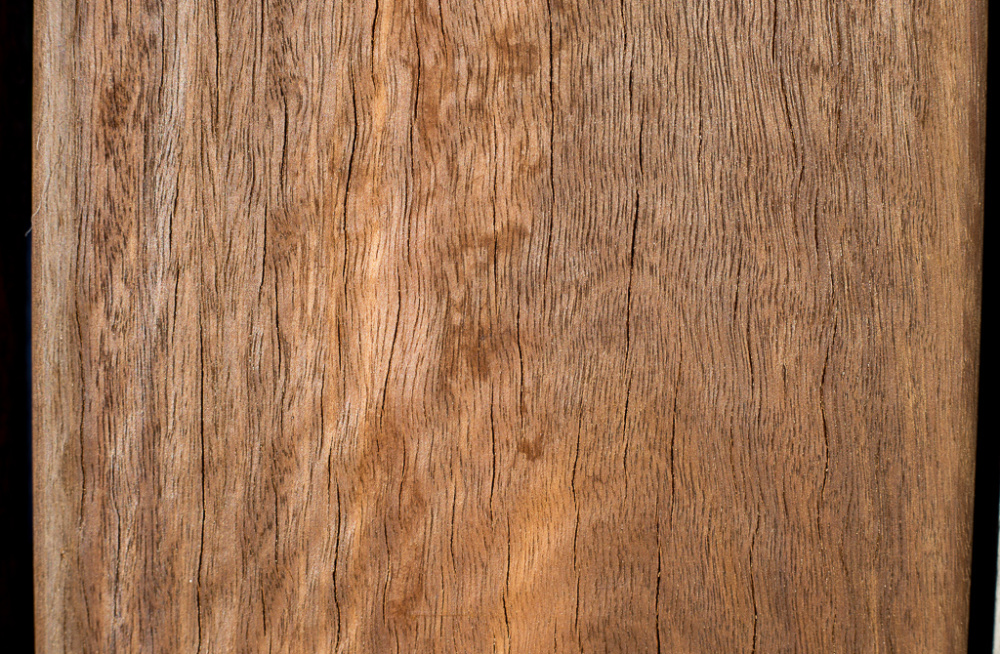



Common name: Narrow Leaf Ironbark
Other common names: Grey Ironbark, Narrow Leaf Red Ironbark, Red Ironbark, White Ironbark
Description
Narrow-leaf ironbark is an Australian eucalyptus tree producing durable timber and nectar for honey production.
Its natural range extends across a wide area, from warm-temperate parts of the country's southeast to the tropical north, and it usually occurs in dry open woodland, either in pure stands or mixed with other tree species.
It is slow-growing and grows up to 20 m (65 ft) tall, though it is occasionally taller under ideal conditions. It develops a straight branch-free trunk for more than half the tree height, supporting a moderately leafy, irregular crown. Mature trees have dark grey to near-black bark that is deeply furrowed and ridged.
The leaves are typical of Eucalyptus species: dark green and long, narrow, and blade-like, up to 15 cm (6 in) long in this species. They remain on the tree year-round.
The flowers are small, with long white stamens set in a goblet-shaped base, and they bloom in clusters from winter to summer. They are followed by dry, woody seed capsules containing many tiny seeds of varying shapes and colours.
Material uses
Hardwood - Narrow-leaf ironbark produces a heavy wood, averaging around 1,000 kgs per cubic metre (62 lbs per cubic foot). The sapwood is yellowish or pinkish-white, and the heartwood is red-brown.
Decay- and rot-resistant wood - It has high natural resistance to rot and decay.
Marine-resistant wood - ...and to marine exposure. This puts it in the durable hardwood class, suitable for indoor and outdoor construction, including in coastal areas.
Timber and lumber - Large, well-formed logs are sawn into beams and planks,
Heavy construction - ...for heavy construction, including houses, bridges and wharves,
Crossties or sleepers - ...railway sleepers,
Flooring and decking - ...external flooring and decking,
Furniture and cabinets - ...and outdoor furniture.
Poles and posts - Small-diameter round-wood lengths are cut for poles and fence posts,
Firewood - ...fuel wood, including firewood,
Charcoal - ...and wood for making charcoal.
Environmental uses
Bee forage - The flowers yield reasonable amounts of pollen for brooding honeybees and nectar for honey production. It is reported as a primary nectar source for honeybees across much of its range in Australia. The flowers are also a good pollen source for brood-rearing honeybees.
Edible uses
Honey - Estimates of up to 73 kg (160 lbs) of honey are produced per colony per season. The honey is substantial in body, with a mild, sweet flavour, an extra-white to light amber colour, and a slow granulating to a coarse, whitish grain.
Climate
Grows naturally in sub-humid to moderately humid subtropical and tropical climates, generally areas with annual lows of 10 to 23°C, annual highs of 23 to 34°C, annual rainfall of 600 to 2000 mm and a dry season of 3 to 7 months.
Growing
New plants are usually started from seed, which remain viable for several years if stored under cold, dry, airtight conditions. Trees perform best in free-draining loam and sandy soils of an acid to neutral nature, generally with a pH of 5.5 to 7.0, and in sites with full to partial sun exposure.
Problem features
The Hawaii Pacific Weed Risk Assessment (HPWRA) project and the IFAS Assessment of Non-Native Plants in Florida's Natural Areas have assessed it as a low-to-moderate weed risk for Hawaii and Florida.
The roots are moderately invasive, with a minimum recommended planting distance of 6 metres (20 ft) from underground pipes, paved areas, or building foundations.
Where it grows
References
Books
-
Blake, S. T. & Roff, C. 1987, The honey flora of Queensland, 3rd ed., Queensland Department of Primary Industries (QLD DPI), Brisbane
-
Boland D.J., Brophy J.J. & House A. P. N. 1991, Eucalyptus leaf oils, use, chemistry, distillation and marketing, Australian Centre for International Agricultural Research (ACIAR) & Commonwealth Scientific Industrial Research(CSIRO), Inkata Press, Melbourne
-
Boland, D. & Brooker, I. & McDonald, M. W. 2006, Forest trees of Australia, 5th ed., CSIRO Publishing (Ensis), Melbourne
-
Clemson, A. 1985, Honey and pollen flora, New South Wales Department of Agriculture, Inkata Press, Melbourne
-
Crane, E., Walker, P. & Day, R. 1984, Directory of important world honey sources, International Bee Research Association, London, United Kingdom
-
Leech, M. 2013, Bee Friendly: A planting guide for European honeybees and Australian native pollinators, Rural Industries Research and Development Corporation (RIRDC), Canberra, Australian Capital Territory
-
Liegel, L. H. 1987. A technical guide for forest nursery management in the Caribbean and Latin America, U.S. Dept. of Agriculture, Forest Service, Southern Forest Experiment Station, New Orleans
-
Nicolle, D. (2016). Taller Eucalypts for Planting in Australia: Their Selection, Cultivation and Management. Dr Dean Nicolle, Adelaide.
-
Randall, R. P. 2002, A global compendium of weeds, R.G. and F.J. Richardson Press, Melbourne
-
Randall, R. P. 2007, The introduced flora of Australia and its weed status, Cooperative Research Centre for Australian Weed Management, Glen Osmond, South Australia
-
Roecklein, J. C & Leung, P.S. 1987, A Profile of economic plants, Transaction Books, New Brunswick, New Jersey
-
Streets, R. J. & Troup, R. S. 1962, Exotic forest trees in the British Commonwealth, Oxford University Press, Oxford, England
-
Webb, D. B. 1984, A Guide to species selection for tropical and sub-tropical plantations, 2nd ed., Unit of Tropical Silviculture, Commonwealth Forestry Institute, University of Oxford, Oxfordshire