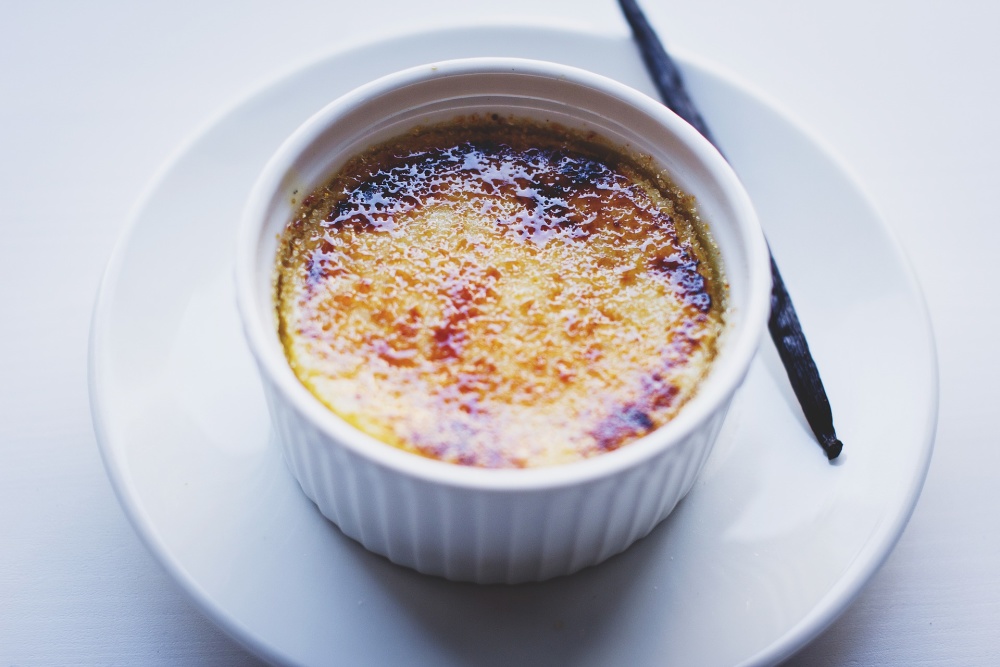


Common name: Vanilla
Other common names: Bourbon Vanilla
Description
Native to southern Mexico and neighbouring Guatemala, this orchid produces seedpods that yield vanilla, one of the world's best-known and most widely used flavourings. It grows in humid tropical forests, in the shade of closely spaced trees, away from direct sunlight.
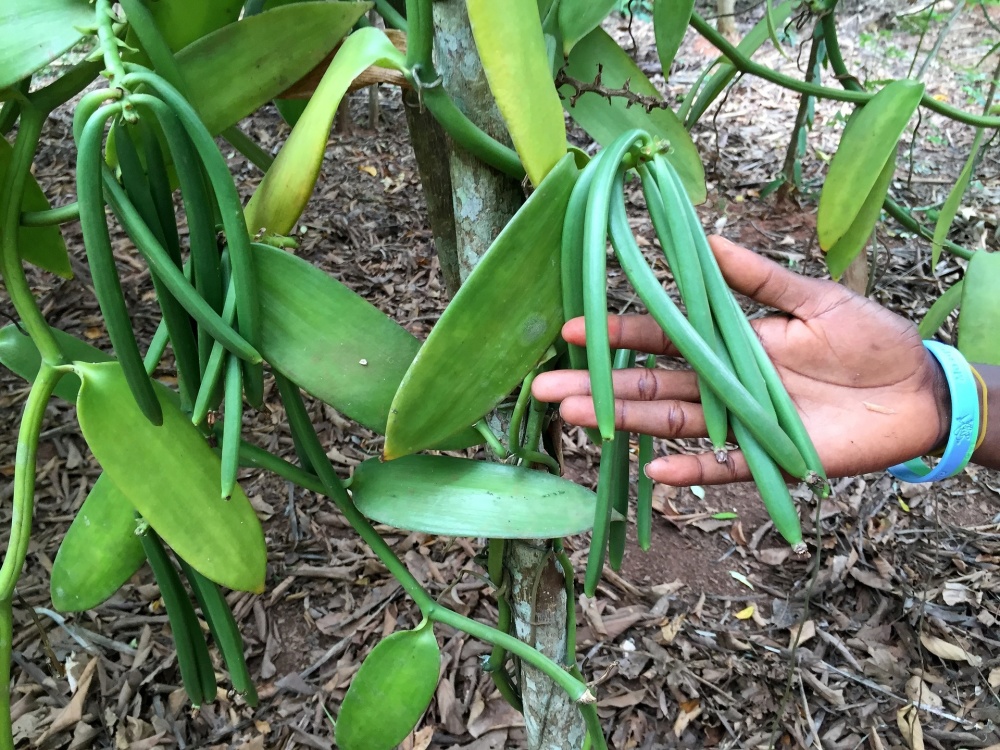
It is a perennial vine with herbaceous stems that climb using aerial roots that arise at nodes along their underside. The aerial roots cling to the structures they climb, usually a tree trunk, supporting the vine as it grows while also taking up moisture and nutrients to nourish the plant.
Individual vines in the wild may be up to 30 m (100 ft) long but are more commonly 5 to 15 m (16 to 50 ft) in cultivation and are either branched or unbranched. They have thick, fleshy stems that are dark green and photosynthetic, absorbing sunlight that filters through the forest canopy above.
Leaves are lance-shaped, 10 to 20 cm (4 to 8 in) long, dark green and fleshy. They are borne alternately along the stem at nodes opposite the aerial roots, which fasten themselves to the tree trunk.
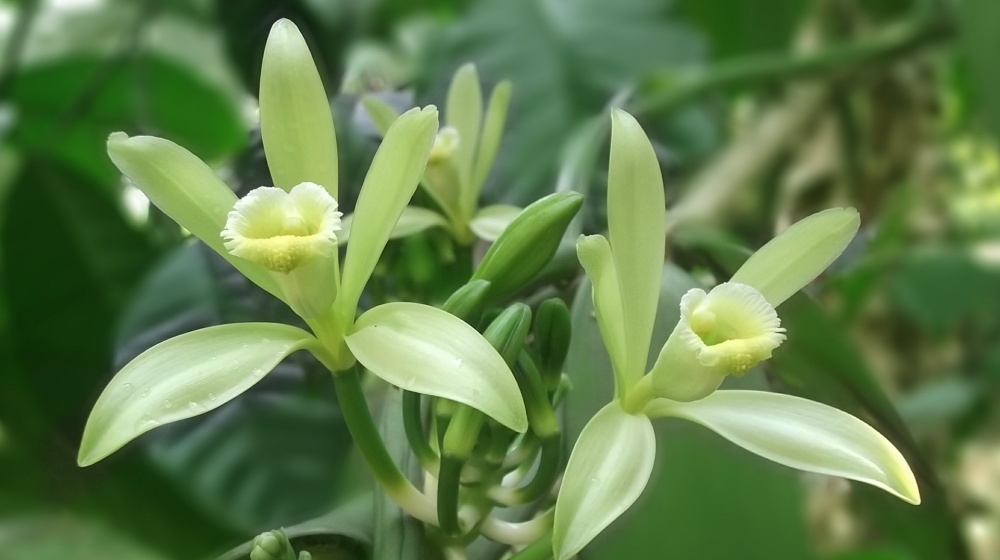
The flowers are large, 5 to 8 cm (2 to 3 in) wide, orchid-like with ruffled lips, pale green or yellow and set in three to five yellow-green sepals. They are held in clusters of ten to twenty, occasionally up to thirty, borne near the top of the stems but with only one to three flowers opening each day. A bee species found only in the plant's native range pollinates them naturally, making hand-pollination the only viable alternative elsewhere. Otherwise, few if any flowers develop seedpods.
Fertilised flowers develop into smooth, green-skinned tubular seedpods 10 to 25 cm (4 to 10 in) long. They mature about seven to ten months after fruit-set, becoming pale yellow with many tiny, roundish seeds inside.
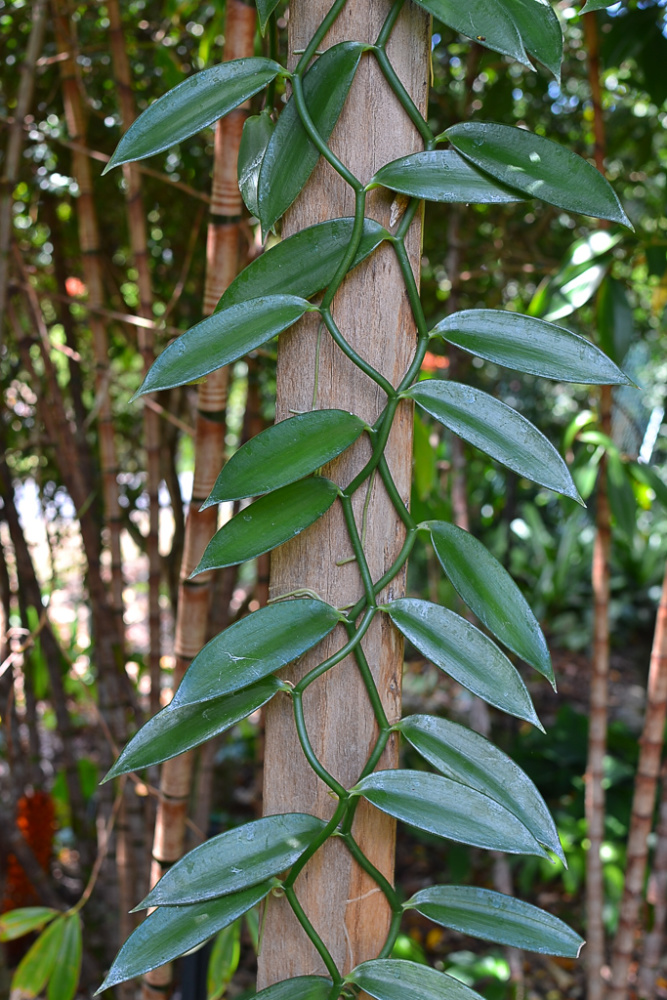
Vanilla vine (Cairns, Australia)
Edible uses
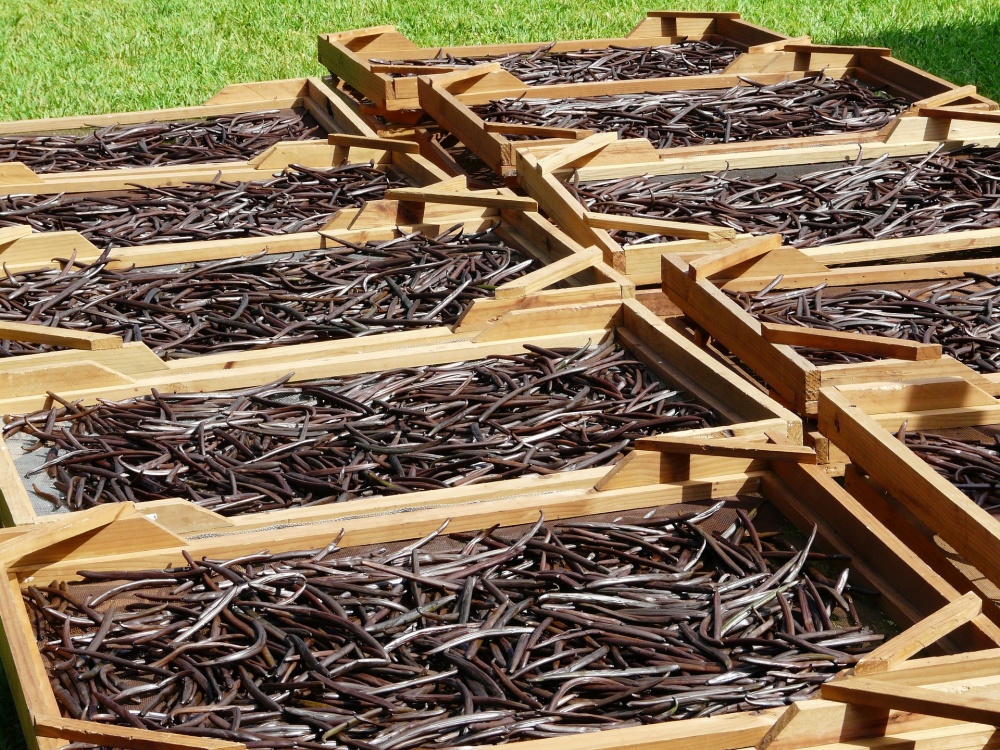
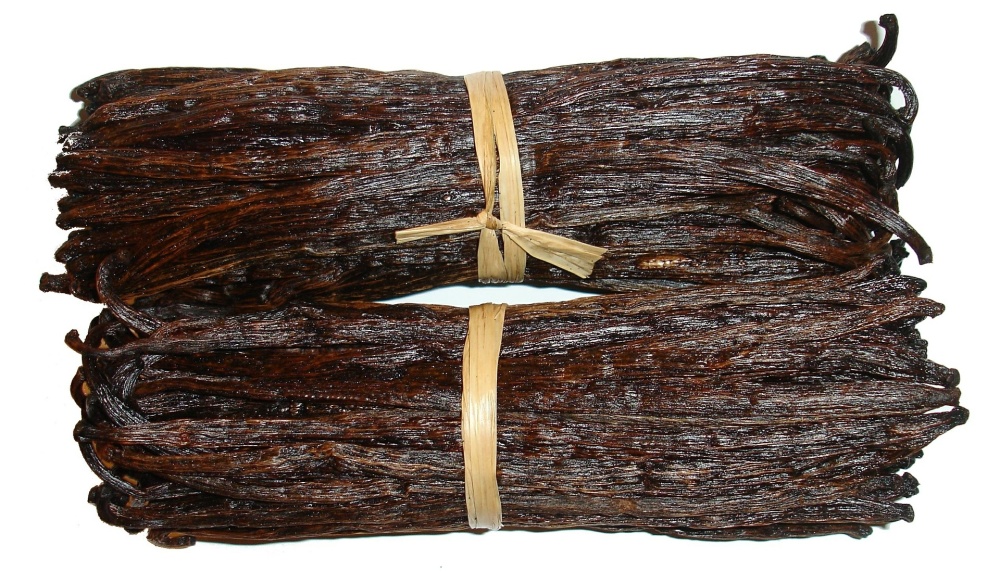
Spice - Vanilla flavouring comes from the seedpod, which, when harvested and allowed to sweat (ferment) under controlled conditions, produces what is commonly known as the 'Vanilla bean'. The traditional process involves immersing the mature beans in near-boiling water to kill them, before they are sweated (fermented), which changes their colour to dark brown or brown-black. As it darkens, the bean loses moisture and wilts, becoming wrinkled and developing its rich vanilla flavour and aroma. Vanilla has long been used to flavour food this way, first by the ancient Aztecs.
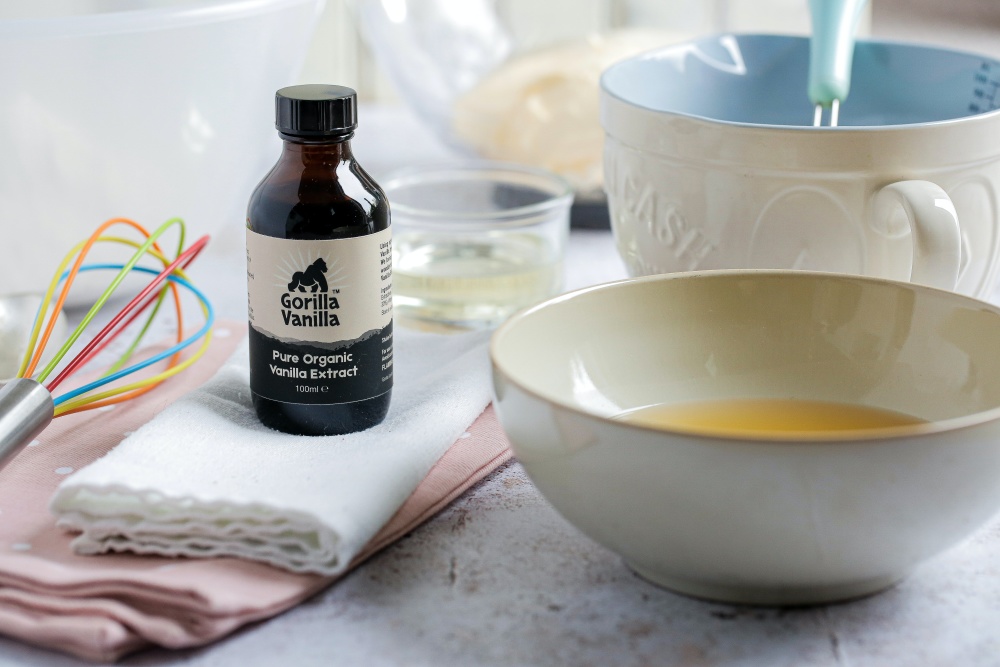
Natural flavouring - It flavours many sweet dishes today, the best-known of which is probably vanilla ice cream. Apart from ice cream, it is used in cakes, puddings, custards, chocolate, beverages and medicines. An extract can also be made by removing the seed from the pod and soaking it in unflavoured, colourless alcohol, such as vodka, for at least 4 weeks. Vanilla extract is also available in supermarkets, usually in the baking aisle.
Material uses
Natural fragrance - Vanilla is also used as a fragrance in air fresheners and soaps. It has also become one of the most widely used perfume ingredients, appearing in the top notes of nearly a quarter of all high-quality perfumes, including 'L'Aimant' by Coty, 'Bois des Iles' by Chanel, 'Jicky' by Guerlain, 'Habanita' by Molinard and 'Amouage'.
Climate
Grows and flowers naturally in humid subtropical and tropical climates, generally frost-free areas with annual lows of 18 to 25°C, annual highs of 27 to 35°C, annual rainfall of 1200 to 4300 mm and a dry season of 4 months or less. Vanilla vines may not thrive where the average low in the coldest month is below 14°C (50°F).
Although vanilla is also cultivated in cooler climates in greenhouses, the climate data above refers only to areas where it thrives outdoors.
Growing
New plants are usually started from stem cuttings 0.9 to 1.2 m (3 to 4 feet) long. The severed end and one node are buried in free-draining soil, and the exposed length is tethered to a support structure for the vine to cling to and grow up on.
Plant in filtered sun or light shade, in loose loam or sand enriched with organic matter, with a pH of 5.0 to 7.0. Mulching with lightweight organic material around the base, such as coconut husks, is recommended to keep the soil moist in dry weather.
The vines start to flower about 18 months to 2 years after planting and may produce a small crop 7 to 10 months later. The flowering season usually coincides with the rainy season, which is spring to summer in its native range.
Hand-pollinating is done in the morning while the flower is fresh. It involves removing the pollen masses with a toothpick or small instrument and gently moving them into contact with the stigma.
Problem features
The seedpods produce large quantities of tiny, viable seeds easily dispersed by wind and flowing water. It is reported to have escaped cultivation and naturalised in Puerto Rico. The Hawaii Pacific Weed Risk Assessment (HPWRA) project assesses it as a high weed-risk species for Hawaii.
The sap can cause skin irritation in some people, usually when trimming the vine.
Where it grows
References
Books
-
Adams, C. D. 1972, Flowering plants of Jamaica, University of the West Indies, Mona, Greater Kingston
-
Attokaran, M. 2011, Natural food flavors and colorants, Institute of Food Technologists, Wiley-Blackwell Publishing, Oxfordshire
-
Elevitch, C. R. & Thaman, R. R. 2011, Specialty crops for Pacific islands, 1st ed, Permanent Agriculture Resources, Hawaii
-
Farooqi, A. A. & Sreeramu, B. S. 2004, Cultivation of medicinal and aromatic crops, Hyderabad University Press, Hyderabad
-
Griffiths, M. & Burras, J. K. 1994, Manual of climbers and wall plants, Royal Horticultural Society (Great Britain), Timber Press, Portland, Oregon
-
Khan, I. A. & Abourashed, E. A. 2010, Leung's encyclopedia of common natural ingredients : used in food, drugs and cosmetics, 3rd edition, Wiley Publishing, Hoboken, New Jersey
-
Macmillan, H. F. 1943, Tropical planting and gardening : with special reference to Ceylon, 5th ed, Macmillan Publishing, London
-
Norrington, L. & Campbell, C. 2001, Tropical food gardens : a guide to growing fruit, herbs and vegetables in tropical and sub-tropical climates, Bloomings Books, Hawthorn, Victoria
-
Perkins, K. D. & Payne, W. 1981, Guide to the poisonous and irritant plants of Florida, Florida Cooperative Extension Service, Gainesville, Florida
-
Purseglove, J. W. 1981, Tropical crops: Monocotyledons, Longman, Harlow, London
-
Randall, R. P. 2002, A global compendium of weeds, R.G. and F.J. Richardson Press, Melbourne
-
Randall, R. P. 2007, The introduced flora of Australia and its weed status, Cooperative Research Centre for Australian Weed Management, Glen Osmond, South Australia
-
Stewart, A. 2013, The drunken botanist : the plants that create the world's great drinks, 1st ed., Algonquin Books, Chapel Hill, North Carolina
-
Weiss, E. A 2002, Spice crops, CABI Publishing, Wallingford, United Kingdom
Articles, Journals, Reports and Working Papers
-
Watson, B.J., & Moncur, M. 1985, Guideline criteria for determining survival, commercial and best mean minimum July temperatures for various tropical fruit in Australia (Southern Hemisphere), Department of Primary Industries Queensland (DPI QLD), Wet Tropics Regional Publication, Queensland