

Common name: Leaf Asparagus
Other common names: Sweet Leaf, Star Gooseberry, Sweet Leaf Bush, Tropical Asparagus
Description
Leaf Asparagus, or Sweet Leaf, is a tropical vegetable originating in India and Southeast Asia, with a natural range extending from southern India and Sri Lanka to Peninsular Malaysia and the island of Borneo. However, botanists remain divided on its exact distribution.
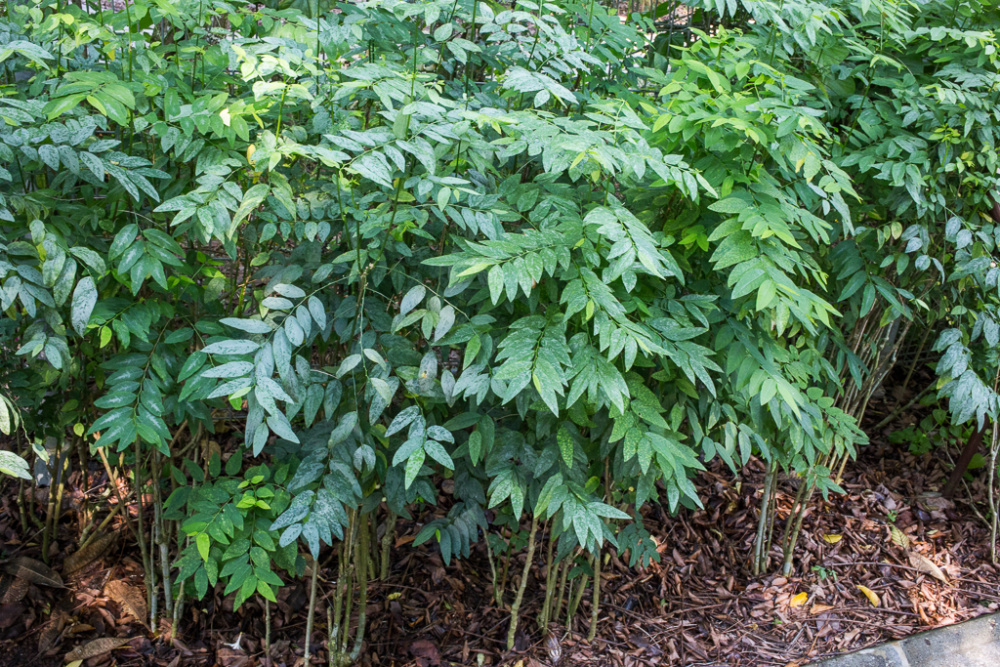
It is a fast-growing, leggy perennial shrub up to 3 m (10 ft) tall, with multiple slender stems and leafy side branches. Because it tends to be top-heavy, with stems becoming too tall to remain upright, it is usually trimmed to 1 to 2 m (3 to 7 ft) tall. The stems and side branches have smooth green bark.
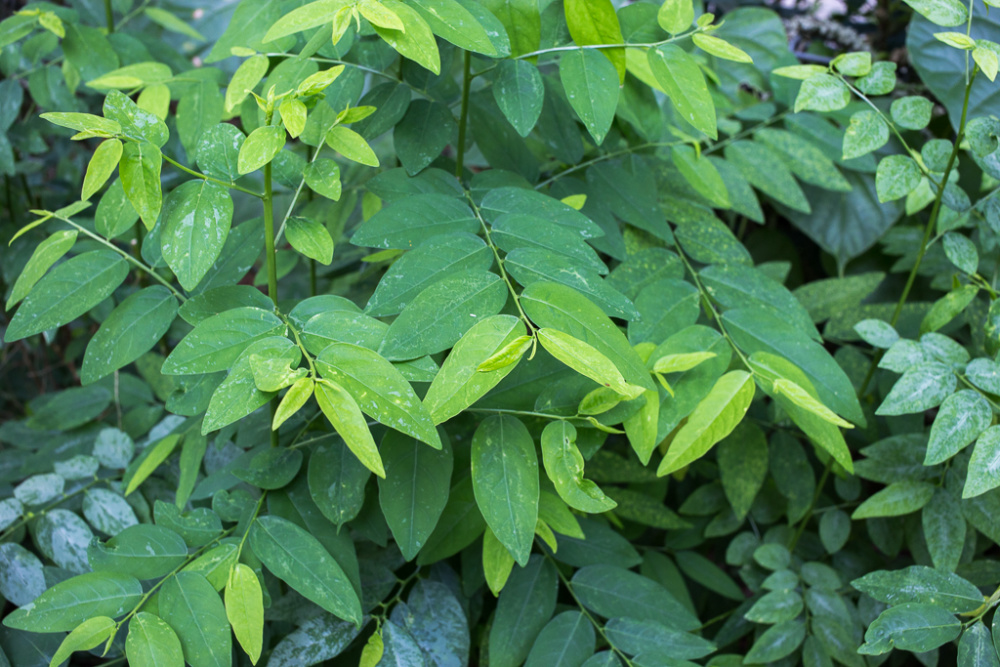
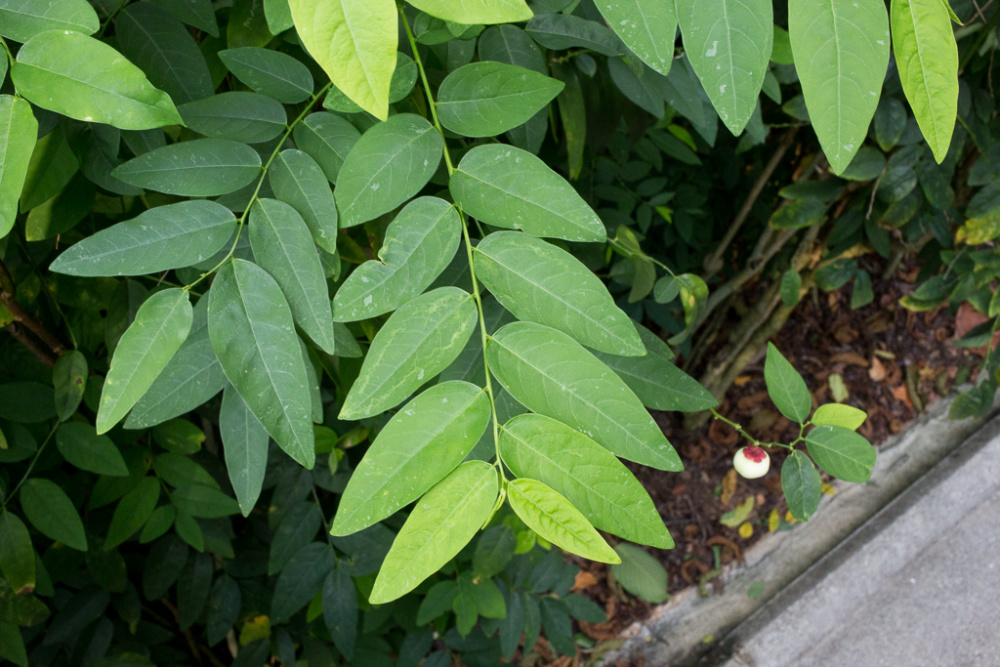
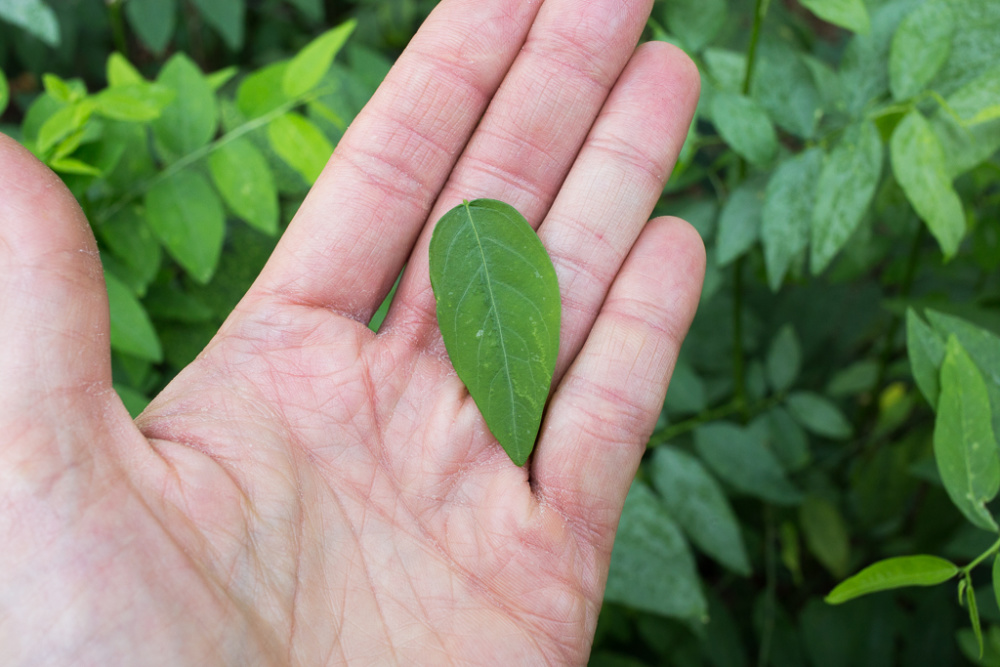
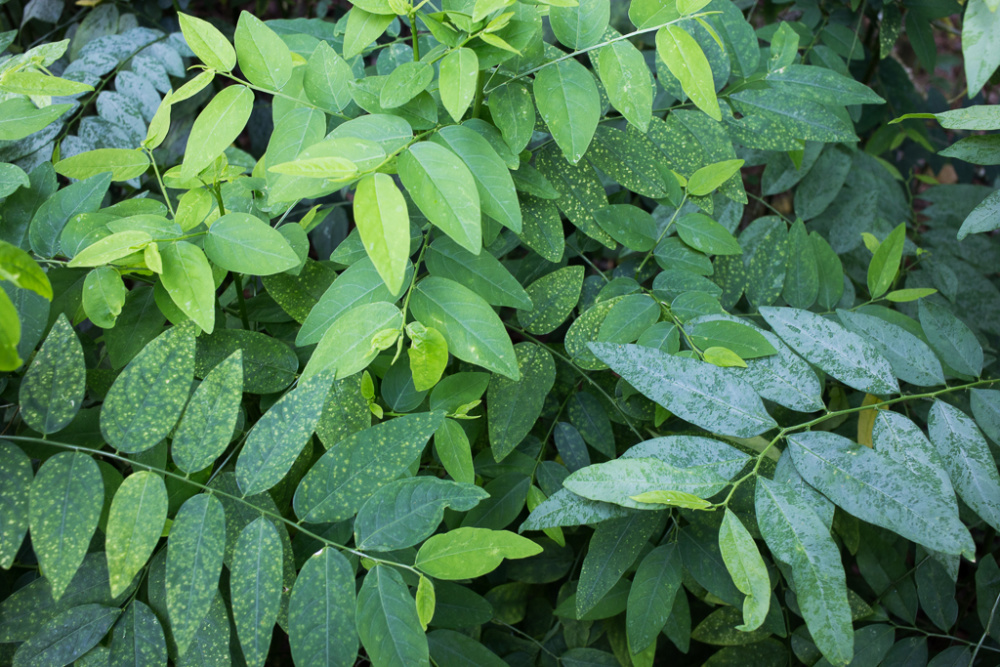
The leaves are ovate to lance-shaped, 6 to 10 cm (2.4 to 4 in) long, deep green on both sides and alternately arranged on long, slender, arching branches. They remain on the plant year-round.
The flowers are disk-shaped, up to 1 cm (0.4 in) wide, deep orange or crimson, either female or male, and borne singularly or in clusters of a few along the underside of the branches. They are followed by small, roundish, white or pinkish fruit up to 1.5 cm (0.6 in) in diameter with four to six black seeds inside.
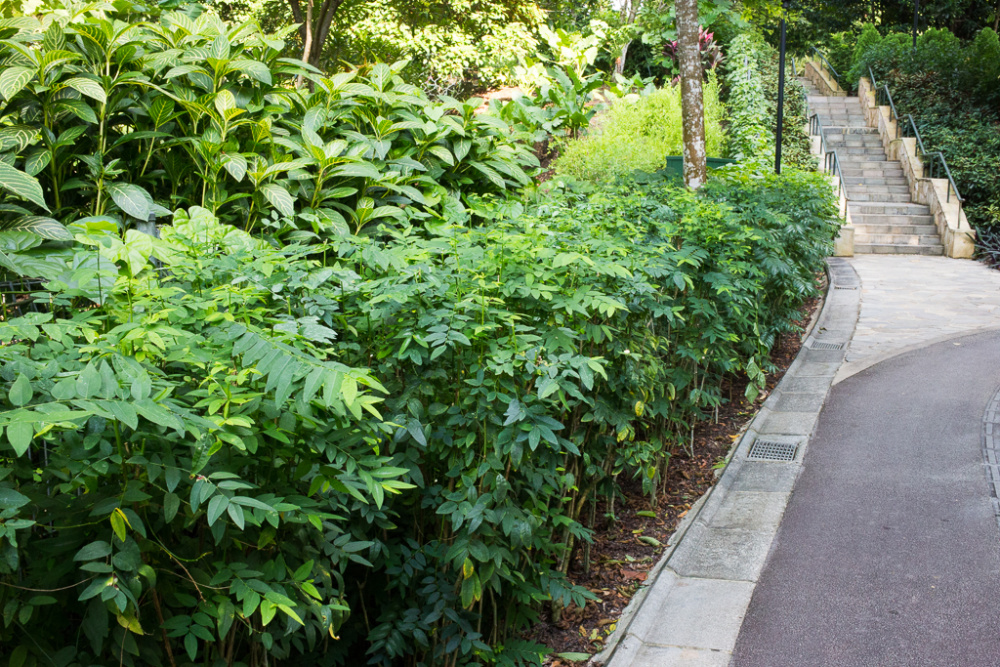
Singapore Botanic Gardens
Use
It is a highly regarded leaf vegetable in its native range because of its year-round availability, agreeable flavour, high yields, and nutritional value. The leaves and stem tips have a sweet, nutty flavour, similar to fresh garden peas or snowpeas and are reportedly popular with children who dislike green vegetables.
The leaves are prepared for cooking by stripping them off the branches and then discarding the leaf stalk, which can be tough. They are usually cooked for only about a minute to keep their green lustre and nutrition when served. Young leaves are preferred for their tenderness, but older leaves generally have more flavour.
The young stem tips are also eaten and are usually harvested from the end 15 cm (6 in) of the branches, or thereabouts. They are commonly found tied in bundles in Asian markets. When preparing them for cooking, an additional 2 to 3 cm (0.8 to 1.2 in ) is cut from the base, leaving only the softest part.
Both the leaves and stem tips retain their dark green colour and firm texture on cooking, and the stem tips have a slightly crunchy texture. They are commonly stir-fried with garlic and oyster sauce, or added to scrambled eggs, omelettes, curry dishes, and soups. A tasty treat or garnish is made by frying the leaves in hot butter or oil for a few seconds, which makes them crisp and nutty.
The flowers and small fruits are also edible but are not as widely consumed as the leaves and stem tips.
Leaf Asparagus is sometimes grown in proximity as a hedge, with regular harvesting and pruning to keep it compact and shapely.
Climate
Grows naturally in humid subtropical and tropical climates, generally frost-free areas with annual lows of 13 to 25°C, annual highs of 22 to 35°C, annual rainfall of 1000 to 5000 mm and a dry season of 5 months or less. It also grows in drier areas with irrigation, but it needs a humid microclimate to thrive.
Growing
New plants can be started from seed, but cuttings and suckers are preferred as they give more reliable results. Cuttings are taken from plants six months or older,r and suckers are dug up from around established plants. They are then potted in a free-draining mix to take root before being planted out. The seed remains viable only for a few months and germinates unevenly.
Performs best in well-manured, moist, free-draining clay, loam, and sand soils with a moderately acidic to slightly alkaline pH, generally 5.0 to 7.5, and in sites with partial or filtered sun to light shade. It tolerates seasonal flooding well.
Rich, moist soils are needed for a continuous supply of leaves and stem tips and, being highly mycorrhizal-dependent, the roots benefit from having well-rotted leaf mulch mixed in with the manure applied to the plant.
Established plants are pruned or trimmed regularly to 2 m (7 ft), or shorter if grown as a hedge, to encourage the production of new, tender stem tips and leaves, and to make it easier to harvest them. Farmers in Malaysia force new, tender growth through frequent trimming, feeding, irrigation, and the use of shade cloth.
Harvesting the leaves and stem tips can start when the plant is about four months old and continue monthly over the plant's life, which can be several years. Although the leaves and stem tips are harvested year-round, they are most abundant and flavoursome during the hot, rainy months.
Problem features
The leaves are thought to contain the alkaloid 'Papaverine', which makes them toxic if consumed raw and in large quantities. However, its effects on humans have been reported only in Taiwan and Japan, where juice from the leaves, promoted as a 'natural diet', caused respiratory distress in some individuals. No health issues have ever been reported in Southeast Asia, where it has been eaten as a cooked vegetable for centuries.
It is listed as a weed in at least one reference publication. Still, there appears to be no record of it as a serious weed anywhere, despite its widespread introduction and cultivation.
Where it grows
References
Books
-
Martin, F. W & Ruberte, R. M. 1975, Edible leaves of the tropics, U.S. Agency for International Development (USAID), and the Agricultural Research Service, U.S. Department of Agriculture (USDA), Mayaguez, Puerto Rico
-
Norrington, L. & Campbell, C. 2001, Tropical food gardens : a guide to growing fruit, herbs and vegetables in tropical and sub-tropical climates, Bloomings Books, Hawthorn, Victoria
-
Randall, R. P. 2002, A global compendium of weeds, R.G. and F.J. Richardson Press, Melbourne
-
Rubatzky, V. E. & Yamaguchi, M. 1997, World vegetables : principles, production, and nutritive values, 2nd ed., Chapman & Hall, New York
-
Tindall, H. D. & Rice, L. W. 1990, Fruit and vegetable production in warm climates, International ed., Macmillan, London