



Common name: Guango
Other common names: Cow Tamarind, French Tamarind, Monkey Pod, Rain Tree
Description
Originating in Central America, this shade, timber, and forage tree is typically 15 to 20 m (50 to 65 ft) tall, though exceptional specimens may reach 30 m (100 ft) or more.
The branches start low on the trunk, then spread out and upward to form an umbrella-shaped crown. Where it has room to grow, it develops a massive, wide-spreading crown almost as wide as the tree is tall, supported by a stout trunk up to 2 m (6.5 ft) in diameter. The bark on mature trees is grey, rough and fissured.
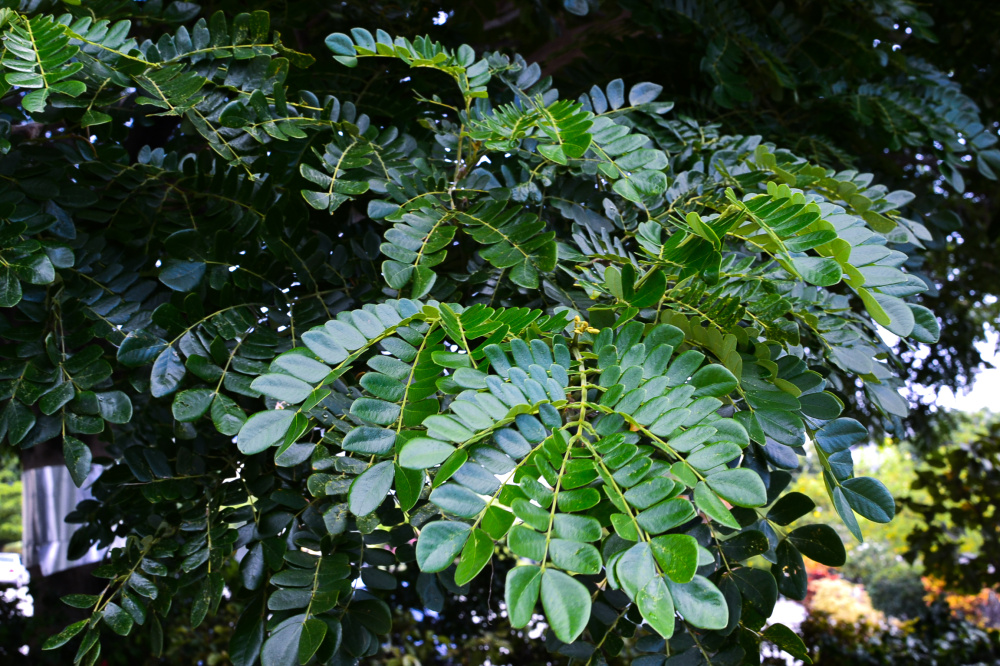
Leaves are large and feathery, consisting of small green, oblong leaflets that curiously fold closed at night to reduce transpiration and conserve water. In the daytime, they open again for photosynthesis and help to shade the trunk and roots from the sun. Most leaves and their leaflets are shed in the dry season to conserve water, leaving the branches partially bare until the new leaves emerge in the rainy season.
The flowers resemble powder puffs with long pink-tipped filaments and are perfect, having both female and male parts. Flowering occurs in the dry season but varies by area. Almost continuous flowering is reported in areas without a distinct dry season. In Hawaii, trees usually flower from April to August and in tropical America and the Caribbean, from January to April.
Fertilised flowers are followed by slim, ribbed seedpods 10 to 25 cm (4 to 10 in) long, green when young, becoming dark brown to near black when mature, at which time they detach and fall to the ground.
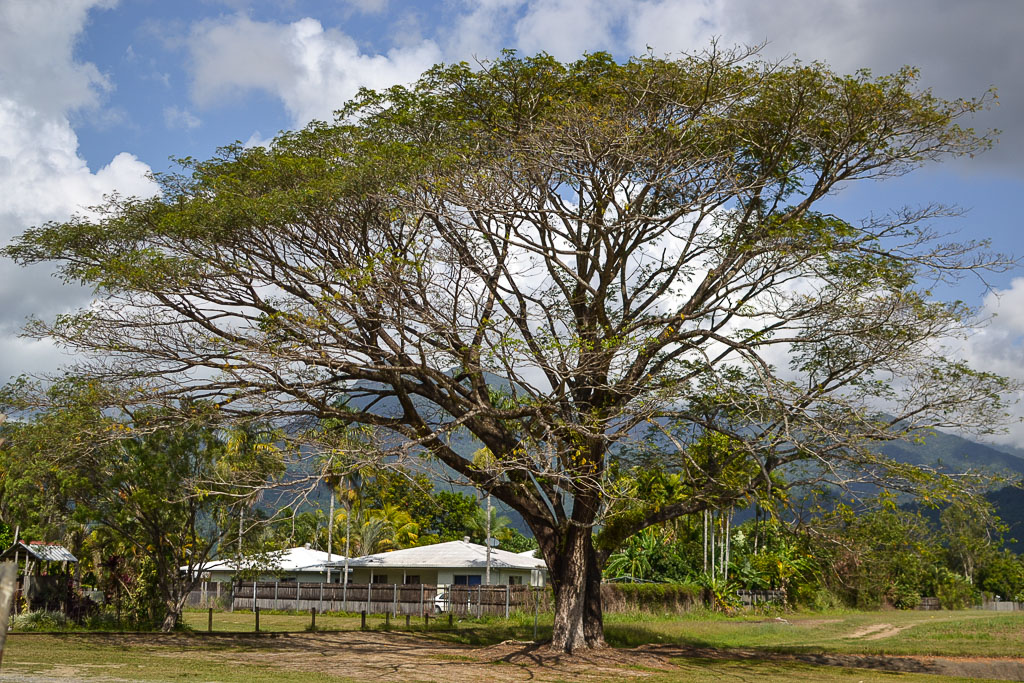
Tree in the dry season (Port Douglas, Australia)
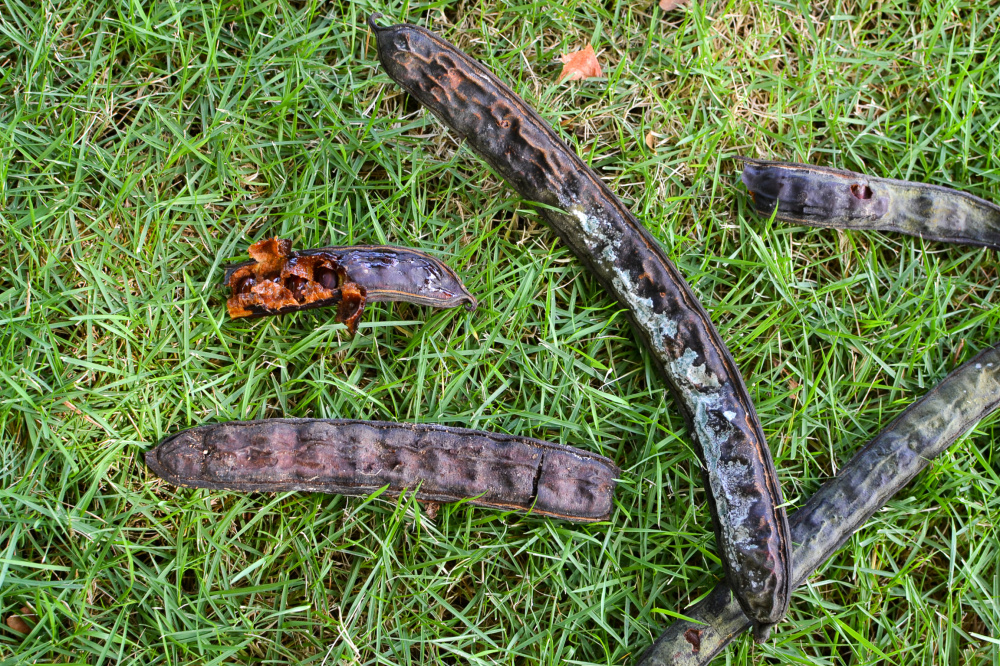
Seedpods
Material uses
Hardwood - Guango trees produce medium-weight wood in the 450 to 640 kg per cubic meter (28 to 40 lb per cubic ft) range, placing it at the soft end of the hardwood scale.
Decay- and rot-resistant wood - Reports on its rot resistance range from moderately resistant to resistant. Variability can be explained, at least in part, by tree growth rates, with slow-growing trees producing wood with a higher rot resistance than fast-growing trees. In the tropics, moisture strongly influences tree growth rates, with the slowest-growing trees found in low-rainfall areas with a pronounced dry season.
Joinery and millwork - Logs can be sawn into planks used for interior joinery and millwork when available.
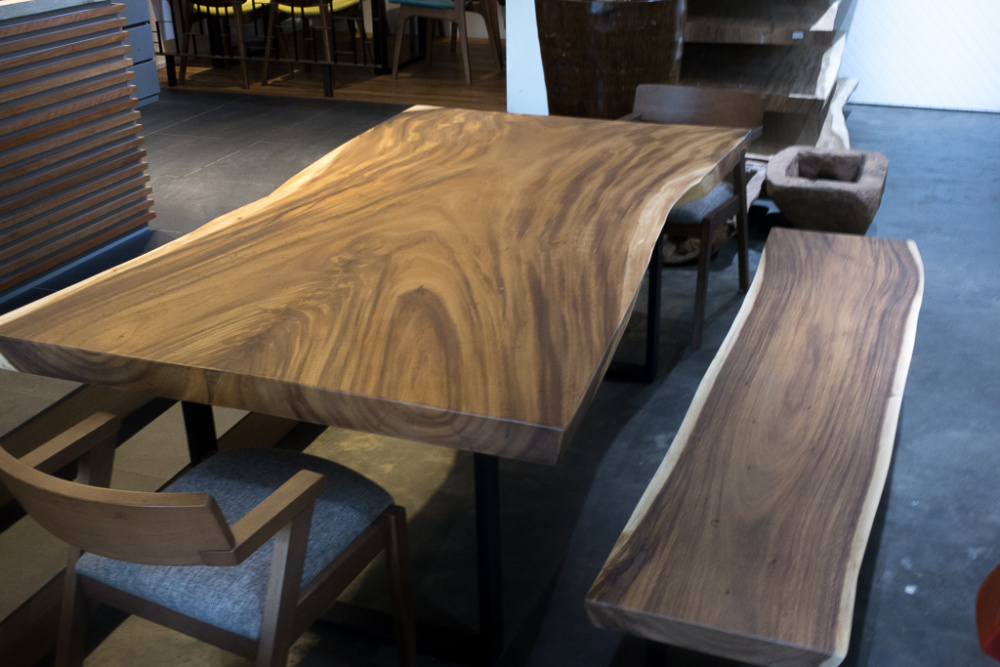
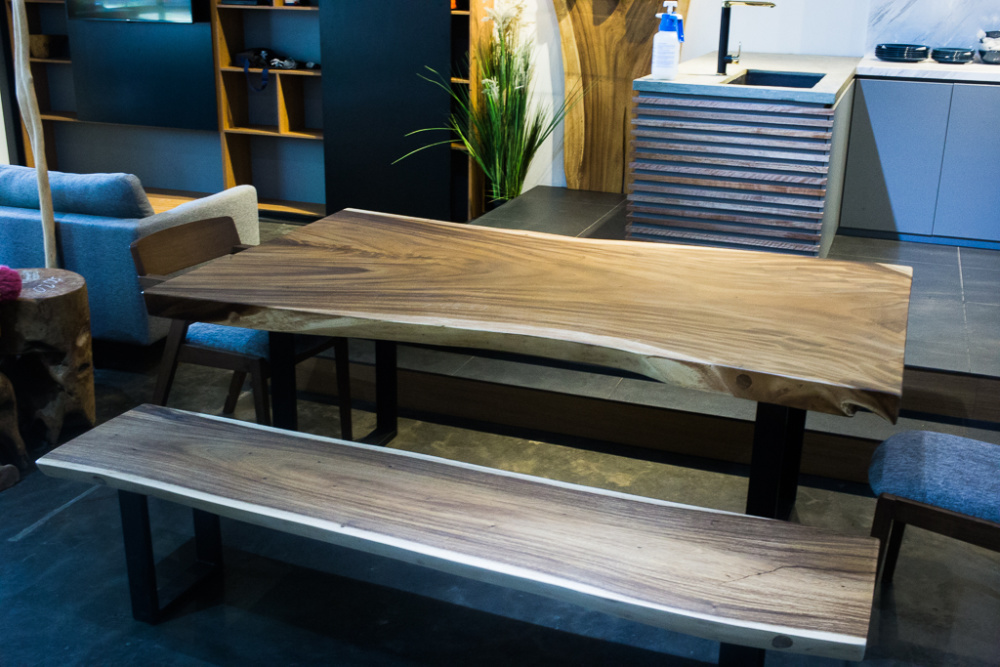
Furniture and cabinets - Also used for fine furniture and cabinets. Large, free-form tabletops are sometimes made from wide-cut slabs taken from the massive trunk.
Decorative veneer - Selected roundwood lengths are sliced for decorative veneer.
Wood craft and wares - Also crafted into bowls and other woodcraft items. Wood from slow-growing trees tends to shrink little, allowing carvings and other woodwork to be done on green, or uncured, wood, which can then be air-dried with minimal to no cracking or splitting. The heartwood is an attractive reddish-brown.
Livestock forage - The tree provides supplemental feed for livestock from its seedpods during the dry season. The mature seedpods are relied upon, particularly between the end of the dry season and after the first rains, just before there is sufficient grass to support grazing. During this time, the seedpods fall to the ground in large numbers, where cattle and other ruminants eagerly browse them.
Thin layers of a sweet, sticky, molasses-like substance within their shells make the seedpods palatable to livestock. They have a crude protein content of between 13% and 18% of their dry weight.
The new leaves are also highly palatable, with a crude protein content of 20%-30% of their dry weight. However, these are usually out of reach for browsing livestock.
Natural gum - The bark, when wounded, exudes a dark gum that is partially soluble in water and swells to a tough, cartilage-like mass. It was reportedly sold at one time in the Mumbai markets in India, but its use remains unclear.
Environmental uses
Shade tree - A common tree in tropical pastures, providing shade for livestock.
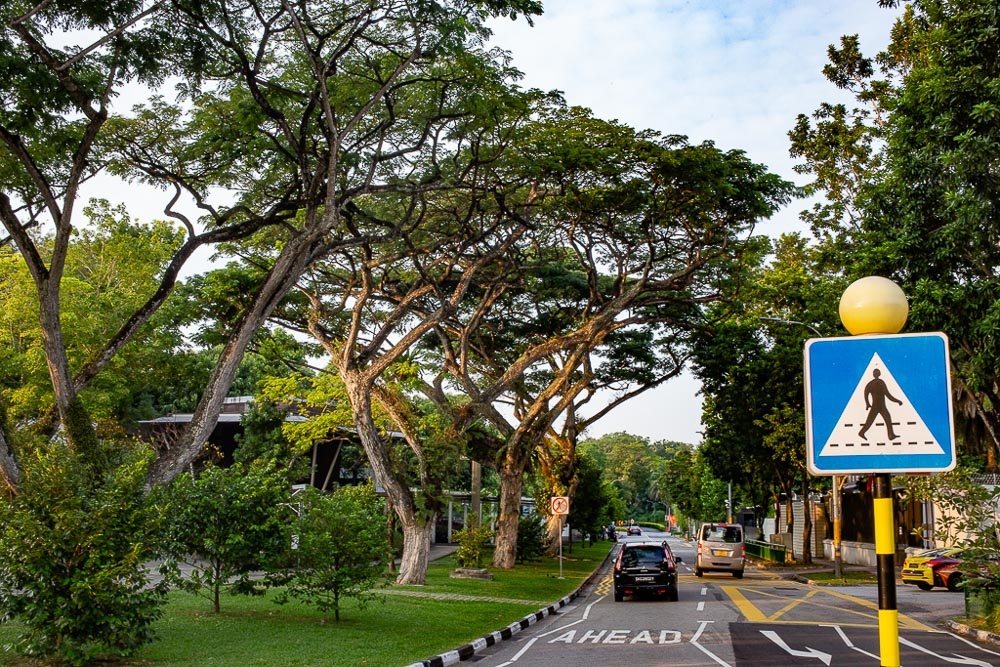
Public garden tree - A commonly planted amenity tree in parks, mainly for the shade its wide-spreading crown provides.
Street tree - Also commonly planted in parking lots and along roadsides in urban areas, for the same reason.
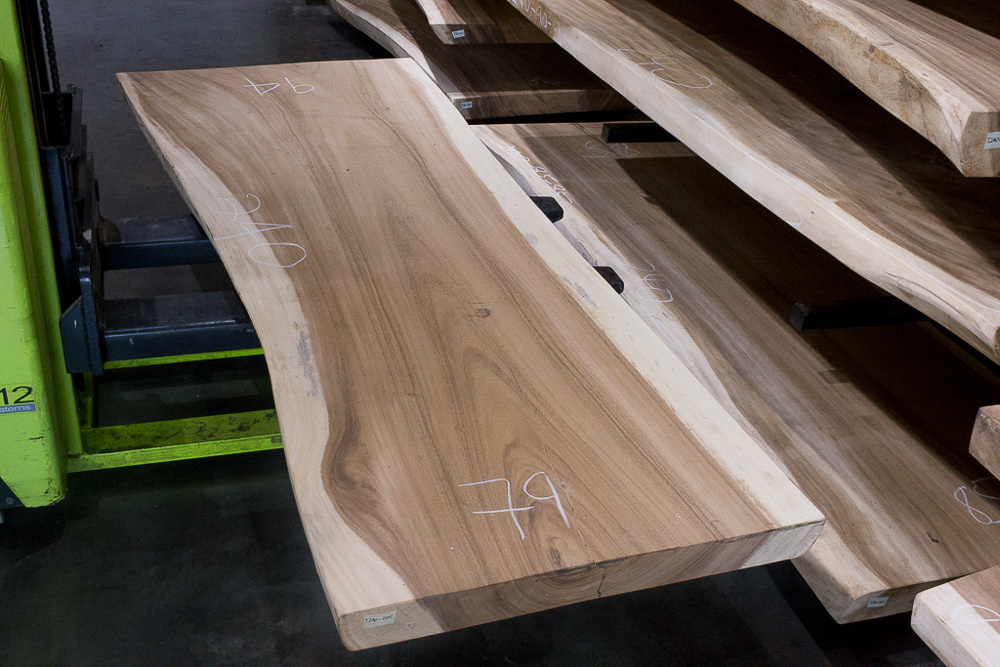
Unpolished wood slab (Singapore)
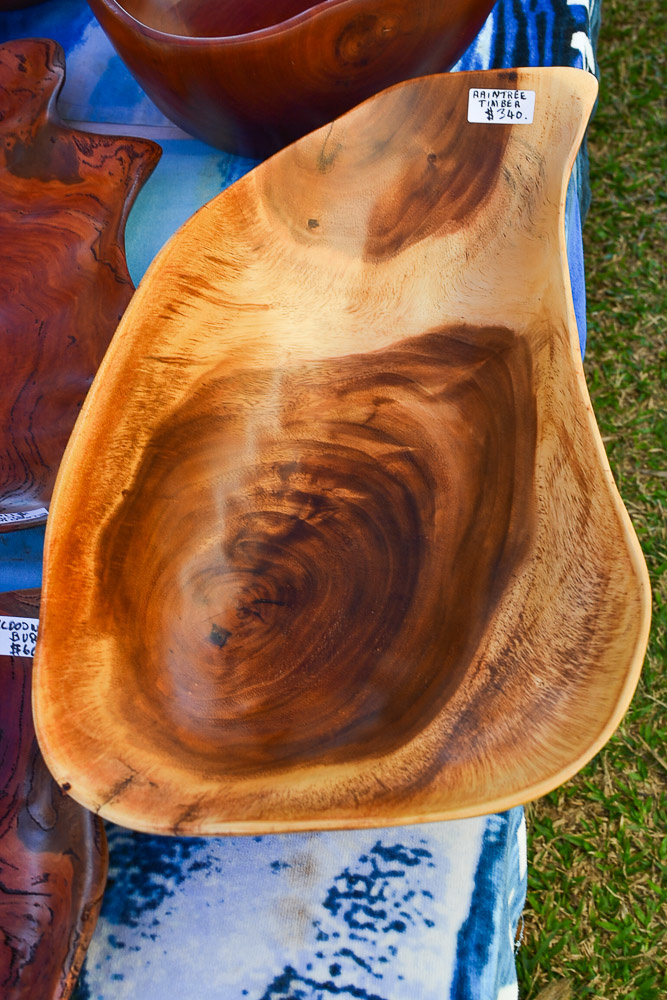
Carved bowl (Port Douglas, Australia)
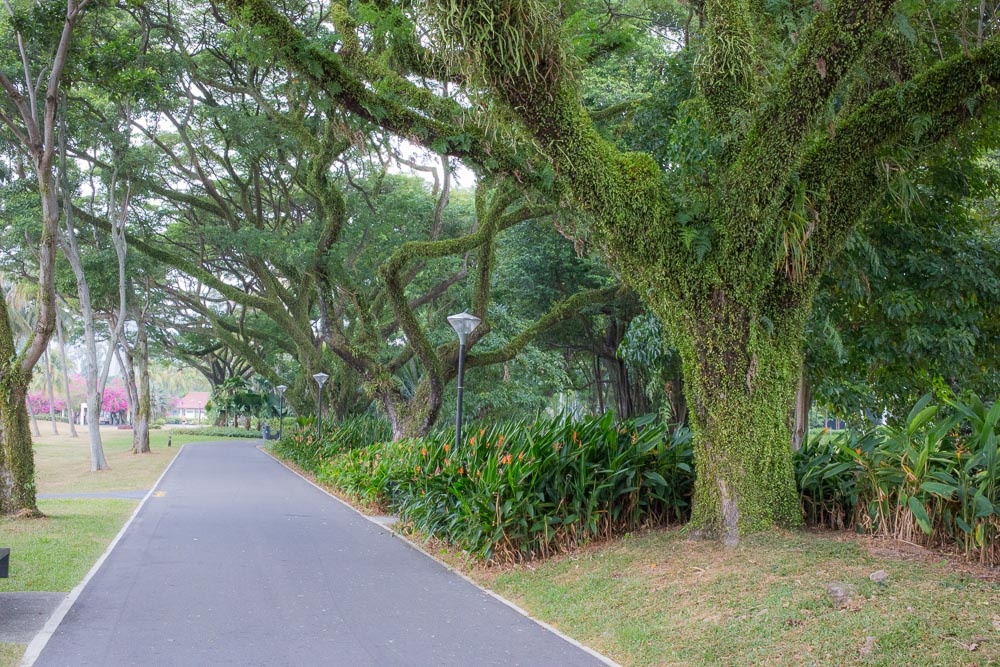
Amenity tree (Singapore)
Climate
Guango grows naturally and thrives in sub-humid to humid tropical lowland climates, generally areas with annual lows of 17 to 25°C, annual highs of 25 to 35°C, annual rainfall of 700 to 4500 mm, and a dry season of 6 months or less.
Growing
New plants are usually started from seed that remains viable for several years under cold, dry storage conditions and readily germinates when sown.
Performs best on free-draining clay-loam, loam, silt-loam and sandy-loam soils of a slightly acid to slightly alkaline nature, generally with a pH of 5.5 to 7.5, and on sites with full sun exposure. It tolerates drought and seasonal flooding.
Problem features
The seedpods are produced in abundance and fall to the ground over a wide area beneath the tree. Some are eaten by livestock, and the seed carried with them, while the seed in those that remain germinates readily, sometimes leading to the formation of dense thickets.
Multiple publications record it as a weed, including references noting that it has escaped cultivation and is a weed of the natural environment in Australia. However, the Hawaii Pacific Weed Risk Assessment (HPWRA) project has not identified it as a high weed risk for Hawaii.
Trees in the wetter parts of their range develop large, expansive surface roots, which can be invasive, potentially cracking surface concrete and building foundations. The fallen flowers and seedpods create a sticky litter.
Where it grows
References
Books
-
Adams, C. D. 1972, Flowering plants of Jamaica, University of the West Indies, Mona, Greater Kingston
-
Barwick, M., et al. 2004, Tropical & subtropical trees : a worldwide encyclopaedic guide, Thames and Hudson, London
-
Berni, C. A & Bolza, E. & Christensen, F. J. 1979, South American timbers - the characteristics, properties and uses of 190 species, Commonwealth Scientific and Industrial Research Organization (CSIRO), Division of Building Research, Highett, Victoria, Australia
-
Burns R.M., Mosquera M.S. & Whitmone J.L. 1998, Useful trees of the tropical region of North America, North American Forestry Commission Publication (Number 3), Washington D.C.
-
Burns, R.M. & Honkala, B.H. 1990, Silvics of North America (Volume 2) : Hardwoods, Agricultural Handbook 654, U.S. Department of Agriculture (USDA), Washington D.C.
-
Chudnoff, M. 1984, Tropical timbers of the world, Forest Service, U.S. Department of Agriculture (USDA), Washington, D.C.
-
Fawcett, W. 1891, Economic plants, An index to economic products of the vegetable kingdom in Jamaica, Jamaica Government Printing Establishment, Kingston
-
Francis, J. K. 1998, Tree species for planting in forest, rural, and urban areas of Puerto Rico, U.S. Department of Agriculture, Forest Service, International Institute of Tropical Forestry, Río Piedras, Puerto Rico
-
Francis, J. K. and Liogier, H. A. 1991, Naturalized exotic tree species in Puerto Rico, General technical report SO-82, USDA Forest Service, Southern Forest Experiment Station, New Orleans
-
Francis, J. K. et al. 2000, Silvics of Native and Exotic Trees of Puerto Rico and the Caribbean Islands, Technical Report IITF-15, USDA Forest Service, Rio Piedras, Puerto Rico
-
Gohl, B. 1981, Tropical Feeds : feed information summaries and nutritive values (Revised edition), Food and Agriculture Organization of the United Nations (FAO), Rome
-
Howes, F. N. 1949, Vegetable gums and resins, Chronica Botanica Company, Waltham, Massachusetts
-
Jensen, M. 1999, Trees commonly cultivated in Southeast Asia : an illustrated field guide, 2nd ed., Food and Agricultural Organisation of the United Nations (FAO) Regional Office for Asia and the Pacific (RAP), Bangkok
-
Liegel, L. H. 1987. A technical guide for forest nursery management in the Caribbean and Latin America, U.S. Dept. of Agriculture, Forest Service, Southern Forest Experiment Station, New Orleans
-
Luna, R. K 1996, Plantation trees, International Book Distributors, Dehradun, Uttarakhand
-
Martin, F. M., et al. 1987, Perennial edible fruits of the tropics : an inventory, U.S. Dept. of Agriculture (USDA), Agricultural Research Service, U.S. Government Printing Office (GPO), Washington, D.C.
-
Nair, P. K. R. 1993, An introduction to agroforestry, International Centre for Research in Agroforestry (ICRAF), Kluwer Academic Publishers, Dordrecht
-
Polunin, Ivan 1987, Plants and flowers of Singapore, Times Editions, Singapore
-
Record, S. J. & Hess, R. W., 1972, Timbers of the New World, Yale University Press, New Haven, Connecticut & Arno Press, New York
-
Reyes, G. 1992, Wood densities of tropical tree species, U.S. Department of Agriculture, Forest Service, Southern Forest Experiment Station, New Orleans, Louisiana
-
Scheffer, T. C & Morrell, J. J. 1998, Natural durability of wood : a worldwide checklist of species, Forest Research Laboratory, Oregon State University, Corvallis, Oregon
-
Selvam, V. 2007, Trees and shrubs of the Maldives, Food and Agriculture Organisation (FAO) RAP publication (Maldives), Thammada Press Company Ltd., Bangkok
-
Webb, D. B. 1984, A Guide to species selection for tropical and sub-tropical plantations, 2nd ed., Unit of Tropical Silviculture, Commonwealth Forestry Institute, University of Oxford, Oxfordshire
Articles, Journals, Reports and Working Papers
-
National Resources Conservation Service (NRCS) 2012, Pacific Islands Area Vegetative Guide, Technical Note 7., United States Department of Agriculture (USDA), Washington D.C.
-
Queensland Department of Agriculture and Fisheries (Australia) 1990, Weed and pest animal fact sheets, Brisbane
-
Skolmen R.G. 2000, Some woods of Hawaii: properties and uses of 16 commercial species, University of Hawaii, Honolulu, (Resource Managment; RM-7), 33 p.