

Common name: Patchouli
Other common names: East Indian Mint, Patchouly
Description
East Indian Mint (aka Patchouli) is a mint relative that originated in the Philippines but is now cultivated in Southeast Asia, Africa, India, and South America for its stems and leaves, which yield an essential oil used in the food and fragrance industries.
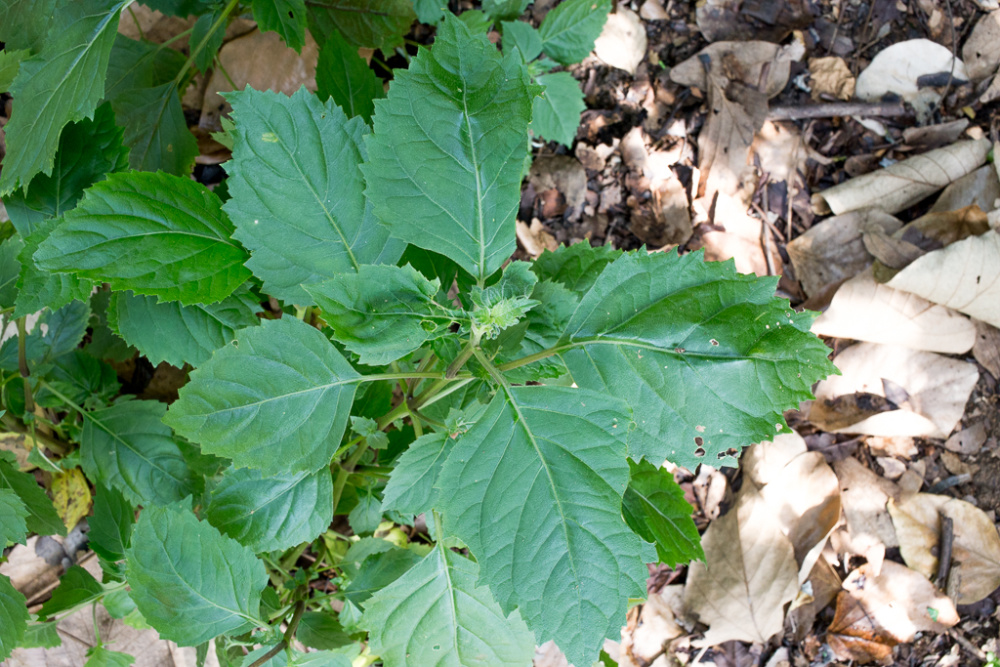
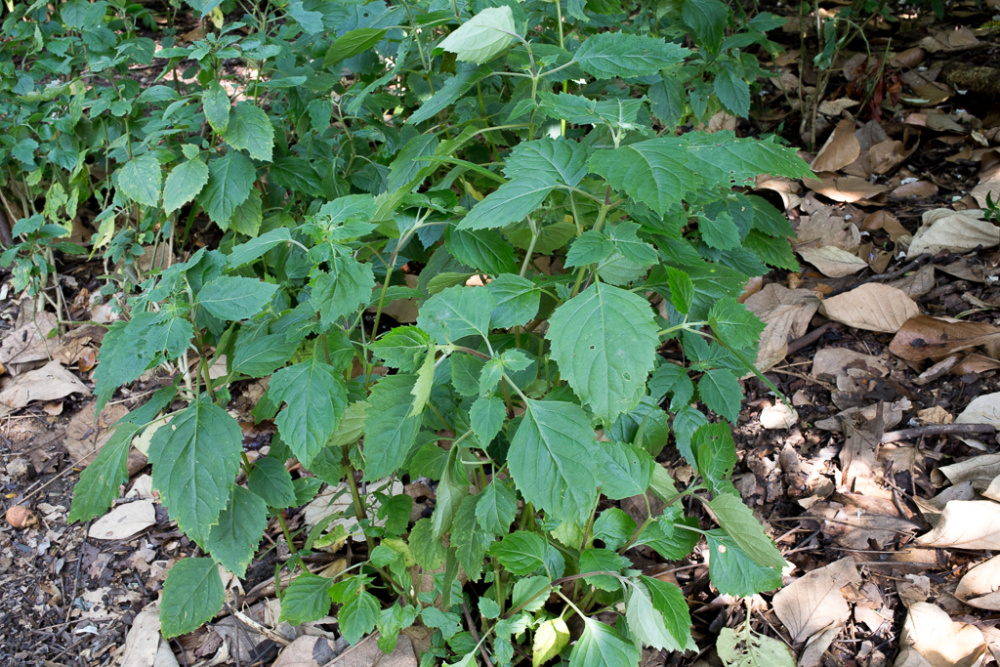
It is a much-branched herbaceous shrub 0.5 to 1 m (1.5 to 3.5 ft) tall with a bushy appearance. The foliage is mint-like, with square stems and soft, fine hairs on both the stems and leaves.
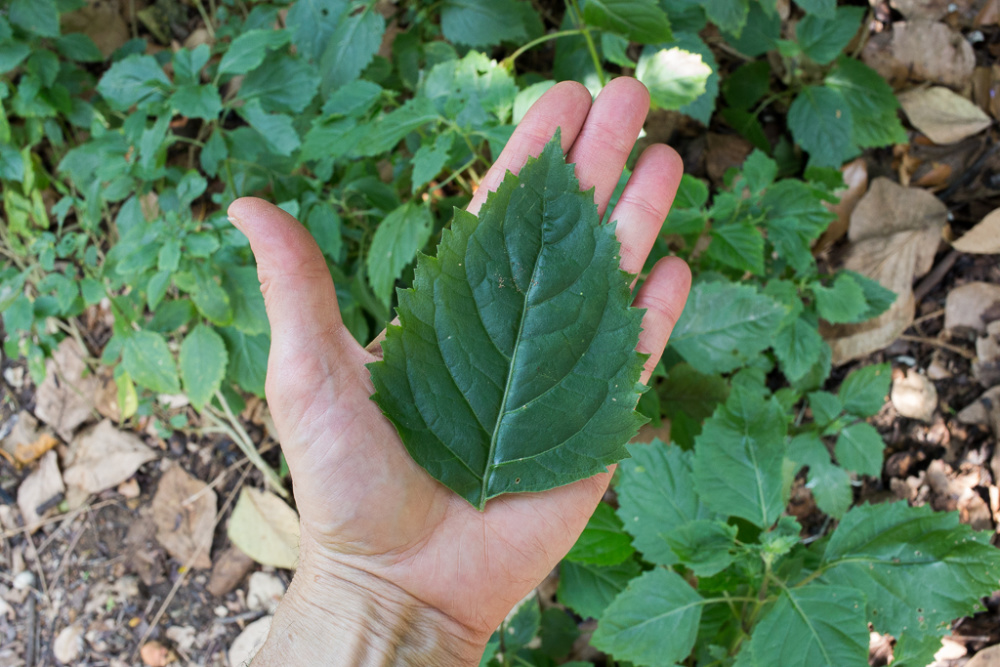
Leaves dull dark green, heart-shaped, 5 to 10 cm (2 to 4 in) long and toothed along the margins. All parts of the plant give off a sweet fragrance when crushed.
The flowers are small, bisexual, white, pink or pale purple and borne on tall, narrow spikes that grow above the foliage, blooming from late autumn to winter.
Material uses
Essential oil - Steam distillation of the leaves and young shoots yields a viscous, yellow-green to brown essential oil traded as 'Patchouli oil'. The oil's fragrance notes reportedly improve with age. Commercial operations produce around 2,000 kilograms of dried leaves per hectare per year; with an oil content of 2.5 to 3.0%, they yield about 50 to 60 kilograms of oil (45 to 54 pounds per acre).
Natural fragrance - It is used mainly as a fragrance component in perfume and personal care products. Its persistent, woody aroma was once widely used to scent men's grooming products, such as aftershave, as well as other male toiletry products.
Deodoriser - The dried leaves and stems are also valued for their fragrance and are used in clothing and linen cupboards in its native range as a deodoriser.
Natural insect repellent - The dried leaves and stems are also used in clothing and linen cupboards to repel fabric-eating insects, such as clothes moths.
Edible uses
Natural flavouring - The oil is also used as a flavouring component in food. Used in low concentrations (typically 0.1 to 10 mg/kg), it has an earthy, woody, balsamic, and sweet flavour profile with complex undertones that complement rich cocoa, beverages such as coffee, and tobacco blends.
Health uses
Natural incense - Patchouli incense sticks are made by blending a combustible wood base, a natural binder, and Patchouli essential oil, then hand-rolling or dipping the mixture onto a thin bamboo core.
Climate
Grows naturally and develops leaves with a high oil content in humid tropical lowland to mid-elevation climates, generally areas with annual lows of 18 to 25°C, annual highs of 27 to 35°C, annual rainfall of 1500 to 4000 mm and a dry season of 5 months or less.
Patchouli is also cultivated with irrigation in drier areas, such as around Bangalore (Karnataka, India), which has annual rainfall of 923 mm and a dry season lasting 5 months.
Growing
New plants are usually grown from cuttings, as it rarely produces seeds. It performs best in rich, free-draining clay-loam, loam, sandy-loam, and loamy-sand soils that are moderately to slightly acidic, generally with a pH of 5.5 to 6.5.
In the lowland tropics, it is commonly cultivated as an understory plant, usually beneath tall and widely spaced timber and coconut trees because of the shade they provide. Shading is less of a requirement in elevated tropical and subtropical areas, and the plants are grown in full sun.
Leaf harvesting in commercial operations starts when the plants are around six months old, with harvesting repeated every three to four months after that. The leaves are selected when they turn pale green to light brown, and the whole bush releases its characteristic aroma, usually in the early to mid-morning. The harvested leaves are then shade-dried, bagged, and left to ferment briefly, which reportedly increases their oil yield during distillation.
It is a short-lived perennial that loses its vigour after around three years and needs replacing with new plants.
Problem features
Patchouli is listed as a weed in at least one reference publication. Still, there appears to be no record of it as a serious weed anywhere in the world, which may be due in part to its shy seeding habit.
Where it grows
References
Books
-
Axtell, B. L & Fairman, R. M 1992, Minor oil crops, Food and Agriculture Organization of the United Nations (FAO), Rome
-
Brown, William Henry. 1920, Minor products of Philippine forests, Bureau of Printing, Manila
-
Chevallier, A. 2000, Encyclopedia of herbal medicine, 2nd American ed., Dorling Kindersley, New York
-
Debboun, M. & Frances, S. P. & Strickman, D. 2006, Insect repellents : principles, methods, and uses, CRC Press, Boca Raton, Florida
-
Farooqi, A. A. & Sreeramu, B. S. 2004, Cultivation of medicinal and aromatic crops, Hyderabad University Press, Hyderabad
-
Groom, N. 1997, The new perfume handbook, 2nd ed., Blackie Academic & Professional, London
-
Hill, A. F. 1952, Economic botany : a textbook of useful plants and plant products, 2nd ed, McGraw-Hill, New York
-
Jones, M. 2011, The complete guide to creating oils, soaps, creams, and herbal gels for your mind and body : 101 natural body care recipes, Atlantic Publishing Group, Ocala, Florida
-
Khan, I. A. & Abourashed, E. A. 2010, Leung's encyclopedia of common natural ingredients : used in food, drugs and cosmetics, 3rd edition, Wiley Publishing, Hoboken, New Jersey
-
National Institute of Industrial Research (India) 2005, Cultivation of tropical, subtropical vegetables, spices, medicinal, and aromatic plants, Delhi, India
-
Oyen, L. P. A. & Nguyen X. D. 1999, Plant Resources of South-East Asia (PROSEA) 19 : Essential-oil plants, Backhuys Publishers, Leiden
-
Preedy, V. R., (editor.) 2015, Essential oils in food preservation, flavor and safety, Elsevier Ltd, Amsterdam, The Netherlands
-
Randall, R. P. 2002, A global compendium of weeds, R.G. and F.J. Richardson Press, Melbourne
-
Randall, R. P. 2007, The introduced flora of Australia and its weed status, Cooperative Research Centre for Australian Weed Management, Glen Osmond, South Australia