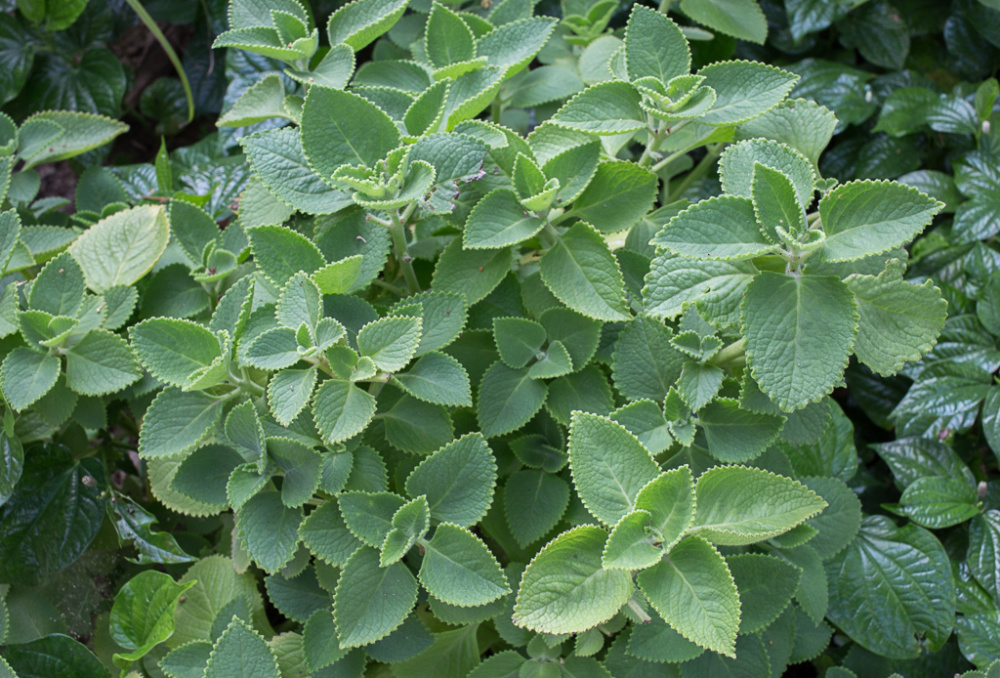


Common name: Cuban Oregano
Other common names: Ajwain Leaf, Broad Leaf Thyme, Country Borage, French Thyme, Indian Borage, Indian Mint, Mexican Mint, Soup Mint, Spanish Thyme, Three In One
Description
Cuban Oregano is an aromatic herb in the mint family, native to East Africa, with its natural range extending from Kenya through Tanzania and Mozambique to South Africa. Nowadays, it is widely cultivated as a culinary herb, primarily in Latin America and Southeast Asia.
It is a low-lying, mounding perennial herb up to 60 cm (2 ft) tall and 1.2 m (4 ft) wide. The stems are thick, squarish and succulent when young, becoming semi-woody with age. They grow outward from the plant centre in all directions along the ground, or, if in a container, cascade over the rim. All parts of the plant are covered with soft velvety hairs.
The leaves are oval or heart-shaped, fleshy, up to 10 cm long, finely toothed along the margins, and either lime-green, grey-green, or variegated, depending on the variety. They are arranged in pairs, with one pair at right angles with the pair above or below it, and, when crushed, give off a strong, herby, mentholated aroma.
The flowers are small and insignificant, either white or purple and loosely borne on flower spikes up to 40 cm (1.3 ft) long, arising at the ends of the stems. It rarely sets seed, which is not uncommon for plants in the mint family.
Edible uses
Culinary herb - The leaves are used as fresh-cut herbs, especially in Latin American, Filipino, and Vietnamese cooking. They are usually finely chopped and added to meat, soup, and bean dishes, especially gamey meats, fish, and black bean stews, which are standard fare in the Spanish-speaking Caribbean. They make a good substitute in recipes calling for dried oregano, such as poultry stuffing, pizza and pasta dishes. They do not dry easily due to their high oil content.
Environmental uses
Groundcover - Its creeping habit and dense growth make it well suited to cultivation as a groundcover, especially in rockeries or gravelly (or sandy) soil with good, fast drainage.
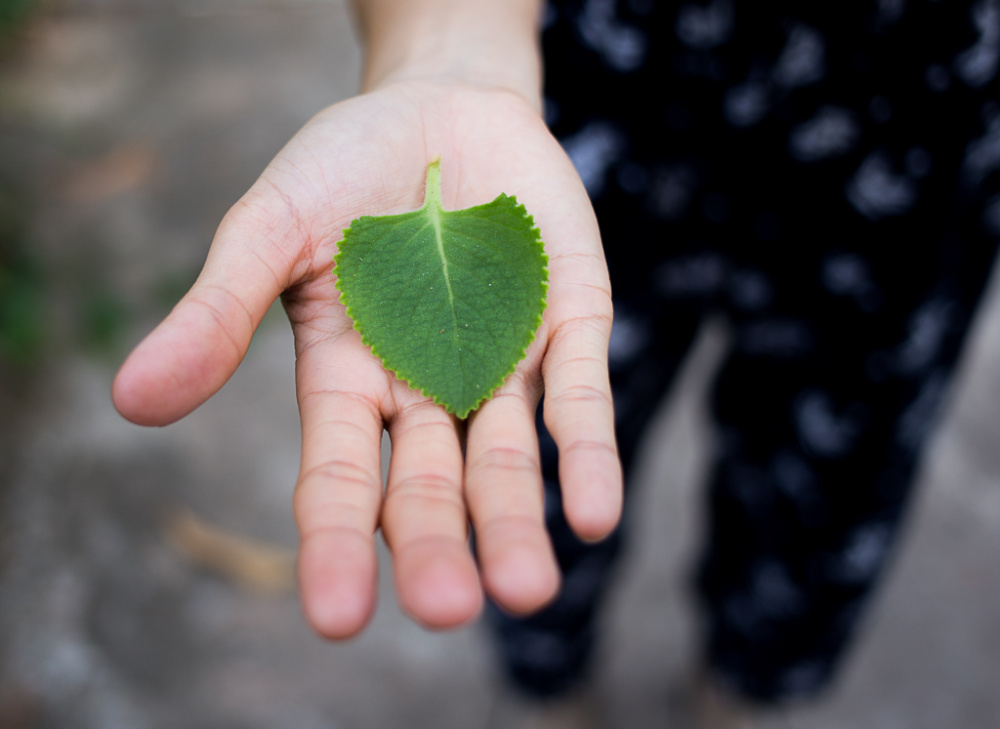
Phu Quoc Island (Vietnam)
Health uses
Traditional medicine - The leaves contain high levels of the chemical compound carvacrol, which has been shown to have anti-inflammatory properties and a relaxant effect on the respiratory tract. It is used in remedies for treating asthma and chronic cough. In Ayurvedic and Unani Tibb herbal medicine, it is traditionally used to reduce inflammation and is prescribed for bronchitis and asthma (Chevallier 2000, Encyclopedia of Herbal Medicine, 2nd American ed.).
Climate
Grows naturally in moderately humid subtropical and tropical lowland to mid-elevation climates, generally frost-free areas with annual lows of 13 to 25°C, annual highs of 22 to 35°C, annual rainfall of 900 to 4000 mm and a dry season of 5 months or less, extending to 12 months with irrigation.
Cuban Oregano can also be grown in pots or containers in cooler climates if it can be moved indoors when temperatures consistently fall below 10°C (50°F).
Growing
New plants are mostly grown from cuttings, which are easy to snap off the plant and quick to root.
It performs best on free-draining loam, sand, and gravelly soils of a slightly acid to alkaline nature, generally with a pH of 6.0 to 8.0, and on sites with full to partial sun exposure. It has poor tolerance to slow-draining or saturated soils and performs poorly in permanent shade.
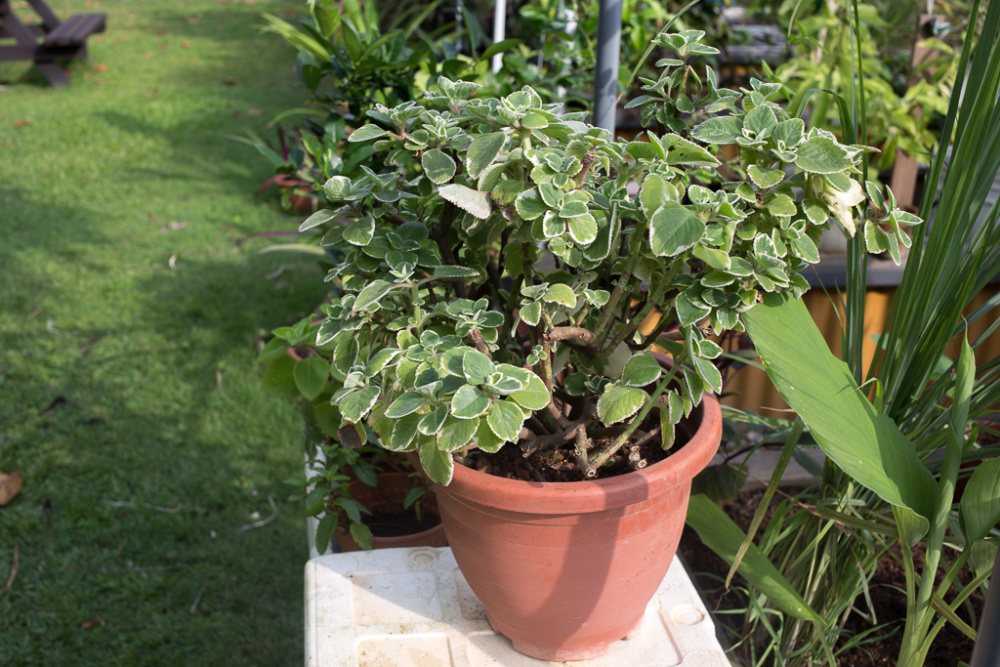
Singapore
Problem features
It is widely introduced and cultivated as an ornamental and culinary herb and is reported to have escaped cultivation and naturalised in one or more countries. However, there appears to be no record of it as a serious weed anywhere. The Hawaii Pacific Weed Risk Assessment (HPWRA) project assesses it as a low weed-risk species for Hawaii.
Where it grows
References
Books
-
Adams, C. D. 1972, Flowering plants of Jamaica, University of the West Indies, Mona, Greater Kingston
-
Chevallier, A. 2000, Encyclopedia of herbal medicine, 2nd American ed., Dorling Kindersley, New York
-
Macmillan, H. F. 1943, Tropical planting and gardening : with special reference to Ceylon, 5th ed, Macmillan Publishing, London
-
Norrington, L. & Campbell, C. 2001, Tropical food gardens : a guide to growing fruit, herbs and vegetables in tropical and sub-tropical climates, Bloomings Books, Hawthorn, Victoria
-
Randall, R. P. 2002, A global compendium of weeds, R.G. and F.J. Richardson Press, Melbourne
-
Seidemann, J. 2005, World spice plants: economic usage botany taxonomy, Springer-Verlag, Berlin
-
Staples, G. & Kristiansen, M. S. 1999, Ethnic culinary herbs : a guide to identification and cultivation in Hawaii, University of Hawaii Press, Honolulu
-
Sterling, D. 2014, Yucatán : recipes from a culinary expedition, First edition, Austin, TX University of Texas Press