



Common name: Coconut
Other common names: Coconut Palm
Description
Coconut is one of the world's most utilised and versatile plants. It originates from the South Pacific, a geographic region extending from the Philippines through Papua New Guinea and Indonesia to northern Australia. Nowadays, it is widely cultivated and has become naturalised in most, if not all, tropical countries.
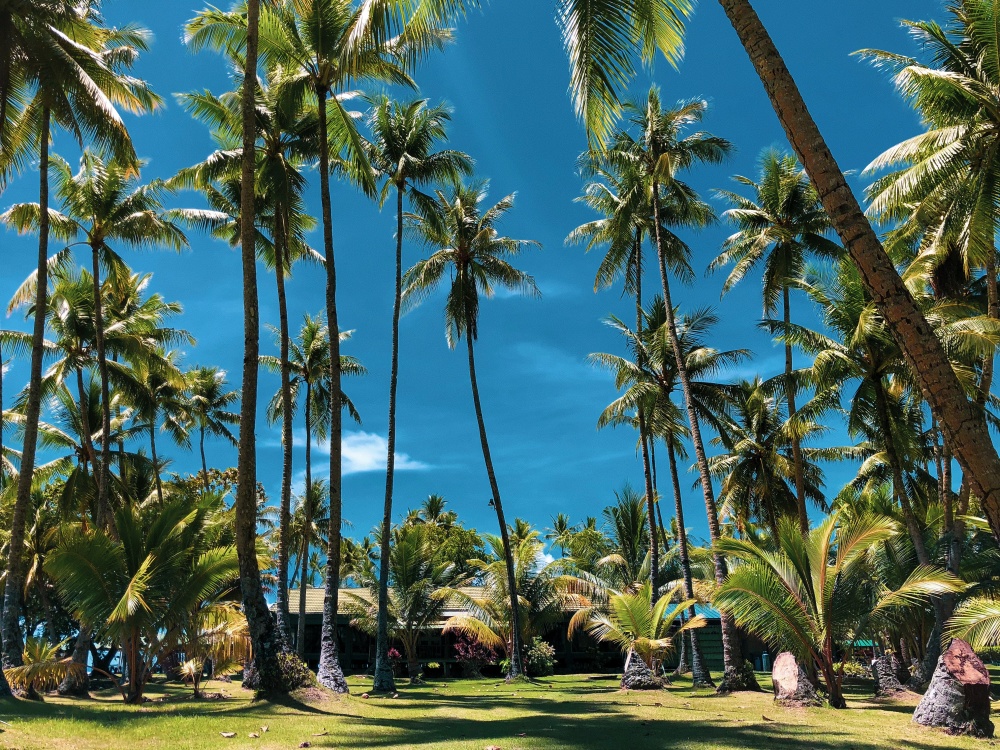
It is a medium-sized to tall palm, typically 10 to 25 m (30 to 82 ft) tall, though occasionally up to 35 m (115 ft) and develops a slender trunk, usually straight but sometimes curved by wind, with smooth, ringed, grey bark and a rounded crown made up of large, feathery palm leaves, each up to 5 m (16 ft) long.
The two primary forms are the tall and dwarf, with the dwarf variety reaching only 10 to 15 m (30 to 50 ft) tall.
The flowers are small, pale yellow, borne on large, branched flower stalks, with the female and male flowers on separate branches of the same stalk. Coconut palms bloom all year round, except when stressed by cold or the lack of water, as happens in areas with a long or pronounced dry season.
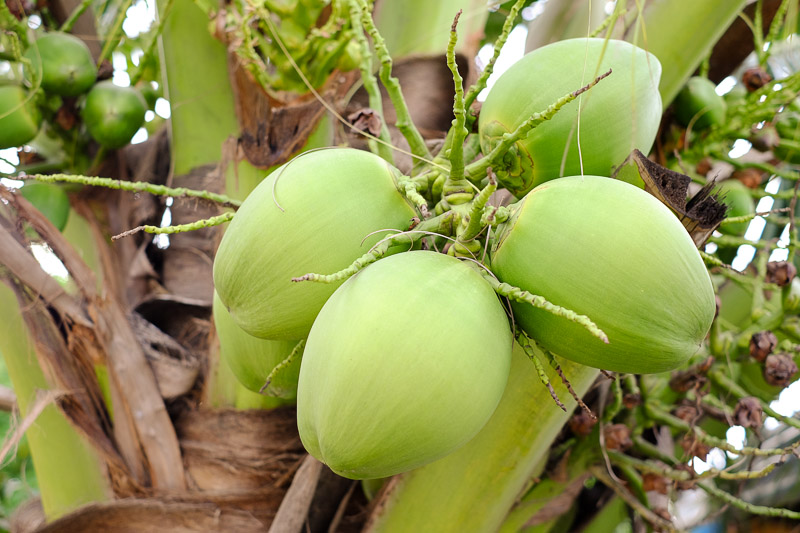
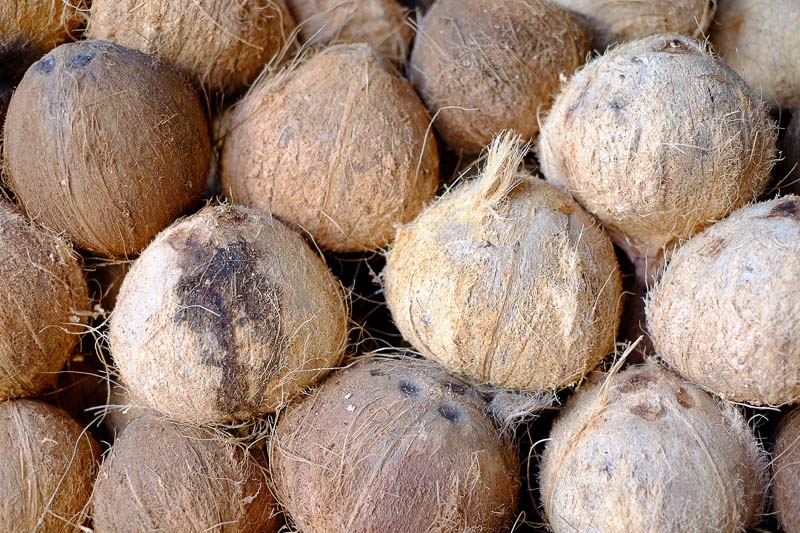
The fruit is egg-shaped, large and heavy, and has a thick, tough, fibrous exterior around a hard, round shell that protects the flesh and water. The fruit develops from fertilised female flowers and forms fruit clusters at the top of the palm.
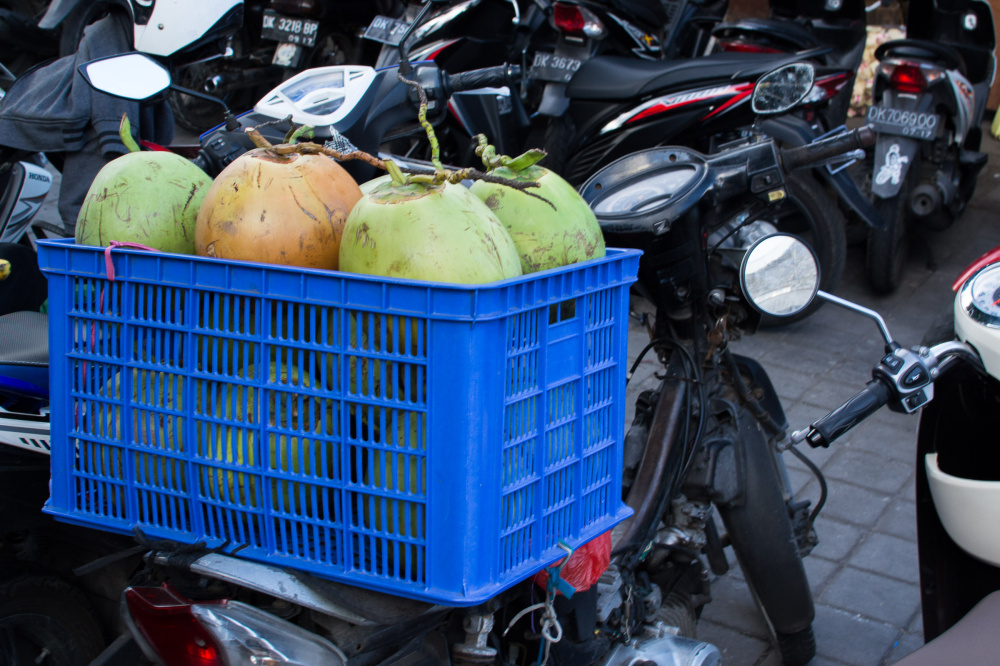
When young, coconuts are green or, in dwarf varieties, yellow-orange, and become brown when mature, around 10 months after fruit set. At which time they self-detach and fall to the ground, where they land with a thud.
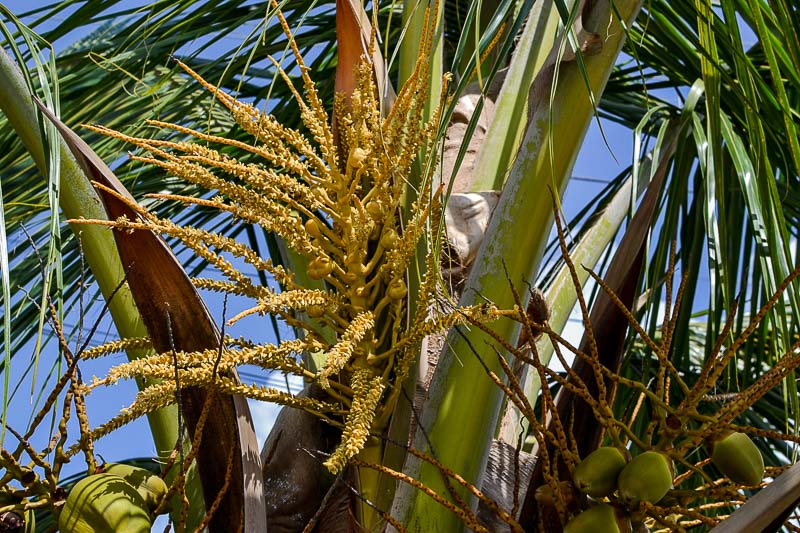
Flower stalk
Edible uses
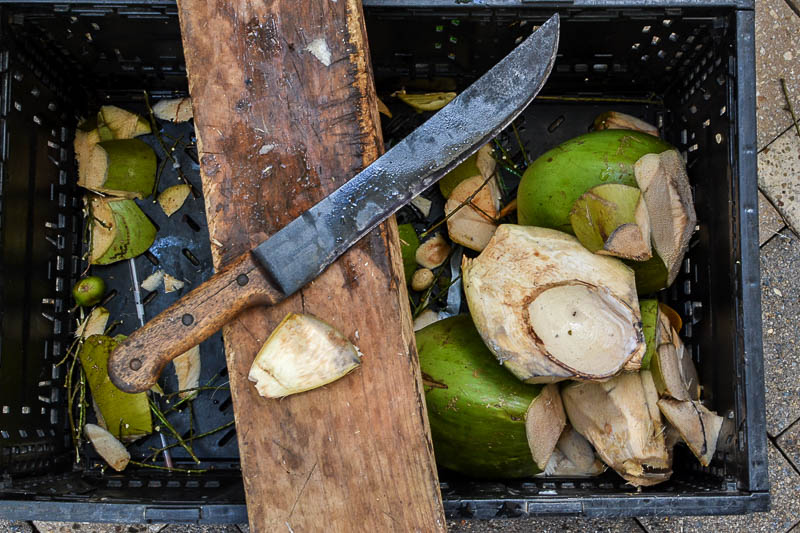
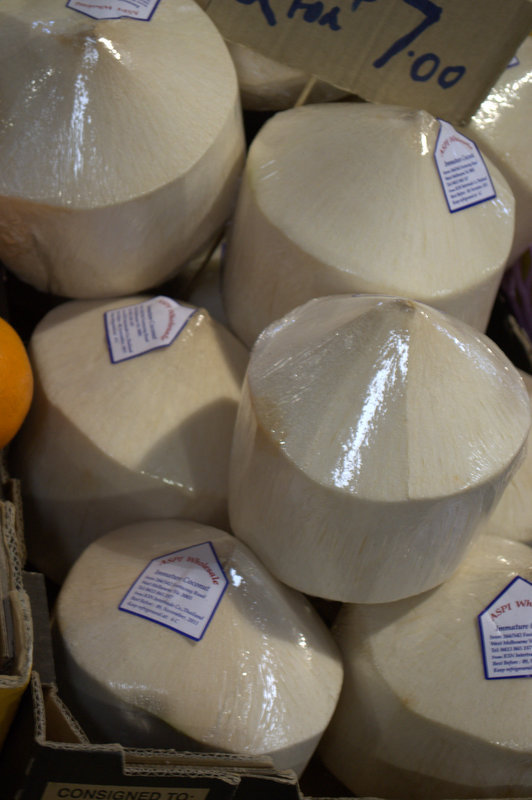
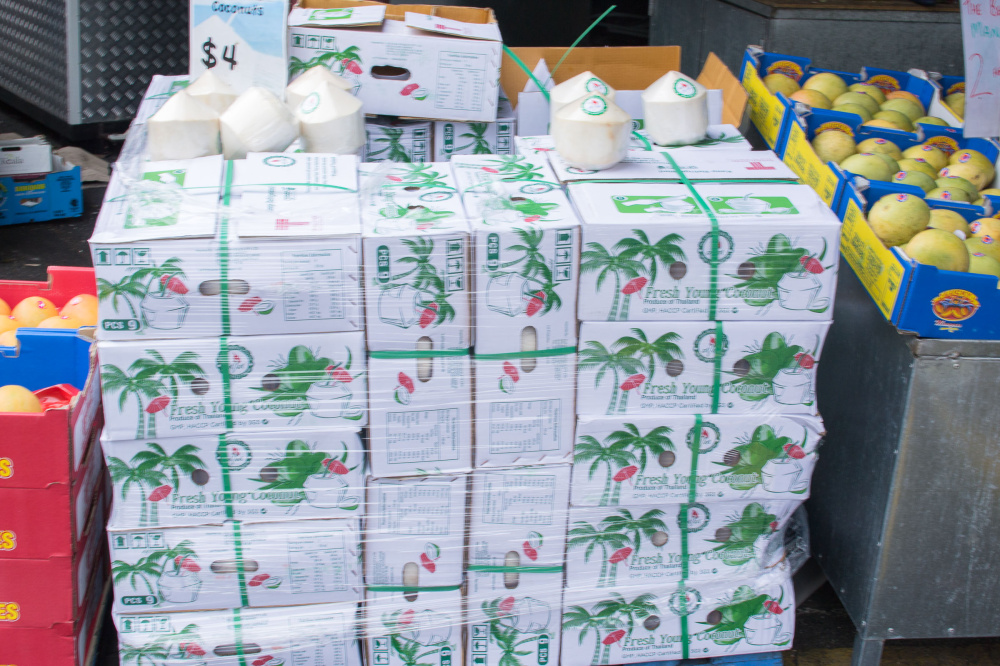
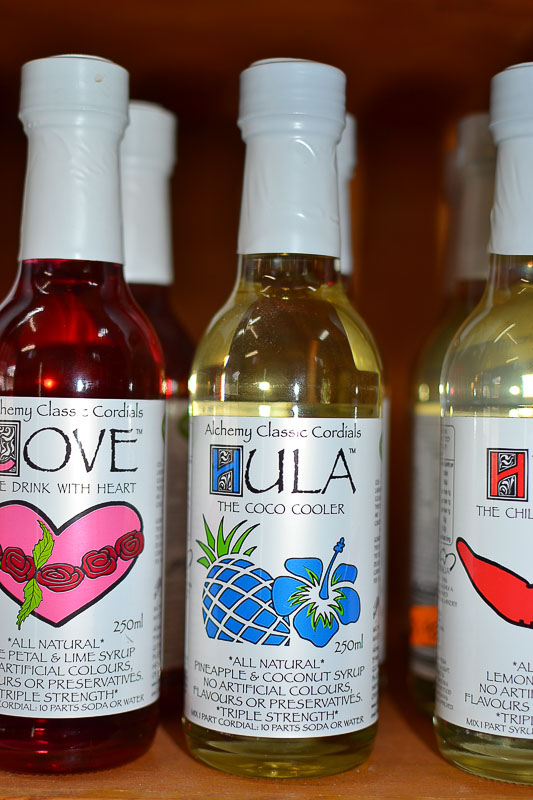
Non-alcoholic drink - The young fruit yields coconut water, a sweet, refreshing, and nutritious drink, accessed by cutting open or boring through the fibrous exterior and hard inner shell.
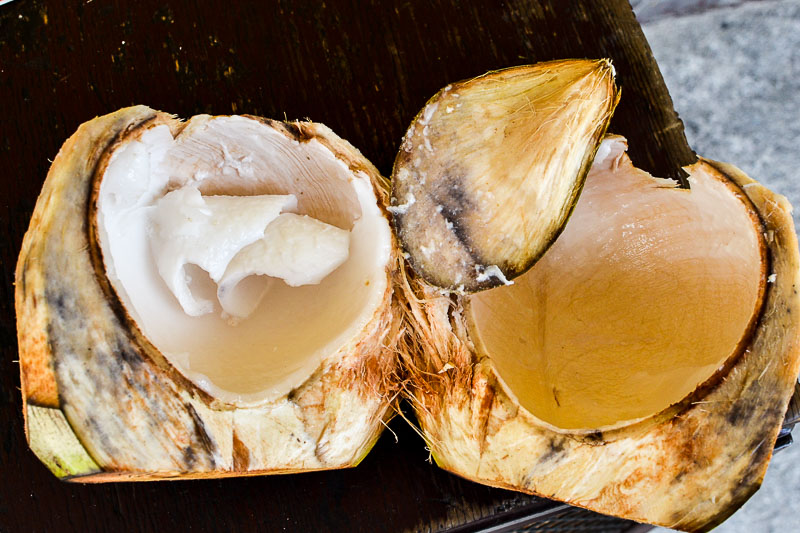
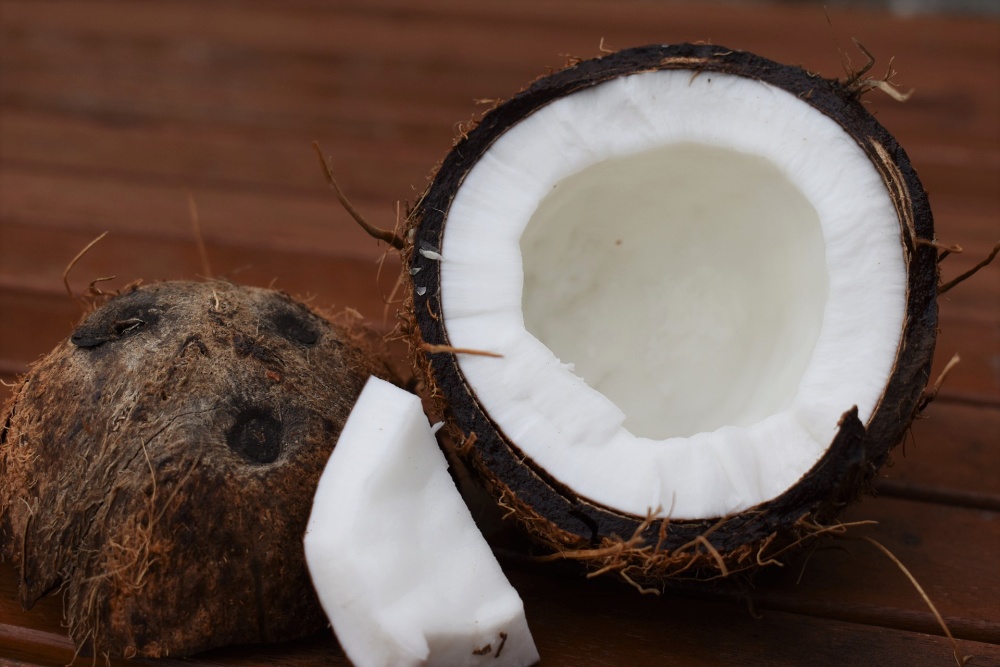
Fresh fruit - After drinking or draining the water, the coconut is split in two to access the soft, jelly-like flesh, which is eaten fresh. As the coconut matures on the palm, the flesh hardens and its oil content increases, while the water's dry matter content and nutritional value decrease.
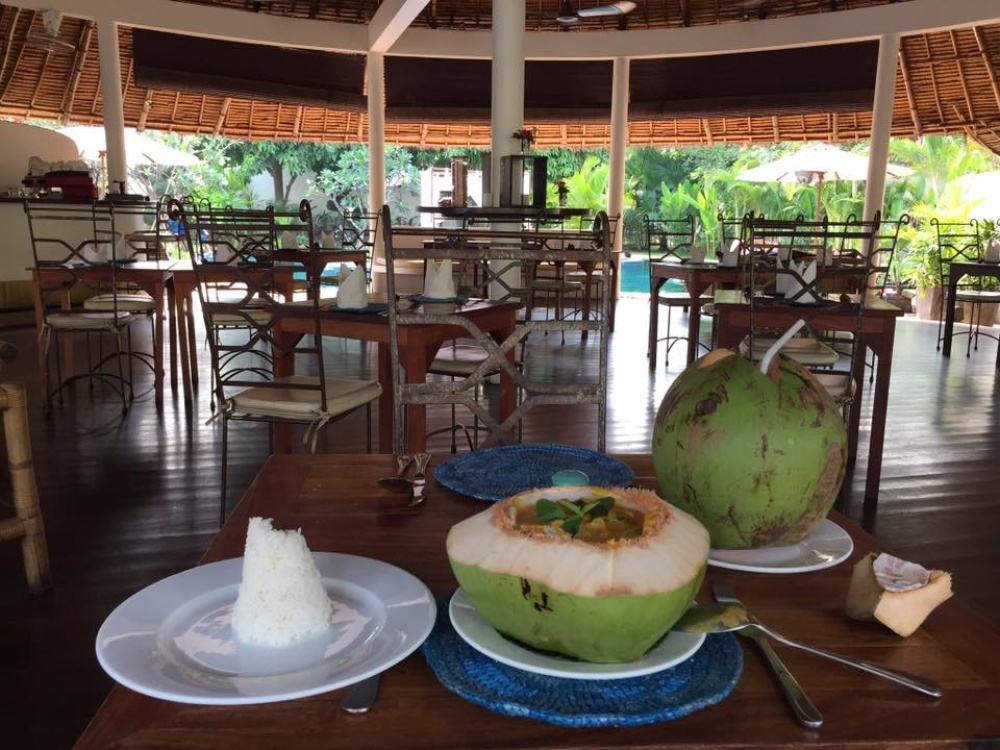
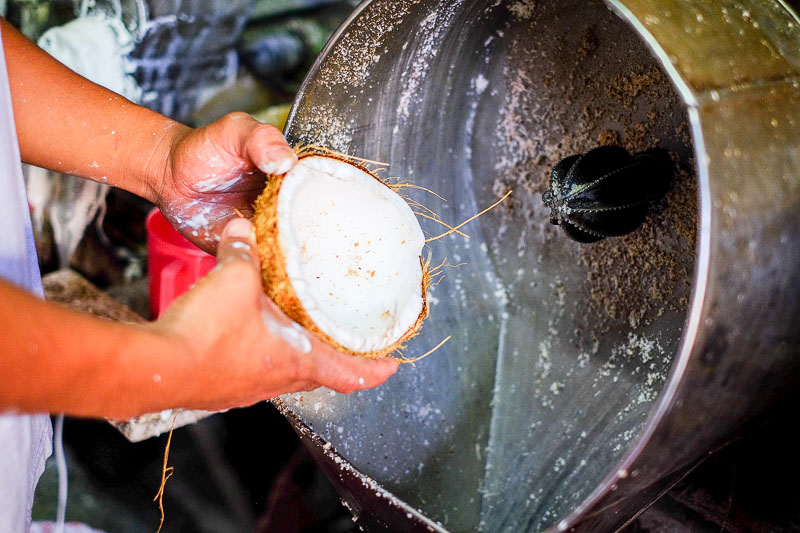
Plant-based milk - The flesh of mature nuts yields coconut cream and milk, widely used in both savoury and sweet dishes, including curries, rice dishes, and custards, as well as in confectionery and in alcoholic and non-alcoholic drinks. To make coconut milk and cream, the mature flesh is finely shredded or grated, mixed with water, then pressed and strained through a sieve or cloth - the first pressing yields the cream, subsequent pressings the milk.
Edible oil - The mature flesh also yields up to 65% oil, which solidifies at temperatures below 25°C (77°F), and is extracted by cold-pressing the mature, dried flesh or by boiling the milk and skimming off the oil. It is used in cooking, especially for frying, as well as in the manufacture of margarine and as a confectionery fat, mainly as a substitute for cocoa butter (from Theobroma cacao). Coconut oil has recently been used as a substitute for beef fat in plant-based meats, particularly in vegan burgers.
Flour - Coconut flour is high-protein, high-fibre, and gluten-free, made by finely milling the dried, mature flesh after the milk or oil has been extracted; suitable for mixing with other flours in baking.
Dried fruit - Desiccated coconut is made by shredding the white part of the dried flesh.
Chip or crisp - Coconut chips are made by thinly slicing the dried flesh. Both the chips and desiccated coconut are used to add coconut flavour and texture to baked goods and confectionery.
Natural flavouring - Coconut extract or essence is made by soaking the dried, grated flesh in unflavoured, colourless alcohol for at least four weeks, adding a coconut flavour to food, especially baked goods and drinks.
Natural sweetener - Sap collected from tapped flower stalks is slowly boiled and reduced into palm sugar.
Plant-based vinegar - The sap can also be fermented naturally to produce coconut vinegar.
Alcoholic drink - Also yields 'Toddy', a sweet or sour, mainly homemade, alcoholic drink produced by fermenting the sap. On a commercial level, the sap and flower nectar are fermented and distilled to make 'Arrack', an alcoholic drink sold under various brand names.
Jam or marmalade - In Southeast Asia, coconut jam (Kaya jam) is made by combining the sweet sap with coconut milk, eggs, and pandan extract (from Pandanus amaryllifolius), spread on toast and buns and eaten for breakfast.
Honey - The flowers are a nectar source for bees, yielding coconut blossom honey. When produced solely from coconut nectar (monofloral), it is crystal clear; when combined with nectar from other plants, it is greenish-yellow. It grades amber on the Pfund scale (a standard measure of honey colour) and typically granulates within three months or later of extraction. In Mexico, colonies have yielded 70-80 kg of coconut honey per season.
Salad vegetable - The palm heart, or 'coconut cabbage' - the tender young shoots surrounding the growing bud - is eaten raw in salads. Harvesting it kills the palm, so it is only available when a palm is being felled.
Material uses
Natural soap - Coconut oil is commonly used in cosmetics, including soap, particularly baby soap.
Natural shampoo - Also used in shampoo.
Natural skin care - Features in skin care lotions, hair products, pre-shaving lotions, and shaving lathers.
Biofuel - Coconut oil has also been tested as a fuel and biodiesel in several Pacific island nations, used to run generators and vehicles.
Natural detergent - Coconut and oil palm (Elaeis guineensis) oils are the main ingredients used to produce plant-based surfactants, key components of eco-friendly detergents and dishwashing liquids.
Livestock feed - The leftover seed cake is a common ingredient in commercial livestock feed.
Fish feed ingredient - Also used in fish feed.
Charcoal - Activated charcoal is made from the hard brown shells of mature nuts, used in air filtration systems and the precious metals industry.
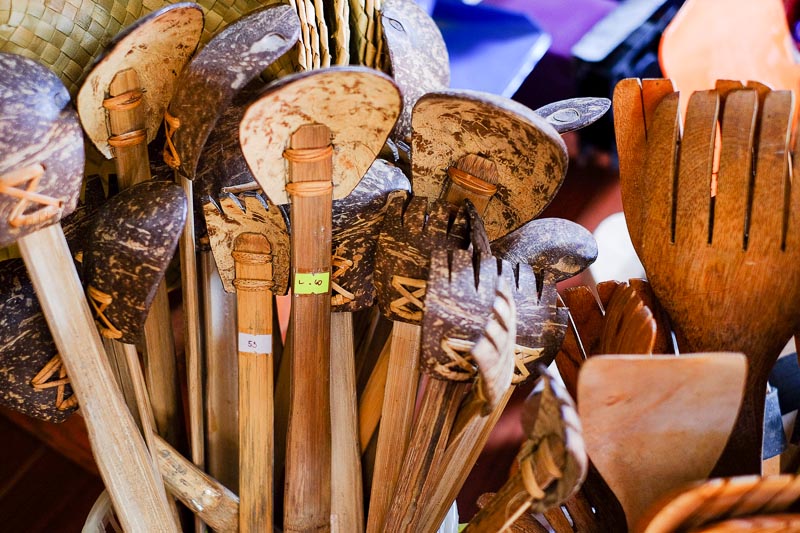
Carved craft - The shell is also shaped and polished into wearable jewellery and carved craft items.Natural fibre - Coir, the fibre extracted from the coconut husk, is graded by length and fineness before processing; the shorter, coarser grades are also used as stuffing for seats and cushions.
Rope or cordage - The longest, finest fibres are spun into rope, cordage, and string, and woven into coir mats.
Potting material - Also an insulating material and a key ingredient in potting mixes for plants requiring a light substrate.
Mulch - Unprocessed husk pieces can be used as mulch or as a growing medium for plants such as Anthuriums (Anthurium andraeanum).
Broom or brush - The husk can also be shaped into floor-polishing brushes, and the shorter coir fibres are also used to make bristle brushes.
Firewood - Husk pieces are also used as kindling to start fires.
Woven craft - Leaves are used in basketry and woven items, including sun hats and floor mats
Shade or privacy screen - Woven coconut leaves are also used to make garden privacy screens.
Natural packaging - The leaves are also fashioned into packaging for food and gifts.
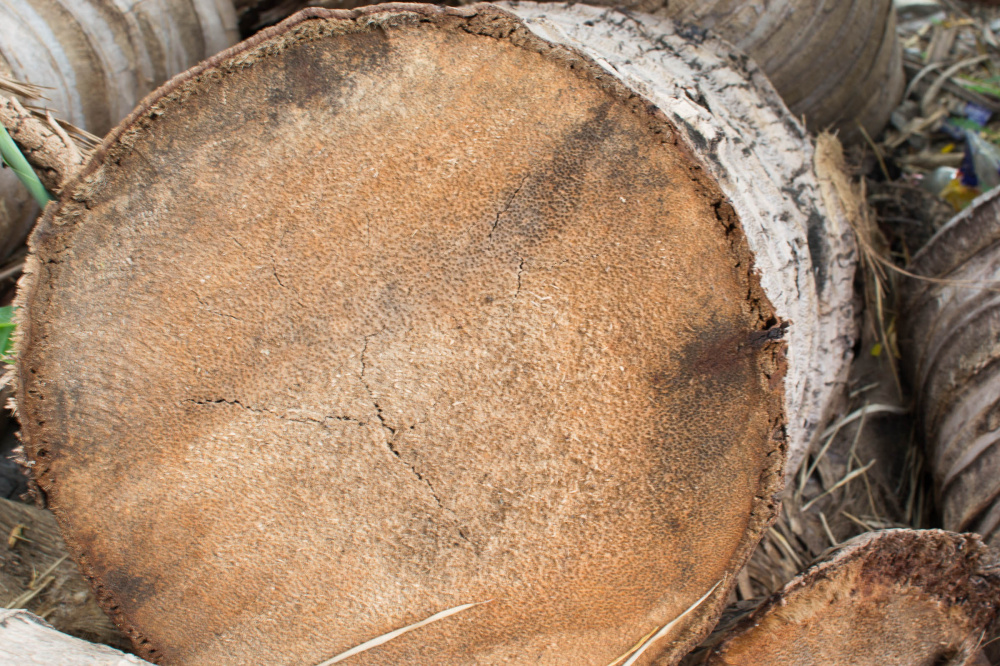
Flooring and decking - The trunk produces wood that is sawn into planks used chiefly for interior flooring and usually laid as parquetry.
Environmental uses
Bee forage - The flowers are a major source of nectar and pollen, providing honeybees with year-round forage.
Seaside garden plant - Coconut palms are a valued addition to coastal gardens.
Windbreak - Also commonly planted there as windbreaks.
Erosion control - They also help control erosion by minimising the loss of soil and sand.
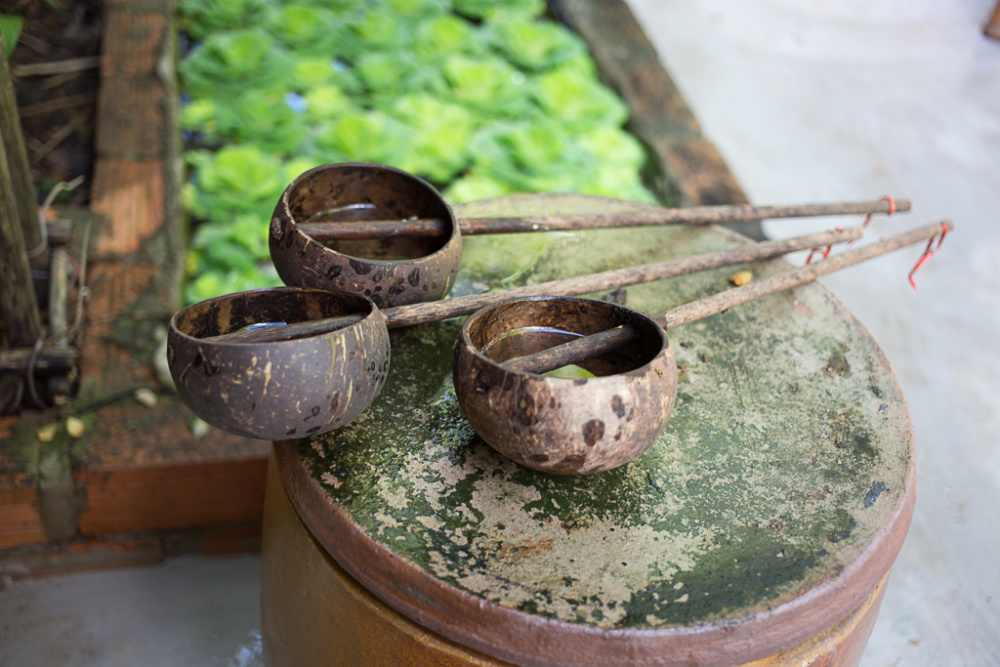
Phu Quoc Island, Vietnam
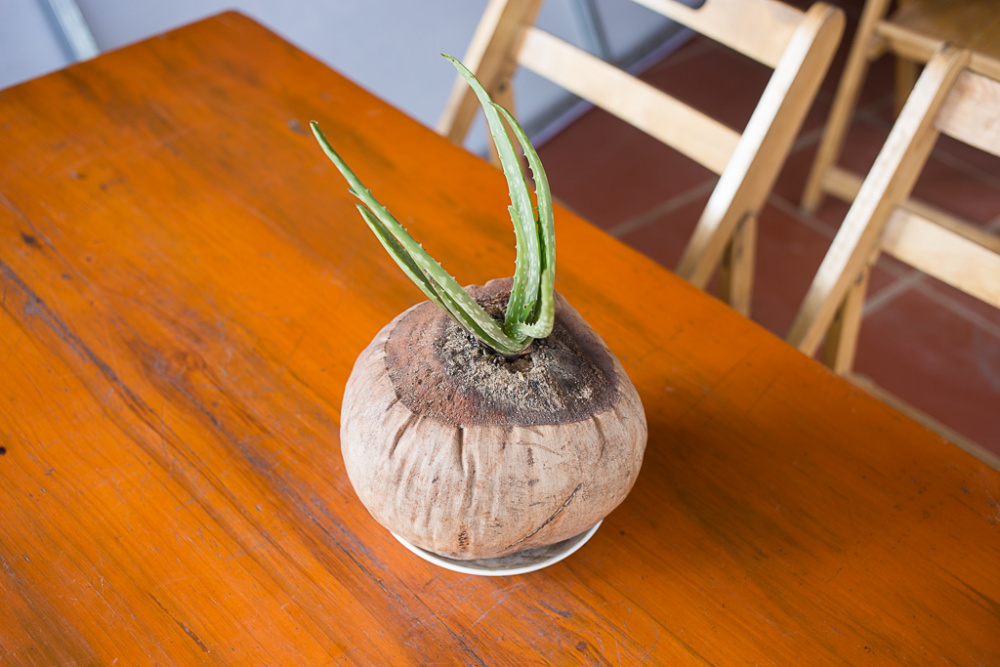
Coconut vase
Health uses
The oil extracted from the mature nut flesh is a high-energy food source, containing the following:
Vitamin B1 (Thiamine)
Vitamin B2 (Riboflavin)
Vitamin B3 (Niacin)
Vitamin B6 (as pyridoxine)
Folate
Iron
Phosphorus
Present in smaller amounts:
Vitamin C
Vitamin E
Natural massage oil - Coconut oil is also used as a massage oil.
Natural kidney tonic - Coconut water from young coconuts is used for this purpose in the Caribbean and is prescribed in traditional Indian medicine for urinary issues.
Potassium - Contains up to 3 grams per litre, supplying nearly 100% of the recommended daily adult intake.
Climate
Coconut palms grow naturally and produce quality fruit in humid tropical lowland climates, generally frost-free areas with annual lows of 18 to 25°C, annual highs of 27 to 35°C, annual rainfall of 1200 to 4500 mm and a dry season of 5 months or less.
Palms may flower and fruit poorly, or not at all, in areas with cool winters. They are also more susceptible to disease in dry, sub-humid or very humid climates, generally areas with annual rainfall outside of the 1200 to 4500 mm range or with a pronounced dry season.
However, coconut palms are productive in areas with a pronounced dry season if their roots have access to groundwater, such as parts of Mumbai, India. And they do equally well in areas with annual rainfall of less than 1200 mm if irrigated, such as Salalah, Oman, on the Arabian Peninsula, and Coimbatore, Tamil Nadu, India, which receives only about 600 mm of rainfall annually.
Growing
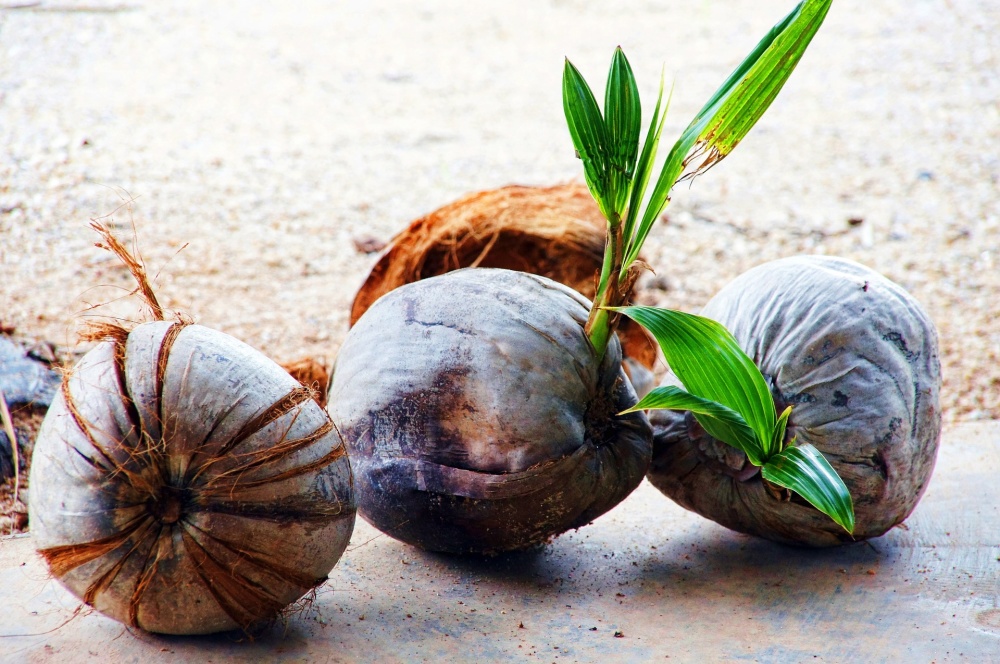
New plants are started from seed, usually by planting mature nuts which have fallen to the ground and sprouted.
It performs best on free-draining loam and sand soils of a moderately acid to alkaline nature, generally with a pH of 5.5 to 8.0 and on sites with full sun exposure. It has good tolerance to wind, salt spray, soil salt and periodic flooding. Still, it is intolerant of slow-draining or waterlogged soils.
Coconut palms start flowering and producing coconuts at around three to four years old. A mature coconut palm can produce up to one hundred coconuts per year. Yields begin to decline when the palm is over thirty-five years old.
Problem features
The young and mature fruit are buoyant, aided by their fibrous, waterproof husks and the air trapped in the nut cavity. This enables their dispersal over long sea distances to new shores where they may eventually become established. However, this dispersal is limited to coastal areas, and human intervention is needed for inland dispersal.
The Hawaii Pacific Weed Risk Assessment project (HPWRA) assessed it as a low-risk weed species in Hawaii. Still, it is discouraged from planting in South Florida.
The large, heavy fruit falls to the ground, sometimes from a great height, and can cause serious personal injury or damage to property.
Pollen released by male flowers can cause allergies in some people.
Where it grows
References
Books
-
Ash, M. & Ash, I. 2004, Handbook of green chemicals, 2nd ed., Synapse Information Resources, Endicott, New York
-
Blombery, A. M. & Rodd, A. N. 1992, An informative, practical guide to palms of the world : their cultivation, care and landscape use, (Revised edition), Angus & Robertson, North Ryde, New South Wales
-
Bradbear, N. 2009, Bees and their role in forest livelihoods : a guide to the services provided by bees and the sustainable harvesting, processing and marketing of their products, Food and Agriculture Organization of the United Nations (FAO), Rome
-
Crane, E., Walker, P. & Day, R. 1984, Directory of important world honey sources, International Bee Research Association, London, United Kingdom
-
Elevitch, C. R. & Thaman, R. R. 2011, Specialty crops for Pacific islands, 1st ed, Permanent Agriculture Resources, Hawaii
-
Fellows, P. 1997, Traditional foods : processing for profit, Intermediate Technology, Technical Centre for Agricultural and Rural Co-operation, London
-
Francis, J. K. 1998, Tree species for planting in forest, rural, and urban areas of Puerto Rico, U.S. Department of Agriculture, Forest Service, International Institute of Tropical Forestry, Río Piedras, Puerto Rico
-
Francis, J. K. and Liogier, H. A. 1991, Naturalized exotic tree species in Puerto Rico, General technical report SO-82, USDA Forest Service, Southern Forest Experiment Station, New Orleans
-
Gilbert, V., Smith, S. & Young, L. 2006, Foliage for florists, Society of Floristry, United Kingdom
-
Gilman, E. F. 1997, Trees for urban and suburban landscapes, Delmar Publishers, Albany, New York
-
Gunstone, F. D. 2011, Vegetable oils in food technology : composition, properties and uses, 2nd ed, Wiley-Blackwell, Hoboken, New Jersey
-
Howes, F. N. 1949, Vegetable gums and resins, Chronica Botanica Company, Waltham, Massachusetts
-
Jacquat, C. & Bertossa, G. 1990, Plants from the markets of Thailand : descriptions and uses of 241 wild and cultivated plants, with 341 colour photographs, Editions Duang Kamol, Bangkok
-
Jensen, M. 1999, Trees commonly cultivated in Southeast Asia : an illustrated field guide, 2nd ed., Food and Agricultural Organisation of the United Nations (FAO) Regional Office for Asia and the Pacific (RAP), Bangkok
-
Kochhar, S. L 1998, Economic botany in the tropics, 2nd ed, Macmillan India, Delhi
-
Lorenzi, H. 2002, Brazilian trees : a guide to the identification and cultivation of Brazilian native trees. Vol. 1, 4. ed, Instituto Plantarum de Estudos da Flora, Nova Odessa, Sao Paulo
-
McNab, J. M & Boorman, K. N 2002, Poultry feedstuffs supply, composition and nutritive value, CABI Publishing, Wallingford, United Kingdom
-
Mollison, B. 1993, The permaculture book of ferment and human nutrition, Tagari Publications, Tyalgum, New South Wales
-
Mors, W. B & Rizzini, C. T. 1966, Useful plants of Brazil, Holden-Day Publishing, San Francisco, California
-
Norrington, L. & Campbell, C. 2001, Tropical food gardens : a guide to growing fruit, herbs and vegetables in tropical and sub-tropical climates, Bloomings Books, Hawthorn, Victoria
-
Parrotta, J. A. 2001, Healing plants of peninsular India, CABI Publishing, Wallingford, Oxfordshire
-
Perry, F. & Hay, R. 1982, A field guide to tropical and subtropical plants, Van Nostrand Reinhold Company, New York
-
Purseglove, J. W. 1981, Tropical crops: Monocotyledons, Longman, Harlow, London
-
Randall, R. P. 2002, A global compendium of weeds, R.G. and F.J. Richardson Press, Melbourne
-
Reyes, G. 1992, Wood densities of tropical tree species, U.S. Department of Agriculture, Forest Service, Southern Forest Experiment Station, New Orleans, Louisiana
-
Rosengarten, F. 1984, The book of edible nuts, Walker and Company Publishing, New York
-
Schubert, T. H. 1979, Trees for urban use in Puerto Rico and the Virgin Islands. U.S. Department of Agriculture, Forest Service, Southern Forest Experiment Station, New Orleans
-
Selvam, V. 2007, Trees and shrubs of the Maldives, Food and Agriculture Organisation (FAO) RAP publication (Maldives), Thammada Press Company Ltd., Bangkok
-
Sonaiya, E. B. & Swan, S. E. 2004, Small-scale poultry production : technical guide, Food and Agriculture Organization of the United Nations (FAO), Rome
-
Tacon, A. G. & Hasan, M. R. 2009, Feed ingredients and fertilizers for farmed aquatic animals : sources and composition, Food and Agriculture Organization of the United Nations (FAO), Rome
-
Van Wyk, B. E. 2005, Food plants of the world: an illustrated guide, 1st ed., Timber Press, Portland, Oregon
-
Vozzo, J. A 2002, Tropical tree seed manual, U.S. Department of Agriculture (USDA), Forest Service, Washington D.C.
Articles, Journals, Reports and Working Papers
-
Bezona N., et al. 2009. Salt and wind tolerance of landscape plants for Hawaii (Landscape; L-13), University of Hawaii, Honolulu
-
Buddenhagen C.E., Chimera C. & Clifford P. 2009, Assessing Biofuel Crop Invasiveness: A Case Study, PLoS ONE 4
-
McCall W.W. 1980, The salt tolerance of plants, University of Hawaii (General Home Garden Series; GHGS-21), Honolulu
-
Morton, J.F. 1964, Honeybee Plants of South Florida, Proceedings of the Florida State Horticultural Society, Vol 77:415-436.
-
National Research Council (Board on Science and Technology for International Development) 1990, Saline agriculture : salt-tolerant plants for developing countries, The National Academies Press, Washington D. C.
-
Percival, S. & Findley, B. 2007 (Reviewed April 2014), What's in Your Tropical Fruit?, Fact Sheet HN 0708, University of Florida IFAS Extension Service, Gainesville, Florida
-
Roddy, K. M., & Arita Tsutsumi, L. 1997, A History of Honey Bees in the Hawaiian Islands. Also called: Honey Bees in the Hawaiian Islands, University of Hawaii, Hilo
-
Watson, B.J., & Moncur, M. 1985, Guideline criteria for determining survival, commercial and best mean minimum July temperatures for various tropical fruit in Australia (Southern Hemisphere), Department of Primary Industries Queensland (DPI QLD), Wet Tropics Regional Publication, Queensland
-
Wenkam N.S. & Miller C.D. 1965, Composition of Hawaii fruits (Bulletin 135), University of Hawaii, Honolulu
-
Wong M. 2006. Palms for Hawaii landscapes, (Landscape; L-19), University of Hawaii, Honolulu