



Common name: Red Frangipani
Other common names: Caterpillar Tree, Frangipani, Pagoda Tree, Plumeria, Red Paucipan, Red Jasmine, Temple Tree, Red Temple Tree
Description
Red Frangipani is a flowering shrub or small tree native to seasonally dry areas in Central America, extending from Mexico to Panama.
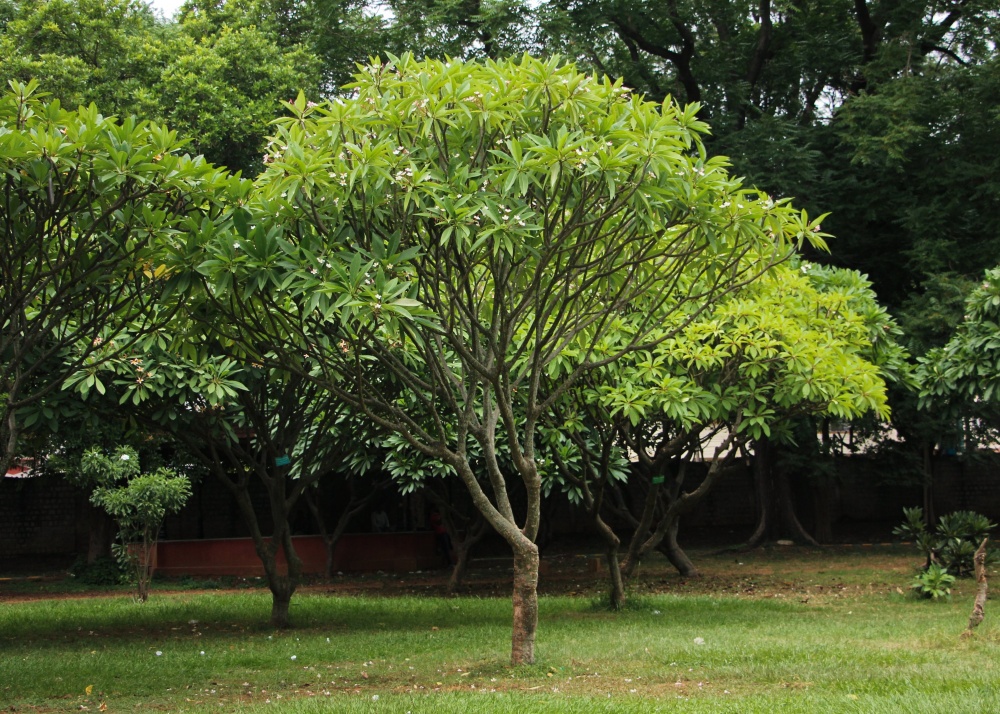
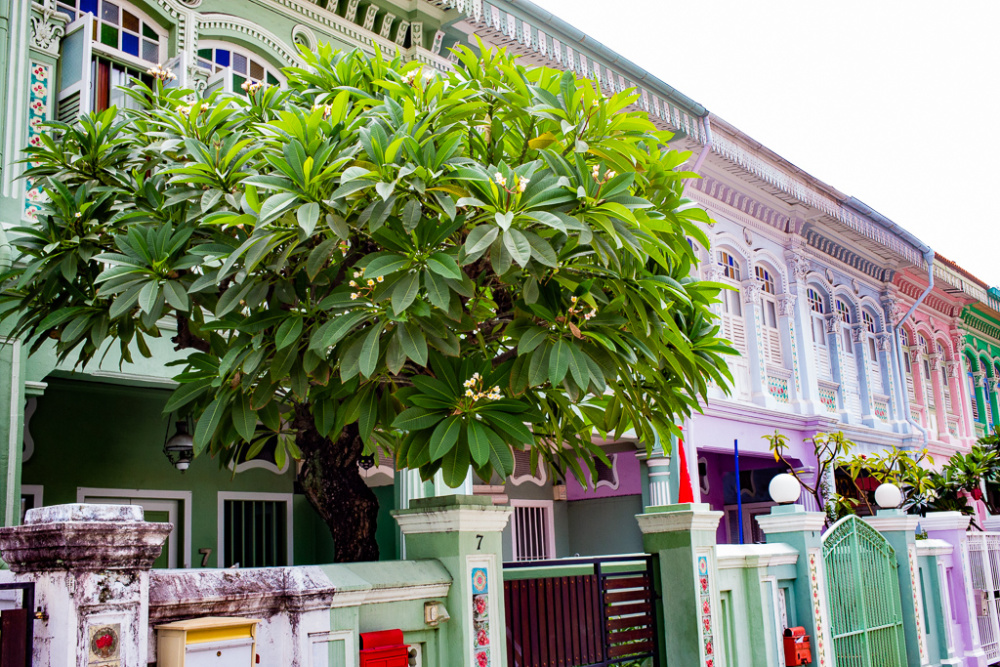
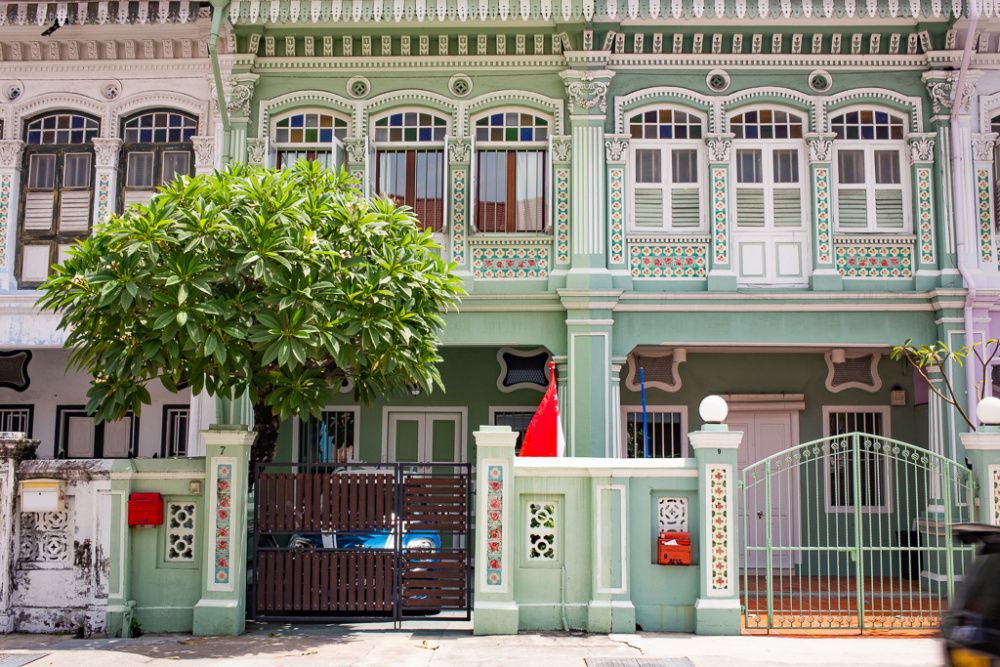
It may reach up to 12 m (40 ft), though it is more commonly 3 to 7 m (10 to 23 ft) tall, and develops a stout trunk with spreading and ascending branches, forming an umbrella-shaped crown whose width may equal the plant's height.
The stems have smooth grey bark and are semi-woody and succulent. They store moisture, allowing the plant to survive a long dry season. When wounded, they bleed a sticky white latex.
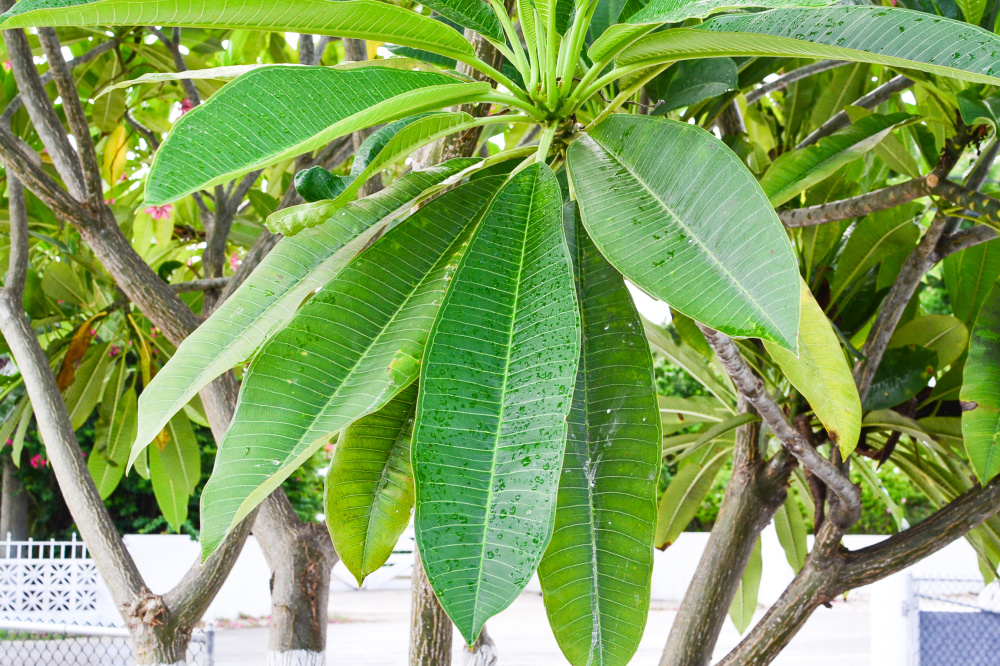
The leaves are elongated-oval with a pointed tip and are large, ranging from 20 to 50 cm (0.7 to 1.6 ft) in length. On top, they are prominently ribbed and dark, dull green, with pale green underneath. Spirally arranged at the ends of the branches, they fall in the dry season to conserve water, leaving the branches bare and exposed.
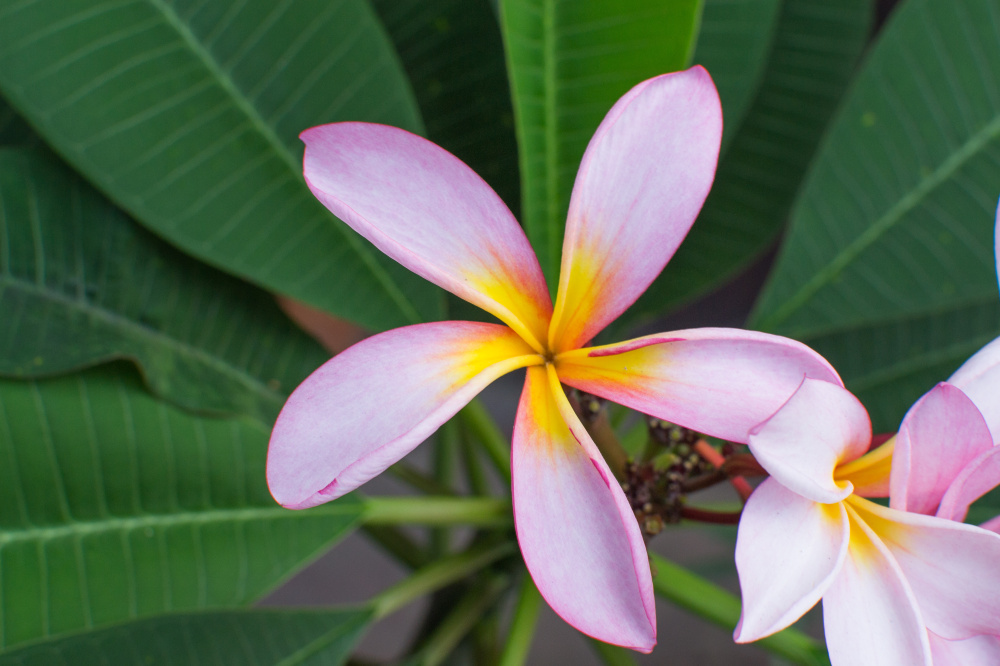
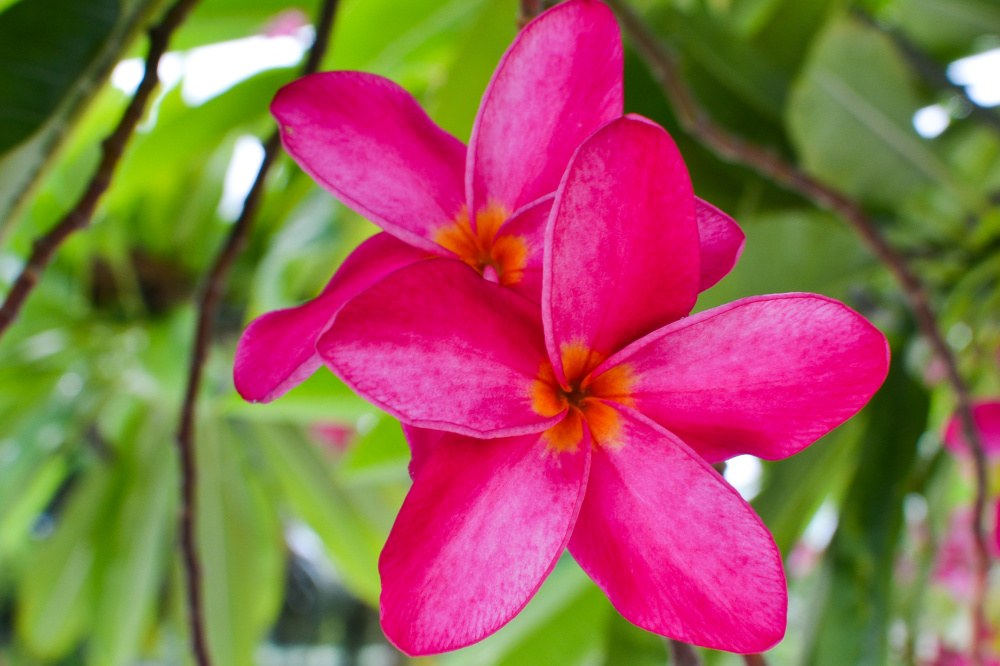
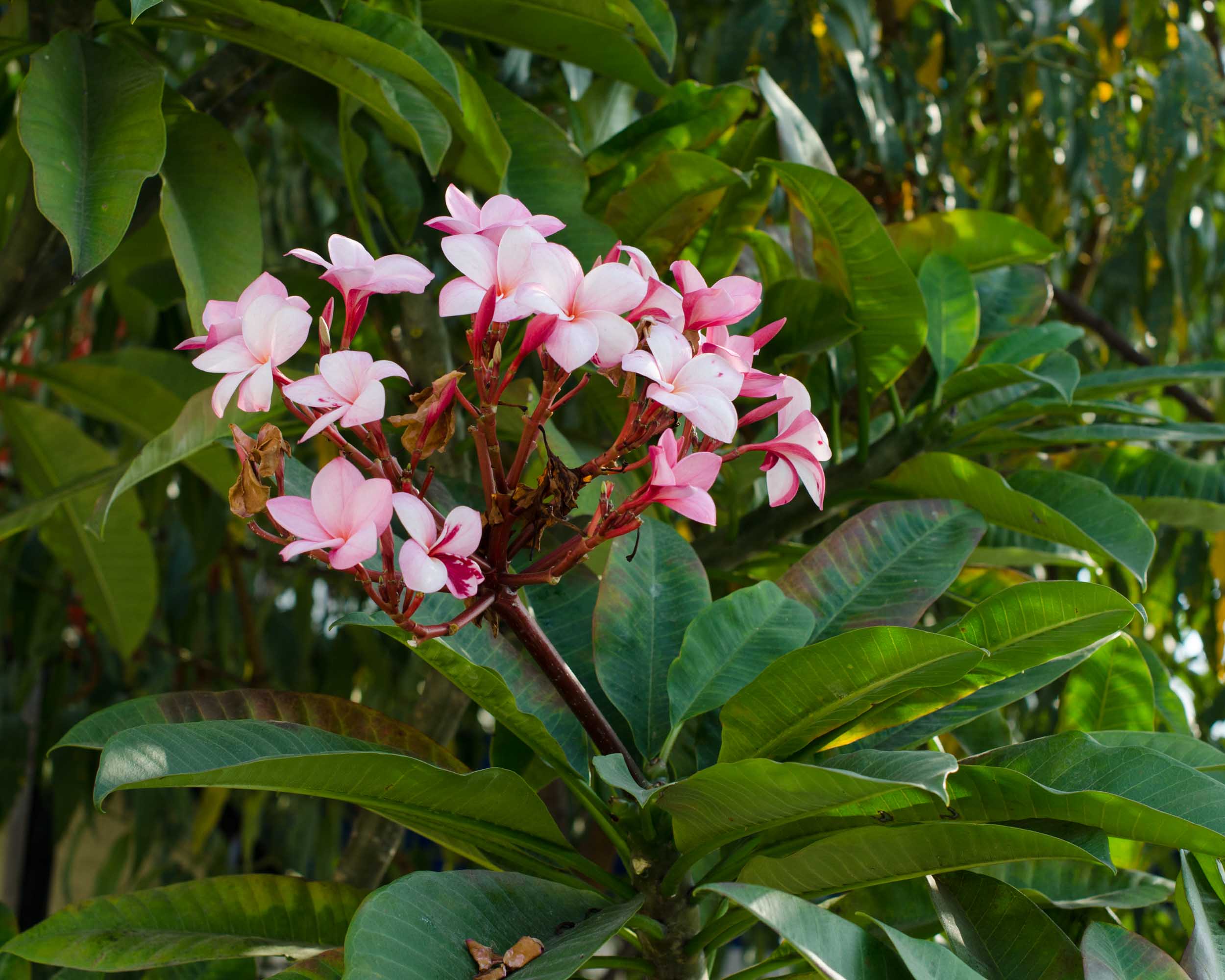
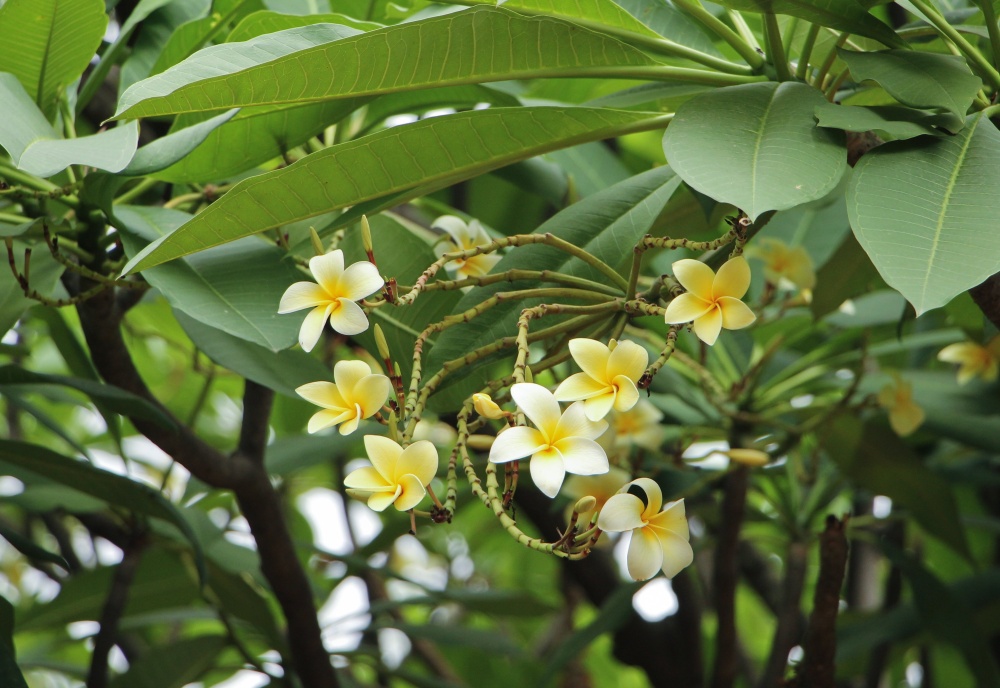
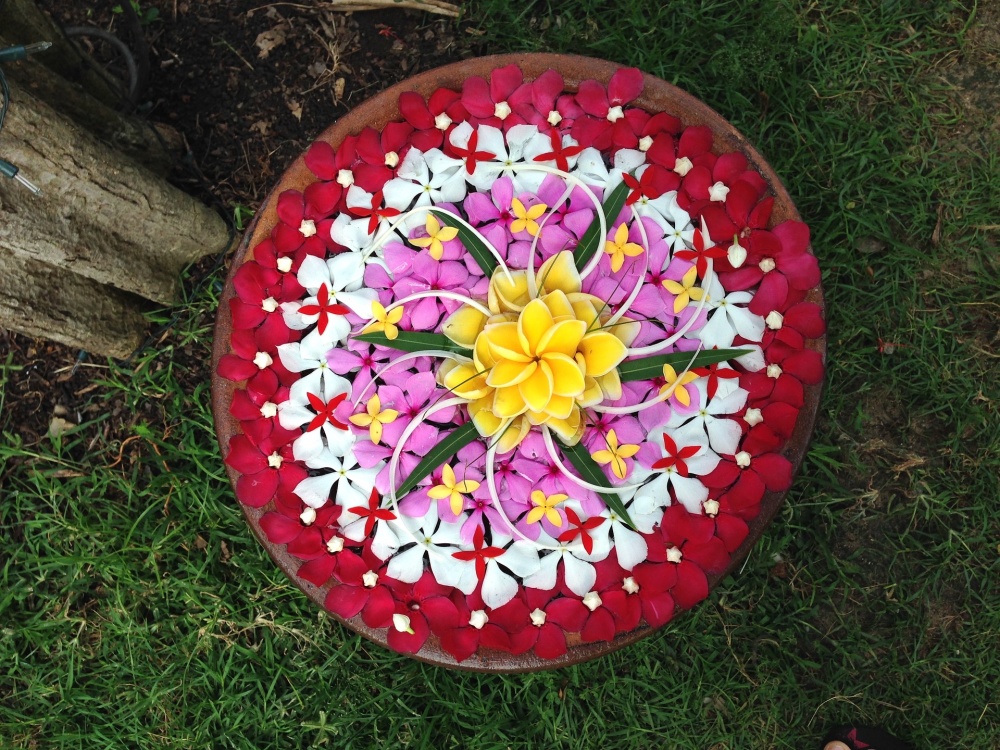
The flowers come in various shapes and colours, due mainly to selective breeding and natural cross-pollination with other compatible Plumeria species. Mainly, they are fan- or pinwheel-shaped with five overlapping petals, measure 5 to 7.5 cm (2 to 3 in) across, and come in reds, pinks, purples, oranges, and whites, some with yellow centres.
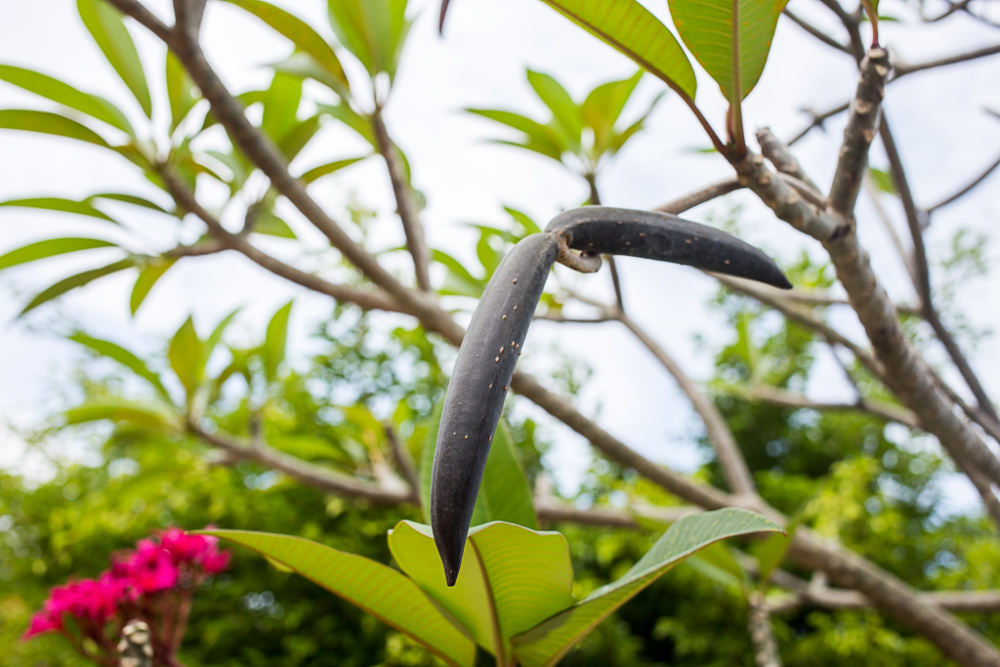
Flowering is long-day-induced, with flowers coming into bloom from spring through autumn, in showy clusters at the ends of the branches, strongly contrasting with the dark green of the leaves. They are followed by twin seedpods 12.5 to 25 cm (5 to 10 in) long, green when young, becoming brown and dry when mature, with large winged seeds inside, each up to 5 cm (2 in) long.
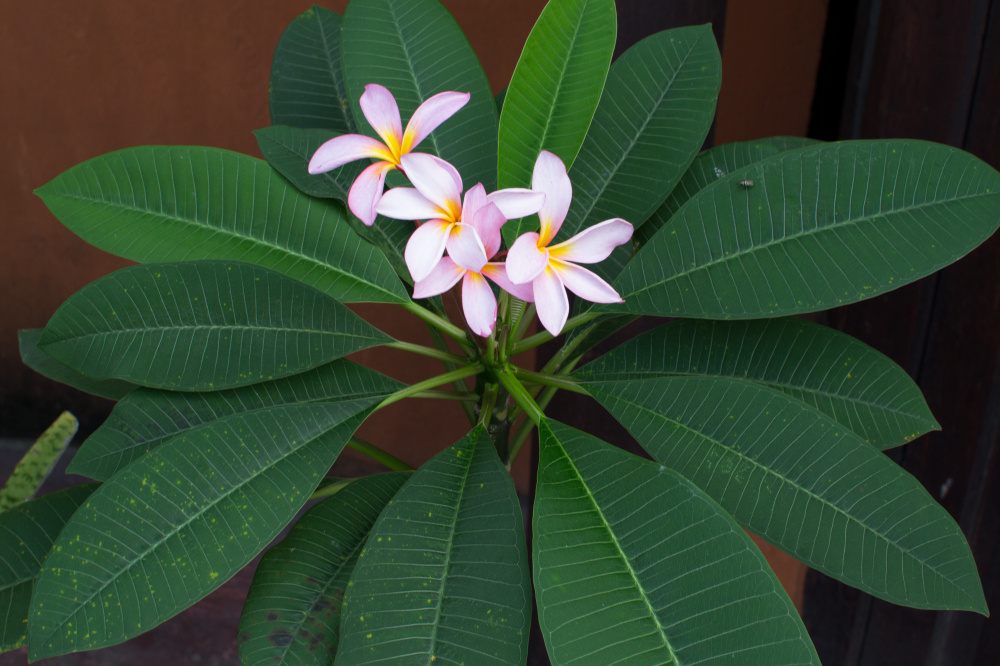
Frangipani flowers (Bali, Indonesia)
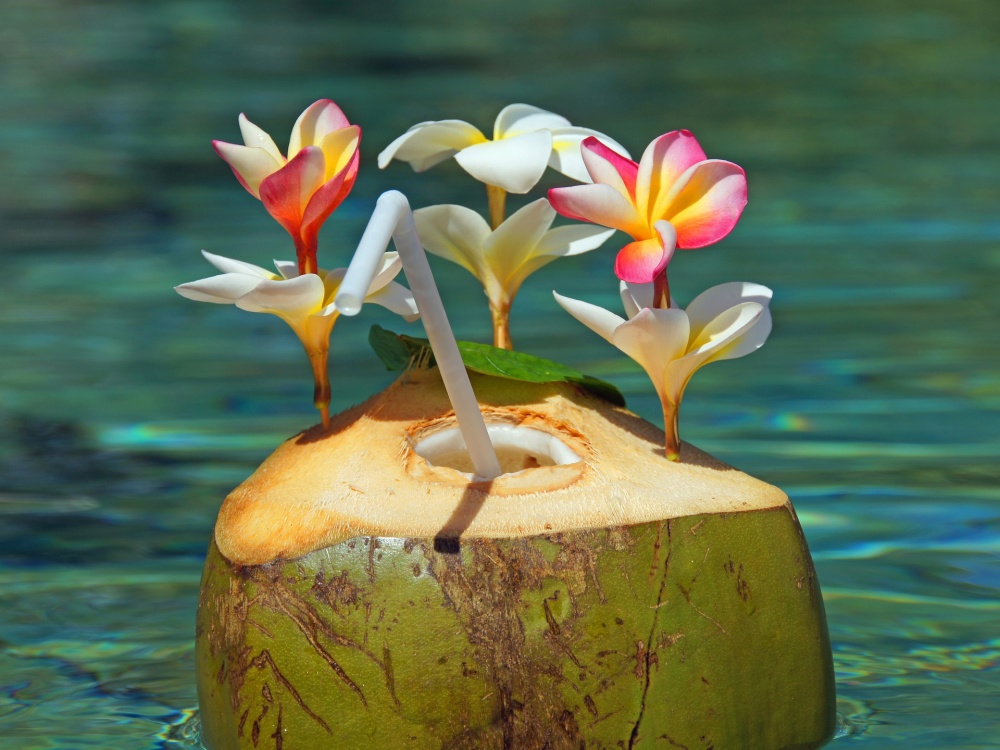
Coconut cocktail (photo by Manuel Willer from Pixabay)
Environmental uses
Flowering ornamental - Red Frangipani is widely cultivated as a flowering ornamental and specimen shrub or small tree for its distinctive, conspicuous candelabra shape, large green leaves, and brightly coloured flowers.
Fragrant plant - Their sweet fragrance is a bonus, at its most pronounced in the evening and through the night, when the flowers attract moths, the plant's specialist pollinators; very little, if any, fragrance is exhaled during daylight hours. The fragrance persists long after the flowers have fallen off the tree and wilted, which has also led to their use in clothing and linen cupboards to scent the clothes and sheets stored therein.
Seaside garden plant - The plant's tolerance to drought, alkaline soils, and salt spray makes it a good candidate for seaside gardens.
Material uses
Cut-flower - The flowers resist wilting longer than most tropical flowers, leading to their use in bouquets and floral necklaces, such as garlands and traditional Hawaiian leis.
Essential oil - The red frangipani contributes significantly to perfumery. A fragrant wax-like substance, known as an essence concrète, is extracted from its flowers using a volatile solvent, typically hexane. This substance is then washed with alcohol and concentrated into 'Frangipani oil'.
Natural fragrance - The resulting oil, with its strong, lingering rosy odour, is a prized ingredient in fine perfumery, particularly valued in heavy Oriental floral perfumes such as 'Coco', 'Mystère', and 'Sweet Courrèges', adding a unique, exotic note to these scents.
Health uses
Traditional medicine - The latex is used as a topical treatment for itchy skin and to treat warts.
General interest
Large caterpillars, known as the 'Frangipani Caterpillar', eat the leaves in some regions. They can be up to 15 cm (6 in) long, with a bright red head and a charcoal-black body ringed with yellow bands. They take in the latex's poison and become poisonous, insect-eating birds, so other birds know not to eat them. When ready to pupate, they head down the trunk to under the leaf litter and emerge later as Giant Sphinx Moths (Pseudosphinx tetrio) with wingspans of up to 14 cm (5.5 in).
Climate
Grows naturally in sub-humid to humid subtropical and tropical climates, generally in frost-free areas with annual lows of 11 to 25°C, annual highs of 22 to 37°C, annual rainfall of 400 to 3500 mm and a dry season of 9 months or less.
Growing
New plants are started from seed or cuttings. Cuttings are preferred because they readily and quickly strike the root, and the flower colour is the same as the parent plant, which may not be the case in seed-raised plants due to cross-pollination. Cuttings should be 50 to 80 cm (1.6 to 2.6 ft) long and left in the shade for two weeks to dry, which improves their strike rate, or readiness to root.
It performs best on free-draining loam and sandy soils that are moderately acidic to moderately alkaline, generally with a pH of 5.0 to 8.5, and on sites with full to partial sun exposure. It tolerates limestone soils well.
Problem features
Red frangipani is recorded as having escaped cultivation, naturalised in many countries, and as a weed in Puerto Rico. However, there appears to be no record of it as a serious weed anywhere.
The Hawaii Pacific Weed Risk Assessment project (HPWRA) and the IFAS Assessment of Non-Native Plants in Florida's Natural Areas assess it as a low weed-risk species for Hawaii and Florida, respectively.
The latex is very irritating to some people's skin after prolonged contact and may cause burning and blistering. Taken internally, it is a powerful laxative and can cause increased urination, diarrhoea, and gastroenteric irritation in large amounts.
Where it grows
References
Books
-
Adams, C. D. 1972, Flowering plants of Jamaica, University of the West Indies, Mona, Greater Kingston
-
Arctander, S. 1960, Perfume and flavor materials of natural origin, Elizabeth, New Jersey
-
Barwick, M., et al. 2004, Tropical & subtropical trees : a worldwide encyclopaedic guide, Thames and Hudson, London
-
Dey, S.C. 1996, Fragrant flowers for homes and gardens, trade and industry, Abhinav Publications, New Delhi, India
-
Editors of Sunset Magazine 2012, The New Western Garden Book: The Ultimate Gardening Guide, 9th edition, Sunset Publishing Corporation, California
-
Elevitch, C. R & Wilkinson, K. M. 2000, Agroforestry Guides for Pacific Islands, 1st ed., Permanent Agriculture Resources, Holualoa, Hawaii
-
Genders, R. 1978, Scented flora of the world, Robert Hale Publishing, London & St. Martin's Press, New York
-
Gilman, E. F. 1997, Trees for urban and suburban landscapes, Delmar Publishers, Albany, New York
-
Groom, N. 1997, The new perfume handbook, 2nd ed., Blackie Academic & Professional, London
-
Hall, N. 1972, The use of trees and shrubs in the dry country of Australia, Australian Government Publishing Service, Canberra, Australian Capital Territory
-
Krishen, P. 2006, Trees of Delhi : a field guide, Dorling Kindersley Publishers, Delhi
-
Macmillan, H. F. 1943, Tropical planting and gardening : with special reference to Ceylon, 5th ed, Macmillan Publishing, London
-
Menninger, E. A. 1962, Flowering trees of the world for tropics and warm climates, 1st ed., Heathside Press, New York
-
Oakman, H. 1995, Harry Oakman's what flowers when : the complete guide to flowering times in tropical and subtropical gardens, University of Queensland Press, St. Lucia, Queensland
-
Parrotta, J. A. 2001, Healing plants of peninsular India, CABI Publishing, Wallingford, Oxfordshire
-
Perkins, K. D. & Payne, W. 1981, Guide to the poisonous and irritant plants of Florida, Florida Cooperative Extension Service, Gainesville, Florida
-
Perry, B. 2010, Landscape plants for California gardens: an illustrated reference of plants for California landscapes, Land Design Publishing, Claremont, California
-
Perry, F. & Hay, R. 1982, A field guide to tropical and subtropical plants, Van Nostrand Reinhold Company, New York
-
Randall, R. P. 2002, A global compendium of weeds, R.G. and F.J. Richardson Press, Melbourne
-
Randall, R. P. 2007, The introduced flora of Australia and its weed status, Cooperative Research Centre for Australian Weed Management, Glen Osmond, South Australia
-
Selvam, V. 2007, Trees and shrubs of the Maldives, Food and Agriculture Organisation (FAO) RAP publication (Maldives), Thammada Press Company Ltd., Bangkok
Articles, Journals, Reports and Working Papers
-
Borchert, R., & Rivera, G. 2001, Photoperiodic control of seasonal development and dormancy in tropical stem-succulent trees, Tree Physiology 21.4 (2001): 213-221.
-
Johnson, A. & Johnson, S. 2006, Garden plants poisonous to people, New South Wales Department of Primary Industries (NSW DPI), Orange, New South Wales